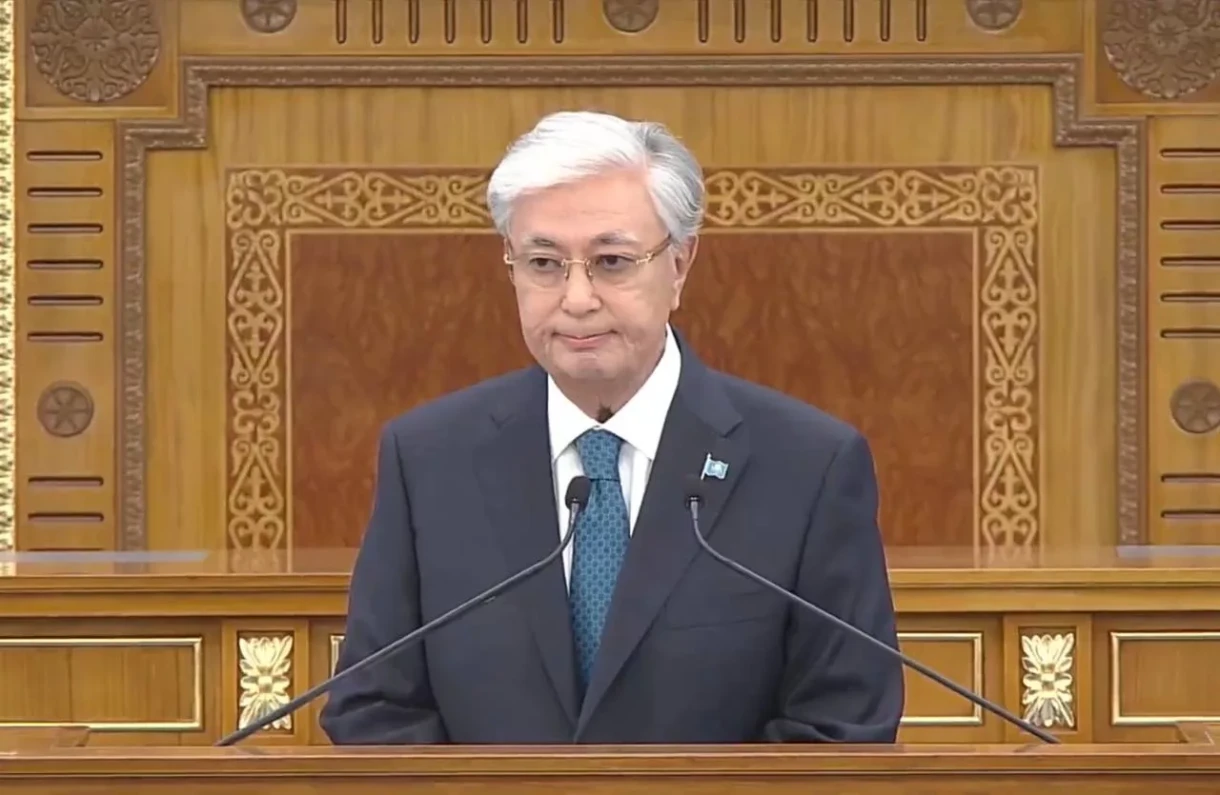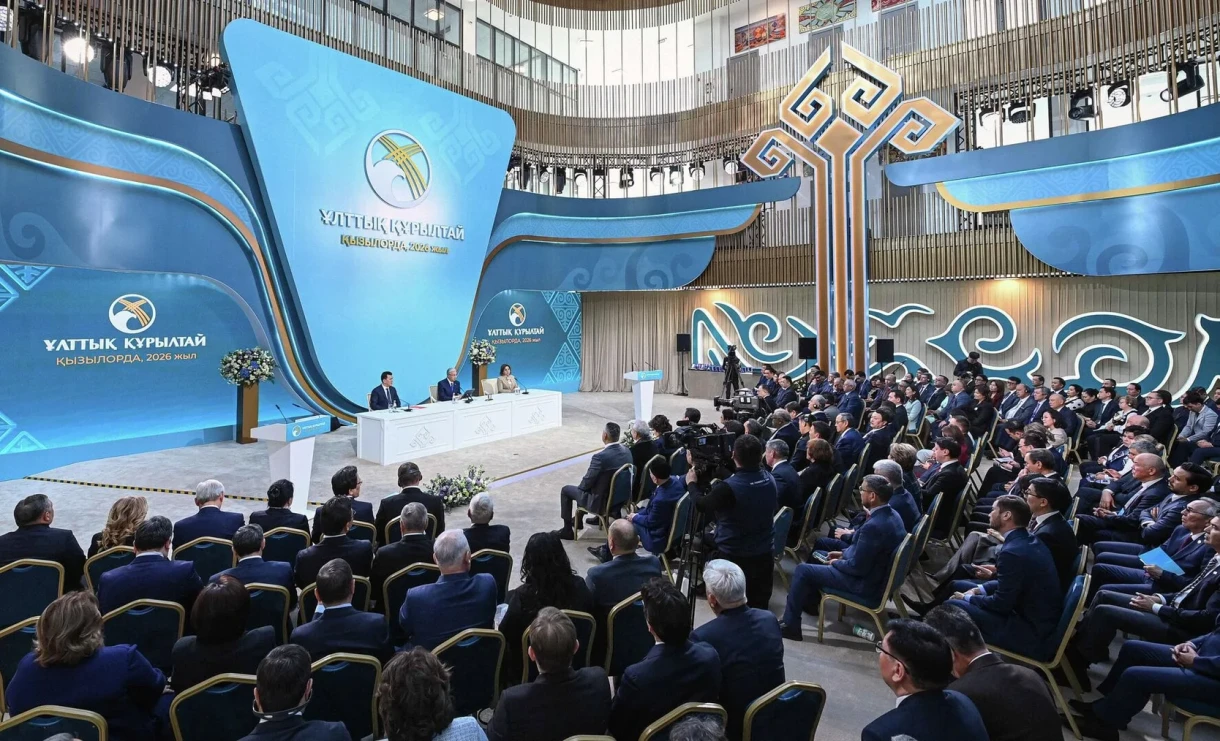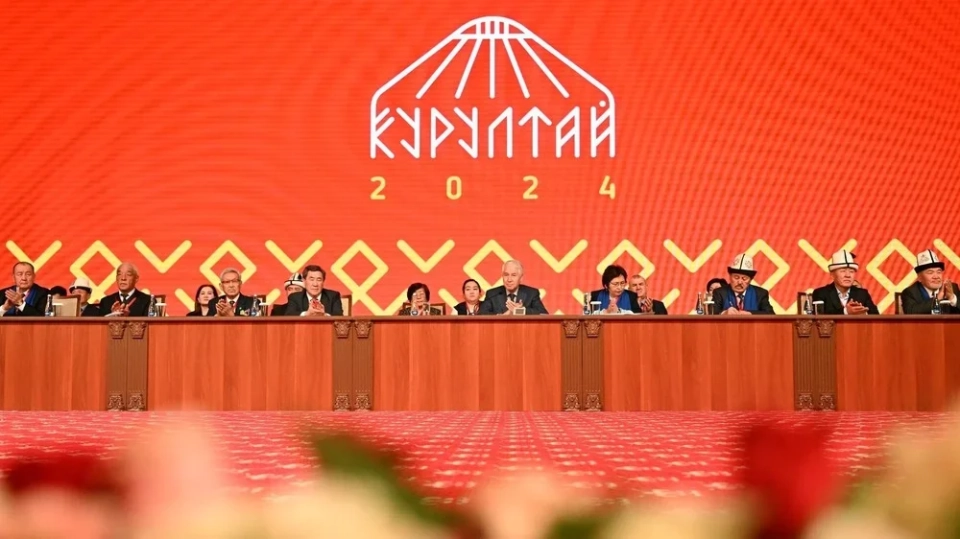
Last weekend, following the issuance of a decree, 130 participants gathered for the first meeting of the constitutional reform commission. The discussion lasted over two hours and covered not only specific amendments but also a complete restructuring of the existing system.
At the next meeting on Monday, January 26, the commission members continued their work, clearly demonstrating their commitment to productive engagement, noted the publication "Vremya".
The main topic of the first meeting was the constitutional changes regarding the introduction of the vice-presidential position. Yerzhan Zhienbaev, the president's assistant for legal issues, reported that the appointment of the vice-president would occur with the consent of the Kurultai, expressed by a majority of deputies. Dismissal from this position would also be in the hands of the president.
According to Zhienbaev, the vice-president will represent the country's interests in international relations, interact with the Kurultai, the government, and other state bodies, as well as with public, scientific, and cultural organizations. The powers of the vice-president will be determined by the president. This introduction will require the exclusion of the state advisor institution from the Constitution.
Zhienbaev also mentioned the requirements for the future vice-president, which will be specified in the Constitution:
— The vice-president must not hold positions in representative bodies, nor can they be involved in entrepreneurial activities or belong to a political party during their term of office.
Initiatives regarding the Халық Кеңесі
The discussions also touched upon the Халық Кеңесі — the People's Council, the status of which is planned to be enshrined in the Constitution. Yerzhan Zhienbaev noted that this body will become the highest advisory body representing the interests of the people of Kazakhstan, and its composition will be formed by the president from among the citizens of the country.
The Council will be granted powers to develop proposals in the field of domestic policy, strengthen public consensus, and promote national values. The president also emphasized that the Халық Кеңесі will receive the right of legislative initiative, which requires corresponding amendments to the Constitution.
— The issues of organization and powers of the People's Council will be defined by a separate constitutional law, — added Zhienbaev. — Council sessions will be held at least once a year.
— Thus, the Халық Кеңесі — the People's Council, like the Assembly of the People of Kazakhstan and the National Kurultai, will not be a permanent body, — he clarified.
The state advisor Erlan KARIN shared key parameters of the unicameral parliament. According to him, the Kurultai will consist of 145 deputies, with the requirements remaining unchanged. A fully proportional electoral system will be applied, and the term of office for deputies will be five years. There is no presidential quota in the new parliament, but party quotas for women, youth, and people with disabilities are preserved.
The Kurultai will consider bills in three readings.
— The final decision on the constitutional reform will be made by citizens in a nationwide referendum, — he added.
Focus on Sovereignty
Deputy Unzila SHAPAK proposed amendments to the preamble of the Constitution, emphasizing that this is not just a formal correction. She believes that the updated preamble should reflect several key orientations:
— Kazakhstan must become a united nation. This principle strengthens national identity and unites all Kazakhstanis around common goals and responsibilities.
Sovereignty should be emphasized, and the unitary nature of the state, the inviolability of borders, and the protection of territorial integrity must be highlighted.
— In the current geopolitical conditions, these principles play a crucial role in strengthening the country's sovereignty! — she noted.
The deputy emphasized the importance of the idea of a "Just Kazakhstan" and the principle of "Law and Order," which should also be included in the preamble. Additionally, Shapak proposed to reflect in the Constitution the values of nature, ecology, culture, science, and education, as well as responsibility to future generations.
Inviolability of Rights
The speech of the ombudsman for human rights, Artur LASTAEV, was one of the most emotional. He proposed to enshrine in the Basic Law the right not to testify against oneself and one's relatives, as well as to establish that a person "is not obliged to prove their own innocence." He also suggested protecting clergy from disclosing information obtained during confession.
Lastaev called for placing the presumption of innocence at the center of the section on rights and freedoms, enshrining international principles of justice and proportionality of punishment, including the prohibition of double jeopardy for the same act. He emphasized the absolute right to life.
— The human right to life is the foundation of all rights and freedoms. Without it, other freedoms would be meaningless! — he stated.
According to him, no one can be arbitrarily deprived of life, including the state, even for the most heinous crimes. Lastaev reminded that Kazakhstan abolished the death penalty and proposed to consolidate all norms regarding rights and freedoms in one section of the Constitution dedicated to the protection of individuals and citizens.
Representatives of the legal community and public figures also presented proposals at the first meeting.
Politics for the Worthy
At the second meeting on Monday, the discussion of constitutional reform took on a harsher tone. While the first meeting focused on the philosophical foundations and architecture of the future system, the second day shifted to specific filters and restrictions.
Senator Nurlan BEKNAZAROV proposed to limit the participation of certain categories of citizens in elections and referendums. According to him, citizens recognized as legally incompetent by a court, as well as those serving sentences in places of detention, should not participate in these processes.
A key emphasis of Beknazarov's proposal was to restrict the right to be elected to public office for citizens with unexpunged or unpaid criminal records, as well as for those whose guilt in corruption crimes has been established by a court!
The senator also proposed to include in the Constitution the right of the Kurultai to raise the issue of ministers' resignations.
— At the initiative of one-third of the deputies of the Kurultai, the right to hear reports from government members will be provided. In case of non-compliance with the laws of the republic after reviewing the report, the Kurultai will be able to appeal to the president with a proposal to dismiss a government member. The president, in turn, will make a decision on this matter, — Beknazarov explained.
He clarified that the powers of the Kurultai will begin with the opening of the first session and end with the start of the new convocation's work.
— Elections to the Kurultai are planned to be held two months before the expiration of the current convocation's term, and in case of early termination of powers — within two months thereafter, — the senator added.
Balance of Power in the New System
Justice Minister Erlan SARSEMBAYEV proposed amendments to the procedure for key personnel appointments in accordance with the new Constitution.
— The president will appoint the vice-president, the prime minister, 10 judges of the Constitutional Court, six members of the Central Election Commission, and eight from the Supreme Audit Chamber with the consent of the Kurultai, — he reported.
At the same time, the president will be able to dissolve the Kurultai in case of repeated refusal to consent to appointments.
— This will help stimulate political forces to compromise and responsible behavior, — the minister explained.
A number of positions, such as the attorney general, heads of the Constitutional and Supreme Courts, the National Bank, the National Security Committee, etc., will be appointed by the president without agreements. This will ensure accountability and prompt decision-making in critical moments.
During the discussion of the introduction of the vice-presidential position, the justice minister emphasized the importance of continuity of power.
— In case of early termination of the president's powers, the temporary leadership of the country will pass to the vice-president. If the vice-president is unable to assume powers, they will pass to the chairman of the Kurultai, and then to the prime minister, — he added.
The person acting as president automatically loses previous powers.
— In order to ensure democratic continuity of power, within seven days after the early release or removal of the president, as well as his death, the Kurultai must announce elections, which must take place within two months thereafter, — noted Erlan Sarsembaev, emphasizing that this seven-day period will prevent the use of a temporary pause for political purposes.
The minister also proposed to exclude the government's powers to approve state programs and manage state committees.
Financing and Transparency
Deputy Snezhanna IMASHEVA voiced proposals for amending the Constitution in the areas of political parties, trade unions, and fundamental rights of citizens. In particular, she suggested updating the restrictions regarding the creation of associations that protect constitutional values.
— Clarifying the list of prohibited goals and actions, such as inciting war and undermining national security, will close possible loopholes and enhance protection, — explained the deputy.
The amendments will also strengthen the prohibition on external influence on parties and trade unions.
— We propose to specify the sources of prohibited financing, including not only foreign states but also stateless persons, as well as legal entities with foreign investments. This will increase the transparency of financing while preserving constitutional freedoms of associations, — added Imasheva.
The changes will also affect the right to peaceful assembly, expanding the grounds for its limitation by law.
The new changes also concern freedom of creativity: they enshrine the protection of intellectual property and clarify that the dissemination of information can occur by any lawful means, except for information that constitutes state secrets.
— At the same time, additional restrictions are introduced: freedom of speech must not violate the honor and dignity of others, as well as public order. The prohibition of censorship remains as a separate guarantee, — concluded Imasheva.
She also noted that the amendments enshrine personal inviolability, limit detention without trial to 48 hours (up to 72 hours only in exceptional cases), and introduce mandatory clarification of rights upon detention.
Updating the Constitution
The deputy emphasized that the Constitution should protect not only dignity but also honor, good name, and reputation of a person:
— The addition of the wording "protected by law" makes this norm more practical: it is not just a principle, but a duty of the state to ensure the protection of human dignity and honor. Article 18 is proposed to be supplemented with a wording about the right to inviolability of personal life and protection of personal data from unlawful handling, including the use of digital technologies.
Moreover, the deputy emphasized that the mention of party and religious affiliation in Article 19 of the Constitution has lost its relevance. She explained that these wordings were more suitable for the Soviet era, while in modern conditions, these rights are protected by other norms. Excluding such outdated mentions, Imasheva called "modernizing the text of the Constitution."
At the third meeting after lunch, the leaders of parliamentary factions unanimously supported the transition to a unicameral parliament.
Support for constitutional reform also came from experts — political scientists, professors, and renowned lawyers.
The fourth meeting is scheduled for Wednesday, January 28, where each point of the amendments to the Constitution will be examined in detail.
However, the final decision on the amendments will remain with the people — in a referendum. Judging by the dynamics of the commission's work, this event is not far off.