- What is the current state of relations between Kyrgyzstan and Kazakhstan?
- Kazakhstan considers Kyrgyzstan one of its closest and strategically important partners in Central Asia. The historically established bilateral ties are based on friendship, good neighborliness, and mutual support. Currently, the relations between Kazakhstan and Kyrgyzstan are characterized by stability, pragmatism, and dynamic development. Both states understand the strategic importance of their ties, relying on allied relations, a shared history, cultural and humanitarian proximity, as well as coinciding key interests in the region.
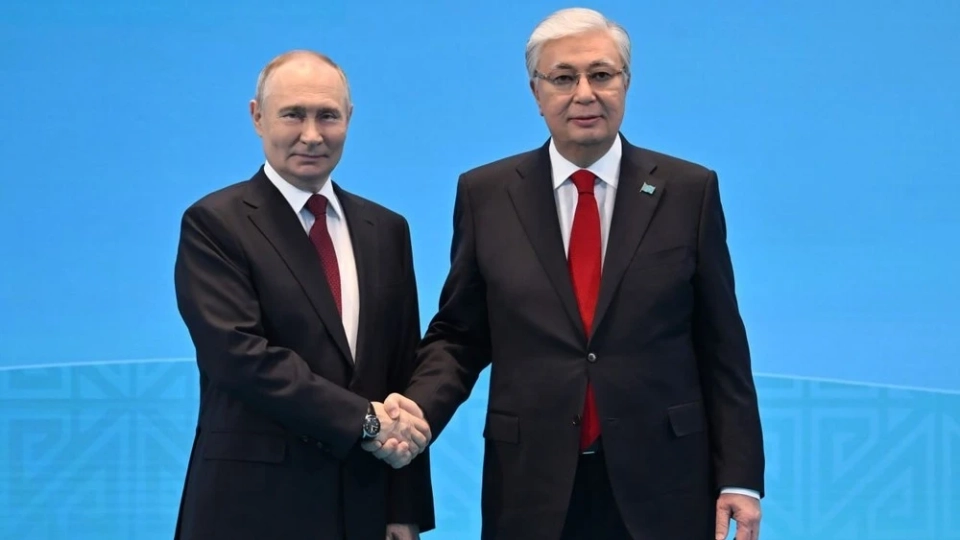
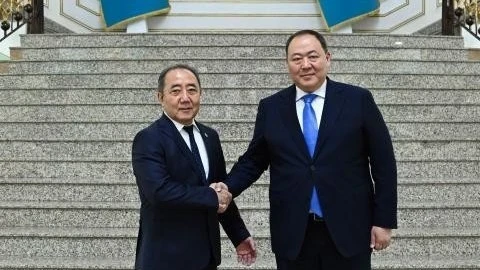
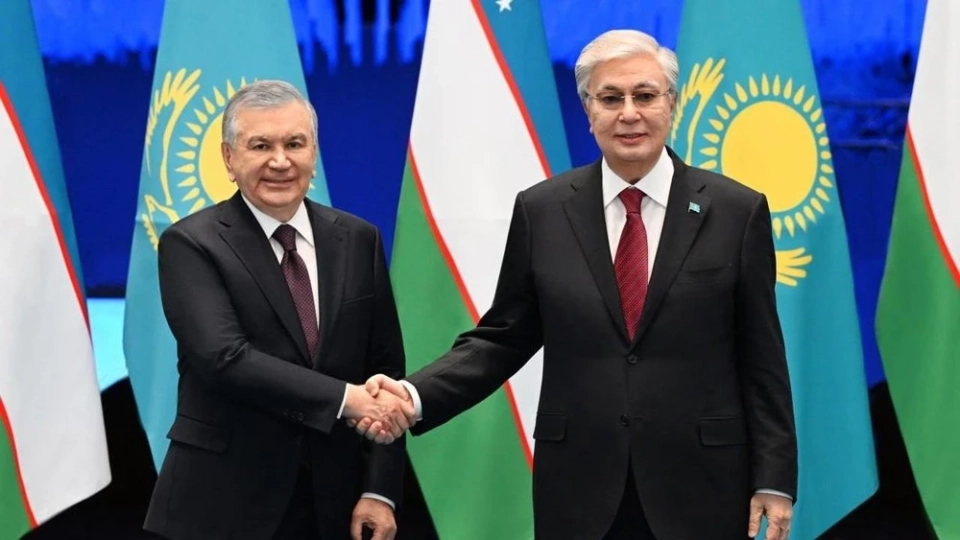
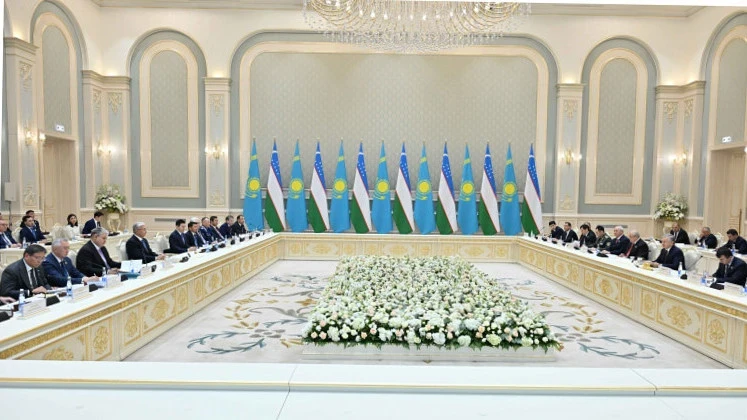
Reliable political dialogue is maintained at the highest level. For example, on August 22-23 of this year, President of Kazakhstan K. Tokayev made an official visit to Kyrgyzstan, during which the Seventh Meeting of the Supreme Intergovernmental Council took place. In November of this year, he also visited Bishkek to participate in a meeting of the Collective Security Council of the CSTO. President S. Japarov visited Kazakhstan twice over the year to participate in the "Central Asia – Italy" and "Central Asia – China" summits. Throughout the year, the leaders of the two countries met more than 15 times at various multilateral forums.
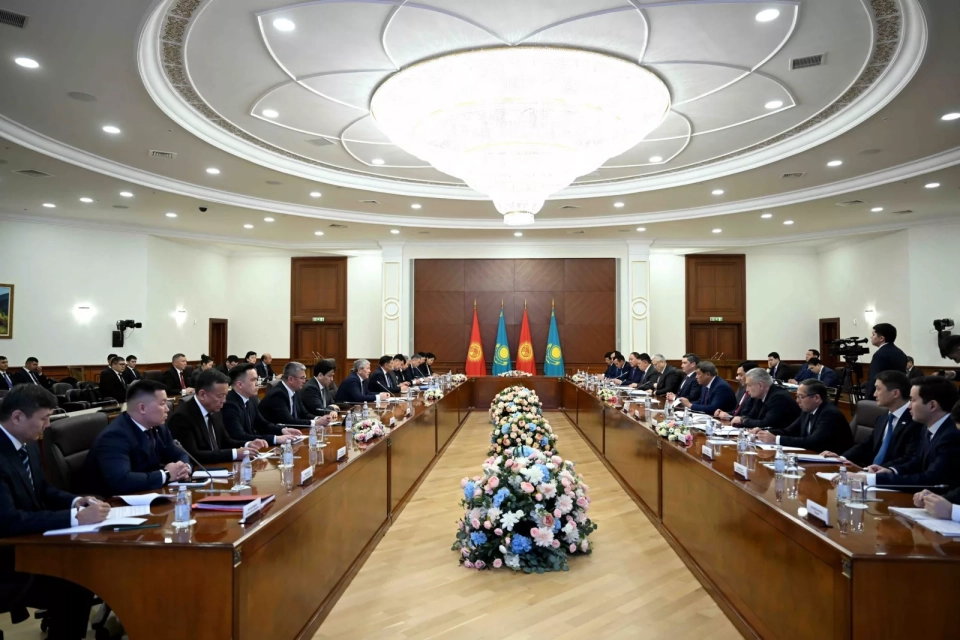
On February 24-25 of this year, the Chairman of the Cabinet of Ministers of Kyrgyzstan A. Kasymaliev made an official visit to Kazakhstan. The Prime Minister of Kazakhstan O. Bektenov represented Kazakhstan at the first meeting of the heads of government of the Turkic States Organization in Bishkek in September 2025. In November, the 13th meeting of the Intergovernmental Council took place, where prospects for cooperation in various areas, including trade, investment, transport, and culture, were discussed.
Inter-parliamentary cooperation is also actively developing. In 2025, the 3rd meeting of the Inter-Parliamentary Council was held, and the Chairman of the Senate of the Parliament of Kazakhstan M. Ashimbayev visited Bishkek to participate in the III Inter-Parliamentary Forum of Central Asian countries. As part of the visit, a bilateral meeting was held with the Speaker of the Jogorku Kenesh N. Turgunbek uulu and the 9th Kazakh-Kyrgyz Forum of Intelligentsia. On November 30, a Kazakh delegation consisting of senators and deputies of the Mazhilis, as well as the Chairman of the Central Election Commission N. Abdirov, was present in Bishkek as international observers at the early parliamentary elections in Kyrgyzstan.
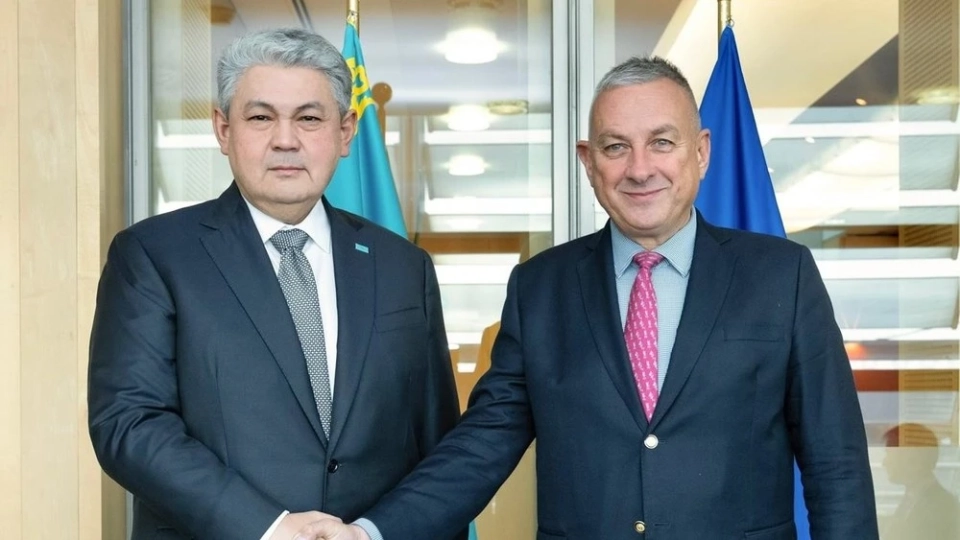
In 2025, official visits by the foreign ministers of Kyrgyzstan (January 10-11) and Kazakhstan (August 1-2) also took place. Annual political consultations between the ministries were held on June 13.
Kazakhstan and Kyrgyzstan actively coordinate their positions on key issues within the framework of the CIS, SCO, CSTO, EAEU, and at meetings of the heads of state of Central Asia. During President Tokayev's official visit, support was expressed for Kyrgyzstan's candidacy for non-permanent membership on the UN Security Council for 2027-2028. Both sides strive to ensure stability and security in the region, jointly responding to modern challenges.
Economic cooperation between the countries also demonstrates positive trends. Kazakhstan has been among the top three main trading partners of Kyrgyzstan for many years, with mutual trade volume reaching 1.78 billion USD last year. This level was achieved in just ten months of the current year.
Kyrgyzstan is the second trading partner of Kazakhstan in Central Asia (after Uzbekistan, with a share of 22.5% in 2024). Kazakhstan is among the top four largest investors in the Kyrgyz economy, with total investments amounting to 1.4 billion USD since 2005.
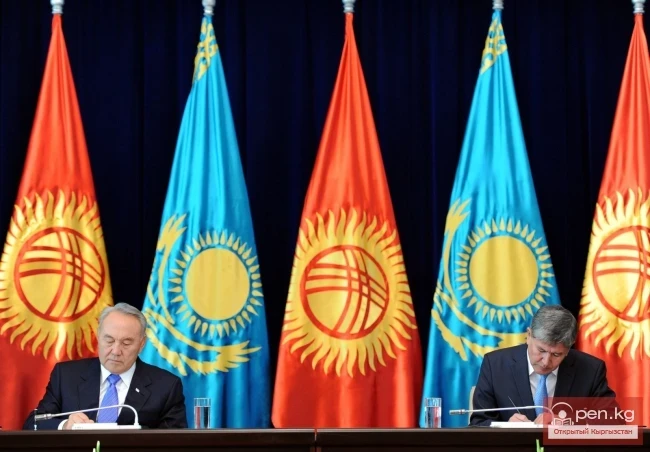
In August of this year, during President Tokayev's visit, a Comprehensive Cooperation Plan until 2027 was signed, as well as a Roadmap aimed at increasing trade turnover to 3 billion USD by 2030. The main priority remains the practical implementation of these agreements.
- What is the total trade turnover between the two countries?
- The trade turnover between Kazakhstan and Kyrgyzstan has shown steady growth in recent years. According to Kazakhstan, from January to October 2025, it amounted to 1.78 billion USD, which is 22.4% more than in the same period of 2024.
The implementation of large joint projects is expected to provide an additional impetus for the growth of mutual trade and help achieve the goal of increasing trade turnover to 3 billion USD.
- What is the amount of Kazakh investments in Kyrgyzstan?
- Kazakhstan continues to actively increase its investments in Kyrgyzstan. According to the Bureau of National Statistics of Kazakhstan, in the first half of 2025, the volume of investments amounted to 25.5 million USD, while for the entire year of 2024, it was at the level of 29.7 million USD.
This data confirms the steady growth of trade and economic cooperation between the two states, indicating the strategic nature of their relations.
- What major joint projects between our countries can you highlight?
- Several major projects are being implemented within the framework of cooperation that can significantly increase trade and economic potential. One of the most significant is the Industrial Trade and Logistics Complex (ITLC), which is being built near the "Karasu" - "Aktilek" border checkpoint. The complex will function as a free economic zone, providing benefits for investors and housing production and trade facilities.
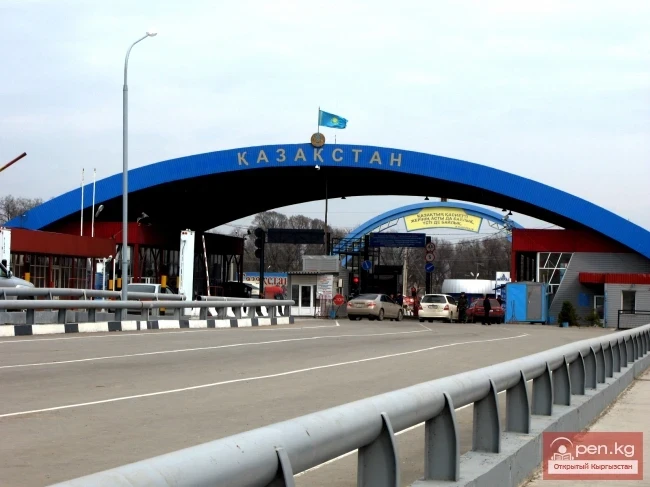
The modernization of border checkpoints between Kazakhstan and Kyrgyzstan is also an important area of cooperation. By 2028, new checkpoints are planned to be built and existing ones modernized, which will increase capacity and improve conditions for cross-border trade.
The project for the construction of an alternative road "Almaty – Issyk-Kul" is of strategic importance for both countries, allowing the route "Almaty – Cholpon-Ata" to be shortened almost by half — from 450 to 220 km. This will create conditions for increasing trade and cargo transportation volumes.
The completion of the construction of the alternative "North – South" road in Kyrgyzstan will also create favorable conditions for the supply of fresh vegetables and fruits to Kazakhstan and the markets of Russia.
The Asian Development Bank, a partner in the project, is working with our countries on the feasibility study for the construction of the road.
The creation of a wholesale and retail center for the storage of vegetables in the Almaty region along the "Almaty – Bishkek" highway is also related to the alternative road project. This project, implemented jointly with the Asian Development Bank and Kyrgyz authorities, aims to create favorable conditions for suppliers from Kyrgyzstan.
In the energy sector, an important project is the construction of the Kambaratinskaya HPP-1 on the Naryn River. Kazakhstan, Uzbekistan, and Kyrgyzstan have agreed on the joint implementation of the project with a share distribution of 33%, 33%, and 34%. The installed capacity of the station will be 1860 MW, and the project cost is about 4.2 billion USD. The project is in the coordination stage with the World Bank. In October 2025, it was announced that the project would be financed by the European Union for 2.4 billion USD.
The implementation of the ITLC is on schedule. All necessary legal procedures have been completed, and land works have begun on the site, which covers more than 200 hectares. In 2026, it is planned to move to the active phase of construction work.
The ITLC will be created as a single territory in the format of a free economic zone with a complex of production and logistics facilities, which will provide attractive conditions for investors.
There is also a possibility of constructing a railway branch about 14 km long from the "KORCEM" cement plant to the city of Kant, which will significantly improve railway logistics.
More than 20 applications have already been received from potential investors for the implementation of projects on the territory of the ITLC.
- How can Kyrgyzstan and Kazakhstan jointly utilize the transit potential of the region?
- Recently, significant changes have been observed in the region related to the formation of new transport and logistics routes and the creation of trade and logistics hubs. These changes reflect the desire of Central Asian countries to adapt to changes in global supply chains.
New transport corridors are actively developing in Kyrgyzstan, and additional checkpoints are being opened at the borders with China, Kazakhstan, and Uzbekistan. This will help expand the geography of cargo flows and improve the connectivity of the region's logistics systems.
The project for the construction of the "China–Kyrgyzstan–Uzbekistan" railway is expected to significantly increase transit transportation volumes from China to Central Asian countries and further to the Middle East, Russia, and Europe. Options for using routes through Turkmenistan with access to Russia via the Caspian Sea are also being considered.
These changes, along with the creation of border hubs and the implementation of projects such as the ITLC, can significantly deepen the integration of the transport and logistics systems of the countries in the region.
In the medium term, these initiatives will create sustainable production and trade chains between Central Asian states, contributing to the formation of a unified regional logistics ecosystem.
- How are relations in the field of water resources developing?
- Cooperation in the field of water resources continues to actively develop, including work within the framework of bilateral agreements and commissions. The permanent Chu-Talas Water Management Commission regulates water supply issues in the basins of the Chu and Talas rivers, which flow from the territory of Kyrgyzstan into Kazakhstan.
For Kazakhstan, coordinating actions regarding the Toktogul Reservoir is important, as it is the main source of water for the Syr Darya River, meeting the needs of the southern regions of Kazakhstan. Regular meetings of the heads of water and energy agencies of Kazakhstan, Kyrgyzstan, and Uzbekistan aim to create a balanced operating regime for hydropower plants.
Experts warn of the growing water resource deficit in the region, which requires coordinated actions to ensure long-term water and energy stability. President of Kazakhstan Kassym-Jomart Tokayev raised the issue of creating an International Water and Energy Consortium in Central Asia to coordinate water use regimes.
At the global level, the idea of creating an International Water Organization within the framework of the UN for systematic coordination of water issues has also been initiated, which is extremely relevant today.
Kazakhstan and Kyrgyzstan, along with other Central Asian countries, are expected to develop an effective model of water and energy cooperation.
- What are the reasons for the periodic accumulation of vehicles at the border checkpoints between Kazakhstan and Kyrgyzstan?
- The accumulation of vehicles at some border checkpoints between Kazakhstan and Kyrgyzstan is usually temporary and multifactorial. The main reasons are related to seasonal increases in passenger traffic and cargo volumes, especially during holiday and pre-holiday periods when traffic exceeds the designed capacities of the checkpoints.
The speed of border crossing is also affected by the control activities of authorized bodies, as well as the involvement of various services in document processing, including border and tax services.
Infrastructure and technical factors, such as a limited number of lanes and road conditions, also influence the situation.
To address this issue, infrastructure projects are being implemented. Currently, the construction of a new checkpoint "Besagash" (Kazakhstan) – "Kichi-Kapka" (Kyrgyzstan) has begun, which is planned to be put into operation in July of next year. Similarly, the construction of the checkpoint "Aksu" (Kazakhstan) – "Tömönkü-Chüy" (Kyrgyzstan) is planned to ease the load on existing checkpoints.
The checkpoint "Kegen" (Kazakhstan) – "Karkyra" (Kyrgyzstan) has switched to a round-the-clock operation mode since August of this year, which has already helped redistribute transport flows.
In the next two years, a phased modernization of all existing checkpoints at the border is planned. For example, the capacity of the "Karasu" (Kazakhstan) checkpoint is 300 vehicles per day, while the actual flow reaches 600-800 vehicles. This requires additional reconstruction measures.
- How are cultural and humanitarian ties between our countries developing?
- Cultural and humanitarian ties between Kazakhstan and Kyrgyzstan are at a high level and are actively developing. President of Kazakhstan Kassym-Jomart Tokayev emphasizes the historical and spiritual foundation of these relations.
Kazakhstan has implemented numerous cultural events in Kyrgyzstan throughout the year aimed at strengthening humanitarian ties and promoting shared heritage. The publication of the magazine "Famous Kazakhs of Kyrgyzstan" has become a symbol of mutual respect and cultural closeness.
In Kyrgyzstan, dozens of cultural and educational events have taken place, including theatrical performances by Kazakh theaters and musical concerts. Important events included exhibitions such as the international photo exhibition "In the Footsteps of Centuries: The Image of Kazakhstan's History" and the exhibition "Famous Kazakhs of Kyrgyzstan" at the National Museum.
Additionally, throughout the year, joint commemorative initiatives have been implemented, such as the installation of monuments to Abai Kunanbayev and Chingiz Aitmatov, as well as naming streets and educational institutions after outstanding figures.
In 2026, cultural exchanges are planned to continue, including tours of Kazakh creative groups in Kyrgyzstan. Cooperation in the field of education will also develop, with an increase in the number of grants for students from Kyrgyzstan and the opening of new branches of Kazakh universities in the regions.
The III Kazakh-Kyrgyz Youth Forum held in August became a unique platform for youth, bringing together specialists in the fields of IT and creative industries. This event aims to develop the digital potential of youth and strengthen partnerships between the two countries.
An exhibition of Kazakh universities was also held in Bishkek, highlighting the high interest of Kyrgyz youth in education in Kazakhstan.