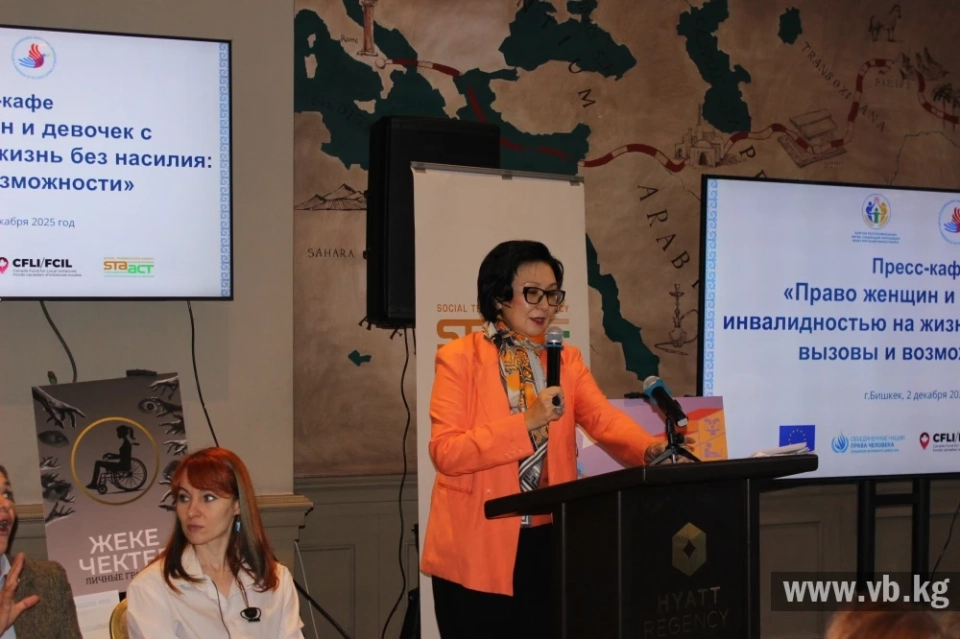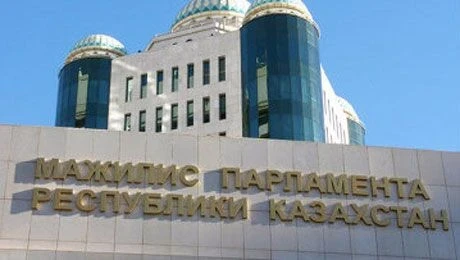
Gauhar Tanasheva, who left the parliament, stated that the sessions of the Mazhilis follow a pre-approved script, and violating it can lead to losing one's mandate. She claims that she was "asked to leave" after making a request that was not coordinated with the party leadership. Azattyq managed to learn the opinion of her colleagues.
In January 2025, the Central Election Commission decided to terminate Tanasheva's powers as a Mazhilis deputy, citing the decision of the People's Party of Kazakhstan, of which she was a member.
Tanasheva was elected to parliament in the 2023 elections, becoming a representative of the NPK, which invited her to join due to her active position in uniting mothers of large families. She served as a deputy for less than two years.
The reason for the termination of her powers, according to Tanasheva herself, was a request addressed to the Prime Minister.
UNAPPROVED REQUEST
At the last session of the chamber in 2024, which took place on December 25, Tanasheva raised the issue of the lack of housing for large families, people with disabilities, and graduates of orphanages. She emphasized that the queue for subsidized apartments is moving extremely slowly, and many have to wait for several decades.
— Innocent children died in a fire. If their families had been provided with housing, perhaps they would be alive, — Tanasheva reminded about the tragedy in Astana in 2019, when five sisters perished in a fire while left home alone, and called attention to other cases where children died in fires. — Is there another country where, in peacetime, 20 children died in a year? Is that not enough?
She proposed that the government provide land plots to developers for the construction of social housing, noting that hundreds of thousands of Kazakhstani citizens live without a roof over their heads and often fall into debt to feed their families.
— We are not a social state, but a government that leaves orphans on the streets and does not care for its people. Until we change this practice, we cannot become a developed country, — stated Tanasheva.
After this, her microphone was turned off. The speaker of the chamber, Erlan Koshanov, asked to restore the connection so that Tanasheva could finish her speech. She noted that responses to deputies' requests are mostly formal and suggested organizing a meeting with government officials to discuss solutions to the housing problem.
On January 14, 2025, her powers were terminated. Tanasheva claims that she did not decide to leave parliament on her own. The request she wanted to voice was banned by her party, but she decided to read it anyway.
— My request was submitted to Vice-Speaker Albert Rau. He said: “You will not voice it.” And the party leadership also asked me not to read it. But I decided to speak out. The next day, the head of the NPK faction, Magerram Magerramov, called me and informed me that I was expelled. The expulsion was backdated. I objected: “How can you do this? I should have been notified; I needed the opportunity to defend my interests.” But I was not given such an opportunity.
Albert Rau, the deputy speaker of the Mazhilis, commented to Azattyq that deputy requests are not subject to censorship, and their preparation is carried out in advance to comply with the meeting regulations.
He confirmed that the NPK faction did not approve Tanasheva's last request.
Magerram Magerramov explained the termination of Tanasheva's powers as a necessity for rotation.
— She raised important social issues, but now it is necessary to focus on issues related to working professions. We have our own vision of how to do this, — replied Magerramov.
Trade union activist Asylbek Nuralin took Tanasheva's place in the Mazhilis.
“INEFFECTIVE PARLIAMENT AND UNHEARING GOVERNMENT”
Tanasheva, reflecting on her parliamentary experience, expresses disappointment.
— Everything in the Mazhilis is by a pre-established script. Every government hour features known speakers, a fixed number of questions that are prepared in advance. Deputies can ask their questions, but most often they are provided with 20–30 approved questions, and only if there is time left can additional questions be asked, which happens very rarely.
The head of the Mazhilis apparatus, Bolat Kalyanbekov, denied these claims, stating that deputies themselves choose which questions to ask and on which topics to speak.
Some of Tanasheva's former colleagues claim they did not encounter such restrictions.
— Yes, there are certain moderations. The Mazhilis apparatus checks the relevance of the legislation referred to by deputies. If it concerns old laws, they may not be taken into account. But no one dictates which questions to ask and which not to, — explained Erkin Abil.
— There are no restrictions on when you can press the button. Personally, no one approached me with instructions on what I can say and what I cannot, — added Zhakynbek Amantai.
President Kassym-Jomart Tokayev identified the formula he proposed, “Strong president — influential parliament — accountable government,” as fundamental for the country, announcing a course towards creating a “hearing state.”
However, Tanasheva believes that in practice there is no effective communication between the legislative and executive branches of power.
— I came to parliament and saw this. I saw an unhearing government and an ineffective parliament, — says the former deputy.
She also mentioned her desire to meet with Tokayev, believing that perhaps the existing problems are not being conveyed to him. However, the meeting did not take place. “If I, as a deputy, could not achieve this, how can ordinary citizens do it?”
— The number of letters to the president is increasing. Why? Because this is the last instance. Local authorities do not solve problems. One woman wrote to me: “I have no coal, ten children are freezing in the cold.” I appealed to the akim from parliament for help because neither the akim nor his deputy listen to the people. Is it normal that I had to call from parliament? This is wrong; it is a systemic problem. Akims and ministers should resolve their issues without appeals from the Mazhilis.
PARTY OF MOTHERS?
Tanasheva entered politics against the backdrop of protests by mothers that began after the tragedy in Astana when five sisters from the Siter family died in a fire. The oldest was 12 years old, and the youngest was only nine months. The children were left alone while their parents worked the night shift.
Thousands of women took to the streets to demand improved social conditions. Tanasheva became one of those who managed to unite other mothers of large families. As a result of mass protests, the government made concessions, and the number of recipients of targeted social assistance increased from 77,000 to one and a half million. However, soon the authorities stated the need to provide assistance only to those who truly need it, to avoid encouraging dependency.
Eleven months after leaving parliament, Tanasheva is contemplating the creation of a new political party based on women.
After the events of “Bloody January” in 2022, Tokayev promised to simplify the process of registering political parties. Amendments were made to the legislation that reduced the number of participants required to create a party from one thousand to 700, and the minimum number of signatures for registration from 20,000 to 5,000. However, those attempting to register new parties accuse the authorities of creating artificial obstacles.
Before the extraordinary parliamentary elections in 2023, the Ministry of Justice registered new parties “Republic” and “Baitak.” Six parties loyal to the authorities entered the Mazhilis.
In 2025, the president announced the need for political reform and a transition to a unicameral parliament. The parameters of this reform are being discussed. It is known that the authorities plan to abandon elections for deputies from single-member districts and switch to party lists. Next year, amendments to the Constitution may be put to a referendum — this will be the second referendum during Tokayev's presidency.
As a result of the 2022 referendum, all mentions of the first president were removed from the Basic Law. Amendments were adopted that restored the Constitutional Court and abolished the death penalty as a form of punishment. Changes also prohibited the president from being a member of political parties while in office, and his close relatives from holding leadership positions in the quasi-state sector.
Additionally, the Constitution enshrined a mixed majoritarian-proportional electoral system for parliament, and the number of deputies in the Mazhilis was reduced from 107 to 98. Tokayev argued that such a system would “fully protect the interests of voters,” ensure a diversity of opinions, and create favorable conditions for the development of civil society.
The authorities spoke of democratization, while critics claimed that the authoritarian system would remain the same.