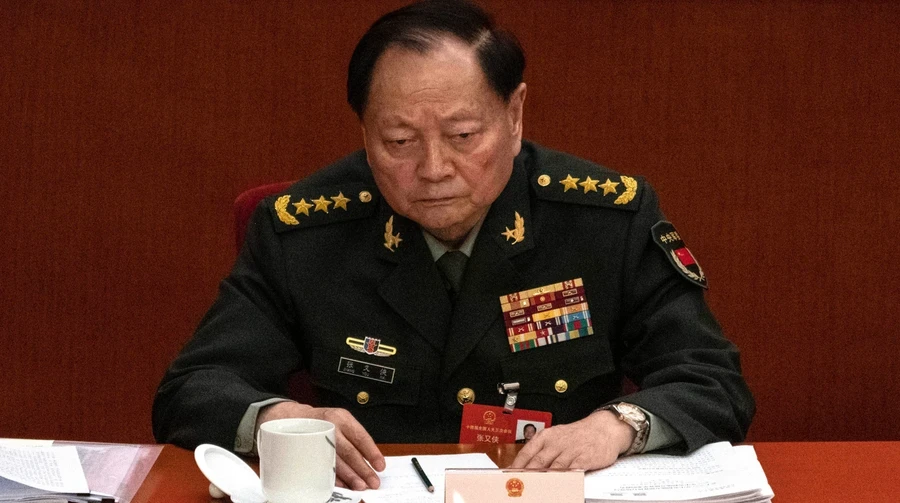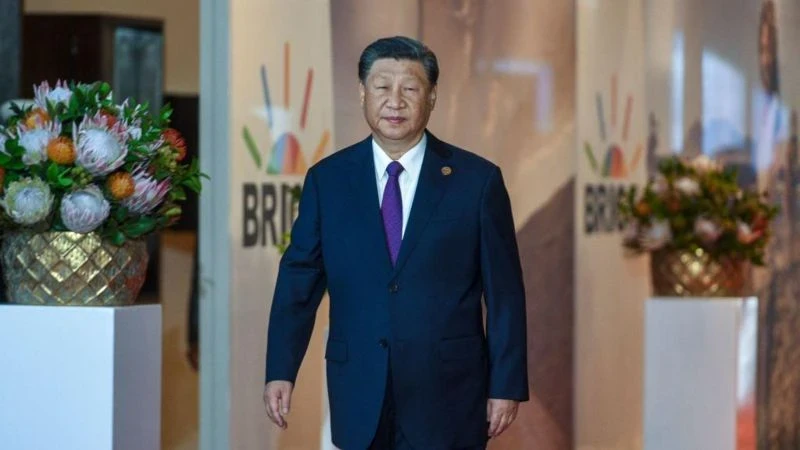
Over the weekend, an important personnel change occurred in China: General Zhang Youxia, who held the position of Vice Chairman of the Central Military Commission and was a member of the Politburo, was dismissed. The removal of this high-ranking military official raises serious questions about China's future in its relations with Taiwan and its position in the confrontation with the United States, as well as its stability in the region. This was reported by Reid Standish.
On January 24, it was confirmed in Beijing that General Zhang Youxia, long considered an ally of Xi Jinping, is under investigation. The surprising dismissal of this high-profile military figure leaves Xi Jinping virtually alone at the top of the military structure. China experts suggest that this will have serious implications for power dynamics, and both allies and rivals are closely monitoring developments within the Communist Party.
“For decades, China has cultivated an image of a country striving for long-term plans for expanding influence and competing with the United States. However, questions are now arising about whether Xi Jinping truly controls his environment as it appears at first glance,” says Temur Umarov, an expert on Russia and Eurasia at the Carnegie Center.
Events and Their Significance
The uncertainty of China's political system complicates understanding the motives behind Xi Jinping's actions, but the dismissal of Zhang Youxia occurred just before an important summit with U.S. President Donald Trump scheduled for April. This also coincides with political maneuvers ahead of leadership changes that occur every five years. In 2027, Xi Jinping is expected to run for a fourth term as the leader of the Communist Party.
The Chinese Ministry of Defense reported that General Zhang Youxia, Vice Chairman of the Central Military Commission, is under investigation for “serious violations of discipline and law.”
Similar accusations have been leveled against Liu Zhenli, another high-profile general and Chief of Staff of the CMC.
In an editorial published on January 25 in the military newspaper Liberation Army Daily, it was stated that Zhang Youxia and Liu Zhenli “betrayed the trust of the CPC and the CMC” and “contributed to the emergence of corruption problems that undermine the party's leadership over the army and threaten its foundations.”
According to information cited by the Wall Street Journal, Zhang Youxia is accused of leaking classified information about the nuclear program to the U.S. and accepting bribes for promoting military personnel to high positions.
RFE/RL cannot confirm the content of this information.
Some experts express doubts about the intelligence leak narrative. Neil Thomas, a researcher at the China Analysis Center, questions why a “battle-hardened general” would betray what has been the purpose of his life for many years and share secrets with China’s main rivals, as he noted in his post on the X platform.
Zhang Youxia, like Xi Jinping, belongs to the “princelings”—descendants of high-profile party officials and revolution veterans. His father fought alongside Xi Jinping's father during the civil war that culminated in the establishment of the communist regime in 1949, and both later achieved high positions.
Zhang Youxia is also one of the few Chinese generals with combat experience, having participated in conflicts with Vietnam in the 1980s.
The dismissal of Zhang Youxia may be part of a broader purge in the upper echelons of the Chinese military that has been ongoing for the past few years. Since 2023, around 20 generals have been dismissed in China, six of whom were from the Rocket Forces, which control the ground missile arsenal, including nuclear weapons.
After these dismissals and the initiation of investigations against Zhang Youxia and Liu Zhenli, only one active officer remains in the Central Military Commission out of seven, and only two active members, one of whom is Xi Jinping.
Implications for China's Neighbors
The situation with Zhang Youxia, who was the most influential general and a member of the Politburo, raises questions about possible discontent within China's elite.
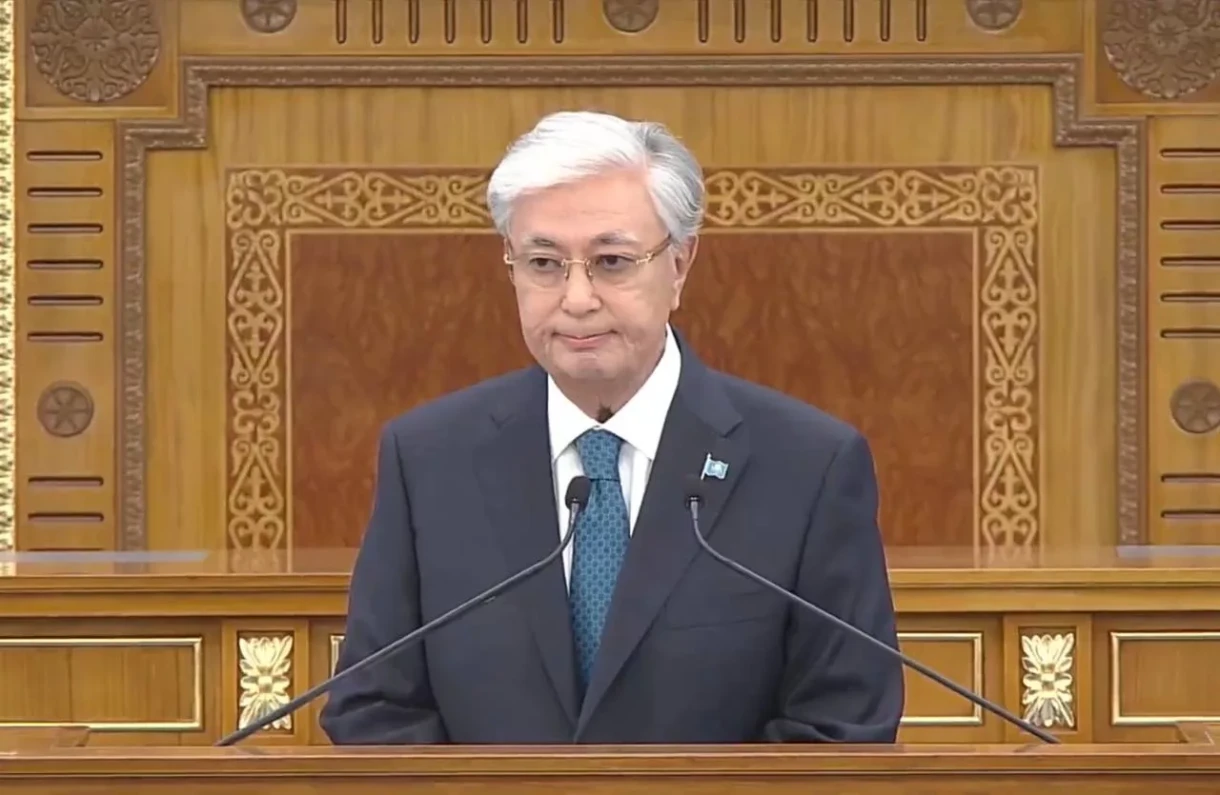
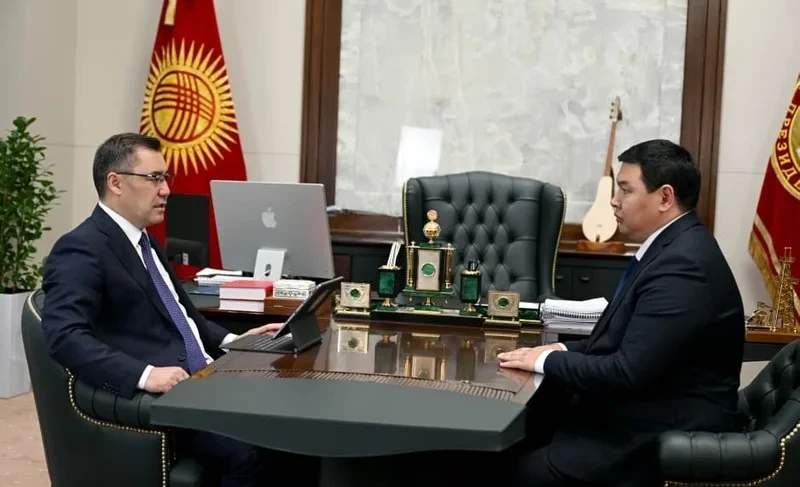
These events certainly attract the attention of Central Asian countries, which view China's political system as an example of stability and resilience to the upheavals faced by Central Asian governments following the collapse of the Soviet Union.
“This purge and the instability it creates will concern decision-makers in Central Asia,” notes Umarov in a comment to RFE/RL.
Zhang Youxia frequently met with world leaders, including trips to the United States and interactions with officials from Asian countries—from Pakistan to Vietnam. He also served as co-chairman of the Russia-China Intergovernmental Commission on Military-Technical Cooperation and often traveled to Moscow for meetings with high-profile officials, including a recent meeting in November with Defense Minister Andrei Belousov.
Umarov emphasizes that the general's dismissal is unlikely to affect China's cooperation with its neighbors in the field of security.
As for Central Asia, Umarov believes that the region's ties with China have become “institutionalized.” Security cooperation between Beijing and Central Asia occurs at various levels, including law enforcement structures and arms supplies.
Implications for Taiwan
The changes may also reflect on China's neighboring countries in the Pacific, particularly Taiwan, which Beijing considers part of its territory.
Experts believe that the dismissal of Zhang Youxia could impact China's military readiness and its ambitions regarding Taiwan. Xi Jinping has repeatedly emphasized that the reunification of the island with the mainland is “inevitable” and is prepared to use force if necessary to achieve this goal.
At the end of 2025, China conducted large-scale military exercises around Taiwan and regularly sends aircraft and ships into its airspace and waters.
“We will closely monitor changes at the highest levels of the party, government, and military in China,” stated Taiwan's Defense Minister Wellington Koo on January 26. “We will not allow the removal of anyone to weaken our vigilance or lower the level of war readiness that we must maintain.”
Drew Thompson, a former Asia strategist at the Pentagon now working at the Rajaratnam School of International Studies (RSIS) at Nanyang Technological University in Singapore, notes that purges in Beijing could have repercussions for Taiwan and the United States, which are the island's main allies providing crucial military support.
“For the U.S. containment strategy to be effective, Xi Jinping needs to be surrounded by competent generals who can provide him with objective advice,” Thompson writes in his newsletter.
Thompson adds that Xi Jinping's consolidation of power in the Central Military Commission is associated with “operational risks,” given that Xi may attempt to command a million-man army relying solely on one person.
“With the disappearance of Zhang Youxia, the risk of miscalculations within the Central Military Commission increases,” he concludes.
The Situation with Clans. Will Xi Jinping Manage to Stay on Top?
The arrest of Zhang Youxia violated an unwritten rule that members of the party aristocracy are untouchable. This may lead to a unification of the communist nomenklatura against Xi Jinping, who has encroached upon the sacred— the status of descendants of the first revolutionaries and their wealth.
The ten most influential communist clans in China (from Telegram channels):
The Deng Xiaoping Clan (former General Secretary)
Heir—Deng Pufan. Despite a sharp decline in influence, the family retains residual prestige as the leading red family.
The Chen Yun Clan (one of the eight “immortals” of the CPC)
Heir—Chen Yuan's son. Continues to control billions in state finances.
The Ye Jianying Clan (Marshal of the PRC, former Minister of Defense)
Heir—Ye Xuanlian. His older brother long controlled military intelligence.
The Jiang Zemin Clan (former General Secretary)
Heir—Jiang Mianheng's son. Controls the telecommunications sector and has significant overseas assets, being a key player in the Shanghai faction.
The Wang Zheng Clan (one of the eight “immortals” of the CPC)
Heir—Wang Jun's son. Controlled CITIC—one of the largest state investment companies, and Poly Group—a conglomerate in real estate. Closely associated with the Jiang Zemin clan.
The Yao Yilin Clan (former Vice Premier of the State Council)
Heir—Wang Qishan, who married his daughter. Former ally of Xi Jinping in the anti-corruption struggle.
The Zeng Qinghong Clan (former Vice Chairman of the PRC)
Protégé of Jiang Zemin. Leader of the Shanghai faction with extensive connections in the intelligence services.
The Hu Jintao Clan (former General Secretary)
Despite his age, retains influence at all levels of power.
The Wen Jiabao Clan (former Premier of the State Council)
Under Hu Jintao, the family amassed a multibillion-dollar fortune.
The Li Peng Clan (former Premier of the State Council)
Heir—Li Xiaolin's daughter. Controls the energy sector.
The Chinese political world based on rules is shattered—Foreign Policy.
Before the arrest of Zhang Youxia, Xi Jinping's purges followed certain unwritten rules (with rare exceptions, such as in the case of Bo Xilai):
— members of the Politburo were not prosecuted;
— “princelings”—descendants of the first communists holding high positions—remained above suspicion;
— retired members of the Politburo Standing Committee were not prosecuted.
The arrest of Zhang Youxia showed everyone in the party apparatus that the rules of “the higher the rank, the safer” and “the closer the family ties, the more protection” no longer apply.
The arrest of Zhang, the son of one of the founders of the PRC and childhood friend of Xi Jinping, appears as a powerful signal that exceptions in the fight against corruption no longer exist. The General Secretary is effectively telling the party and the PLA: if I can act against those closest to me, who dares to challenge me?
Nevertheless, Xi Jinping's strength may be the cause of his downfall. After so many years of anti-corruption purges, the campaign does not appear successful, creating the impression that corruption has become entrenched in the system, and Xi Jinping himself is ineffective in eradicating it.
After more than 12 years in power, the targets of the anti-corruption struggle have become those whom Xi Jinping himself chose. These were the people he trusted and appointed to the most important positions.
When fear becomes a common state, the power structure begins to disintegrate. Principles never held the system together; the main binding elements were the exchange of interests and resources, as well as a shared understanding of “red lines.” The former allows the system to remain resilient, while the latter makes it predictable.
As the anti-corruption struggle reaches the level of Politburo members, “princelings,” and friends, these rules begin to break down. With the disappearance of clear boundaries in politics, people instinctively begin to avoid risks: do not sign anything and do not take responsibility if there is a way to avoid it.
State power weakens. With the economy slowing down, no one dares to implement reforms; when social problems arise, no one takes responsibility; in the process of modernization, no one risks introducing innovations.
Although the system may appear stable, it develops slowly and becomes more fragile. This contradicts Xi Jinping's goals when he began his anti-corruption campaign.
Politics becomes more conservative, and implementation becomes more mechanical, while the top leadership becomes increasingly isolated and its understanding of reality deteriorates.
Xi Jinping finds it increasingly difficult to find people who are not only competent but also willing to take responsibility. Therefore, his problem may not be who dares to oppose him, but who dares to continue working with him?