On the anniversary of the December events of 1986, Bulat Abilov published a post in which he raises important questions: what caused these events, who benefited, and who made the key decisions? He also mentioned that in 2000 he asked the first and only president of the USSR, Mikhail Gorbachev, about that time, reports Orda.kz.
In his memoirs, Bulat Abilov spoke about the situation surrounding the removal of Dinmukhamed Kunayev and the subsequent events:
“We remember how, as a result of a decision from Moscow, without explanations and discussions with society, Kolbin became the head of the republic — an appointee who had no relation to Kazakhstan. And how the next day students went out to the square. I am haunted by the question: who decided to send in the troops? Whose names are behind this order?”
Abilov described a chance meeting with Mikhail Sergeyevich Gorbachev in Switzerland in January 2000:
“He invited me to his place. I asked him about the events of December 1986 — a question that concerns every Kazakh. I was interested in how he was informed about what was happening in Almaty and who made the decision to send in the troops to suppress the protests. Gorbachev, smiling, replied: ‘Young man, Bulat, there was no video communication back then. The situation was reported by Kolbin, but he could not provide details. And Nazarbayev constantly reported that the situation was getting out of control and insisted on sending in the troops. This was a request from the local leadership; Kolbin and Nazarbayev asked me to send in the troops.’”
Abilov noted that witnesses to those events are still alive, yet these events have not received political and historical assessment:
“We do not know the depths of our history and have not even comprehended the most recent. We are afraid to do so. Unfortunately,” he concluded.
December 1986 remains a blank spot in the history of Kazakhstan, as confirmed by the words of a man who fought for the truth about Zheltoksan for many years.
_
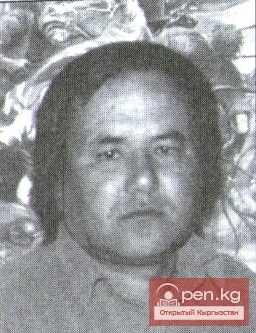
This is Arken Uak, a participant in the events we mentioned on the "Respublika" portal on December 13, 2013, when we found his video interview on social media. It is hard to say when it was recorded, possibly for another Independence Day. But it was evidently not aired, as it contains too harsh and terrifying accounts of those days.
For those who may not know this name: in 1987, Arken Uak, while a lecturer at the Almaty Architectural and Construction Institute, was sentenced to 8 years for participating in the December events of 1986 on charges of organizing mass riots and inciting national hatred. He was released in 1991 and rehabilitated in 1994.
In 2000, his book about the December events in Almaty was published in Moscow, but almost the entire print run disappeared on the way to Kazakhstan. Nevertheless, Arken Uak did not give up and wrote a sequel.
His second work titled "Genocide" was published after his death, but the print run also fell into the hands of the special services.
The reason for this? His books are based on unpublished materials from the special commission of the Supreme Soviet of the Kazakh SSR, which investigated the events in Almaty in December 1986.
That is why his interview is probably one of the last, unpublished, and piques our interest. We offer you its transcript.
There was no request for Kunayev to stay
Arken Uak shares his memories candidly.
— We had nothing to lose; we had already lost everything. It was a struggle for life: to be or not to be? You see, 40% do not know the language. How could we become so Russified? We needed to either restore the rights of the Kazakh language so that the people would not lose their culture or perish, — Arken Uak recounts.
— Now I am telling things I have never said before. On December 16 or 17, I received a call from Abdigapar, an instructor at the Central Committee. He informed me that there was a war in the square, people were being beaten. I had a neighbor, an eye doctor, whose only daughter went to the square. They came to me in tears, saying that people were being killed there. I got in my car and went to the square. I saw people running away and how they were being beaten, — recalls the Zheltoksan participant about those tragic days.
He debunks one of the myths about Zheltoksan:
— When the investigations were conducted, it turned out that the posters only had political demands. But no one asked for Kunayev to be reinstated. Why was he needed? This lackey, the satrap of the Communist Party, was just like Nazarbayev. They were ready to betray their parents, let alone the people. But the people were ready for these events; everything was building up. The insulting attitude towards us every day. Two Kazakhs on a bus speak in Kazakh, and they are yelled at: “Speak in Russian!” It all built up, accumulated, and at one moment exploded.
They wanted to shoot, but they imprisoned
He also spoke about the fate of Arken Uak in this interview:
— Do you think Kolbin felt sorry for us? The KGB army was sent to find out who the organizer was? They only found me. I felt that I was being watched when two came and said: “We want to invite you to the KGB for a conversation.” I got ready; they tortured me until two in the morning, asking who the organizer was. They said: “You will be shot, and no one will know.”
— A commission was created under the leadership of the deputy head of the criminal department of the KGB, Murzalin. Now he is an alcoholic, living in the Mamyr-1 microdistrict. I wanted to talk to him, but he is always drunk. This very Murzalin told me: “Well, Uak, you will be shot anyway. Come on, tell me how it was?” I replied: “I don’t know anything.” And he said: “But you were in the square?” I said: “I wasn’t.” He: “Didn’t anyone tell you what happened in the square?” I replied: “No one told me.” And so it went every day, — shares Arken Uak.
— I knew I would be convicted, and I learned the Criminal Code in the KGB. I knew where I would end up; I knew they would assign me a criminal case, not a political one, — says the Zheltoksan participant. — And so it turned out. They opened a case for the theft of 280 rubles, as if I had stolen tiles for the dormitory. A witness at the trial stated that white tiles were missing, but I only had green ones. Still, I was sentenced to 8 years in prison and 5 years of deprivation of the right to engage in teaching activities.
When the zone is better than freedom
The years spent in prison he recalls with irony.
— I ended up in Kolyma, where there was a zone in the Talye region. At the stage, we were not given beds; we all got lice. In Magadan, we suddenly got clean beds and a room. Then we arrived in Talye. At night, some inmate rushed in and asked: “Who is Uak?” I responded. It turned out that while I was traveling for three months, my reputation had already preceded me; everyone knew my story. He said: “You will go to the third squad; you won’t work for a month. You will be the head of the BPK! This is the bath-laundry complex. So I managed the bath. Solzhenitsyn wrote that the most prestigious position in the zone is that of the bath manager,” — the Zheltoksan participant laughed.
The story of how they wanted to forcibly pardon him reminds of modern realities.
— In the summer of 1989, my boss called me and said: “Uak, congratulations, you are free.” I asked: “How?” He replied: “I received a call from Magadan; there is a request, write a petition for pardon.” I refused: “I don’t want such freedom!”
Why, the reader may wonder. It’s simple.
— What is a pardon? It is an admission of guilt; after that, you have no right to complain; no one will accept your petition because you admitted it. I am not a fool like that Askarov. Askarov received a pardon and then wrote to the Supreme Soviet to be acquitted. I was summoned many times, but I refused. After some time, the judge, now a member of the Supreme Court, the head of the department, Raimbaev, summoned my wife and offered her to write a petition in her name, saying that we would push it through and free him. My wife wrote me a letter; I refused. But she wrote a petition in her name. I was summoned again: here, your wife is asking, and so on. At that time, the chairman of the Supreme Court was my fellow countryman from Arkalyk; we were neighbors. He apparently wanted to help, but I refused the pardon.
People were taken away by trucks
In a conversation with the journalist, Arken Uak continues to reveal the truth:
— I had one task — to come out alive to fight, and I am fighting. I am sending a petition to the Supreme Court and copies of documents based on which it is possible to achieve the conviction of Nazarbayev under Article 160 “Genocide.”
— I could not do this before because neither under the Soviet Union nor in Kazakhstan was this article present. But in September of this year, under pressure from the public and international organizations, this article was adopted. Now I am preparing materials and will file a lawsuit. Of course, the case will not be considered; I will be denied. But I will submit the case to the international court, — says Uak.
— Genocide is divided into two types. Destruction or beating, inflicting serious bodily harm to one member or the entire group is considered genocide. The second, for example, right now they are selling our children abroad — this is also genocide. There is also an article called “rudimentary genocide.” This means that genocide can continue for 50-100 years, and regardless of the statute of limitations, a person can be held criminally liable, regardless of whether he was a leader or not, whether he participated or was present. Do you understand? — asks the Zheltoksan participant.
— Nazarbayev was the secretary of the Central Committee, then implemented the policy of the Soviet Union in the government. He was also the chairman of the government. I have a document signed by the first deputy minister of internal affairs, which states that the authorities believed that on the 17th the people would not come out, but they did come out on the 18th. All police stations, all sobering-up stations, where vagrants are placed, were filled; they did not know where to put the people, and then they started loading them onto trucks, taking them out to the fields, and throwing them out naked. In the evening, as it is written, in the dark, they wanted to deal with everyone. So there was such an order. And who was in charge of the headquarters? The headquarters was led by Nazarbayev.
— So, this deputy minister describes how all this was planned. To appoint three squads, surround the people from all sides and beat them. Whoever manages to escape will run away, and the rest will be beaten. In this decision, the chairman of the Council of Ministers — Nazarbayev — was present, writes the deputy minister. Look in the book. The journalist who wrote about this was convicted, but I am not being touched. Why am I not being touched? Everyone says, you raised this issue and are writing a second book, — shares Arken Uak.
He fought for the truth about Zheltoksan until the last day of his life.
— I wrote on one website about all his crimes; he sold everything! We have nothing left. The industry is completely sold out; in Ust-Kamenogorsk, not a single industrial enterprise belongs to Kazakhstan. To whom was the Ermak Ferroalloy Plant sold? And the chrome plant, which ranks first in the world in chrome production? I am not even mentioning oil — you already know what is happening with it. We have nothing; everything is sold. How did he do this? Through bribes, or maybe they are paying him a percentage?
— Have you read his (Nazarbayev's) book? He writes that after finishing school, he came to the chemistry faculty but did not pass the competition. But if he did not pass, he should have gone to the army. So where did he go? To the Komsomol construction sites. Then he successfully married Sara because her relative was an influential person who raised him and made him a communist, — he reminded of the Elbasy's biography.
— There is a system and civil conscience. Mine did not allow me to be a communist, but I live. Each of us has a civil conscience; we should not be scoundrels, — said the elderly man.
— As long as Nazarbayev is in power, nothing will change, but I will fight to the end. The truth is on my side. I am not guilty that he added this Article 160 on genocide to the Criminal Code. I will sue him precisely under this article. I would have done this long ago, but in December of last year, I had a stroke, and I still cannot recover. My speech has returned, my memory has returned, but I have complications in my legs — I cannot walk, I cannot go outside, but I am fighting. Personally, I need nothing; I am 73 years old; I can leave at any moment. But I have documents that Nazarbayev destroyed, burned. How I collected them is not important, but I have factual materials. I do this for history…
…Arken Uak passed away in 2003.