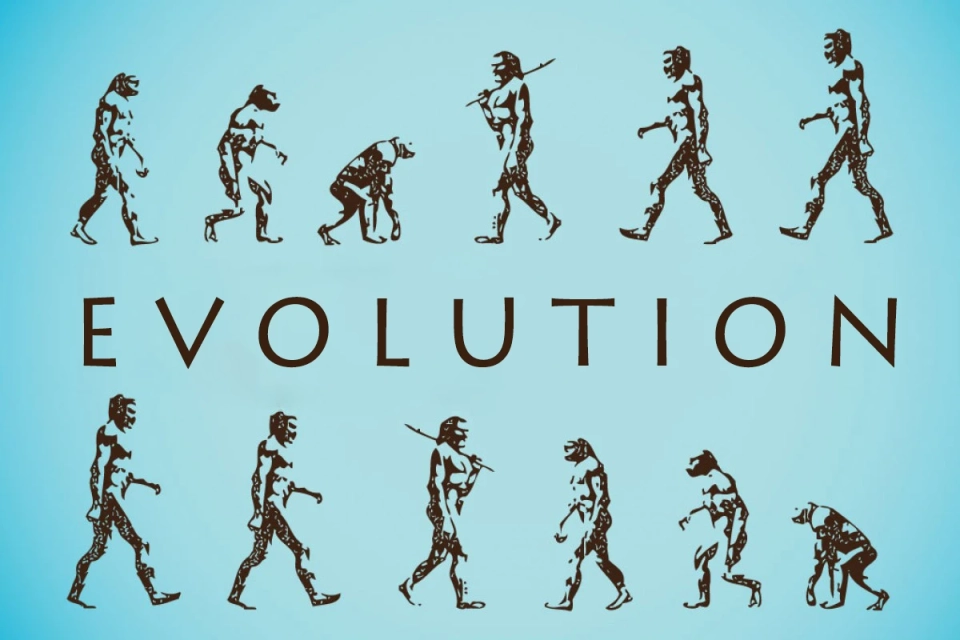
Humanity tends toward anthropocentrism, considering itself the pinnacle of evolution. At the same time, from the perspective of biomass, we are insignificant compared to plants and other animals. Moreover, if we imagine the history of Earth as one hour, humanity appeared only eight seconds ago. However, many perceive themselves as the most intelligent and conscious beings on the planet, notes Susan Lahi.
Phytoplankton, on the other hand, has existed on Earth for over a billion years. These photosynthesizing organisms inhabit aquatic environments and are primarily represented by single-celled life forms similar to plants, but also include bacteria and protozoa. Few consider phytoplankton capable of consciousness, but this raises two important questions: first, what is consciousness? Second, self-awareness is considered an important part of consciousness, and even single-celled organisms can demonstrate certain forms of it.
So if consciousness is not just a human trait, could there be many more intelligent beings on our planet than we assume?
Numerous studies suggest that this is indeed the case. Some scientists argue that every cellular organism in the universe, regardless of its size, may possess consciousness, as they all share common features at the microscopic level.
In the 1990s, a hypothesis known as the Cellular Basis of Consciousness (CBC) was proposed, which claims that life and sentience are one and the same. According to this theory, all living organisms possess consciousness, self-awareness, and emotional experiences. CBC suggests that single-celled prokaryotes, such as bacteria, are capable of associative learning, memory formation, navigation, and decision-making. They can predict events and organize themselves into functional groups, exhibiting both cooperation and competition, as well as primitive forms of altruism, where some cells risk themselves for others.
For example, the slime mold Physarum polycephalum, which belongs to single-celled eukaryotes, is capable of solving mathematical problems and finding its way out of a maze without external stimuli, such as food.
Some bacteria can also determine when they have enough members for collective actions. For instance, a specific marine bioluminescent bacterium releases a molecule that causes luminescence, but only upon reaching a certain population density. Bonnie Lynn Bassler, a molecular biologist at Princeton University, claims that bacteria interact with their environment, communicate, count, and solve problems in groups.
According to researchers, the difference between the perception of consciousness in single-celled organisms and humans is that the former form of awareness is perceived as intuition rather than complete self-knowledge.
This concept also includes plants. Plant neurobiologist Stefano Mancuso, Ph.D., noted that plants respond to anesthesia similarly to humans, ceasing their activity. Although it is often believed that plants are not subject to external influences due to their lack of movement, experiments have shown that some, such as the Venus flytrap, stop responding to touch when under anesthesia. Moreover, some plants migrate north in response to global warming, reminiscent of animal behavior.
To test the spatial perception of beans, Mancuso conducted an experiment by placing a plant next to a metal rod. In slow-motion footage, the bean, upon reaching the top, sought support, demonstrating awareness of its surroundings. Another experiment showed that when two plants reach a support, one of them realizes that the other was first and begins to seek an alternative path.
“The losing plant instantly ‘felt’ that the other had already reached the pole and started looking for a new way,” he explains in his study. “This is remarkable and demonstrates that plants are aware of their environment and the behavior of others.”
Dr. Monica Gagliano conducted experiments on mimosa plants, studying their reaction to falling. After repeated trials, the mimosa stopped responding to falling, indicating the ability of plants to remember.
In 2025, Mancuso, along with Dr. Tomonori Kawano, explored the idea of two levels of consciousness in plants, analogous to humans: unconscious and conscious. In the case of mimosas, closing their leaves is a quick reaction, while remembering previous instances is a more conscious behavior.
Kawano and his team also proposed that single-celled organisms might possess two levels of consciousness, asserting that the principles apply at all levels of life: biological material, energy flow, and information. Some researchers have already suggested a connection between these elements and human consciousness.
Anesthesiologist Marco Cavalli from the Polytechnic University of Turin is working on a theory of consciousness, according to which cellular membranes and the surrounding water resonate with the Earth's energy fields, creating the matter that makes up our brain. Humans, using logic and neurochemical signals, form their perception of reality through interaction with these fields.
Other living organisms also have cellular membranes and adjacent water, although they may not strive to create a narrative about their existence. This may be an advantage for them, as human stories are often clouded by self-awareness and anxieties that hinder optimal interaction with energy fields.
There is also the idea that consciousness may be related to quantum energy rather than electromagnetic energy. Quantum theory suggests the existence of energy fields that represent probabilistic waves, which collapse into a specific reality. Nobel laureate Roger Penrose and his colleague Stuart Hameroff propose that microtubules in cells interact with the quantum wave function, which could explain the continuous flow of consciousness.
Microtubules are found in neurons but are also present in the cells of plants and animals. If Penrose and Hameroff are correct, it is remarkable that plants may have more evidence of quantum activity than the human brain, as they "absorb" photons, which is considered a quantum process.
It is also worth considering the idea that self-awareness in humans arises when there are enough nodes in the neural network. Systems theorist Jamie Monat from Worcester Polytechnic Institute notes that about 70 billion nodes are required for such self-awareness to emerge. In dense forests, the number of nodes between plants and fungi may exceed this number, and when counting cells, the number increases exponentially.
“Some forests on Earth may contain billions of trees, and in prairies and seagrass meadows—billions of plants,” notes Monat. “Thus, these ecosystems may be self-aware, and self-aware plant ecosystems may already exist on the planet.”
In South Africa in the 1990s, reserve keepers were puzzled by the discovery of dead kudu without apparent cause. Zoologist Wouter van Hoven found that the cause was acacias, which increased the content of toxic substances in response to the kudu eating them due to food shortages.
Humans tend to explain such behavior in plants solely through chemical reactions and evolution, rather than consciousness. But what is human functioning if not a combination of biology, neurochemical processes, and personal perception? The question of how we use our consciousness remains open.
Phytoplankton, although they are single-celled organisms, play a key role in the oceanic ecosystem. They produce more than 50% of the oxygen on Earth and absorb over 40% of the carbon dioxide released by burning fossil fuels.
Humanity uses its creativity and intelligence to adapt the environment to itself, which scientists believe could lead to the sixth mass extinction on the planet. At the same time, plants have supported life for millennia by interacting with each other, and perhaps it is time to rethink our place in this world.
The record "Studies show that every cell in the universe possesses consciousness" first appeared on K-News.