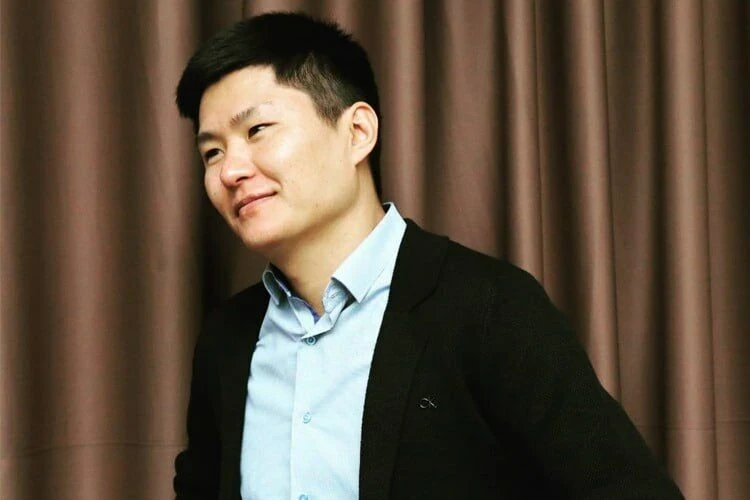
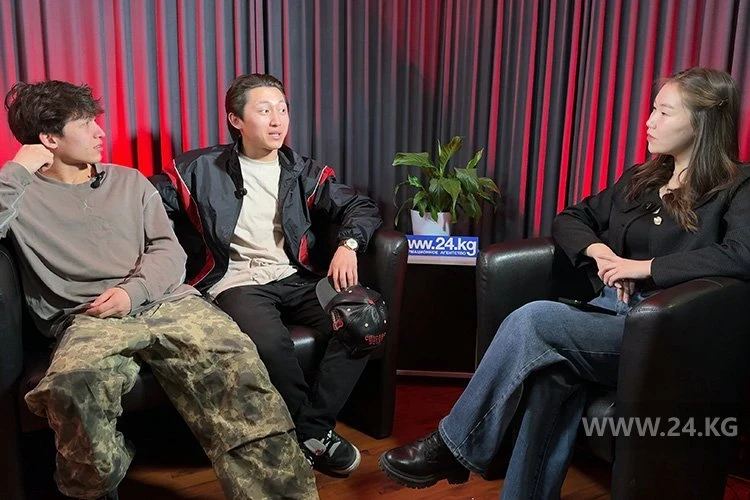
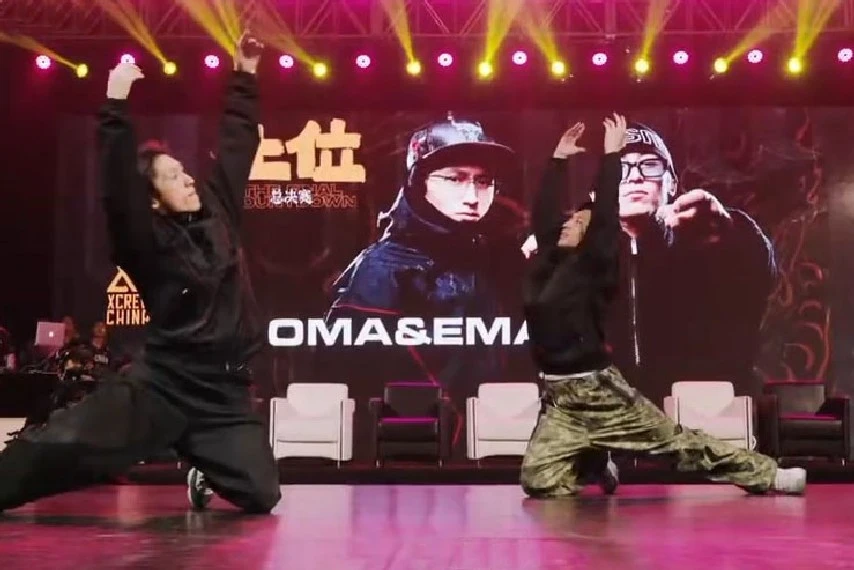
The dance duo of twins Omur and Emir Asanbekov, known as Oma & Ema Twins, began their journey in the world of dance inspired by the Step Up film series. Initially, they performed in underground venues in Bishkek, and today their successes include semifinals in world championships and the prestigious World of Dance stage in Los Angeles, where they triumphed over legendary dancers.
Photo 24.kg
In an interview with 24.kg, the twins shared their impressions of dance, talked about their first steps in the field, how France became a significant place for them, as well as the reasons for their disqualification in competitions in Italy and what is lacking in the dance culture of Kyrgyzstan.
— Where shall we start? How can you be distinguished?
Oma: Probably by our hairstyles.
Ema: Yes, sometimes people confuse us, and sometimes they don’t. If we are dressed the same, mistakes happen more often. But those who have known us for a long time can tell us apart easily.
— How did dance enter your life?
Oma: The inspiration came from the movies.
Ema: We watched Step Up and realized that there are dancers in Kyrgyzstan too.
Oma: Gradually, we began to find like-minded people, watch videos, and dance together. It brought us together.
— Who started dancing first?
Ema: We started together.
Oma: Yes, there wasn’t one who started earlier. It all happened simultaneously.
— So you performed as a duo from the very beginning?
Ema: Yes, it happened naturally. At that time, there was a huge wave of interest in dance: Step Up, "Battle of the Year", various teams and performances. We understood that we were not the only ones passionate about it.
Ema: In our childhood, there were guys around us who also inspired us to dance. This created an atmosphere of belief that dance is real, and you can live by it.
— What did you start with?
Oma: We started with choreography, with ready-made numbers and shows.
Ema: We had a team called Will B, where it all began. We performed on stage; it was more of a show.
Oma: Then we ended up in another studio in Bishkek, where the atmosphere was completely different. It was a basement with an underground vibe, and there they danced not choreographed numbers, but what came from within.
Improvisation is when movements arise spontaneously, without prior preparation.
Ema
Oma: That’s what hooked us: the atmosphere, the people, the battles, the improvisation. It became our true passion.
— What is the strength of your duo?
Ema: In our love for dance and the desire to create together.
Oma: There are team dancers and solo dancers, but there aren’t many duos. We have always been interested in working as a pair, not only in dance but also in music and culture.
Ema: In a team, everyone dances synchronously, while in solo, it’s one person. In a duo, we have something of our own; we can be harmonious even without synchronization.
Sometimes one of us improvises, and the other just picks it up, or vice versa. Without prior agreements.
Oma
Ema: People don’t always understand that we can feel each other, even without preparation. One starts, the other picks it up — it’s hard to explain.
Oma: It happens naturally, without a clear plan.
— Do you have a special connection?
Ema: Yes, we do, but sometimes we still have to prepare numbers.
Oma: So that the audience doesn’t think everything happens by chance. It varies, but the main thing is that we are genuinely interested in what we do.
Ema: And we always have debates.
— Do you have a ritual before going on stage?
Oma: Yes, it’s faith in God. Faith in something greater.
Ema: We understand that it’s important to remain humble and not take all the credit for ourselves. There is strength in that.
— In which countries have you performed?
Ema: We started with local battles, participating in small competitions to gain experience and become known.
Oma: Then we went to Russia to learn and share our knowledge. We stayed there for over four years, working and performing.
Ema: In Kyrgyzstan, there was a selection, the victory in which allowed us to perform in Paris. We won, and after that, we began to be invited to other countries.
Oma: That’s how we ended up in America and Los Angeles, where we performed four times as headliners at World of Dance, known throughout the dance community.
Ema: The main thing is that we continue to be invited, and we keep traveling, sharing our experience with others.
Oma: We also perform in China, where we showcase our culture, including national elements like kara jorgo. People are interested in the new.
— How does the audience abroad differ from ours?
Ema: The people there are more liberated and don’t judge as much.
There is no pressure like "this is normal for men, and this is for women." Creativity is perceived much more freely.
Oma
Ema: And this applies not only to men but also to women, who also face judgment. In Europe and America, very different people dance, including girls in hijabs, and it doesn’t shock anyone. It’s just creativity.
Oma: Art should be accessible in all its forms — in music, painting, and dance. It’s important to understand your purpose and not get hung up on wealth. The main thing is to know why you do it and keep moving forward.
— Do you feel support in Kyrgyzstan?
Ema: Support is split 50/50. There are those who support and those who don’t.
Oma: We used to react more strongly to this; now we take it more calmly. It’s also part of our journey.
Ema: We love and respect this culture despite the difficulties.
— What is lacking in the dance industry of Kyrgyzstan?
Oma: More collaborations with various events. The main thing is that dance should more often be combined with other fields.
Ema: Dancers should broaden their horizons, showing dance not only as hip-hop but also as culture and art. More choreographic ideas and experiments are needed.
It’s also important for people to realize the prospects of dance. Many still ask, "Is this useful? Can you make money from it?" But you need to live in the moment and seize your chance.
Oma
Ema: If we succeeded, then others can too. It’s not just about international trips but also about building connections and exchanging experiences.
Oma: Winning isn’t always important. The main thing is to leave a mark in the hearts of the audience and young dancers. Even if you didn’t win, you are remembered for inspiring.
Ema: This creates a name in the culture. People start inviting you to judge, conduct master classes. Yes, at first, it may be modest amounts, but with experience, they grow.
— Is anything changing for the better in Kyrgyzstan?
Oma: Yes, there are changes. The dance culture wasn’t supported as much before, but now it’s noticeable.
Ema: The Ministry of Culture is starting to provide support, and that’s a good sign. Society is also beginning to realize the importance of dance culture.
Oma: It seems that people are starting to understand that dance is connected with youth, movement, and development.
— What competition left the biggest impression on you?
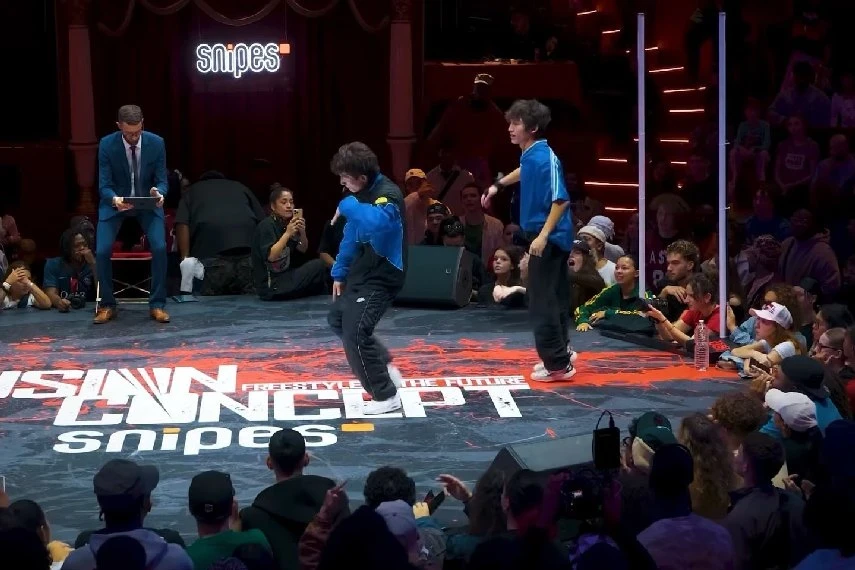
Oma: Fusion Concept in Paris. It’s a unique place.
Ema: Every competition is like a part of a movie, but France left a particularly strong impression.
Oma: In Kyrgyzstan, we feel at home — everything is familiar and close. In France, the attitude towards creativity is completely different; it is highly valued here.
Ema: There, people can just come up and say, "You’re awesome!" We really miss that in Kyrgyzstan and Kazakhstan.
Oma: Our people are often reserved, perhaps due to pride or envy. This hinders the dancer's personality from unfolding. People need kind words and support for development.
Ema: In France, even the most famous dancers remain simple and accessible — it’s inspiring.
— Have there been moments when you met your idols?
Oma: Yes, it’s a very strong feeling. We grew up being inspired by them, and then we found ourselves on the same stage.
Ema: At one of the Fusion Concepts, one of the dancers we grew up watching was giving us tips backstage. It’s incredible when your idol tells you what to do.
— What do you feel on stage during a battle?
Oma: The first battle at Fusion Concept was like a brain shutdown. We immersed ourselves in the flow. This state is akin to what athletes experience in boxing or UFC. When you go out, it’s like the gates open — and you start doing movements you’ve never done before.
Ema: In those moments, everything around disappears; only the music and you remain. You delve into the dance, and then, when you finish, you hear the audience's reaction.
Oma: It’s an incredible feeling.
— What would you say to those who consider dance a trivial pursuit?
Ema: Many, when they hear "dance," immediately think of TikTok.
Oma: In reality, it’s something more than just entertainment — it’s a combination of sport and creative self-expression. That’s why we chose dance.
About significant victories
Oma: At Fusion Concept, we surpassed many famous dancers.
Ema: For example, Slim Boogie, who has become an idol for many. This is a popping style. Also Yaya from Los Angeles. We defeated them.
— Do you currently have a busy international schedule?
Oma: Yes, we have good news. We recently participated in the world championship Juste Debout 2×2.
Ema: Unfortunately, we didn’t win, but we reached the semifinals.
Oma: Then we went to a championship in Italy.
Ema: And fortunately, we won. After that, we went to Amsterdam, where we also reached the semifinals. Another important moment — in China, one of us won in Beijing. On May 22, we have another flight, including to Palermo.
Oma: Our goal is to win as many championships as possible on behalf of Kyrgyzstan. This is our way of showing that hip-hop culture is not just entertainment but also an educational and developmental scene.
— You mentioned disqualification. What happened?
Ema: It happened in Italy. There is a rule there: you cannot do more than two prepared numbers — routine.
Oma: At the beginning, I went on stage, and he just joined me. It wasn’t prepared in advance.
Ema: That was my mistake.
Oma: The host thought it was already a routine.
Ema: In the second round, we did the only prepared performance, understanding that it would be the only one for us.
Oma: However, the host decided that this was also a routine and stopped the music.
Ema: The judges, by the way, were unhappy, and the atmosphere soured. A 30-minute break was announced, and many dancers left.
Oma: What happened, happened. We continue to move forward. Next year will be even more successful.
Ema: We really had chances to win, and we felt we could reach the finals.
— Do you consider yourselves the best in Kyrgyzstan?
Oma: We don’t want to think of ourselves that way.
Ema: It’s more important for us to move forward, grow, and represent Kyrgyzstan at a worthy level.
— What would you advise young dancers in Kyrgyzstan?
Oma: There are prospects, and they are huge. It’s not just about trips abroad but also about development, connections, and culture.
Ema: If we succeeded, then others can too. The main thing is not to be afraid to try and to love what you do.
Oma: Even if you didn’t win, you can inspire someone. That’s sometimes more important than any award.
Reference 24.kg
OMA & EMA — a dance duo from Kyrgyzstan. They perform under the name Oma Ema Twins, and their style includes street dance, freestyle, and hip-hop battles.
Among their achievements are the semifinals of the world championship Fusion Concept Festival in Paris, victories in the national selection Fusion Concept Kyrgyzstan, three-time championship at Fusion Concept Bishkek Qualifier, two-time victory at Gorilla Style Wars in Almaty, and first places at tournaments Just a Battle, KG StreetFest, and Top Tournament in Moscow. They have performed in France, Kazakhstan, Russia, the USA, participated in World of Dance in Los Angeles, and in the show "Dances" on TNT.