Journalists 24.kg spoke with representatives of the Ministry of Internal Affairs of the Kyrgyz Republic, who shared their work experiences, love for the profession, and how modern technologies contribute to solving crimes and finding missing persons.
Women and the Safety of Bishkek
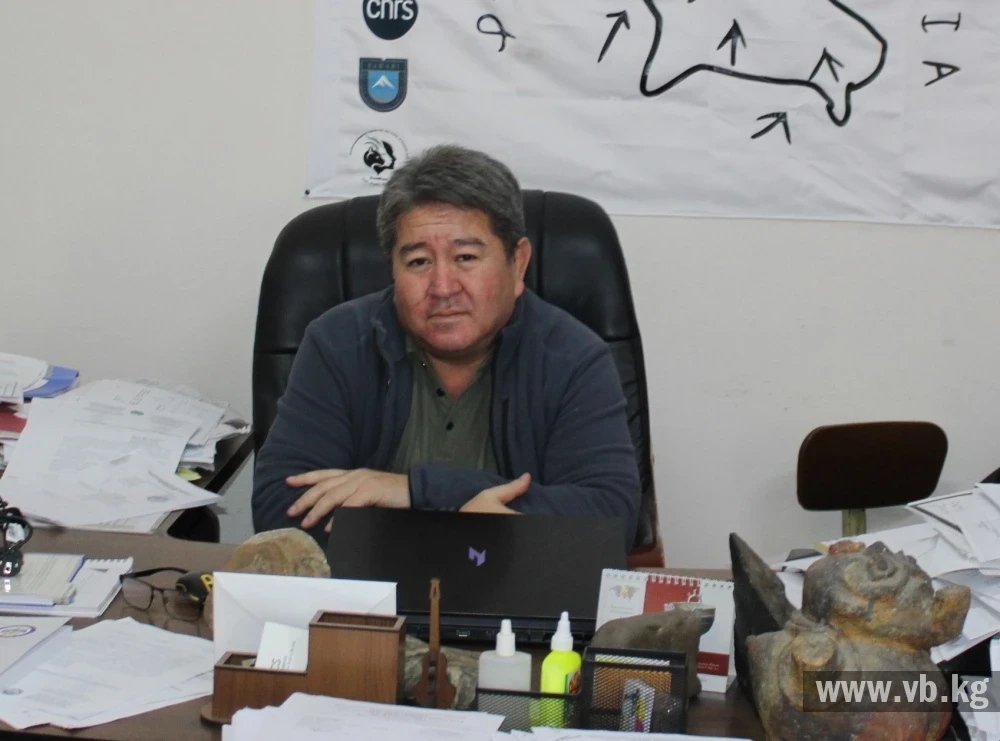
Among such units is the situational center of the public safety service of the Bishkek City Police Department, which monitors the safety of the capital around the clock. The deputy head of the center, police lieutenant colonel Gulnara Sharshenalieva, noted that about 90% of the staff are women.
They are characterized by diligence and attentiveness, which allows them to notice even the smallest details. Where men may overlook something, women often see everything down to the last detail.
Gulnara Sharshenalieva
In Bishkek, there are approximately a thousand cameras in the "Safe City" system, placed on streets, near schools, and kindergartens. These cameras not only help solve crimes but also prevent them, as well as facilitate the quicker search for missing children.
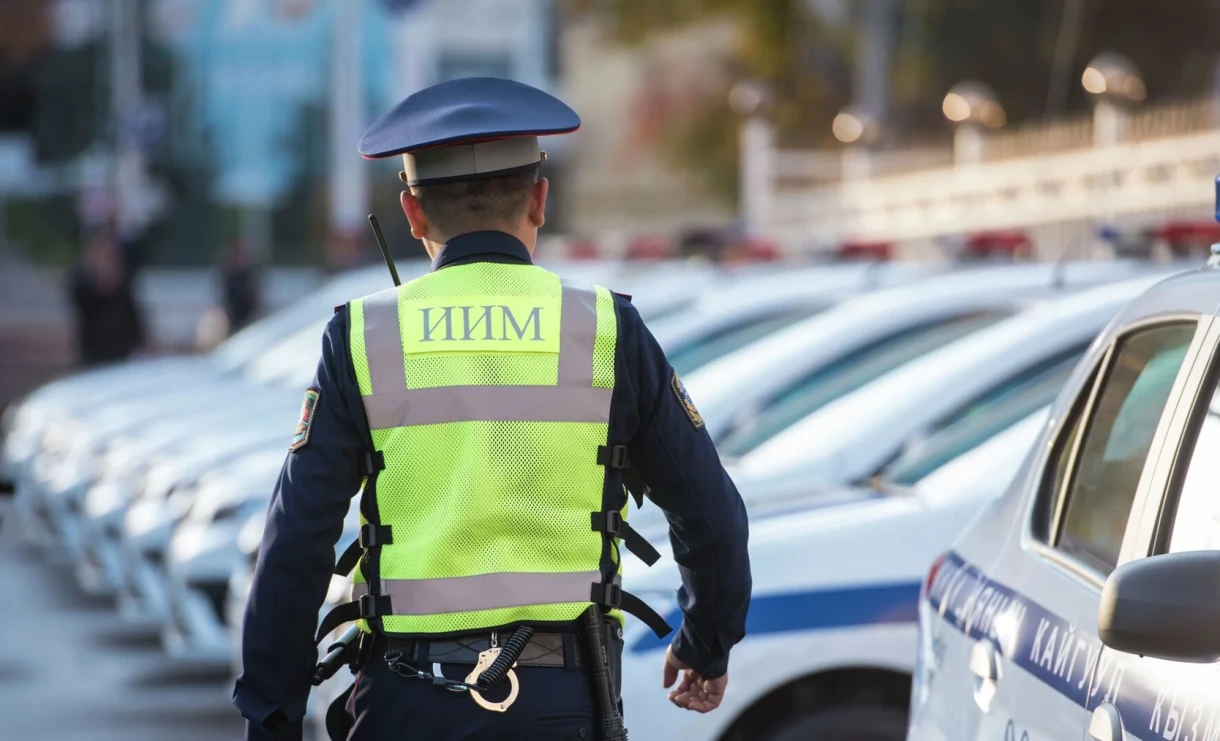
The structure of the situational center includes monitoring groups and the 102 service, which work closely together. The staff of the first group constantly monitor what is happening in the city and immediately inform the 102 service about offenses. This data is recorded in an electronic log, after which the nearest crew is dispatched to the scene.
Every day, the 102 service processes more than 2,000 calls, of which about 800 concern specific offenses.
Digital technologies significantly facilitate the coordination of patrol work, allowing them to track their movements in real-time using heat maps.
According to Gulnara Sharshenalieva, the implementation of such systems has significantly increased the crime clearance rate, as it allows officers to analyze camera recordings and reconstruct the sequence of events.
Nurgul Isakova: Path to the Police
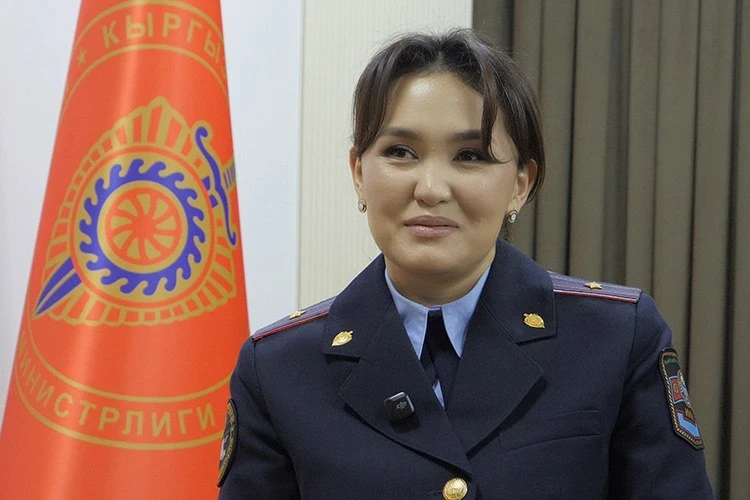
Caring for the safety of citizens, police workers like Major Nurgul Isakova, a mother of three, have been working in the field of juvenile rights protection for 17 years. The situational center greatly simplifies her work.
Nurgul shared what inspired her to become a police officer, how she balances service and motherhood, and her feelings when she manages to return a child to their family.
— What prompted you to choose the police?
— I dreamed of working in law enforcement since childhood. My choice is largely influenced by family history: my grandfather became one of the first police officers in Kyrgyzstan, and I decided to follow in his footsteps.
As a child, I interacted more with boys; we created our own "army" and played soldiers. Instead of dolls, I read detective stories about Sherlock Holmes; I have always been interested in investigations.
— Do you remember your grandfather?
— Unfortunately, no. But my mother often talks about his service, about how he fought against the Basmachi. His photographs are kept in the Ministry of Internal Affairs museum, and one of the schools in the Kadamjai district is named after him.
— How difficult do you think it is for a woman to work in the police?
— It is not easy. We often have to prove our competence. You need to have a strong character and be resilient to stress. But overall, the service is difficult for everyone, regardless of gender. We perform the same tasks and bear the same responsibilities.
— How do you manage to balance work and motherhood?
— It is difficult but possible. The key is discipline. There are days when I come home tired from work, but I try not to show it. When I get home, I switch to the role of wife and mother, not bringing work problems home.
Preventing Crimes Among Youth
— Tell us about your duties at work.
— I supervise the work of juvenile inspection in Bishkek. Our unit has 134 employees. We coordinate their work, provide methodological assistance, and monitor the correctness of preventive measures.
We also regularly meet with representatives of state bodies and municipal services at the city level.
— How do your raids go?
— Usually, we conduct them several times a month, trying to ensure the safety of children, especially at night. We warn parents that children should not be left outside without adult supervision.
During Ramadan, children often sing "jaramazan," and this tradition sometimes leads to begging. We communicate with parents, and in cases of repeated violations, we impose fines.
— Is it true that children find it easier to talk to female officers?
— Yes, there are more women in our department. Children feel their softness and see a maternal figure, so they are more willing to engage.
— What are you proud of in your service?
— That our work protects children. We help identify minors who find themselves in difficult life situations. Our goal is not just to solve crimes but to prevent them.
The main task of the juvenile inspection is to ensure that a child does not end up on the wrong path.
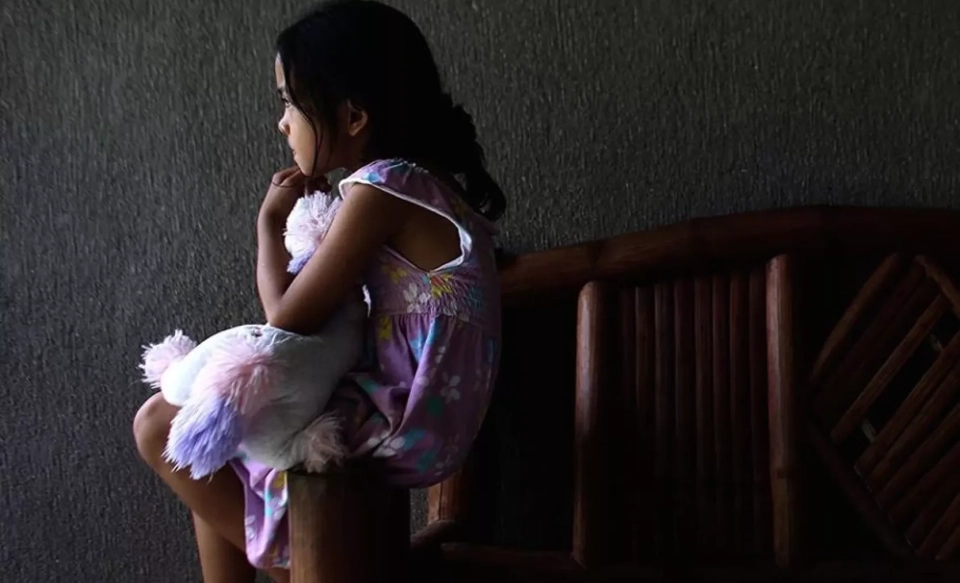
Unfortunately, sometimes we have to take children from families where they are subjected to violence. Often, the reason for running away is precisely violence.
Photo 24.kg. Police Major Nurgul Isakova
— Where do children who often run away from home go?
— They are temporarily placed in special centers where psychologists and social educators work. We also work with parents and relatives.
Our main goal is to return the child to the family, as they should grow up in it. The commission for juvenile affairs provides a period of three to six months for preventive work with the family.
— What qualities does a female leader in your system need?
— She must be fair, principled, and moderately strict.
— How does your typical day go?
— In the morning, I send my children to school, and then I go to work. After service, I prepare dinner, talk to the children about their day, and help with homework.
— How do you manage to combine all this?
— Honestly, sometimes I don't manage (laughs). It can be tough, but when you love your job, you strive to find a balance between different roles.
Work as a Calling
— After 17 years of service, have you learned to control your emotions?
— I try not to show my worries, but inside I process a lot. I have children, and I constantly think about what it is like for a child to be alone on the street without support.
— Is there a case that particularly stuck with you?
— Yes, it happened at the beginning of my service. In one of the schools, there were complaints about a third-grade boy who constantly ran away from home.
The boy's mother was in prison, and he was raised by his grandmother, sister, and brother. He often stole, did not listen, and was punished for it. Moreover, his grandmother sometimes abused alcohol.
We even temporarily took him from the family because he did not want to return. I tried to support him, took him to clubs, and soon discovered that he was interested in chess. I enrolled him in a section.
Later, the boy was placed in a foster family, and he was lucky – the family turned out to be wonderful. A few years later, I met him again and did not recognize him – a tall, well-mannered young man who studies well. He reconciled with his biological family and now communicates with them.
— Do you keep in touch with the children you worked with?
— Sometimes. That boy even came to my house and stayed overnight when he was afraid to return.
— Do modern technologies help in finding children?
— Yes, very much. The "Safe City" system operates in Bishkek, which allows tracking children's movements. Cameras are installed near schools and on the streets of the city.
The system recognizes faces, which significantly simplifies the search.
If it used to take days, now a child can be found in one to two hours.
— Where do children most often go?
— It varies. Some go to relatives, while others wander in parks or shopping centers. Over time, employees develop a professional intuition that allows them to quickly determine where to search for a child.
— At what age do children most often run away from home?
— Previously, this mainly happened at 15-16 years old. Unfortunately, this age has decreased; sometimes children run away at 10 years old.
— Does female intuition help in your work?
— Yes, often. When communicating with children, they may leave things unsaid or lie. You intuitively feel where the truth is and where it is not.
March 8 and Its Significance
— What do you consider important in raising children?
— Love, care, trust, and discipline.
— What is the secret of your energy?
— Inner discipline. I try to find time for sports, which helps a lot. I also attend training sessions and constantly improve my qualifications.
— How do you manage to switch off after work?
— I used to not know how to do this and brought work worries home, which negatively affected my family. Now I try to avoid discussing work at home, although sometimes calls come in.
— What does the holiday of March 8 mean to you?
— It is primarily a celebration of spring. In my childhood, my dad always brought my mom a bucket of tulips, and these flowers are what I associate with March 8.
On this beautiful spring day, I want to wish all women happiness, peace, love for themselves, and the achievement of all their goals!