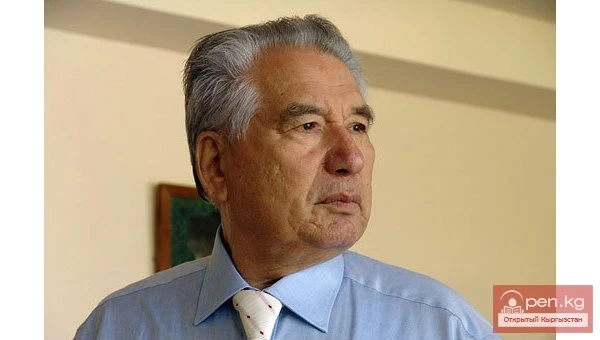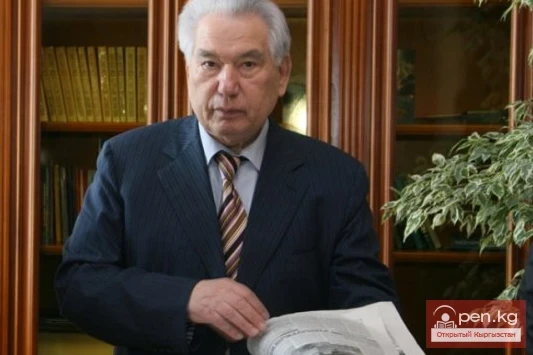
On December 12, we celebrate the birthday of the outstanding writer of the 20th century, Chingiz Aitmatov. His humanistic philosophy, devotion to his native language, and deep sense of justice are an important part of our country's spiritual heritage.
In anticipation of this date, we spoke with Ashyrbek Takishovich Kurmanov, the chairman of the Issyk-Ata District Court of the Chui Region. He successfully combines his professional duties as a judge with a love for literature.
Our interlocutor believes that Aitmatov holds special significance for shaping the legal consciousness and moral culture of modern society. His works inspire people to engage in honest reflection, recognize the value of justice, and appreciate the importance of spiritual values relevant to the Kyrgyz people.
- Ashyrbek Takishovich, how do you assess the influence of Chingiz Aitmatov's work on our society?
- The literary heritage of Chingiz Aitmatov is not just a collection of books; it is the spiritual foundation of our society. His works instill in readers a sense of responsibility, respect for people and nature—qualities essential for forming not only culture but also legal consciousness.
Aitmatov brought Kyrgyz literature to the international level, demonstrating the richness of our language and the depth of our culture. His heroes face moral choices and challenges, teaching us to contemplate human obligations. I see a connection here with justice: both literature and the judiciary ultimately strive for one goal—the pursuit of truth and the affirmation of justice.
On National Literature Day, we once again turn to Aitmatov as an author capable of uniting humanism and wisdom within a single artistic space. His works remain the foundation of moral and legal guidelines for the citizens of Kyrgyzstan.
- Recently, there has been much discussion about legal culture. Do you think literature can influence citizens' attitudes toward laws and justice?
- Absolutely. I am convinced that the understanding of justice begins not only in classrooms but also in a person's soul. And the soul is shaped by literature, especially Kyrgyz classics created by those who could speak the truth in simple and powerful words.
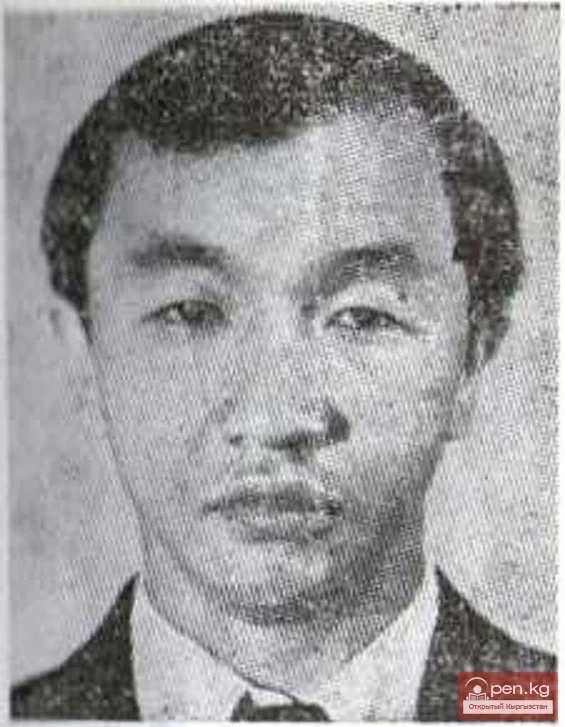
For example, the work of Alykul Osmonov is not just poetry; it is a conversation with conscience. He wrote about dignity and inner honesty, about the moral laws that live in each of us. This inner law becomes the foundation for respect for the laws of the state.
Reading Alykul, we understand that justice is not just a court decision but a state of the soul, honesty before oneself and others. Therefore, I always tell young people: if you want to serve the law, start with literature. It teaches us to think, feel, and empathize, which is necessary to become good lawyers and honest citizens.
The works of Alykul Osmonov, Chingiz Aitmatov, Toktogul Satylganov, and Moldokul are our moral guidelines. They form the basis of personality development, and I believe it is important for every Kyrgyzstani, regardless of profession, to occasionally turn to these works. Literature reminds us that justice is not an abstraction but a daily choice.
- Alykul Osmonov, who passed away before reaching 36, left behind a spiritual legacy that inspires not only his generation but also those that follow. Today, on the day of his memory, December 12, we remember this outstanding individual.
- The extraordinary power of his talent was also manifested in his translation work. He adapted Pushkin's "Eugene Onegin" and the works of Shakespeare into Kyrgyz, significantly broadening the horizons of our literature.
He also endured many life trials. It is known that, being demanding of himself, he sometimes destroyed his manuscripts in pursuit of the perfection of poetic expression.
- Ashyrbek Takishovich, I know that you also write. Tell us about your creative work and how you manage to combine your duties as a judge with writing?
- Yes, at various times I have created small works. In recent years, some of them have been published on social media and have found their readers. When I see that my works gather many views, it brings me satisfaction. Every person has some talent, but developing it requires effort.
When I was in school, literature particularly attracted me. I read many works of fiction, including Russian classics such as Tolstoy, Dostoevsky, and Chekhov, as well as world authors like Márquez and London. The works of Kyrgyz writers also inspired me, and with each book I read, my interest only grew.
I have been working as a judge for many years, and it is a huge responsibility. Although I often lack time for myself, I continue to write, albeit not as frequently. My works reflect the complex fates of my ancestors. I strive to artistically describe the stories of the places where they lived and their connection to historical events, gathering materials and talking to people.
In our work, we encounter many fates. When I worked in the prosecutor's office, I published some cases to warn about violations of the law and convey an educational message. Judicial activity requires a lot of written work, and judicial acts must be written in clear language accessible to people seeking justice. Therefore, I believe that my work as a judge and my interest in literature complement each other.