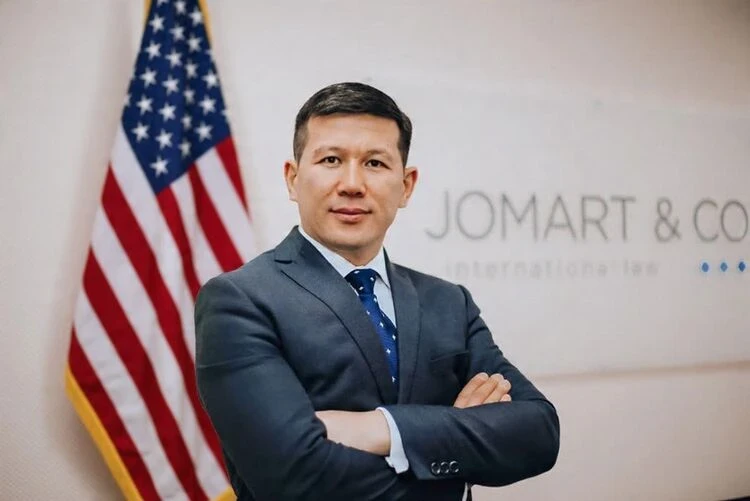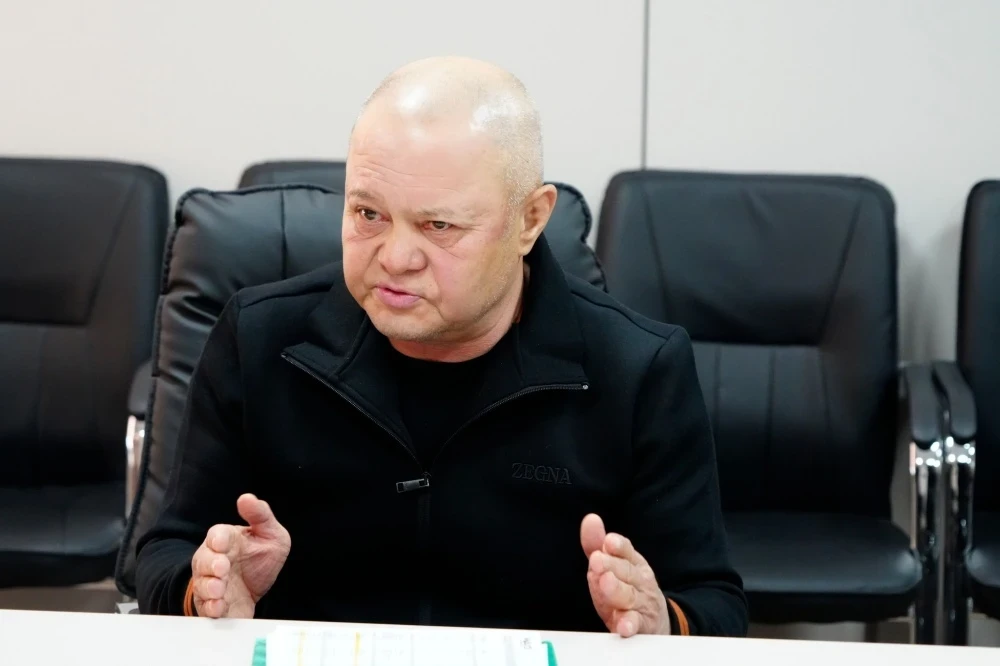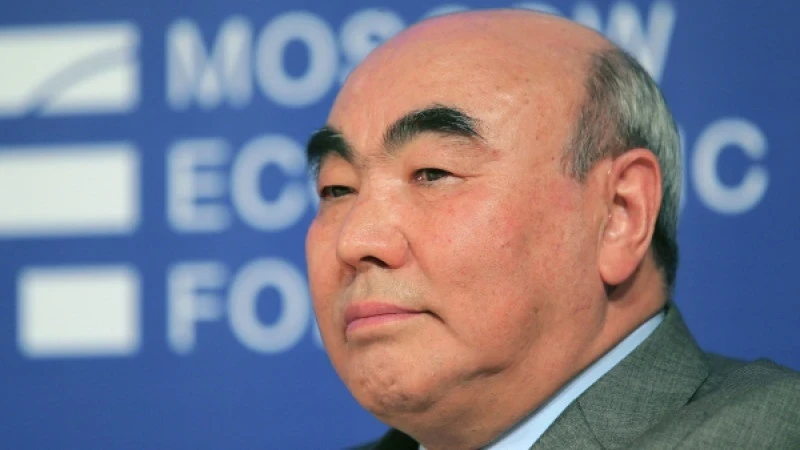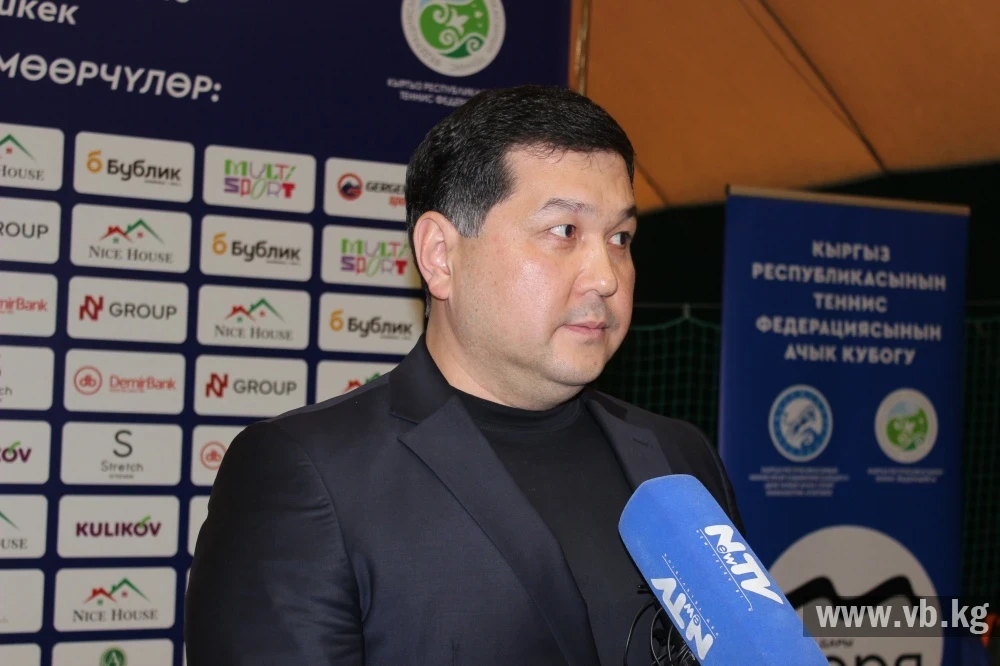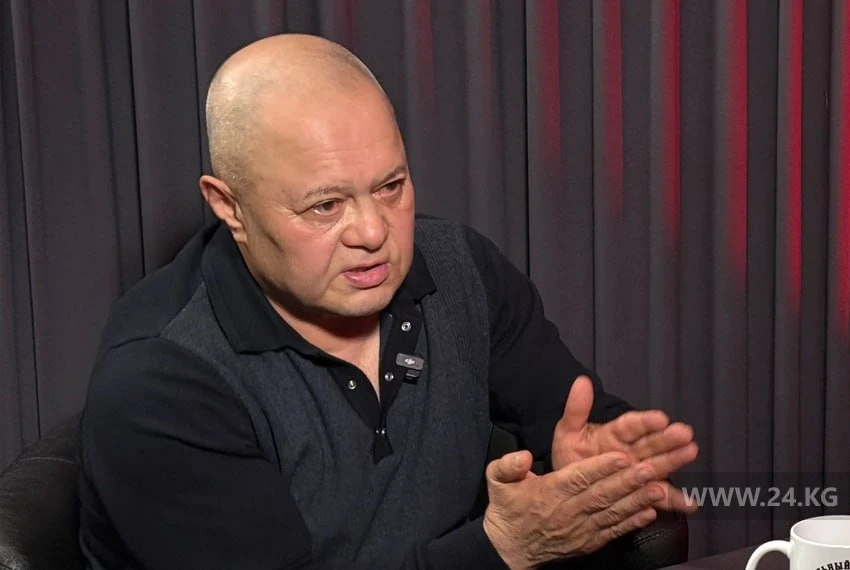
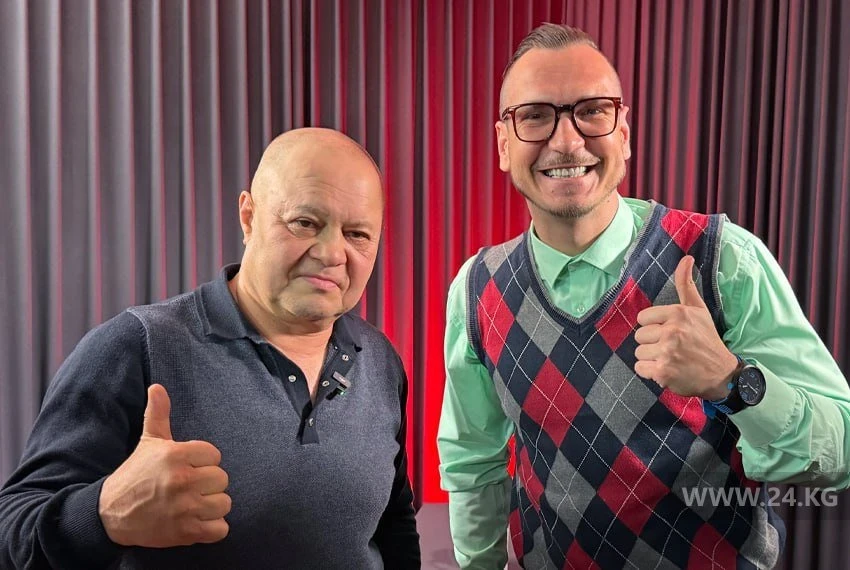
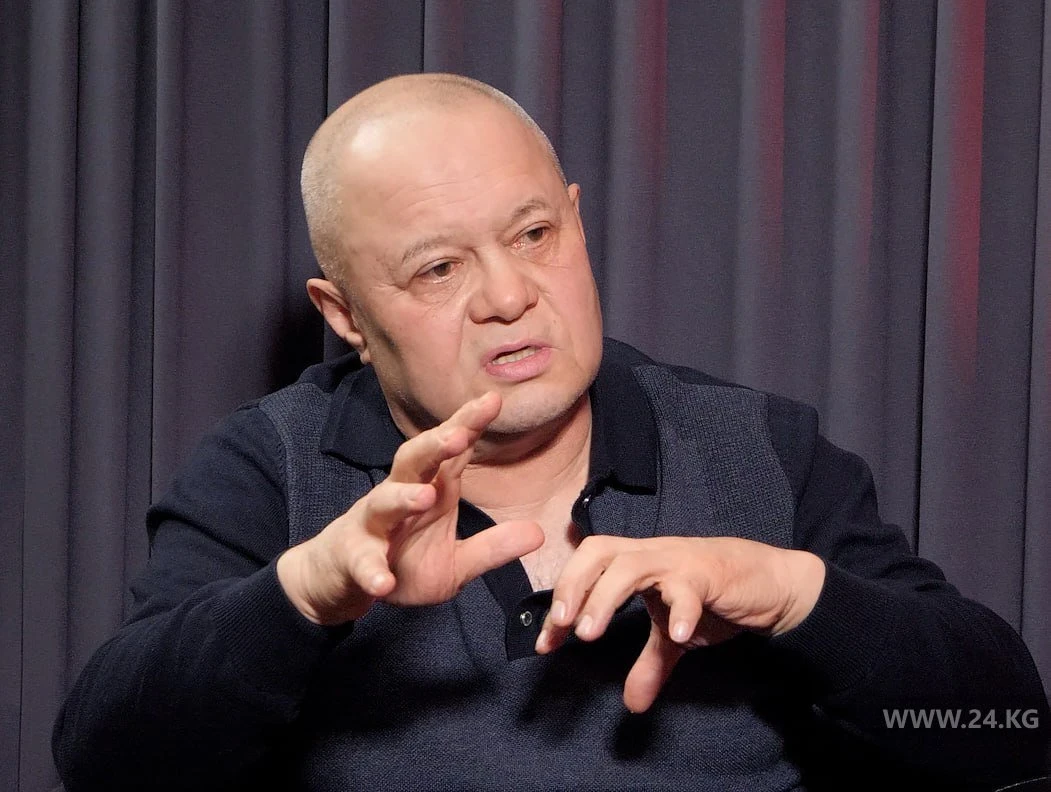
Alexander Voinov, former deputy of the Jogorku Kenesh and president of the Kickboxing Federation, shared his views on the development of sports in Kyrgyzstan in an exclusive interview for the project cast24.kg. He recalled the bright tournaments of the 90s, discussed the problems of bureaucracy and lost champions, as well as the opportunities that are opening up for the country on its way to becoming the "mecca of martial arts".
Photo 24.kg
— Alexander Khusainovich, thank you for your time. You rarely give interviews. Why did you decide to talk now?
— I didn’t think about it. There are important things that have long needed to be said out loud. Not so much about myself, but about the situation in sports.
— What can you say about the state of kickboxing in Kyrgyzstan today? Previously, tournaments attracted a large number of spectators; has interest really waned?
— We have achieved the goal that was set. Our tournaments and events were aimed at attracting people. It worked: parents began to actively enroll their children in sections, and young people also came to the gyms.
Many of those who started with us now work in various fields — in business, government structures, and law enforcement agencies. But their roots still remain in martial arts. Some became champions, while others simply became strong and healthy individuals, and that is also important.
— What was the secret to the popularity of those tournaments?
— We initially knew that without a high level of skill, no decorations would save the situation. The audience in Kyrgyzstan understands martial arts. If the level is low, they simply won’t come to the competitions. At that time, the level of athletes was very high, and this created idols. I saw how flyers with our fighters hung on the walls in homes. That is the real indicator: when children hang pictures of fighters on the wall, not just Hollywood stars.
Moreover, we hit the right time: the fashion for martial arts was at its peak. We offered a quality sports product.
— Recently, MMA has become very popular. Should kickboxing be revived to the level it was before?
— There’s no need to artificially inflate anything. We did the right thing by first ensuring quality and then quantity. Otherwise, nothing will work.
Today there are many types of sports and sections. The main thing is not to interfere with children making their choices and to create good conditions for that. Competition between clubs and coaches will lead to interest. If there is no competition, there will be no growth, either within the country or beyond its borders.
— You often talk about the lack of sports management. Can you give an example of what you mean?
— A simple but vivid example is the World Kickboxing Championship in Bishkek in 1999.
We "snatched" the right to host this championship thanks to our successes in international competitions, where our team ranked among the top three. We won the World Cup, ahead of Russia.
The opening and closing took place at the old Spartak Stadium, which had almost 30,000 seats. Tickets sold well because we invited many stars: a famous host, singers, and a show ballet. People wanted to come not just for the fights, but for an event.
There was a risk: October, open stadium — what to do if it rains or snows? I was worried that people might not come, and we would have to refund the money.
By chance, I saw an advertisement for the insurance company "London Bishkek." I went to the director and suggested insuring the championship. He didn’t understand at first, but I explained that if the weather didn’t allow people to come, he would have to refund the ticket money, and in return, he would get advertising and status at this event.
The director of the insurance company came to the stadium, assessed ticket sales — almost all were sold. A thirty-thousand-seat stadium!
In the end, we signed a contract. The opening took place in wonderful weather, as did the closing. The director of the insurance company sat in the stands and was pleased that no one needed to pay anything.
However, the day after the final fights, it snowed and the wind picked up.
This is what sports management is about: the ability to see risks, count money, find partners, and turn sports into a professionally managed process rather than a spontaneous celebration. Unfortunately, we still do not have a proper system for training sports managers. Without this, we won’t get far.
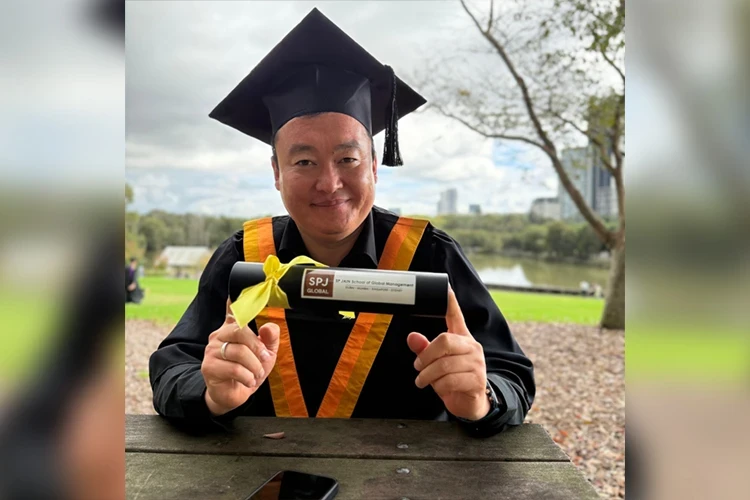
— One of your students, Eduard Temirov, who trains the Indonesian national team, claims that Kyrgyzstan can become the "mecca of martial arts." Do you agree with his opinion?
— In some ways, yes. We have unique natural conditions and a real "thirst for sports."
Look at the gyms — they are full, and this applies not only to kickboxing but also to other sports. People want to engage, and that is a huge plus.
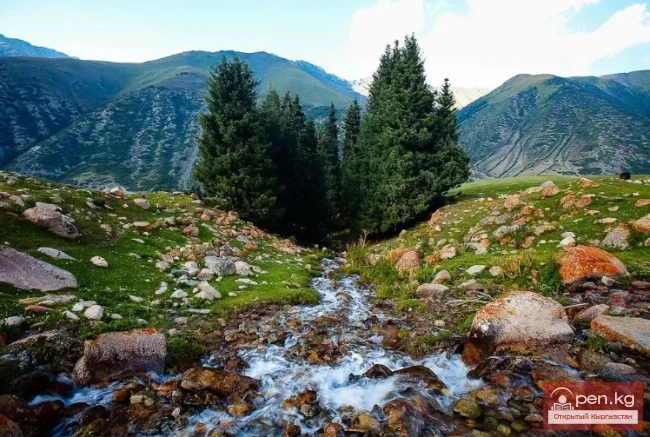
The first factor is our mid-mountain region. Modern anti-doping agencies recommend that athletes replace pharmacology with training in the mountains. The mid-mountain region is a kind of "permitted doping": hypoxia, increased lung capacity, adaptation of the body to loads.
We have places at an altitude of 1600-1700 meters, a mild climate, up to 300 sunny days a year, and minimal precipitation. It’s no surprise that athletes from other countries choose our mountains for training.
The Olympic champion in athletics Baranovsky trained with us for the Athens Games and became an Olympic champion with a record.
Alexander Voinov
At the Olympics in Beijing, he himself said that he would like to train in Kyrgyzstan again, but the team was sent elsewhere, and the result was worse. This is a vivid example of the work of our mountains.
The second factor is the traditions of martial arts and wrestling. In a country where there are no huge sports budgets, we still show serious results. This is a pattern, not a coincidence: competition between regions, schools, and coaches.
The third factor is that we have the opportunity to hold major tournaments.
If we have our own heroes, our own stars, and our own stories, then there is no need to constantly travel abroad for competitions. We can gather a team of professionals from television, the internet, and advertising and create real intrigue from a sports event that interests the whole country and the diaspora.
— If you were offered to head the Ministry of Sports or a large government structure, would you agree?
— No. Those are different goals. If it’s about stirring up interest and changing the motivation system, that can be done without the minister's chair.
Government bodies in our country operate within a bureaucratic system: plans, reports, a unified sports classification, and compliance with standards. This is important, but there is almost no motivation in this process.
In the USA, for example, there is no Ministry of Sports at all. There are athletic commissions in each state that regulate rules, safety, and licenses. If an athlete gets knocked out, by law, he is not allowed to enter the ring for six months, and can only train after three months. Violation of these rules punishes the organizer, and he loses his license. That’s it: either you know the rules and value your license, or you don’t work.
In our country, many don’t even know what is allowed and what is not.
The system needs to be revised: less bureaucracy, more responsibility, and real motivation.
— You often compare our sports with American ones. What is the main difference?
— In the USA, coaches and the entire team around the athlete are high-paying professions. It’s not the government that pays, but parents, clubs, sponsors, and advertising companies. When an athlete reaches the top level, their main income is not the prize for a medal, but advertising contracts.
An American Olympic champion may not receive any money from the government at all. But at home, they are awaited with multi-million dollar advertising agreements.
Our athlete will receive about 150-200 thousand soms. The difference is significant.
Around the name of Mike Tyson, it is estimated that about 9 billion dollars were earned. Not by him personally, but by the entire industry around him. This is the result of proper positioning and competent work of managers and promoters.
Alexander Voinov
Our business often fears becoming a sponsor, thinking: "If we get noticed, we will be questioned about the origin of our money." This kills the normal partnership between "sports and business".
— You have talked a lot about the importance of medicine, dietetics, and massage therapists. How critical is the lack of such specialists?
— Critical. And this applies not only to martial arts. When I performed under contract in the USA, I always had a team around me: a doctor, a psychologist, a dietitian, a massage therapist, a manager, and a driver.
All of them were included in my fee: it was clear who earned how much and what they were responsible for. The higher my fee, the more the team earned. Everyone had a direct interest in me being healthy and ready for competitions.
In Kyrgyzstan, we tried to create a similar system around "Hermes-Profi":
- psychologist;
- chef who cooked for our fighters for 11 years;
- massage therapists;
- managers for international contacts.
The system worked while we had world-class fighters. Then the generation finished their careers, and physically I could no longer maintain that volume. The average strike of a good fighter is 130-150 kilograms. During training, he delivers dozens of such strikes to pads, and there are several fighters. As a result, through your hands, there is a striking load of about 15 tons per session. Every day. At some point, the body simply says "stop".
But the main thing is that we lack science. There are no laboratories that conduct multiparametric analyses, track blood condition, and adaptation to loads.
Alexander Voinov
The Japanese know exactly how many "transport cells" an athlete has and where they risk losing form.
We often send an athlete to the main event "blindly". We spent the budget on training and equipment, and then explain: "Well, sports is sports." This is wrong. If you received government money, you are obliged to do everything possible to achieve the maximum result. And the coach needs science behind them.
— To summarize, what does Kyrgyz sports lack today?
— To be frank, it’s not people that are lacking, but meaning for them.
Yes, we need:
- doctors;
- dietetics;
- psychologists;
- rehabilitation specialists;
- specialized chefs;
- qualified coaches and managers.
But they will only appear when this profession becomes interesting and well-paid.
A person will not go to study to become a sports dietitian if they will subsequently earn less than a coach in a school gym. They will simply choose another field.
There are two options: either integrate them into the motivation system around the athlete so that they also have a share in the fee, as in professional sports, or provide normal state salaries and invest in science and medical support.
Kazakhstan, for example, spent hundreds of millions of dollars preparing for one Olympics. In essence, one gold medal cost them 300 million. The question is: can’t we build a system for the same money that will yield not one medal, but ten? I advocate a systematic approach.
— You suggested reviving the Soviet GTO system, but in a modern format. How should this work?
— The idea is simple. Every parent is interested in knowing the real level of physical development of their child. Not "by feelings," but by specific tests. The system can be as simple and inexpensive as possible: only a pull-up bar, a platform, a stopwatch, a tape measure, and a notebook are needed. No expensive equipment.
Example: in the 1st grade, the task is for the child to do at least one pull-up by the end of the year.
If at the beginning of the year out of ten children six can do pull-ups and four cannot, then the physical education teacher has a specific goal: to get those four to do at least one pull-up. In the 2nd grade — two pull-ups, in the 3rd — three. And so on until the 10th grade.
At the same time — running, jumping, squatting, for girls — hanging on the bar, not pull-ups. Everything is measurable and clear.
If today, conditionally, 80 percent of children in the 1st grade are physically healthy, and by graduation only 20 percent remain healthy, then the physical education system has failed. We need to ensure that at least 80 percent remain healthy until the 11th grade.
With such a system, we can graduate the most physically developed children in the world from schools. This is the foundation of a healthy nation. And no huge budgets are needed: just will and simple organization.
— You went through the difficult 90s and mentioned that strong athletes were often drawn into crime. What was really happening then?
— Business in the 90s was half criminal. The state received almost nothing; chaos and violence reigned.
A businessman trying to survive in such conditions needed physical strength by his side. Athletes took risks for easy money.
Alexander Voinov
I lost my students. Ali Porsukov was shot just because he did not obey. He wanted to become a world champion and was striving for that goal. Before his death, he told his father: "I will become a world champion." However, he was killed before he could realize his potential.
My motivation was always different: I promised the guys real fights in America, participation in big shows, contracts. And we delivered. We traveled the USA back and forth, were in Japan and Paris. The guys knew: if Voinov said it, then it would happen. This was an alternative motivation system, opposite to crime.
Now, fortunately, the situation has improved significantly. This topic can be said to be closed. But the lessons of those years should not be forgotten.
— You talk a lot about character. What is more important — character or skill?
— These things are inseparable, like the right and left hand: one helps the other. You cannot develop only skill without character and vice versa.
Sometimes coaches yell at their students: "Break him! Break him!" I don’t understand these words. The boy’s mother is sitting in the hall, and the coach says: "Break her son." What is the mother’s state at that moment? For such things, licenses should be revoked.
Character is formed not in the ring. It is formed in everyday life, discipline, training, and little things — even in how a child takes care of their shoes or helps their friends.
In the ring, all that is required from an athlete is to show skill and enjoy their work. There is no need to impose unnecessary aggression on them and demand "to be a man." It is necessary to awaken in them the desire to beautifully and correctly perform what they can do.
— Modern youth is very different from the generation of the 90s. What hinders the formation of a healthy nation and interest in sports?
— Besides everything mentioned above, there is one more important point: children closely observe the lives of their coaches. They notice what kind of phone they have, what car they arrive in, and how they are dressed.
If a coach arrives on foot or in an old car, many teenagers perceive him as a "loser."
Alexander Voinov
They quickly label him. To keep a child in sports, a coach must not only be a professional but also have at least minimal support: a decent salary and working conditions. Otherwise, he will leave for the private sector to feed his family.
— You said that Kyrgyz athletes are characterized by patriotism. Can you give an example?
— In the late 90s, we flew to the World Cup in Hungary via Moscow. Before our flight, a plane from Tajikistan arrived, and one of the passengers was found with drugs. After that, we were checked especially thoroughly.
There is a "sign" in sports: the flag is carried by the one who is confident in victory. Usually, one or two people take the flag to raise it on the podium.
During the inspection, I was surprised to notice that the flag of Kyrgyzstan was in every bag. Every fighter was confident that they would need the flag on the podium. They were not flying to "see Europe," but to win the World Cup.
For me, that is true patriotism: an inner confidence in victory and a readiness to raise the flag of one’s country.
— You are often asked why your ideas have not yet been implemented. Is it that they don’t listen, don’t invite, or have you become disillusioned?
— To be honest, in many ways it is our fault. We do not actively formulate proposals and convey them to those who make decisions.
When I was an advisor to the president on sports, I was heard. But if an idea gets into the system, it often gets distorted or doesn’t reach at all. That’s even worse.
Now, many sports facilities are indeed being built in the republic. This is good. But at the same time, it is necessary to "build" personnel, managers, doctors, and a scientific base.
If we can clearly formulate proposals and convey them to the leadership, I am confident we will be heard. The country has a unique chance to restart the sports system.
— Lastly, who is the greatest athlete in history for you? Do you have an idol?
— It’s hard for me to name one name. The more you understand sports, the less inclined you are to "deify" people. Sometimes you admire the results, and then you learn about the athlete’s life and become disappointed. For me, not only medals are important, but also human qualities and what a person does outside the arena. For example, Jackie Chan — he performed incredible stunts without safety nets and directed a large part of his fortune to charity. How can you not respect him? He is a person with a capital letter.
As for Kyrgyz athletes, I can name many names. I won’t single out my students to avoid appearing biased. But, for example, Akjol Mahmudov is an obvious idol for many children. He positions himself correctly and is an example.
Aysuluu Tynybekova — a person with whom it is easy to talk to understand what a strong personality she is, and only then do you remember her titles.
Alexander Voinov
Our boxers who have won medals are modest and decent guys with a strong sense of patriotism.
It is important for me to see in an athlete not only a champion but also a person. Only then will respect be genuine.
— Alexander Khusainovich, thank you for this conversation and for everything you have done and continue to do for Kyrgyz sports.
— Thank you for the opportunity to raise these topics. I really hope that our ideas will not remain just words and that we can be useful to our country.