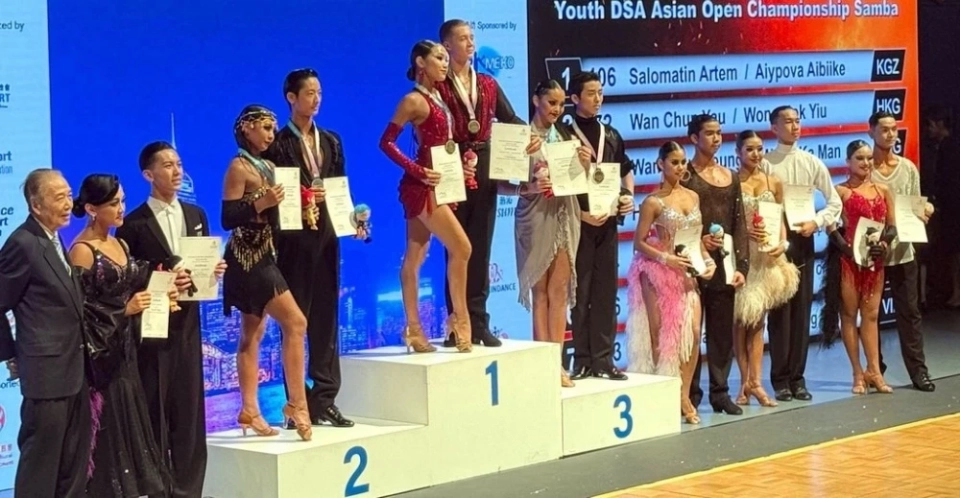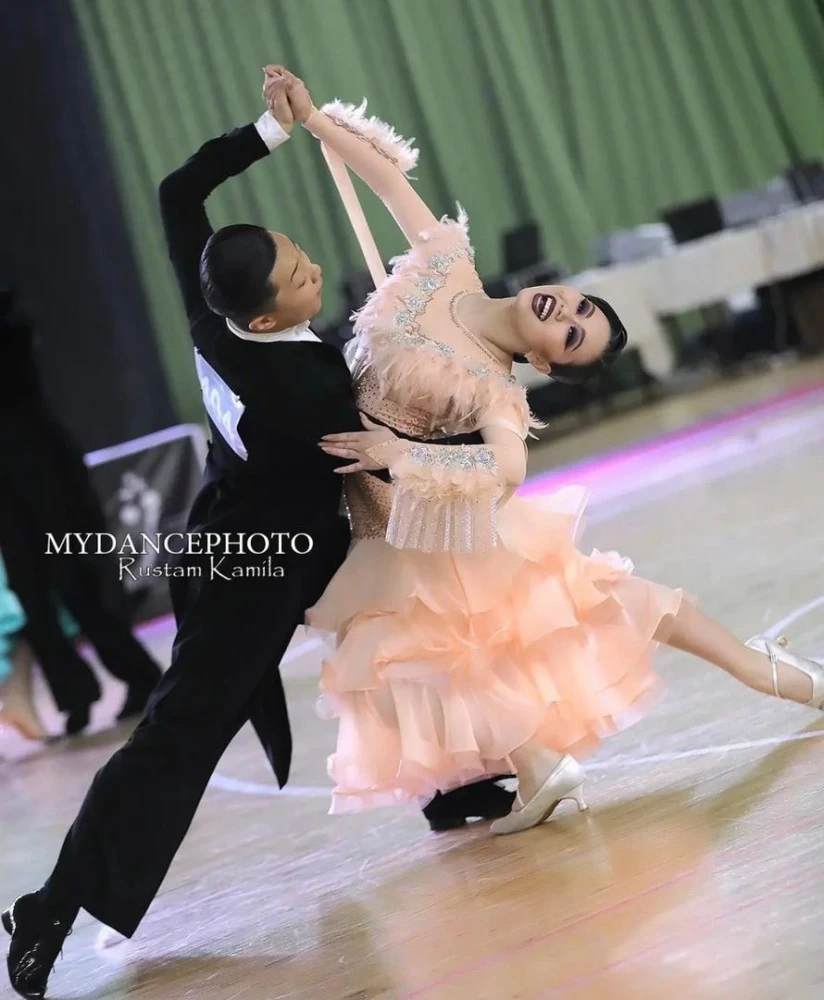
Aibiyke Nurlanova, a 19-year-old dancer from Bishkek, began practicing competitive ballroom dancing in her childhood. Over the years of active performances, she has managed to win numerous medals and trophies, become a winner of international tournaments, and reach the finals of the world championship. She is also a prize winner of the championships of Kyrgyzstan and currently holds the title of candidate for master of sports with representation for master of sports. Dancing remains an integral part of her life alongside her studies.
During an interview with Aibiyke, we discussed the beginning of her journey in dance, the influence of mentors, her most significant achievements, and building a career in this field.
- How did you start dancing ballroom?
When I was five years old, my mother took me to a competitive ballroom dancing event. I was amazed by the beautiful outfits and the passion of the participants for victory. This inspired me, and soon I began attending a dance studio. Over time, dancing became my choice, and I enthusiastically attended training sessions, realizing that I wanted to develop my skills in this area. I made many friends, and we became like one big family, with dancing and competitions becoming part of my everyday existence.
- Where do you train?
- I train at the Alexis dance studio under the guidance of Alexey Kibkalo and Tatyana Kogadey, who instilled in me a love for dance. It is a serious school that shapes real champions. From childhood, we were taught discipline and regular training, which over time became the foundation of my success.
- When did you realize that ballroom dancing was a serious sport for you?
- It came gradually, with the increasing number of tournaments and trips. When you start participating in competitions and feel responsible for your partner and coach, you no longer perceive it as just a hobby. It requires a serious approach and constant work on oneself.
- Which of your achievements do you consider the most significant?
- I have accumulated many awards, and they are all dear to me. Among the most memorable is the first place at the Baltic Cup in Riga, which was an important moment in my career. I also won tournaments in Kazakhstan, Russia, and Turkey, and participated in the world championship in Romania. The finals of the world championship in Astana at Silk Way was one of the key events for me. Thanks to dancing, I was able to travel the world and get to know different cultures, which is also important for my sports growth.
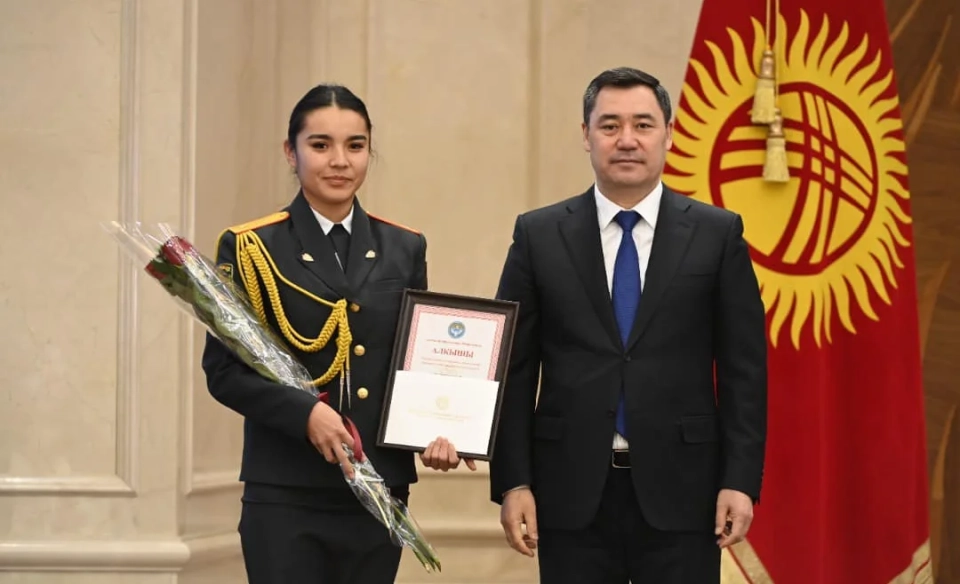
At the level of Kyrgyzstan, I have become the national champion several times and already have representation for the title of master of sports.
- Have you always danced in a pair?
- Yes, throughout my career, I have worked in a pair. Previously, the solo direction was not developed, and we focused specifically on pair dancing. I had three partners, and each time changing partners required rebuilding relationships and coordinating the pace of work. With my last partner, Howard Cholponbaev, we achieved significant success, including reaching the finals of the world championship and winning national championships.
- What do you do besides dancing?
Currently, I am studying at the university for my bachelor's degree, and education is very important to me. I try to combine my studies and training. Dancing has taught me discipline since childhood.
In addition, I teach mathematics and spend time with friends.
- How does dancing affect your studies?
It changes a lot! It shapes discipline and endurance, teaches focus. I graduated from the Physics and Mathematics School-Lyceum No. 61 and scored 213 points on the ORT and 1530 on the SAT. Thanks to my tight schedule, I learned to value time and plan my days in advance. Sports help me strive for the best results everywhere—be it studies, competitions, or university.
- Have you received offers to study abroad?
Yes, I was accepted into several international universities on scholarships. There were various opportunities, but I decided to continue my studies and dance in Kyrgyzstan.
- Do you plan to connect your life with dancing in the future?
Definitely, I want to continue dancing and developing in sports. I am confident that I have the potential to grow as an athlete, and in the future, I consider the possibility of coaching.
- How costly is ballroom dancing?
It is quite an expensive sport. Costs include costumes, specialized shoes, hairstyles, makeup, and travel to tournaments. For girls, expenses are generally higher than for boys.
A lot depends on the enthusiasm of the coaches who accompany us to competitions and invest effort into our success.
- What do you feel before stepping onto the dance floor?
- I feel the support of the audience, my coach, and the younger generation.
Nervousness is always present, even with experience. But over time, I learned to control it. When the music starts, I focus on the program, technique, and interaction with my partner. At that moment, it is important to be as focused as possible and demonstrate what has been practiced in training.
The journey in the world of competitive ballroom dancing requires time and effort. Aibiyke Nurlanova's story demonstrates that behind every achievement lie regular training, the support of coaches and family, and the ability to cope with pressures and competitions. This is what shapes a high level athlete.