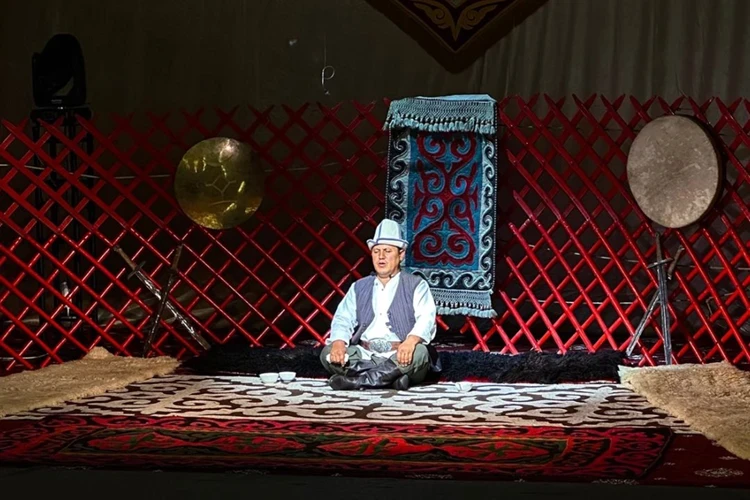
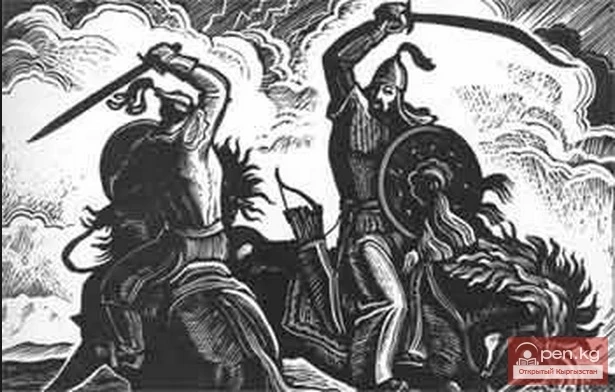
In the book, the biographies of the manaschy are arranged in chronological order, each accompanied by verses from the manaschy Rysbay Isakov. Nurbek Talantbekov emphasizes that manaschy is not only an art or entertainment but also an important part of culture passed down from generation to generation.
How many names of manaschy have been preserved in the memory of the people, and how many have gone unnoticed by history? Even today, the public cannot accurately say how many manaschy exist.
According to the author, their task is to continue introducing the people to the names of manaschy, and the list will be updated in future editions.
As part of the AKIpress column "The History of Manaschy," we introduce readers to the life and work of each of the 150 manaschy.
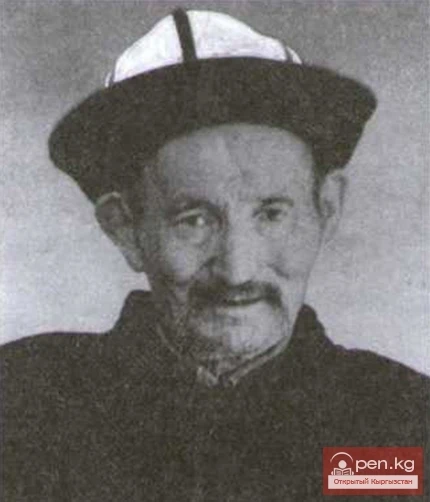
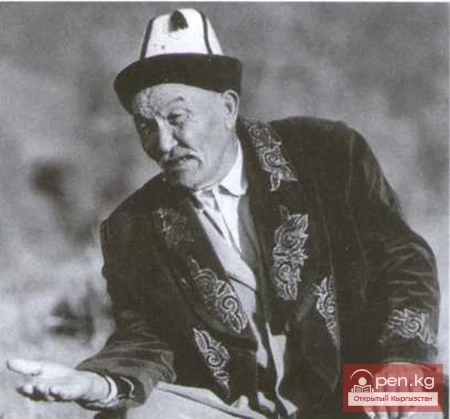
Sayaqbay Karala uulu (1894-1971)
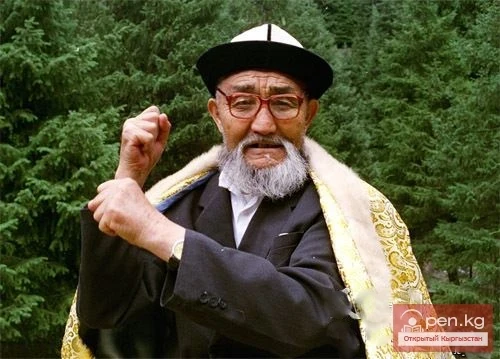
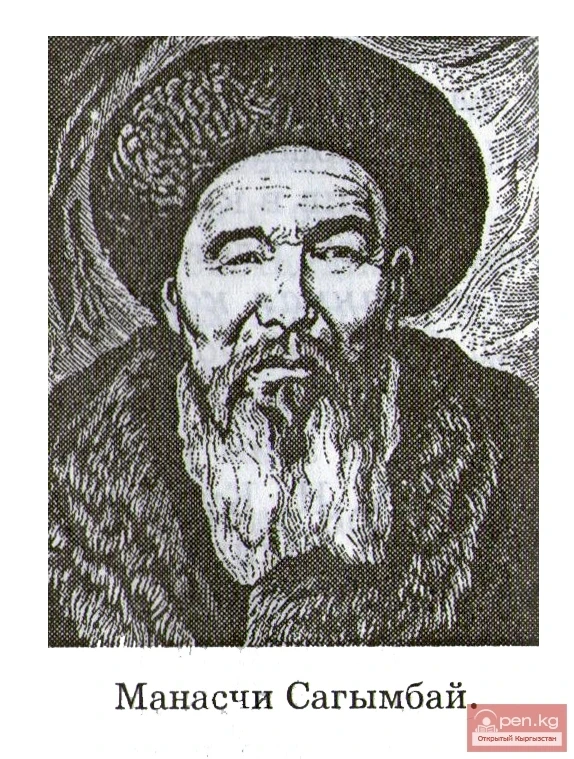
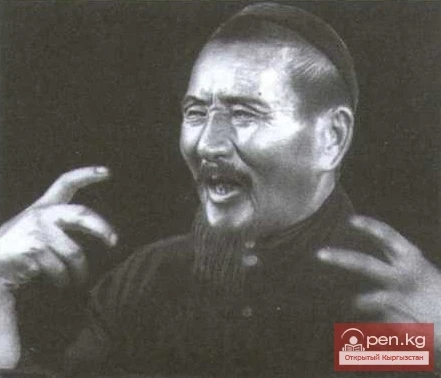
Sayaqbay Karala uulu is a symbol of the Kyrgyz people and the greatest manaschy who glorified the epic "Manas" with his talent. His homeland is the village of Ak-Ölön in the Semiz-Bel district, and he passed away in Frunze (now Bishkek). His ancestors came from the Sarykalpak clan, a branch of the Bughu tribe.
Among all existing versions of "Manas," the version by Sayaqbay Karala uulu is the most complete and accurate, covering all key events of the epic. This version differs from others, such as those recorded by Shapak, Bagysh, Moldobasan, Togolok Moldo, and Mambet, in that it includes the entire trilogy.
The biographical data collected by his son-in-law Sultan gaz Kasy mov and his student Shaabay Azizov confirm that Sayaqbay's ancestors lived in the village of Maman, which was part of the Turgun district (now Ak-Suu).
According to legend, the clan of Kenenbay, from the Sarykalpaks, began a dispute with Kydyr ake over the right to govern and eventually had to seek a new place to live, which led him to the Ton district. These lands were then occupied by the Aлагөз-Kaba people, representatives of the Sayaq clan. Kenenbay, dividing these lands, founded Semiz-Bel and governed it for several years. He had a son named Sayaqbay — "the descendant born among the Sayaqs."
From childhood, Sayaqbay showed outstanding abilities, encouraged by his grandmother Dakish, a connoisseur of folk culture, from whom he first heard the epic "Er Töshtük." She often recited fragments of "Manas" to him:
“Berenjini jamynyp,
Beregi,
Beejin miner mal eken.
Karypchyny salynyp,
Kangai miner mal eken.
Degenime kӧn, burut,
Maanikerdі berbesen,
Tartkan etin jebeimin.
Andai-mandai debeymin,
Ashynga apaty kılabyn,
Aydap jürüp kyramyn”
These lines became an important part of his inner world and had a tremendous influence on his development as a manaschy.
At the age of ten, his father Karala, experiencing hardship, decided to move the family to Zhydyk-Kol, but as a result of an accident, Karala sold his children, Sayaqbay and Tölöbay, into slavery to a wealthy Dungan named Zhykı. The children spent three years in slavery, and when Karala realized that poverty left him no choice, he moved the family to Semiz-Bel, where he started a new life.
The first revelation Sayaqbay received at the age of fourteen when he told Tenti Orokchiev about it:
“I began to tell 'Manas,' but soon, abandoning it, I started to sing:
‘Maraldai közüng zhyltyl'dap,
Pakhtaday etin bylqyl'dap.
Baranyngdy körgöndö,
Batynbaym jürök zyrpyl'dap.’ This was the beginning of my journey into the world of the epic. One day, I went with Kylzhyr to Orto-Tokoy to sing jaramaazan and earn some money. We earned eighty-five soms. Kylzhyr left me thirty-five soms, and took the rest for himself, saying: ‘I will stop by Karakoo, and you can go home.’ I had a horse named Kulakash, she was fast, and I was galloping on her when I suddenly heard a loud scream. My head almost burst, and I fainted, thinking: ‘This is the very Albars that my brother Balpyk spoke of — the one who torments people.’
When I came to, I found myself in some unusual place. Instead of a stone, I saw a huge yurt, and next to me stood a woman who introduced herself as Kanykey. She offered me food and invited me to try the dishes on the table, but I was shy due to my poverty.
At that moment, I felt that the sounds around me began to fade. Suddenly, a man in a blue cloak appeared before me and said: ‘Will you see those who will be with you? Here is Manas, the great warrior, and here is Almamбет, strong and mighty.’ He blessed me and disappeared.
When Sayaqbay came to, he found himself at a black stone. He was not sure if it was a dream and headed back to the forest. Tying his horse, he noticed a man leading two sheep and bought them with all his money, arranging a sacrifice for the people.
The next morning, upon waking, Sayaqbay discovered that he had become mute. His relatives thought he was crazy, and the children laughed and mocked him. Unable to bear it, he went to an empty field, saying: ‘I have endured a fall among people and in the mountains, but I have survived thanks to Kanykey.’
One night, he dreamed of Almamбет, who said it was time to sacrifice a horse in honor of Manas. Sayaqbay followed his advice, and as a result, his voice returned. He could not stop, and he began to sing, not knowing what exactly. In his songs, the name Manas sounded, and when he began to tell the epic, his father punished him to calm him down.
// State Archive of the KR
At 21, Sayaqbay married the daughter of a wealthy landlord from the lower Issyk-Kul, but his wife, accustomed to luxury, could not adapt to poverty and returned home. Upon learning of this, Sayaqbay's brother, Kenenbay, went with him to Maksyt, the elder of the clan, to resolve the issue. This story was recorded by the manaschy Dölötbek Sydykov:
“Maksyt, hearing the noise from Kenenbay's arrival, came out into the street in a chapan.
— You have never visited us, get down from your horse, be our honored guests, - said Maksyt.
— I came for an important matter. If you wish to resolve it, I will dismount, but if not, I will turn back immediately, - replied Kenenbay.
— I hope it is within my power to solve such a task.
— That’s why I came to you, because you are capable of resolving this.
— Well then, speak.
— I have a stallion, and your mare rejected him, - said Kenenbay.
— What kind of stallion do you have?
— He tells great epics.
— Well then, come into the house. We will discuss the rest over a meal.
Everyone entered the house, and Kenenbay sat in the honored place, while Sayaqbay remained at the threshold. Maksyt suggested that Sayaqbay continue the story, but he interrupted him, pointing out that "Manas" cannot be told while sitting at the threshold. Sayaqbay changed his clothes and continued his tale.
When Sayaqbay began to narrate "Manas," he was absorbed by the story and did not notice when his wife’s father and mother-in-law arrived. Maksyt, noticing this, turned to Sayaqbay's father-in-law, admiring the talent of the young manaschy.
— Why did your daughter reject him? He is, in essence, a man gifted to us by God! Take him home, treat him, and then see him off. If you do not fulfill this, I will compel you to pay a large sum — and this is not negotiable!
Maksyt also advised Sayaqbay: “Remember, do not tell ‘Manas’ sitting low again. The story of the hero should be told with respect, in a high place.”
Sayaqbay spent the night at his father-in-law's, and in the morning returned to his village. A few days later, he remembered Maksyt's words and headed to the northern sayaqs. Meanwhile, Maksyt invited the famous storyteller Dıykanbay to himself, who spent three months with him, teaching him the art of storytelling and traveling through the villages, telling "Manas." Upon returning, Dıykanbay gifted Sayaqbay one of the best horses and a significant sum of money so that he could continue his work.
When his career as a manaschy was just beginning to develop, the Ürkün began. The residents of Issyk-Kul began resettling to Tasek, and the clan of aryk from Semiz-Bel took refuge in Kölüü Sary-Jaz. On the way, Sayaqbay narrowly escaped death at the hands of the commander of the punitive detachment Bychkov but managed to save himself. At this time, the residents of Kölüü, trying to survive, learned that Kydyr ake was protecting his fellow countrymen from the punisher. They decided to visit the village of Turgona, where Kydyr ake lived, and found shelter in Maman. Sayaqbay took a job with the judge Shpilkevich in the Karakol district, where he first heard about the events of the October Revolution.
In 1918, upon the advice of Shpilkevich, he joined the Red Army and began fighting against the White Guards. In 1922 he returned to Maman and began working in agriculture while continuing to tell "Manas" in his spare time. Upon learning of his talent, Kydyr ake decided to train him with one of the best storytellers — Choyuke. Choyuke took Sayaqbay in and taught him the art of storytelling, passing on all his wisdom. After several days of training, he took him to the feast of Maralbay, where Sayaqbay narrated "Manas" before a large gathering, discovering the world of the great epic. He maintained contact with Choyuke until his death in 1925 and always remembered him, emphasizing that Choyuke was like a mighty oak to him, while he himself was merely a branch.
One day, Beyshekan (Sayaqbay's wife), feeling offended, left for her parents' house with their newborn daughter. Sayaqbay decided to go after her, hoping that time would help mend the rift. The locals, already familiar with his fame, said to him: “We will be glad if you tell us the great epic, without requiring us to serve as a son-in-law.” This brought him fame, but his father-in-law was not pleased, stating: “This son-in-law can only talk, and knows nothing else.” Offended, Sayaqbay took his wife and daughter and returned home. That evening, the weather turned sharply worse: the sky darkened, and lightning struck his father-in-law's house, tearing it apart. The people in the village decided that this was a heavenly sign and returned Sayaqbay, allocating him land for housing.
From 1922 to 1930, Sayaqbay was the chairman of the village councils in Yrdyk and Maman. At that time, due to a lack of funds to pay civil servants, he often traveled through the villages, telling "Manas" to earn a living. One day, he met Akylbek, an old storyteller, who admired his talent and said that Sayaqbay was a true master despite his years.
In 1930, at the invitation of scholar Kusein Karasaev, Sayaqbay left his position and went to the capital, Frunze. In his memoirs, he said: “In 1930, when I was still the chairman of the village council, Kusein Karasaev came with a commission from Narcompros: ‘You are a storyteller, you are summoned.’
According to Kusein Karasaev's recollections, in 1929, he, along with colleagues B. Zharkynbaev and O. Mamyrkanov, went on a journey around Issyk-Kul in search of manaschy and semeteychi. They met Jakshylyq, from whom they recorded the epics "Semetey" and "Seitek." Then they met the manaschy Kaidu, who spoke about Sayaqbay, noting his mastery and the hardships he had endured. Kaidu advised Kusein Karasaev to go to Maman, but he could not find Sayaqbay and returned to the capital. The following year, he went again to bring the manaschy to the capital. Kusein recalled that at the suggestion of Kasym Tynystanov, he gathered a group of historians and scholars to listen to Sayaqbay. In the evening, they invited him, and Sayaqbay narrated the epic with great mastery, bringing tears to the eyes of those present. Everyone agreed that a recording of his "Manas" should be made, but due to obstacles, the work was postponed.
In 1935, work began on recording the version of Sayaqbay Karalaev, and by 1937, the epics "Manas" and "Er Töshtük" were recorded. Later, until 1947, the epics "Semetey," "Seitek," and "Kenen" were recorded, totaling 500,553 lines.
In 1936, the Kyrgyz State Philharmonic was founded, and Sayaqbay was accepted as a manaschy, working there until his retirement.
In 1939, he performed an excerpt from "Kanykeydin Taytorunu chapkany" at the decade of Kyrgyz literature and art in Moscow, astonishing Joseph Stalin. Upon his return, he was awarded the title of "People's Artist of the Kyrgyz SSR."
According to folk legends, Sayaqbay could narrate "Manas" for three days and three nights without interruption. He himself said that he only experienced true enjoyment once in his life when he completely told "Manas" and spent twenty-three days in Solton-Sary.
In 1958, work began on the audio recording of the epic by Gaidak Karalaev, which was overseen by the first secretary of the Central Committee of the Communist Party of the Kyrgyz SSR, Iskhak Razzakov. Sound engineer Tursun Uraliev worked on the recording, which was completed after five years and included in the "Golden Fund." Tursun recalled how Sayaqbay was initially against the recording, but his wife persuaded him, and ultimately the recording took place.
In 1961, Sayaqbay Karalaev was invited to the program "El shayyrlary mikrofondu," where his voice was recorded for fourteen hours, which later became part of the anthology "Anthology of Kyrgyz Music."
In the late 1960s, Mambet Bestebayev, the director of the Almaty branch of the Melodiya firm, came to Frunze to record Sayaqbay's voice on a gramophone record while the manaschy was at his daughter's in Balykchy, and they recorded several events while she was absent.
In 1965, Bolot Shamsheev filmed a documentary "Manaschy" about Sayaqbay Karalaev. The director noted that the project was very close to him, despite a lack of funding.
In 1966, Melis Ubukeev filmed a three-part documentary "Sayaqbay," which was later used in the seven-part film "The Great Storyteller," released in 1988. In this film, Chyngyz Aitmatov emphasized the importance of Sayaqbay in preserving the legacy of "Manas."
“The name Karalaev holds immense historical significance for the current generation. We understand that behind this name lies the great epic "Manas," and it is Karalaev who preserves it as a living legend,” said Aitmatov.
In Chyngyz Aitmatov's memoirs, he also mentions how he lived with Sayaqbay in the same house in Frunze, where they had a warm relationship. When guests came, Aitmatov always invited Sayaqbay and his family.
“I was a correspondent for the newspaper "Pravda" in Central Asia. One day, I was tasked with writing an article about Sayaqbay. I went to the elder, consulted with him, and he suggested that I go with him to the collective farm so he could tell "Manas." At the collective farm, we were met with honors, and the people gathered to listen to Sayaqbay. As soon as he began, the sky was overcast with clouds, and a downpour started, but Sayaqbay continued to narrate, oblivious to the bad weather. At that moment, I realized that the power of the epic far exceeds natural disasters, and the people did not leave their places,” recalled Aitmatov.
In 1963, Chyngyz Aitmatov's book "Toolor jana talalardyn povestteri" received the Lenin Prize, and at the award ceremony, Sayaqbay performed "Manas" on stage. Musicologist Orlov, who was among the audience, was amazed by his performance.
Regarding the talent of Sayaqbay Karalaev, the great Kazakh writer Mukhtar Auezov said: “This man is a unique talent, rarely found among Turkic peoples. Compared to him, the Greek Aed and Homers seem like nothing.”
In 1964, during a visit to Kyrgyzstan, the German writer Karl Yakobe-Heinz admired Sayaqbay's mastery, noting how absorbed the audience was in his art.
When Chyngyz Aitmatov headed the Union of Cinematographers, he organized a cultural program for the Minister of Culture of Algeria, Murat Burbu. Instead of offering him an event in the Ala-Archa park, he decided to show him Lake Issyk-Kul and invited Sayaqbay. Despite personal losses, Sayaqbay performed the epic with great mastery. Burbu stated that the oral art of the Kyrgyz people is a living heritage.
Ziyash Bektenov in his book "Memoirs of Contemporaries" described how in 1949 he and Sayaqbay attended the anniversary of the Karelian epic "Kalevala." Sayaqbay became the representative of the Kyrgyz people, gifting them a book about "Manas."
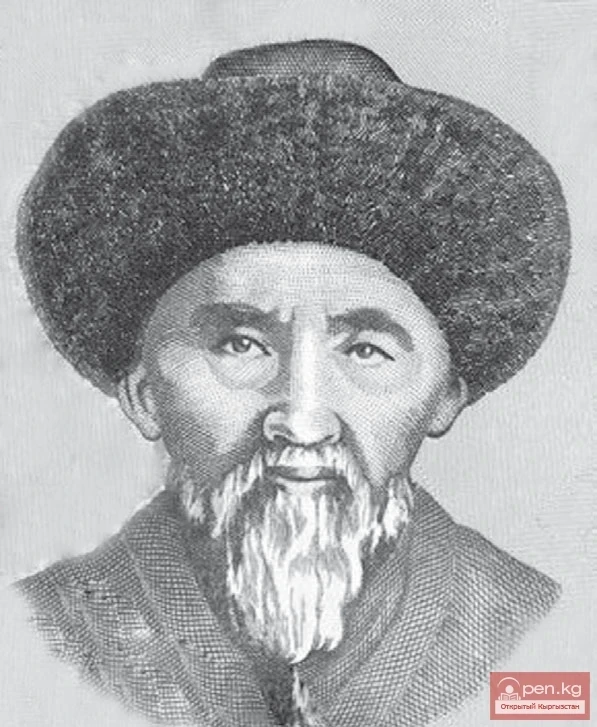
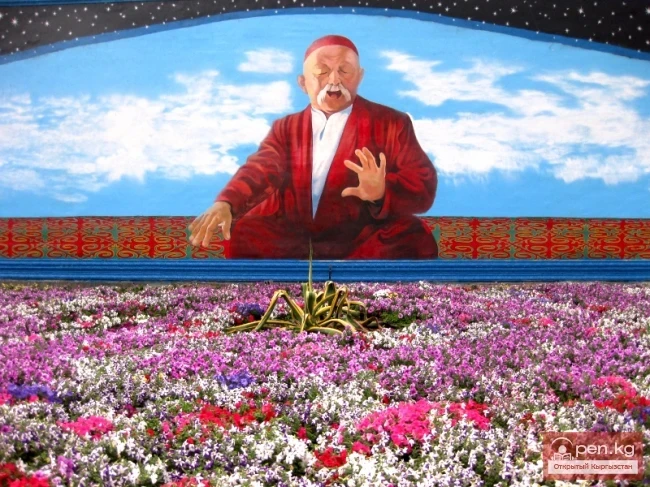
In 1958, the public fund "Sayaqbay manaschy" was created, which organized the 120th anniversary of the manaschy. Over time, the fund became international, and based on Sayaqbay's works, other works of his were collected and published. His memory is immortalized in the names of streets, schools, and monuments, and his image is placed on the 500 som banknote.
Sayaqbay Karalaev left an indelible mark in the history of Kyrgyz culture and remains in the memory of the people as the greatest manaschy, celebrated by Rysbay Isakov in his work "Manaschylar." In his lines, the greatness and significance of Sayaqbay for the Kyrgyz people resonate.