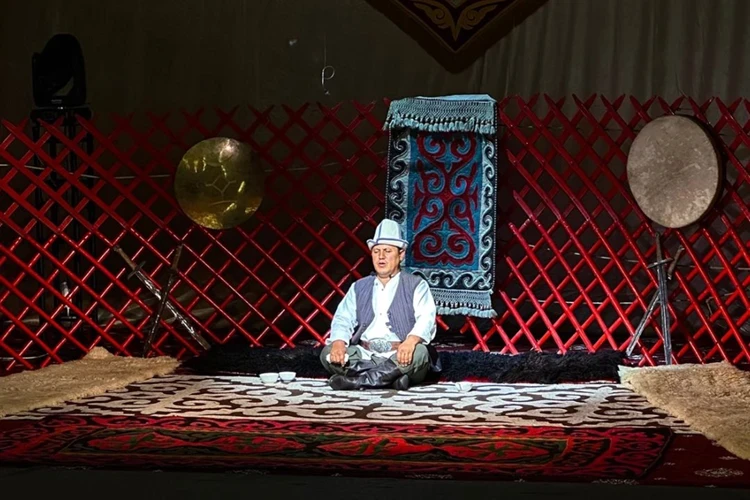
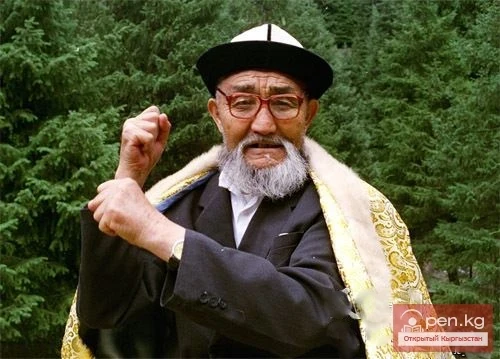
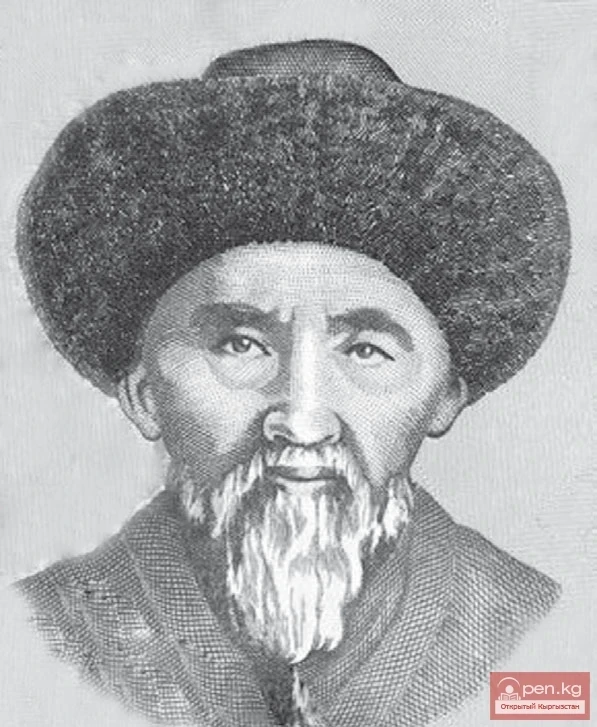
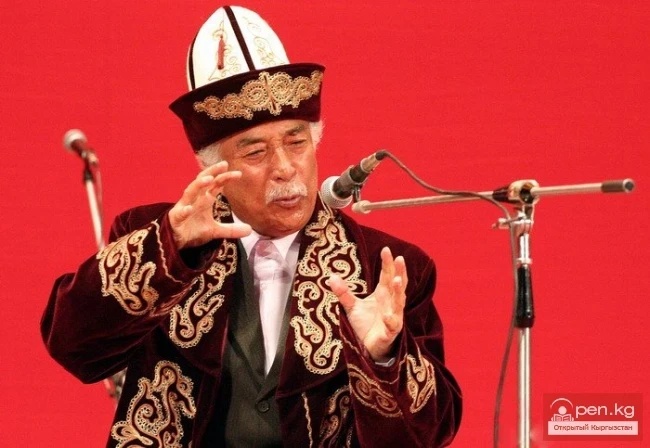
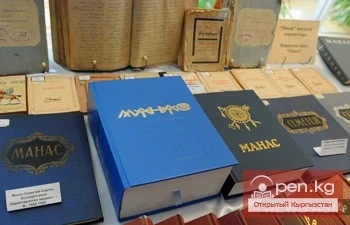
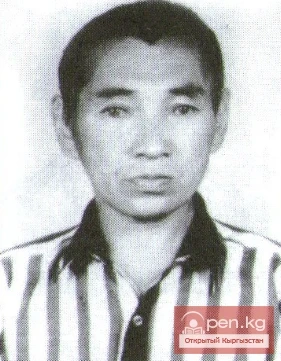
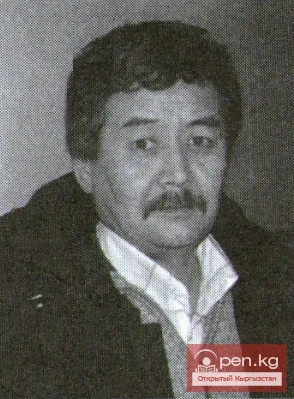
In the book, the manaschy are presented in chronological order, and their stories are supplemented with verses written by the manaschy Rysbay Isakov. Rysbay entered the Guinness Book of Records for recounting the epic "Manas" for 124 hours.
Nurbek Talantbekov noted that manaschy and the art of storytelling are not just a form of entertainment, but something deeper that science has not yet fully explored.
“We understand that the art of manaschy and the epic itself possess a unique power that has left a mark on myths and historical events. The epic inspired heroes to perform feats for the people and the land, and the influence of the words of manaschy cannot be overstated. That is why individuals like Baytik and strong-spirited people like Kydyr Ake took pride in supporting and developing this art,” he added.
The question of how many names of manaschy have survived to our time remains open. The public still does not know the exact number of these masters.
According to the author, the main goal of the book is to preserve and pass on the names of all manaschy to future generations. The list will be updated in the future.
As part of the new section of AKIpress "The History of Manaschy," we will introduce readers to the life and work of each of the 150 manaschy.
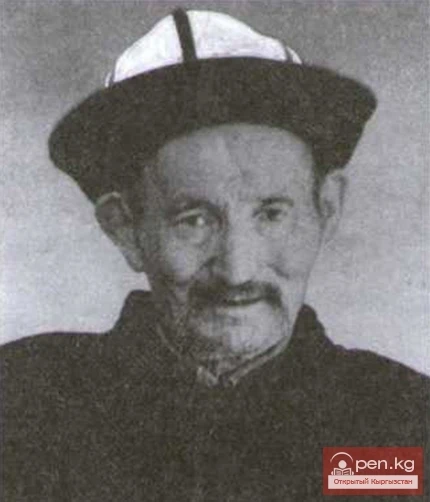
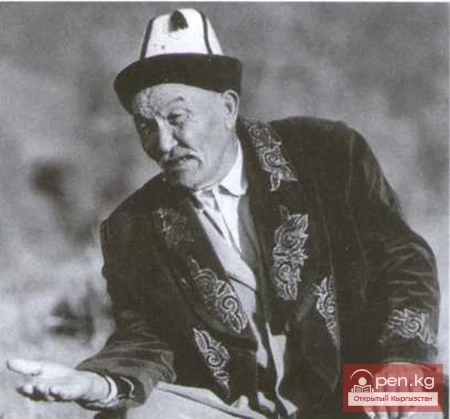
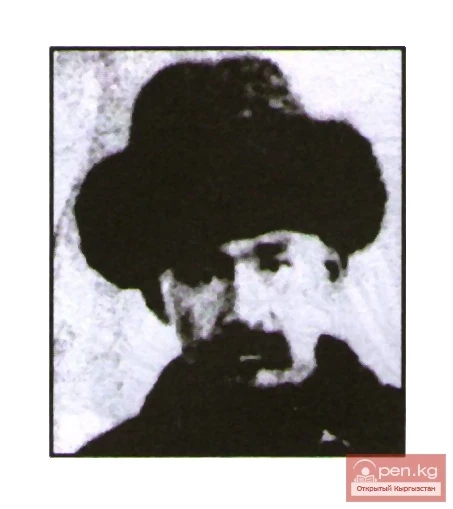
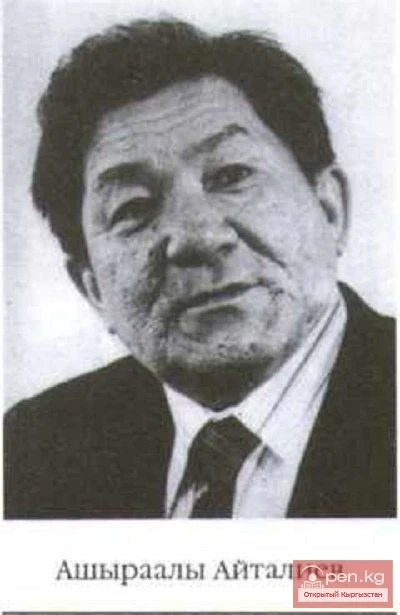
Abdyrakman uulu Ybyrayym (Akmoldo) (1888-1967)
The manaschy, folklorist, genealogist (sanjyrachy), historian, and educator Ybyrayym Abdyrakman uulu was born in the village of Chyrak, located in the Jeti-Oguz district, and passed away in the village of Pogranichnik (now Kazybek) in the At-Bashy district. He belonged to the Cherik clan.
His father, Abdyrakman, was a jack-of-all-trades: a hunter, folk healer (tamyrchy), musician, and a connoisseur of human nature. Realizing that his son had intelligence and a desire to learn, he sent him to a moldo at the age of seven, which marked the beginning of Ybyrayym's journey into epic and spiritual heritage.
In his memories of how he became a manaschy, he said: “From the age of seven, I studied with a moldo. In those days, there was no writing system like now, and we sat on the floor, memorizing verses from the Quran under strict supervision. I was diligent and learned to write by myself. When people gathered in the evenings during winter, the elders would say: ‘Let’s listen to “Manas.”’ I, in my short clothes, listened to the tales until dawn without blinking. They said: ‘This boy will become a manaschy.’ Sometimes, in a fit of excitement, I would jump up and start telling “Manas.” Once, in my hurry to listen to a tale, I nearly drowned while crossing a river on a calf.”
He also recalled how at the age of 13, in the Aral area near Tyup, he heard the famous storyteller Akylbek, who recounted “Manas” for six consecutive days. Subsequently, he spent many years communicating with such masters as Dyikanbay, Jandake, Baizhan, Otunchu, Kalcha, and Jakshylyq (nicknamed Kara yrchy), learning from them the art of epic performance. He shared his impressions with the folklorist Buuidaibek Sabyr uulu, recounting his path to epic heritage.
He also left lines of poetry:
“I also know from the beginning.
‘Semetey,’ ‘Manas’ epic,
Since my childhood.
In the land of Issyk-Kul,
In the clan of Bughu,
Descendant of Akylbek.
The elders used to say:
‘In reciting “Semetey,” “Manas,”
Akylbek’s words are approved,’” they said.
I heard much from Akylbek,
Assimilating it thoroughly.
From Jandake, Baizhan, Kalcha,
I learned a great deal from them.
From Otunchu and Jakshylyq,
From the gifted Dyikanbay,
I learned a lot from them.
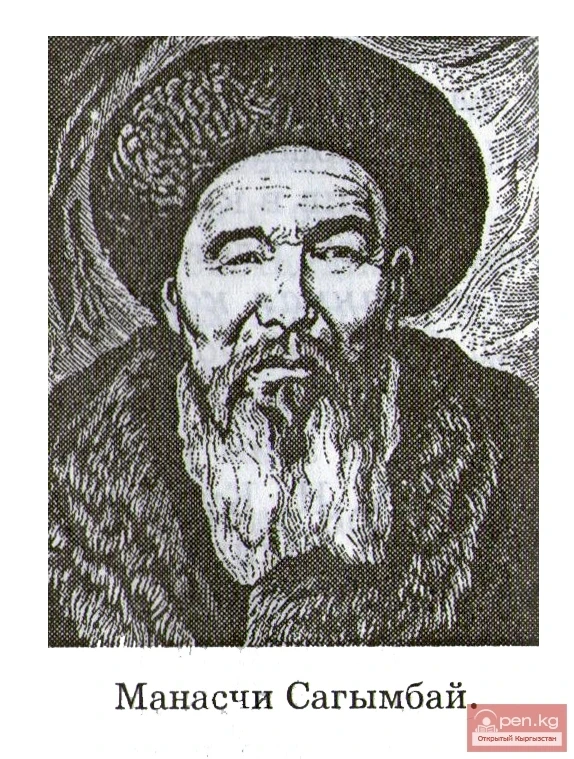
I wrote a lot from Sagynbay,
Wrote down what they said.”
After five years of studying with the moldo, in 1901, Ybyrayym entered the Tatar school "usul-i-jadid" in Karakol, which he graduated from in 1905. In the same year, he began working as a teacher, first with Aldash uulu Jeenike, and then in the "usul-i-jadid" schools of Kodontay. It was then that he began collecting folk art.
In 1915, together with his father Abdyrakman, he moved to relatives in At-Bashy, where from 1916 to 1920 he taught local children. In 1920, after completing teacher training courses in Almaty, he returned to At-Bashy and continued his teaching activities. At that time, the secretary of the Naryn District Committee of the Communist Party, Kasymbay Teltaev, invited him along with Kayum Miftakov and Saparbai Sooronbaev to record the epic "Manas," which was passed down by Sagynbay Orozbak uulu.
Kayum Miftakov recalled: “I took a notebook, placed a tarp on top, and began to write. After several pages, I passed the notebook and pen to Ybyrayym, watching how he wrote. I really liked his handwriting.”
Saparbai Sooronbaev noted: “One of Ybyrayym's merits was that he wrote very quickly in Arabic. His manuscripts were excellent. Sagynbay never got used to writing; he only spoke — we couldn’t keep up with writing. Only moldo Ybyrayym could write down what he said so quickly. This ability amazed us.”
In 1923, at the Congress of Soviets in Naryn, a decision was made: “The epic ‘Manas’ from Sagynbay Orozbak must be fully recorded.” Based on this, Ybyrayym Abdyrakman uulu was appointed responsible, although only separate fragments had been recorded previously. From then until 1926, he traveled to various places, recording the epic "Manas" from the mouth of Sagynbay. Sagynbay himself said: “Cherik moldo — another great son — walked with me and tirelessly recorded vast amounts of text. When I suggested he take a break, he smiled and asked: ‘Let’s first finish this page, Sake.’
After a year of work in At-Bashy, in 1926, Ybyrayym left to study in Frunze. During this time, he met the famous Kazakh writer Mukhtar Auezov at the home of Tokchoro Zholdoshev, where they discussed manaschy. This event was recorded in the work of writer and translator Ziyash Bektenov.
From 1935, the Institute of Language and Literature in Frunze invited Ybyrayym to work until his retirement in 1960. During this period, he participated in recording the trilogy “Manas” by Sayakbay Karala uulu and the epic “Er Töshtük.” He also led the recording of variants from such masters as Shapak, Togolok Moldo, Bagysh, Janybay, Akmat, Moldobasan, translated oral performances of many manaschy into prose form, collected, and preserved folk works. According to him, he recorded 26,456 lines of “Manas,” 23,584 lines of “Semetey,” and 7,839 lines of “Seitek.”
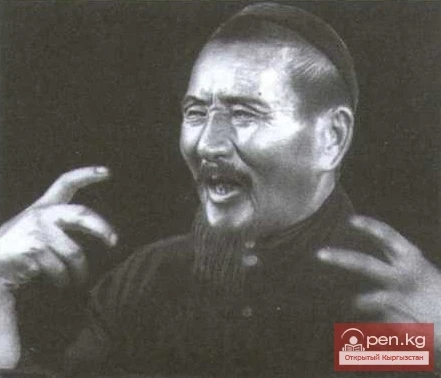
Regarding his performance of “Manas,” scholar L. Sheina wrote in the article “Ancient Echo of the Tian Shan” (1966): “He raised his head, slightly frowned, straightened his forehead. He stretched his hands forward and began… His hands, like in a dance, soared into the air, his voice rose and fell, flowing… He transformed into a hero before our eyes.”
Scholar Mungduk Mamyr in the article “Jomokchu, Zhiyoochu, Folklorist” (journal “Ala-Too,” 1967) wrote: “If Ybyrayym Abdyrakmanov's variant were to be published, it would not require any additional preparation.”
Professor Raisa Kydyrbaeva in her book “The Storytelling Mastery of Manaschy” (1984) noted: “His variant can be considered one of the most organically composed.” He created his own version, harmoniously integrating the plot lines of previous versions according to his personal creative world.
In 1937-1939, Ybyrayym studied at the literary faculty of a two-year pedagogical institute in Frunze. In 1948, he became a member of the Union of Writers of the USSR and received Honorary Certificates from the Supreme Council of the Kyrgyz SSR multiple times, as well as medals for “Labor Heroism” and “Labor Distinction.” In 1960, upon retirement, he moved to the village of Pogranichnik in At-Bashy, where he passed away.
Kuttugaly Ibraimov and Narynbek Öskönaliev published the books “Ybyrayym Abdyrahmanov” and “Creative Biography of Ybyrayym Abdyrahmanov.” Numerous researchers and literary scholars have written articles about his life and about “Manas.”
In the collection “Manaschylar,” Rysbay Isakov recalled Ybyrayym Abdyrakman uulu with the following lines:
He has seen all the greatness,
And paid attention with awe.
What he said was written on paper,
He brought it without leaving anything behind.
He has passed everything on to us,
Blessing us with it.
With a patterned soul,
His art is a companion to the soul.
Galloping forth like a stallion of thought,
He ran ahead as a song.
To Ybyrayym the father,
Today his descendant is grateful.
May the song of Abdyrakman uulu
Reach the world.
Let future generations await,
One line written without diminishing.