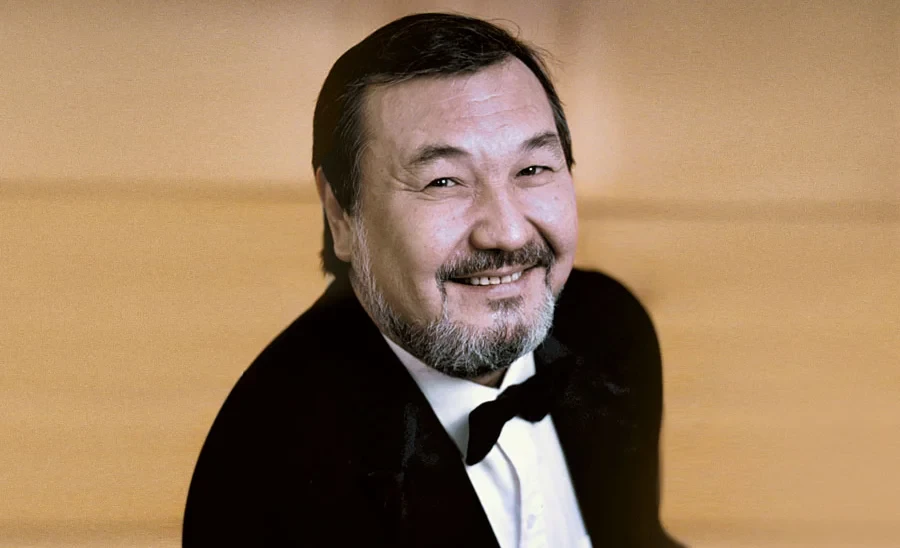
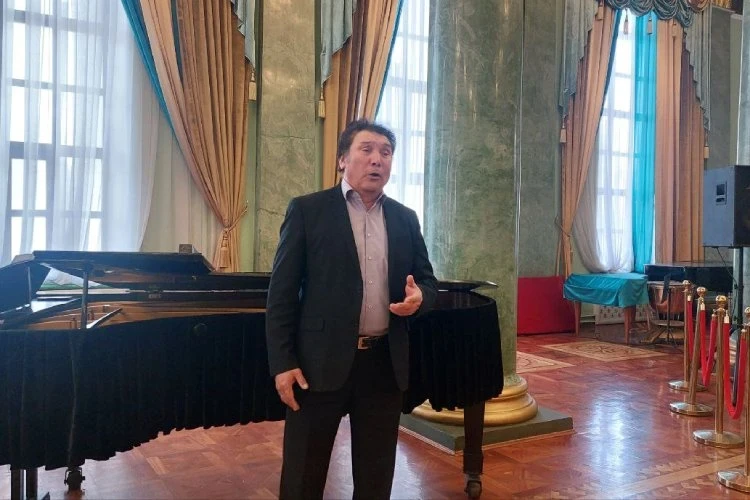
Baktybek Ibykeev, the People's Artist of the Kyrgyz Republic and opera singer, is remarkably modest despite his vast experience and talent. However, when the conversation turns to Russian romances and works from the war years, his eyes fill with fire, and he begins not just to talk but to share his songs, allowing one to feel all his love for music.
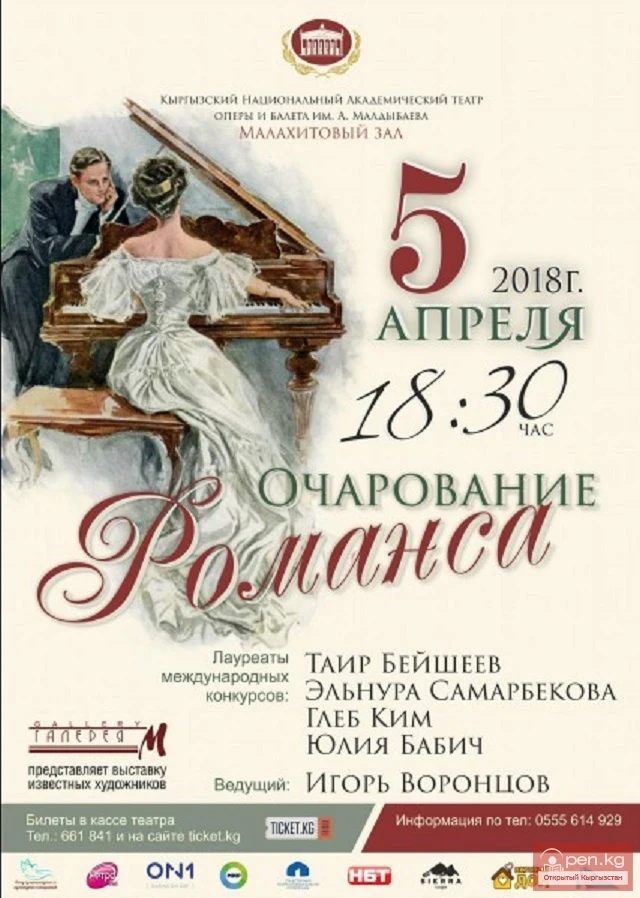
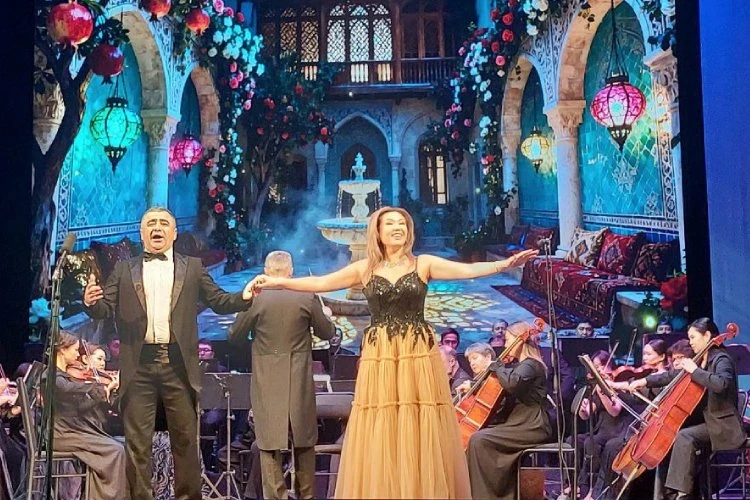
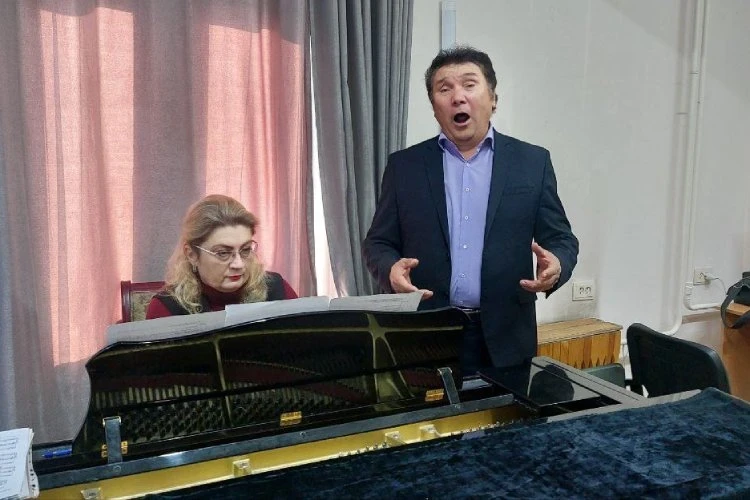
Julia Babich, a distinguished artist and accompanist, has been collaborating with Baktybek for over two decades. She notes that he performs Russian romances with great pleasure and holds solo concerts dedicated to this genre. At the evenings of Russian romance held at the Abdykalyq Malbaev Kyrgyz National Academic Theater of Opera and Ballet, Baktybek shows complete dedication and responsibility during rehearsals.
The evenings of Russian romance in Bishkek represent a unique immersion into the world of delicate musical culture. For those attending such events for the first time, a new sense of aristocracy, soulful elegance, and harmony opens up.
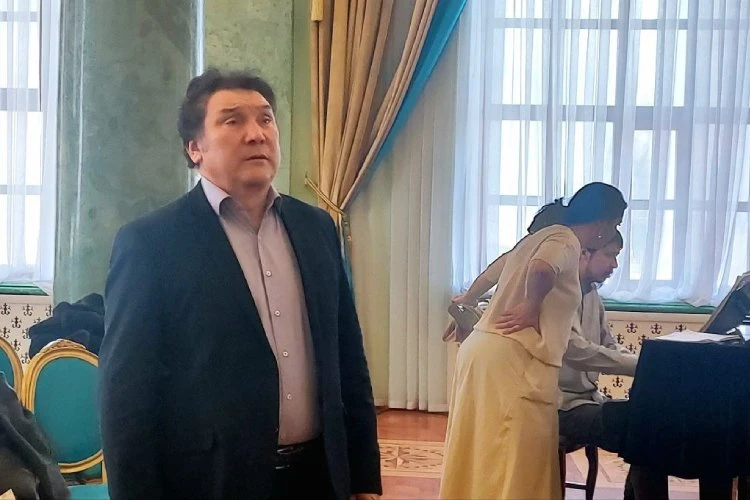
The atmosphere of the Malachite Hall is perfect for reflecting on the Russian soul. Baktybek, adjusting his tailcoat, begins to perform the classic romance "I Met You — and all that was...," filling the hall with warmth and tenderness.
According to Julia Babich, Baktybek constantly studies the works of outstanding performers, absorbing the best like a sponge. Despite his status as one of the leading baritones, he not only teaches young performers but also strives for improvement, listening to advice and honing his craft.
If romances are written for tenor or baritone but touch the soul, the artist asks to adapt the notes to his voice, refining the performance to perfection.
“Baktybek performs complex parts on stage, not forgetting about the concert program. He also enjoys holding concerts dedicated to Victory Day,” Julia shares.
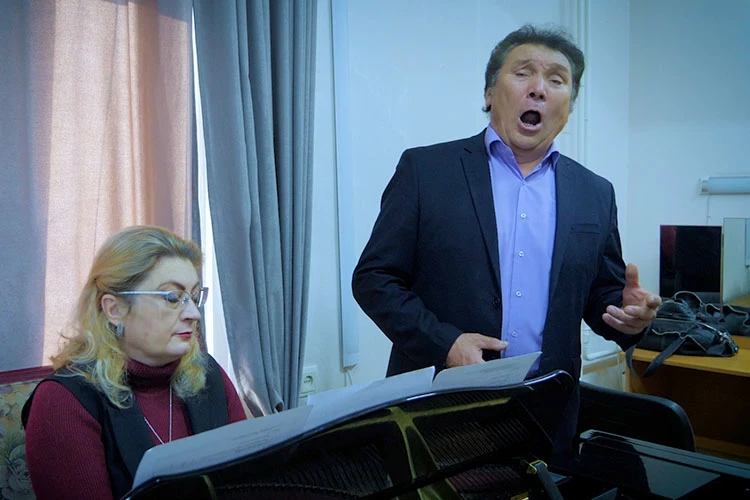
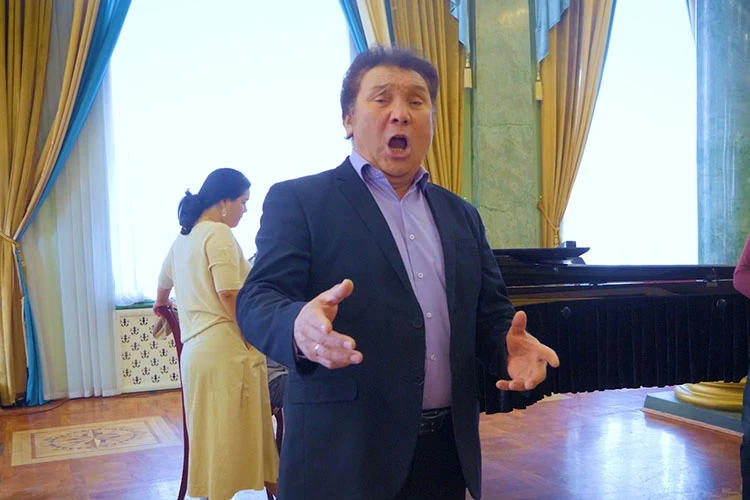
She emphasizes that Baktybek always honors the memory of the Great Patriotic War and the victory over fascism. In anticipation of May 9, he includes a solo concert with songs from the war years in his program.
“Victory Day” and “Let’s bow to those great years” are exclusively his works, which others simply would not trust. No one can feel each word as he does.
Julia Babich
Despite his busy rehearsal schedule, Baktybek found time to talk with 24.kg, sharing his creative journey and the dreams that are common to every opera performer.
— How did your love for singing begin?
— I started singing in childhood. In our family, it was a tradition — when the whole family gathered, we would definitely sing. Some relatives sing even better than I do.
— What do you love to sing with your loved ones?
— Mostly, Kyrgyz folk songs that many are familiar with.
— How did opera enter your life?
— I always dreamed of making singing my profession. I participated in many school competitions and festivals. Teachers often left me for the finals, but since time was limited, I didn’t always get to perform. After three years of waiting in the tenth grade, I asked to perform first and did well, accompanying myself on the accordion. The jury then asked why I had been hidden for so long.
— After winning competitions, did you finally decide to dedicate your life to singing?
— I didn’t go to college; I went straight to the Institute of Arts (now the Kyrgyz National University of Culture and Arts named after Büyübsara Beishanalieva). Since I had no musical education, I had to first complete preparatory courses. I didn’t understand what classical singing meant back then. At the entrance exams, everyone sang from sheet music, while I sang by ear.
— Were you accepted?
— I thought I wouldn’t pass. Young people with musical education were applying with me, but I was given a chance. I studied in the preparatory courses for two years, then five years at the institute and two years in graduate school.
— Who had the most influence on your development as an opera artist?
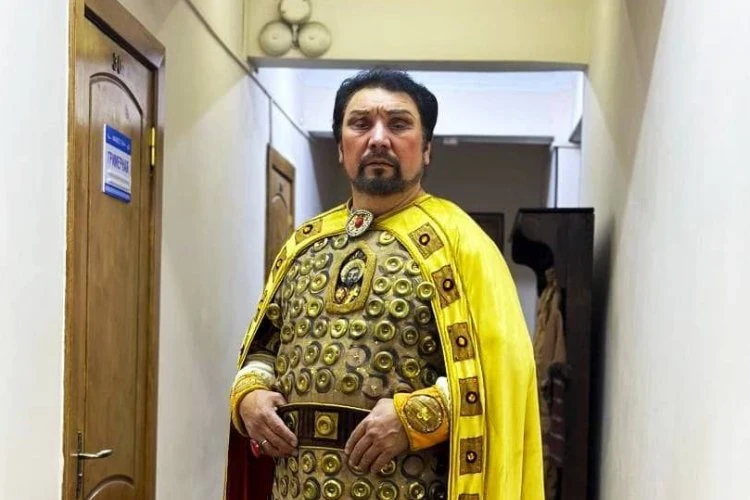
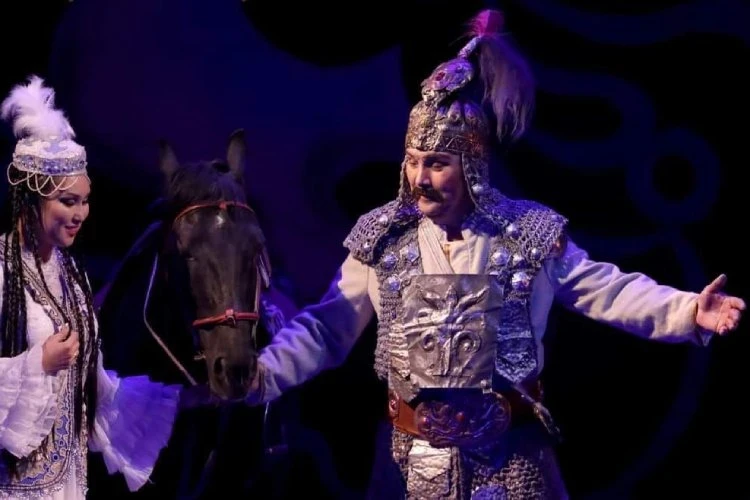
— I particularly remember Raisa Dedova, who taught me a lot during the two years of preparatory courses. After the collapse of the Soviet Union, she moved to Israel. Then, for five years, my mentor was the People's Artist of the Kyrgyz Republic Toktonaly Seitaliyev — his portrait still hangs in my classroom in the image of Don Carlos. After graduating, it was a great honor for me to perform on the same stage with him.
— Have your professional plans come true?
— As soon as I became an opera singer, I decided: “I will sing as long as I can. If not, I am ready to change professions.” After the collapse of the Union, it was hard for artists. I graduated from the conservatory in 1994 and got married. I had a son in graduate school, then another one. It was very difficult at that time. Some left their vocations and started trading in the market.
— Did you ever want to follow them?
— No, I remained true to my calling, even though it was very difficult.
Those who did not leave the stage are true fans for whom it is life. I knew that there are no unsolvable problems. I endured, and everything was resolved.
Baktybek Ibykeev
Of course, I had to work in several places to support my family, but I did not leave music.
— When did Russian romance enter your life?
— As soon as I began to study. During breaks, I loved listening to professional performances from records. The institute and conservatory had a phonotheque where we listened to the necessary programs. I have always loved classic Russian romances.
— Which works do you particularly enjoy performing?
— I have three idols: Bulat Minzhilkiyev, Dmitry Hvorostovsky, and Muslim Magomaev. I especially like works from their repertoire. I feel close to the romances "Burn, burn, my star" and "Have you forgotten." When I learn a romance, sometimes I think that perhaps in a past life I was Russian, as this genre is very close to me. It is easy to remember, as if I have always known it.
— You are the leading performer of songs on Victory Day...
— We are children of the Komsomol. In school, I started singing love songs, but the teachers remarked that I was too young for that. They advised me to sing patriotic songs, and now I do (laughs).
“Victory Day” I started singing from the third grade. Every year I perform this song at least five or six times. Once, on May 9, I sang it nine times at different events. Now in my repertoire, there is "Victory Day" in Kyrgyz as well.
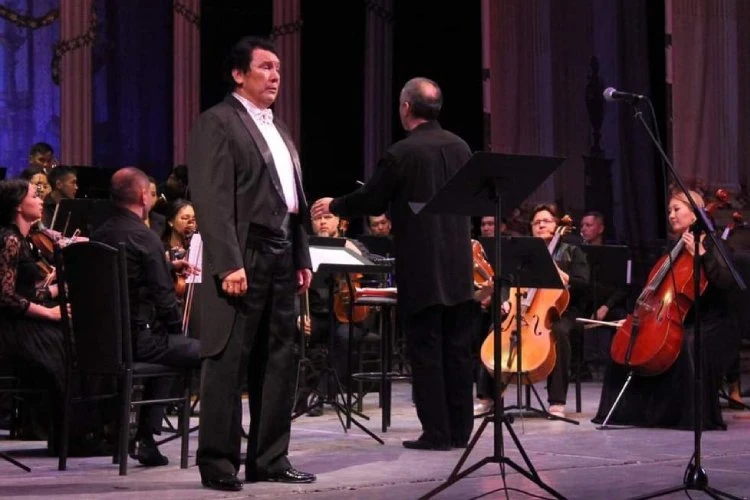
I try to hold solo concerts specifically for May 9. The first part consists of songs from the war years with a classical symphony orchestra, and the second part is with the wind orchestra of the Ministry of Defense.
Baktybek Ibykeev
In 2025, I planned to organize a concert for the 80th anniversary of Victory, but the theater said that all days before May 9 were booked. A week later, I was informed that a date had opened up — May 8. I prepared the entire program in just seven days. Unfortunately, the orchestras were busy, so I prepared songs with a backing track. Admission was free, and the hall was full.
— Are there songs about Victory in your repertoire in Kyrgyz?
— Besides "Victory Day," I perform a few others. One of my favorites is "Estelik" ("Memory"), written by the People's Artist and composer Tugelbay Kazakov. Nasyr Davlesov has a ballad "Cholponbay" (Hero of the Soviet Union. — Note from 24.kg), which is also in my repertoire. I always prepare thoroughly and with excitement for this day.
— Every artist has dreams. What else would you like to perform?
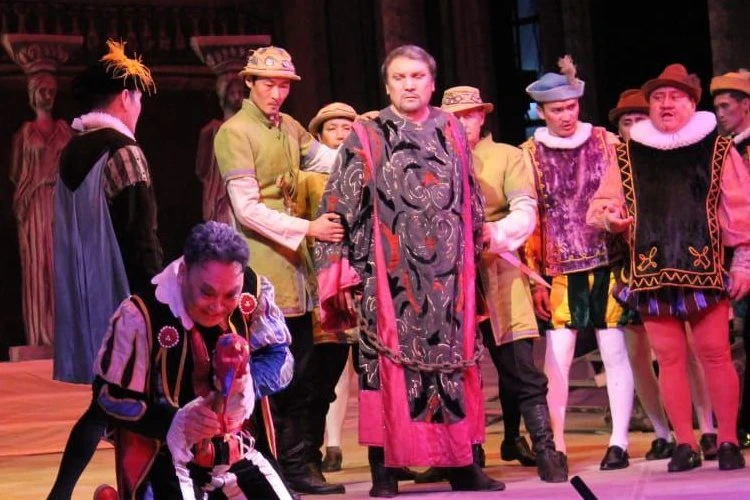
— I really want to perform the role of Eugene Onegin while I still have hair (laughs). Ten years ago, I asked the director to give me this part, but he said: “You have enough roles; let the young ones sing Onegin.” This remains my dream, which I hope to fulfill next year.
— Is the youth eager to enter the opera today?
— Young people come and want to work, but there are not always places for soloists in our theater. There is a demand for the profession of opera performer. The government has started to pay more attention to culture, which is encouraging. Many graduates of the conservatory or the University of Arts plan to go abroad to work. There are prospects for the profession and the theater.
— What advice would you give to the future generation of opera performers?
— As they say, 1% is talent, and 99% is hard work. Vladimir Lenin said: “Learn, learn, and learn again,” and I always say: “Work, work, and work again!” If you rehearse a lot and don’t get lazy, you can achieve success.
— What does opera mean to you?
— It is the main part of my life. When I just started dating my future wife, I immediately told her: “If there is no bread in the house and I have to choose between opera and another, higher-paying profession, I will choose opera. Do you agree?” She agreed. That’s how we live.