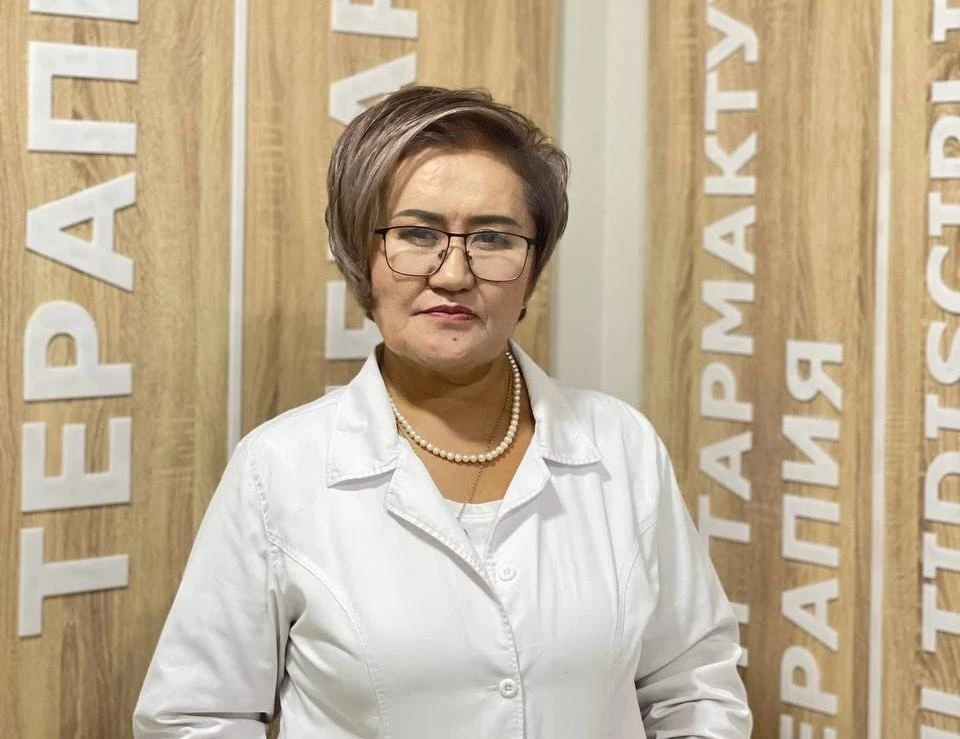
She emphasized that this incident has become a "medical tragedy" that has caused significant public outcry. Baryktabasova noted that negative treatment outcomes are often perceived as the physician's fault, although this is not always the case.
The expert highlighted that medicine operates on probabilities rather than guaranteed outcomes. Even with the correct treatment methodology, unexpected complications can arise.
In her opinion, three key aspects influence treatment outcomes: the physician's level of qualification, healthcare resources, and the characteristics of the disease itself. Issues with even one of these components can lead to serious consequences.
Baryktabasova added that "even the most experienced and qualified doctors can face objective difficulties that prevent them from making the right decision or implementing the optimal treatment approach."
She identified several factors that contribute to such situations:
- The lack of clear national clinical practice standards for rare or complex diseases leads to decision-making under uncertainty.
- Some seizure conditions require immediate angiography or specialized imaging, which are not always available and not accessible around the clock, as well as requiring high levels of expertise.
- Specialists in pediatric nephrology, vascular surgery, and hematology are in short supply even in developed countries, let alone in Kyrgyzstan, where they are critically needed.
- In complex cases, the coordination of several specialists is necessary, which can prolong the process, while time is of the essence.
- Family refusal of surgery or doubts about the physician's actions can lead to a loss of time, which is often critical.
- Some vascular complications can develop covertly or at lightning speed, complicating their diagnosis.
- Atypical or rapid disease progression, such as hypercoagulable states, can develop faster than standard response algorithms allow.
- Guidelines require the availability of equipment, logistics, and specialists, which are often lacking in our system, creating a gap between international standards and the actual capabilities to implement them.
- The unpredictability of the biological response of the patient's body remains a controllable factor that cannot be fully anticipated.
She emphasized that "the main conclusion from such tragedies is not to find a guilty party, but to strengthen the healthcare system so that in the future medical professionals have more opportunities, time, and chances to cope with diseases."
It is worth reminding that on February 18, a nephrologist, candidate of medical sciences, and associate professor Nasira Beishebayeva was detained in Bishkek. According to the Bishkek Department of Internal Affairs, the mother of a patient who was undergoing treatment in 2024 filed a complaint about a possible medical error. According to her, the nephrologist allegedly provided improper treatment to the minor K. A., born in 2011, which led to serious consequences, such as the amputation of the right lower limb. A criminal case has been initiated under part 2 of Article 146 "Improper performance of professional duties by a medical or pharmaceutical worker, resulting in serious harm through negligence" of the Criminal Code of the Kyrgyz Republic.
Based on the results of forensic medical examinations, she was charged, detained, and placed in the temporary detention facility of the Bishkek Department of Internal Affairs.
The staff of the National Center for Evidence-Based Medicine addressed the President of Kyrgyzstan, Sadyr Japarov, on social media, calling for an objective investigation into this case and requesting that no pre-trial detention be applied to Beishebayeva.