Kyrgyzstan is actively moving towards urbanization, and according to UN forecasts, by 2050, the share of the urban population will reach 43.4%. The general plan for Bishkek suggests that the population of the capital will grow to 2 million. These changes indicate not only an increase in cities but also radical transformations in the economy and lifestyle.
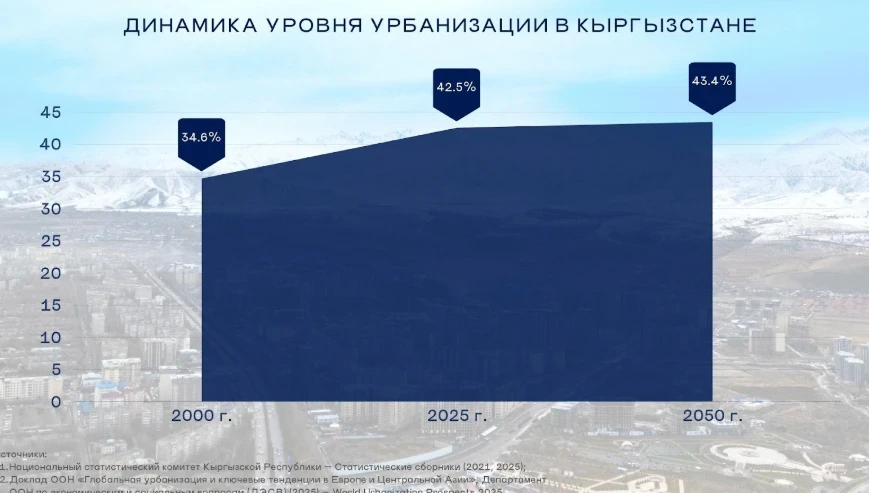
Dynamics of the level of urbanization in Kyrgyzstan
Urbanization contributes to socio-economic progress, as the concentration of people and businesses in cities leads to GDP growth, increased labor productivity, and the development of small and medium-sized enterprises. Cities become centers of access to education, healthcare, and innovations, which reduces population migration and promotes sustainable economic development.
However, with the growth of cities come old problems: congested roads, increased crime, and inefficiencies in bureaucratic processes. If measures are not taken, these issues could slow economic growth and worsen the quality of life for urban residents. Therefore, digital and intelligent technologies are becoming important tools for data-driven urban management.
Using urban problems as opportunities for growth
As the population of Bishkek, Osh, and other cities increases, the burden on transport networks and public services rises. Outdated management models are unable to cope with modern challenges and data volumes. In such conditions, technology becomes a necessary condition for the survival of large cities.
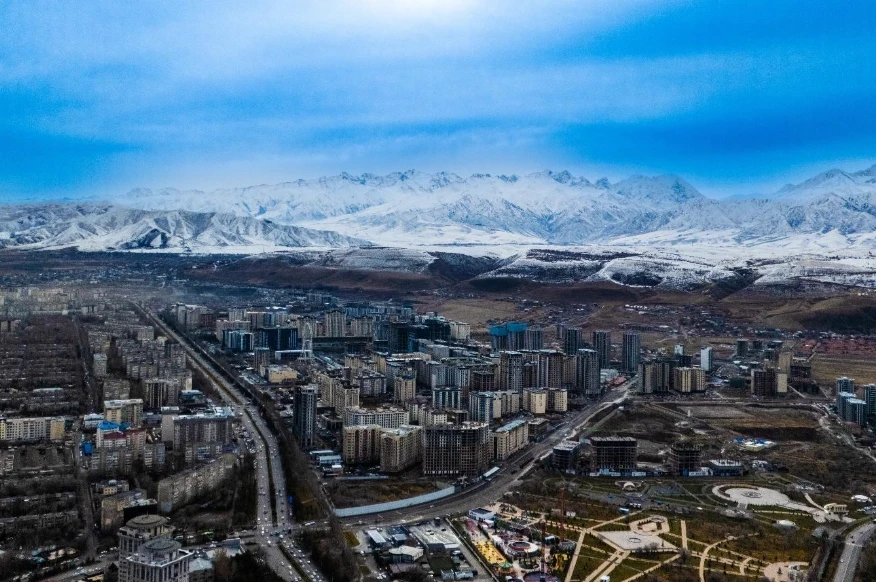
City of Bishkek
Traffic jams: implementing technologies to optimize traffic
Traffic jams are one of the most pressing problems in cities. Ten-point traffic jams have become commonplace in the capital. The main reasons lie not only in the number of cars but also in chaotic driving. Adaptive traffic management systems can help address this issue.
Bishkek has already implemented the "ASUDD" (Automated Traffic Management System), which allows real-time monitoring and regulation of traffic flows. It is also planned to install "smart" traffic lights that prioritize public transport and allocate special lanes for buses in Bishkek, Osh, and other cities such as Manas, Talas, Tokmok, Batken, Naryn, and Karakol. These measures will help increase the speed and reliability of public transport, which in turn may reduce the number of private cars on the roads.
Additionally, as part of the "Safe City" project, cameras have been installed to record traffic violations. This not only disciplines drivers but also reduces the number of traffic accidents. According to the Ministry of Internal Affairs, in areas of Bishkek where cameras are installed, the number of accidents has decreased by 3.5%, while in the Chui region, it has decreased by 14%.
Safety and crime: new approaches to law enforcement
The increase in population density requires new methods of ensuring safety. The traditional model of responding to crimes is no longer sufficient, and a shift to data-driven prevention is necessary.
The "Safe City" and "Safe Country" initiatives are showing results: since 2021, the crime rate in Kyrgyzstan has decreased by 69%. Video surveillance and analytical systems help not only to record offenses but also to solve crimes, including high-profile cases.
The rapid integration of cameras with emergency services reduces response times, and the presence of video surveillance lowers street crime levels in monitored areas. This creates a safer urban environment where technology serves not for total control but for protection and prevention.
Bureaucracy: the path to a service-oriented state
Bureaucracy is another problem faced by growing cities. As part of the de-bureaucratization program initiated by the President of Kyrgyzstan, procedures are being streamlined, and excessive certificates and requirements are being eliminated. The goal is to accelerate the provision of public services and transition to digital document management through the Tunduk system.
Digitalization is becoming a key factor in facilitating the work of both government agencies and citizens. In 2025, 3.6 million applications were received at public service centers, of which 527 thousand were processed in digital format. More than 190 public services are available on the Tunduk platform, and the application has around 3 million users. Digitalization covers all areas of government activity, leading to a reduction in the number of visits to agencies and increased transparency.
The transition to a service-oriented state changes the philosophy of interaction, making the government a convenient service provider rather than a source of obstacles for citizens and businesses.

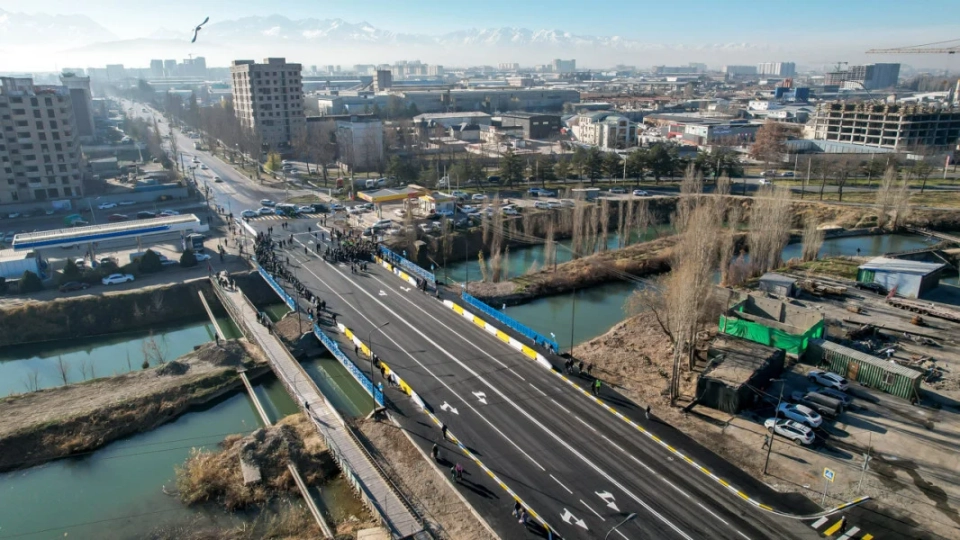
Bishkek, photo by Nikolai Gladkov
Cities of the future: where digitalization is heading
Despite the achievements, the path to a "smart city" in Kyrgyzstan remains challenging. Key obstacles include the fragmentation of solutions, a lack of qualified personnel, and the need to develop infrastructure. The next step is the integration of transport systems, security services, and public services into a single digital platform for more effective data utilization. The government is collaborating with technology partners, aiming to accelerate the digitalization of the economy and exchange international experiences.
According to Ilya Belyakov, Director of the Technical Department of the INTEGRA CITY Group of Companies, a "smart city" is not just about technology, but about solving problems such as traffic jams, speeding up services, and enhancing security. Often, cities face not a lack of technology but their incompatibility, leading to inefficiencies. Today's technologies allow for the integration of data into a single platform, enabling the anticipation and prevention of problems.
Big data and artificial intelligence open new horizons in solving old tasks, allowing a shift from merely addressing shortcomings to predicting future problems. The Minister of Digital Development, Azamat Jamangulov, stated that the necessary capacities and infrastructure for implementing AI in government structures and businesses will be available in Kyrgyzstan by 2026.

City of Bishkek. Photo by Nikolai Gladkov
Urbanization in Kyrgyzstan opens new opportunities. However, for successful implementation, it is essential that urban development is accompanied by smart management, digital solutions, and data. Technologies do not replace urban management but make it more effective, transparent, and scalable.
Thus, the problems of traffic jams, crime, and bureaucracy become manageable processes. This opens up the chance for the cities of Kyrgyzstan to become not only larger but also more comfortable, safer, and economically sustainable.