The article is a translation of a material by a BBC correspondent, the full text can be found here.
The Chinese government has been accused for decades of repressive policies aimed at subjugating and assimilating ethnic minorities into Han culture.
A new law, expected to be approved at the annual session of the Chinese parliament, is designed to enshrine and accelerate these processes, which, according to scholars and human rights advocates, could further threaten the rights of minorities and their way of life.
However, Chinese authorities defend this initiative, claiming it is necessary for achieving "modernization through unity" and calling the law "on promoting national cohesion and progress."
The law downgrades the status of other languages in favor of Mandarin and encourages marriages between Han people and representatives of other ethnic groups, prohibiting any attempts to limit such unions. It also obliges parents to "raise minors in love for the Communist Party of China" and bans any actions that could threaten "ethnic unity."
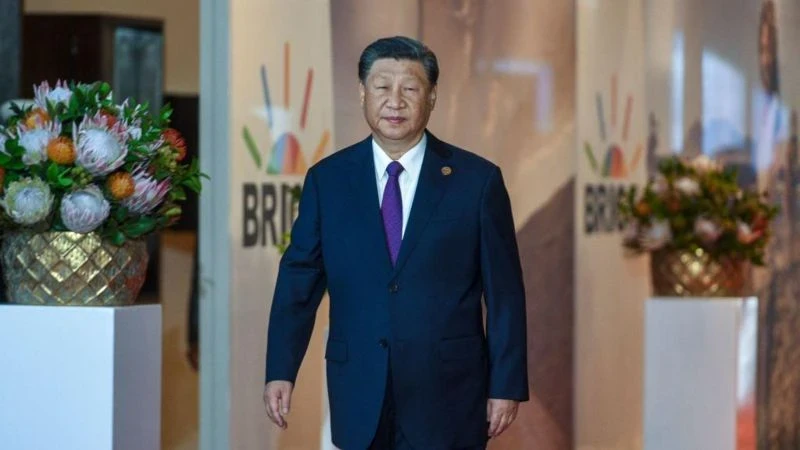
Xi Jinping has repeatedly called for the "Sinicization of religion," demanding that religious practices conform to the cultural values espoused by the Communist Party. This law is seen as a consolidation of the priority policies of his leadership.
“The regime states: everything we did before was right, and now we elevate this to the level of basic law,” notes Aaron Glaser from the University of Pennsylvania.
There are officially 55 recognized ethnic minorities in China, with populations ranging from several tens of thousands to millions.
Some groups, such as the Uyghurs and Tibetans, are of particular concern to Beijing. The most serious allegations of human rights violations are associated with these regions.
The authorities believe that the threat of punishment for any discussions of independence is more effective than autonomy, which could encourage minorities to remain part of China.
Months before the 2008 Olympics, a monk-led uprising occurred in Tibet, which was suppressed with serious consequences. Official reports state 22 deaths, while Tibetan exile organizations claim the number is around 200.
The following year, clashes between Uyghurs and Han people in Urumqi, the capital of Xinjiang, resulted in nearly 200 deaths.
In 2013, Uyghur separatists were killed while attempting to detonate a car at the entrance to Tiananmen Square, and in 2014, an attack occurred on passengers at a train station in Yunnan.
Beijing claims that harsh measures against minorities are justified by violent actions.
Nevertheless, the UN and human rights advocates report that over a million Uyghurs have been placed in camps that Chinese authorities call "re-education centers." Restrictions on religious practices and the closure of mosques are also part of this campaign.
In Tibet, monasteries are under strict control, and children under 18 are required to learn Mandarin in state schools, negatively impacting traditional education in monasteries.
In recent years, unrest has arisen due to restrictions on the teaching of the Mongolian language in Inner Mongolia, as well as orders for the demolition of mosques in Ningxia.
Analysts believe that in the face of potential instability, the authorities may have deemed it necessary to adopt a new law that effectively cancels existing legal guarantees of minority rights.
Moreover, this law provides the state with additional means to control strategically important regions that connect China with other countries.
The China Power project refers to Mao Zedong, who spoke of the diversity of China's territory, resources, and population, emphasizing that Han people make up the majority of the population while minorities possess natural resources.
Given that the populations of most minorities are significantly smaller than that of the Han, who make up over 90% of the population, the situation is further exacerbated.
Nevertheless, the territories inhabited by Tibetans, Uyghurs, and Mongols are rich in resources and important agricultural regions.
Historically, these peoples have had periods of independence from China and continue to preserve their languages and traditions despite Beijing's control.
While the government has the authority to enact any laws, the new law on "ethnic unity" simplifies the implementation of current policies, providing clearer guidelines for officials.
In recent years, the authorities have actively encouraged the settlement of Han people in Tibet and Xinjiang, which critics argue is an attempt to demographically displace local minorities. The capital cities of these regions, such as Lhasa and Urumqi, have already undergone significant cultural changes.
Beijing provides financial incentives for interethnic marriages, especially between Uyghurs and Han people, which also raises accusations of attempts at assimilation. This aspect is also addressed in the new law.
“The law does not explicitly mention the promotion of interethnic marriages; however, it states that no one can interfere with the right to marry based on religious or ethnic affiliation,” explains Glaser.
He provides the example of an official facing religious resistance regarding interethnic marriage.
“Such an official seeks to minimize problems to gain a promotion and may attempt to prevent the marriage by pressuring the parties. The new law complicates such an approach and increases the likelihood that interference from religious leaders will not succeed,” adds Glaser.
In China, in 2026, it will be virtually impossible to obtain interviews with Uyghurs, Tibetans, or Mongols to get their opinions on the new law, as criticism of state policy can lead to criminal penalties.
Nevertheless, international human rights organizations are already expressing their concerns.
Restrictions on teaching in minority languages for many subjects ensure that “Uyghurs, Tibetans, and Mongols will not be able to use their native languages in educational institutions. They will be forced to learn Mandarin as part of the ongoing campaign of assimilation,” reports the organization Campaign for Uyghurs.
According to a report by Phayul, “critics view this law as part of an accelerated campaign for 'Sinicization' led by Xi Jinping.”
The Communist Party, in a sense, agrees that this law is aimed at assimilation, but the authorities view this process as positive.
According to an official representative of the National People's Congress session, the law “aims to ensure comprehensive party leadership in ethnic policy and the integration of ethnic minorities into the overall development of the country.”
The Party believes that the Han majority is at a higher stage of modernization than other ethnic groups.
Glaser notes that this creates difficulties for the central government in working with local officials, who may ignore the cultural traditions of minorities.
In the past, local officials often violated the rights of minorities, forcing Muslim communities to follow traditions that did not align with their culture.
From Beijing's perspective, such conflicts are better avoided, and the new law may help standardize the actions of the authorities.
Human rights advocates believe that this law is more of a political statement than a tool for prosecuting violators.
“It formalizes the ideological framework related to the 'common consciousness of the Chinese nation' in the areas of education, religion, culture, and media policy,” notes Yalkun Uluyol, a researcher at the human rights organization Human Rights Watch.
Experts believe that Beijing does not need a new law to assert its power, but its adoption signals the direction Xi Jinping intends to lead the country in the future.
The entry "China adopts law on 'ethnic unity.' How will it change control over minorities?" first appeared in K-News.