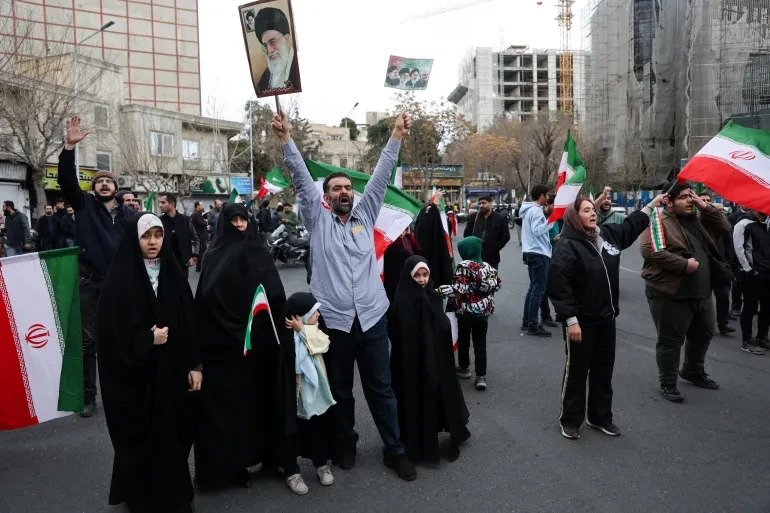
The conflict in Iran continues, with strikes on the country coming from the U.S. and Israel, which have attacked oil storage facilities and plants for the first time, causing large fires throughout the capital.
President Trump is once again insisting on "unconditional surrender" from Iran, claiming that the war will only end when Iranian leaders "surrender" or their army becomes incapacitated.
Trump: The U.S. will not compromise with Iran.
- When asked about the future leader of Iran, Trump noted: "We don't want to go back to this every five or ten years... We need a president who won't drag the country into war."
- He also added that the U.S. has "maximum" leverage in negotiations, but "we are not seeking a compromise."
- When asked about Iran's claims that the U.S. attacked a desalination plant, Trump replied that he did not have such information.
- According to him, Iran is using 9 percent of its missiles and drones in the first two days of the war. "We believe this is due to a lack of resources. We have incapacitated 70 percent of their missile systems."
- He added: "Soon there will be no one left to say, 'We surrender'."
- Trump also noted that the U.S. "does not count on Kurdish participation" and does not want to complicate the current situation in the war.
Here are a few more comments from Trump made during a flight aboard Air Force One.
- When asked what exactly he wants from Iran, he replied that he demands "unconditional surrender." "It's either their surrender or loss of ability to wage war," he noted.
- Trump also stated that he has no information about Iran's support from Russia.
- When asked about the decrease in shipping intensity through the Strait of Hormuz, he said that it is the decision of the shipowners themselves. "We have cleared the strait. We have destroyed their fleet," he added.
- Trump expects oil prices to drop soon, as the U.S. has "huge reserves" of oil.
- When asked about the possibility of deploying ground troops, he said he does not want to talk about it and that it is impractical.
The U.S. president believes that the war with Iran will last "some time" longer and that for American military forces, it is going "incredibly successfully."
"In one week, we have achieved much more than anyone could have imagined. We have destroyed their fleet — 44 ships. We have destroyed their aviation, all aircraft," Trump told reporters.
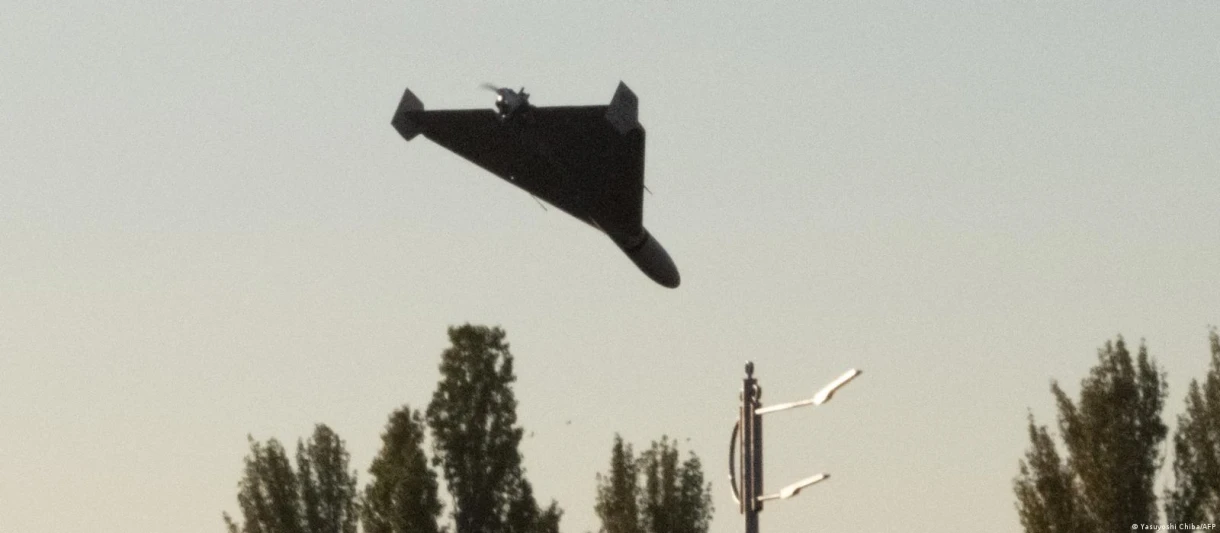
"We have destroyed most of their missiles. There are significantly fewer missiles. We have also dealt serious blows to missile production capacities. Their capabilities in using drones have also significantly decreased," he added.
"We have struck where it hurts the most, including the near-total destruction of all forms of leadership," he noted.
When asked how long he thinks the war will last, Trump replied: "As long as it takes."
Iran firmly resists aggression: Pezeshkian
The President of Iran, Masoud Pezeshkian, addressed the nation through state media.
Here are some of his key statements:
- Pezeshkian reiterated that Iran seeks good relations with its neighbors and warns that the enemy is trying to sow discord.
- Iran is ready to respond to attacks carried out from the territory of other countries; however, this does not mean conflict with those states, he emphasized.
- Iran firmly resists aggression and is ready to respond with force, Pezeshkian stated.
- He called on the people to unite and come out to defend Iran's waters and lands.
- Iran, relying on the support of its people, will not allow the enemy to seize an inch of its land.
Iran officially warned Azerbaijan: time is running out.
We have accurate coordinates of the locations of "Mossad" and CIA agents, including their hideouts. While there is still time — expel them from your country.
Our target is not the people of Azerbaijan, nor the government, nor the army, but these child killers.
Therefore, the population should avoid places where their military facilities are located.
Our target is not the people of Azerbaijan, nor the government, nor the army, but these child killers.
Therefore, the population should avoid places where their military facilities are located.
The UAE air defense systems respond to threats of missile and drone attacks.
The UAE Ministry of Defense reported that their air defense systems are taking measures against possible missile and drone attacks coming from Iran.
The agency confirmed that the sounds heard in the country are related to the interception of projectiles by air defense systems.
The new strike in the center of Beirut is significant as it highlights the expansion of Israel's strike zone and changes in the interfaith situation in Lebanon.
Israel claims that its strikes are aimed at Hezbollah militants among their supporters in the Shiite area of Lebanon. However, the attack has also affected traditionally Sunni areas, as well as Christian and Druze areas.
As a result, there is growing concern throughout the country about the reception of hundreds of thousands of displaced persons — an atmosphere of suspicion and tension is developing, which Israel can either exacerbate or deliberately ignite.
It now seems that a) there is no safety anywhere in Lebanon, and b) accepting displaced persons is dangerous, as Israeli airstrikes may target those trying to flee.
Brief overview of events:
- Kuwait reports the death of two border guards and that attacks on the international airport and social security office have led to fires.
- Saudi Arabia reports preventing an attack on the diplomatic quarter in Riyadh and intercepting several drones in its airspace.
- Israeli forces destroyed a hotel in downtown Beirut, resulting in at least four deaths and 10 injuries.
- Trump again demands "unconditional surrender" from Iran, claiming that the conflict will only end when Iranian leaders "surrender" or their army becomes ineffective.
- Human Rights Watch states that the attack on a girls' school in the Iranian city of Minab on February 28 must be investigated as a war crime.
Human Rights Watch demands investigation into the attack on the Iranian girls' school as a war crime.
Human Rights Watch claims that the attack on an elementary school in southern Iran, which resulted in the deaths of at least 160 people, mostly schoolchildren, must be investigated as a war crime.
"Those responsible for the unlawful attack must be held accountable, including prosecuting all involved in war crimes," said Sofia Jones, an open-source researcher from Human Rights Watch's Digital Investigations Lab.
"An immediate and thorough investigation is necessary, including establishing whether the perpetrators knew that a school was located on the premises and that it would be filled with children and their teachers before noon," Jones added.
The attack was one of many carried out by American and Israeli forces on the first day of operations on February 28.
According to an investigation by Al Jazeera, the attack on the school may have been "intentional," and The New York Times reported that the strike may have been carried out by the United States.
According to a report by The Washington Post, an intelligence report from the U.S. National Intelligence Council states that even a "large-scale" U.S. offensive against Iran is unlikely to topple the country's government.
The Post reports that the data raises doubts about the Trump administration's claims of being able to end the war within four to six weeks.
The report was prepared just a week after the joint U.S. and Israeli attack on February 28, which resulted in the death of Iran's supreme leader Ayatollah Ali Khamenei.
The report also indicates the unlikelihood of the fragmented Iranian opposition seizing power.
Kuwaiti authorities report that firefighters have managed to contain the blaze that occurred this morning in the fuel tanks at Kuwait Airport.
Other crews are still working to extinguish the fire in the main social security management building, according to the government news agency.
These reports came shortly after the Kuwaiti Ministry of Interior announced the death of two border guards.
Israeli media report the activation of air raid sirens in southern Israel, including the Negev Desert, after the Islamic Revolutionary Guard Corps announced a new wave of missile and drone attacks.
Israeli Channel 12 reported the interception of projectiles using air defense systems.
Meanwhile, the Israeli military reported via social media platform X that they detected missiles launched from Iran and urged citizens to follow emergency alerts.
The Saudi Ministry of Defense reported preventing yet another attack, intercepting three more drones near Riyadh.
This came just hours after the ministry announced the prevention of a drone attack on the diplomatic quarter in Riyadh and the interception of at least 15 other drones.
Over 1300 casualties in a week of war in Iran
More than a week after the start of the conflict, the number of casualties among the Iranian population continues to rise.
Over 1300 people have died, and around 100,000 have been forced to leave their homes. According to the UN Refugee Agency, there has been a sharp increase in urgent appeals for assistance.
The Islamic Revolutionary Guard Corps has launched a new wave of attacks on Israeli and American targets in the Middle East.
Iranian state media report that the Islamic Revolutionary Guard Corps has begun a new wave of attacks on Israeli and American targets in the Middle East.
The Corps referred to the latest attack as the "27th wave of Operation True Promise" and stated that the target is a precision missile base located in the Kuwaiti city of Arifjan.
U.S. allies fear that the war with Iran will leave them without American weapons — Politico.
European countries struggling to replenish their arsenals after supplying weapons to Ukraine fear they will be unable to defend themselves against a Russian attack.
Allies in Asia, shaken by the high firepower of the U.S., are wondering whether this will provoke China and North Korea into action.
In the Middle East, countries are also uncertain whether they will receive air defense resources from the U.S. to address their priorities.
The Trump administration is putting strong pressure on allies to increase defense budgets and purchase American weapons, which could quickly deplete these resources in the war.
"This is very frustrating; words do not match actions," says an Eastern European official. "It is clear to everyone that the U.S. prioritizes its own interests over European ones."
Officials warn that a joint U.S.-Israeli war could accelerate America's estrangement from its allies on defense issues.
The commander of the Quds Force of the Islamic Revolutionary Guard Corps, Esmail Qaani, is reportedly in Israel, according to Israeli media.
It has been revealed that he played a key role in the elimination of Hamas leader Ismail Haniyeh, as well as in the elimination of Hezbollah leaders and senior generals of the Islamic Revolutionary Guard Corps.
Record The conflict in Iran: Trump insists on surrender again; Israel attacks oil storage facilities first appeared on K-News.