When comparing military capabilities, it is important to consider not only military strength but also the economic and educational situation in the countries. Many experts argue that Iran, once a developed monarchy, has fallen victim to sanctions, transforming into a third-world country; however, such generalizations are not always accurate.
In fact, Iran has made significant progress in education. For example, in 2023, the literacy rate among women aged 10 to 49 reached 96.1%, which is significantly higher than the figures from 1978, when only 35.5% of women were literate.
Moreover, as of 2025, Iranian universities enrolled 958,000 students, of which 608,000 were women. In comparison, in Russia, only 904,000 people were admitted to universities in 2025, with the proportion of women among them being lower than in Iran.
This progress has been made possible by Tehran's efforts to reduce scientific and technological lag. Iranian science is gaining popularity, and the number of publications by Iranian scholars in peer-reviewed journals is increasing, unlike in Russia, where such efforts have only recently begun.
Nevertheless, the country's economic achievements lag behind its educational ones. Due to a lack of knowledge in macroeconomics, Iran's GDP per capita is only half that of Russia. However, the structure of the economy differs between the two countries due to sanctions.
For example, the service sector is better developed in Russia, while certain sectors of engineering are more advanced in Iran. Iran produces one and a half times more cars than Russia and four times more automotive engines.
It is also worth noting that Iran, with a population of 90 million, significantly outpaces Russia in car production per capita. Prior to the current war with Washington, production dynamics in Iran were growing, while in Russia, a decline was observed.
Additionally, Iran actively produces gas turbines for thermal power plants, while Russia has long imported them. Our country was forced to sign an agreement for the supply of Iranian turbines in the 2020s.
Despite these achievements, problems in Iran remain. For instance, in 2002, both Iranians and Russians had the same caloric intake, but now Iranians consume the same amount while Russians have significantly increased their norms.
Challenges in accessing more expensive products, such as chicken meat, also persist, as Iranians depend on imported feed for their production.
Iran has also made significant strides in the production of tunnel boring machines, becoming the only manufacturer of automated shields in Western Asia. These machines, although intended for civilian purposes, are also used for concealing military facilities.
Military Industry: Rocket-Drone Brilliance…
If we consider military production in Iran, it appears heterogeneous. There are sectors where Iran produces weapons comparable to Russian ones, but they are not numerous.
Iran independently produces medium and short-range ballistic missiles, most of which are solid-fueled, although it imports some components from China. The production volume is in the dozens per month.
Ghadr-110, the first stage is liquid-fueled, the second is solid-fueled. This MRBM can reach 2000 kilometers, with a warhead weight of up to one ton / © Wikimedia Commons
In the MRBM category, Iran even surpasses Russia in the number of missiles, as Russia is only beginning to mass-produce new models and previously did not have significant stockpiles.
According to the most conservative estimates, at the beginning of the current war, Iran had over a thousand MRBMs. This is significantly more than Russia, which is an impressive achievement for a country with a smaller population and GDP.
However, the technological level of these missiles significantly lags behind their Russian counterparts. Iranian missiles have limited maneuverability, and their accuracy is lower than that of Russian systems.
Unfortunately, the lack of effective self-guidance makes Iranian MRBMs less reliable. The deviation of missiles from the target increases with launch range, making it difficult for them to hit protected objects.
This limits the effectiveness of Iranian missiles, and their strikes are more often directed at less protected targets, such as cities, rather than key military facilities.
Although Iran claims to have guided missiles, such as Fattah-1 and Fattah-2, in practice, it has not been possible to confirm their precise hits. Attempts to strike an American aircraft carrier have also been unsuccessful.
Low accuracy significantly reduces the combat value of Iranian missiles, making them less effective against well-protected targets.
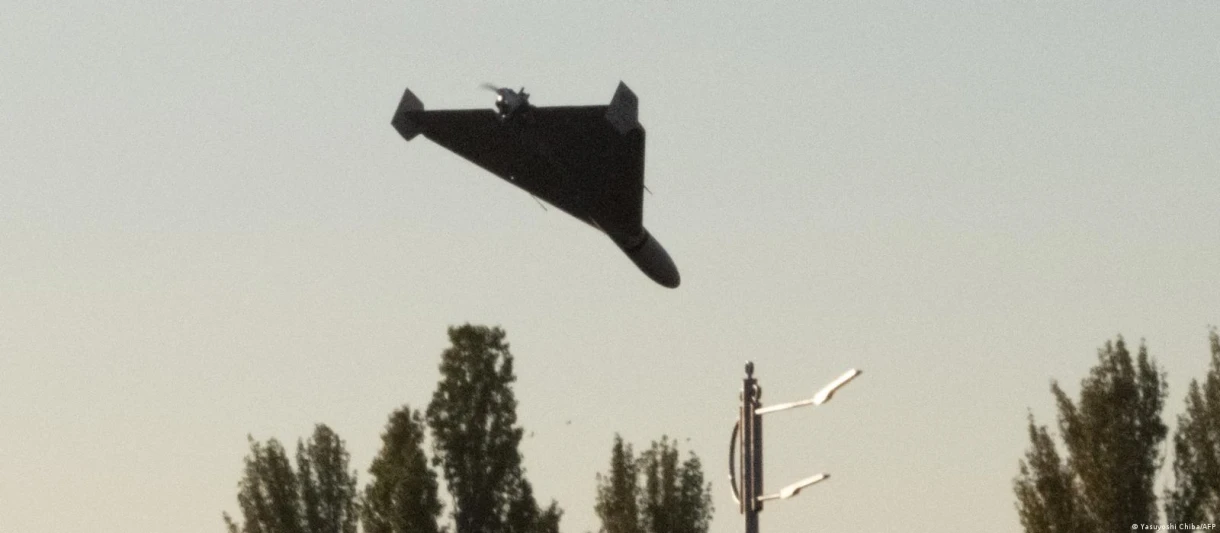
On the other hand, Iran demonstrates success in the production of drones, which proved themselves during the Iran-Iraq war. These UAVs have shown to be less vulnerable to the enemy and provided greater reconnaissance capabilities.
The successes of Iranian drones were first noted during the attack on oil facilities in Abqaiq in 2018, where drones later known as "Shahed" were used.
Iranian drones are relatively inexpensive and possess high accuracy, allowing them to effectively hit targets such as tankers in the Strait of Hormuz.
Toofan-1 with operator. Its small size makes it less noticeable and harder to destroy / © Wikimedia Commons
Additionally, Iran has maritime drones, such as Toofan, which are also used for military purposes. These devices are difficult to detect and can effectively attack targets at sea.
Maritime drones have already been used by the Houthis, raising concerns among the U.S. Navy. Iran also has ships capable of launching aerial drones.
… and Poverty in Everything Else
However, beyond the aforementioned technologies, Iran faces serious problems. It lacks modern air defense systems, allowing the U.S. to attack the country even using stealth technology.
The inability to create effective air defense systems forces Iran to rely on outdated developments that do not meet modern standards.
Iran's pursuit of self-sufficiency also limits its ability to import modern systems, complicating the acquisition of necessary military equipment.
Iranian military satellites launched into space by a Russian rocket on December 28, 2025 / © Yuri Lyamin, @imp_navigator
Despite this, Iran's short-range air defense system Majid has some advantages, such as passive target detection. However, it cannot compete with more modern systems.
The main achievement of Iran in the field of air defense is loitering drones that can stay in the air for extended periods, waiting for their target. This allows for effective engagement of both drones and cruise missiles.
Despite these achievements, Iranian air defense still struggles with modern challenges. In recent wars, it has failed to shoot down any adversaries except for drones.
A comparison with other countries shows that Iran does not have enough modern tanks and other equipment for conducting intensive combat operations.
Thus, despite successes in some areas, Iran faces numerous challenges that could negatively impact its military capabilities.
USA: Uncle Sam is Rich but Slightly Musty
A comparison with U.S. weaponry shows that they have a multitude of tanks, infantry fighting vehicles, and aircraft, although many of them are outdated. However, in the field of MRBMs, the U.S. significantly lags behind Russia.
The U.S. has a stockpile of cruise missiles; however, their accuracy and power leave much to be desired compared to Russian counterparts.
As a result, even with the presence of missiles, the U.S. cannot effectively counter Iran, which has higher quality weapons.
It is not surprising that the U.S. strategy in the current war is to stay at a safe distance from Iranian missiles, using cruise missiles and glide bombs.
While such a strategy minimizes losses among American troops, it also reveals problems with intelligence.
The recent incident involving a missile hitting a school in Iran highlights deficiencies in planning and intelligence, which could negatively affect the reputation of the U.S.
Challenges with accuracy and intelligence cast doubt on the effectiveness of the American strategy in the conflict with Iran.
Against the backdrop of all these difficulties, it becomes clear that the lack of modern UAVs makes a prolonged war with Iran practically impossible for the U.S.
If Iran continues its aggression, the U.S. may face difficulties in responding, leading to increased casualties.
While Iran can launch its drones, the U.S. may face limitations in the number of missiles, making their response less effective.
A comparison with previous conflicts shows that Iran is capable of enduring prolonged wars, and its people are ready to fight for their beliefs, complicating the task for the U.S.
Despite all the challenges, America may face difficulties in waging war with Iran, making the conflict more complicated and costly.
The material "The Technological Power of Iran and the USA on the Battlefield" was first published in K-News.