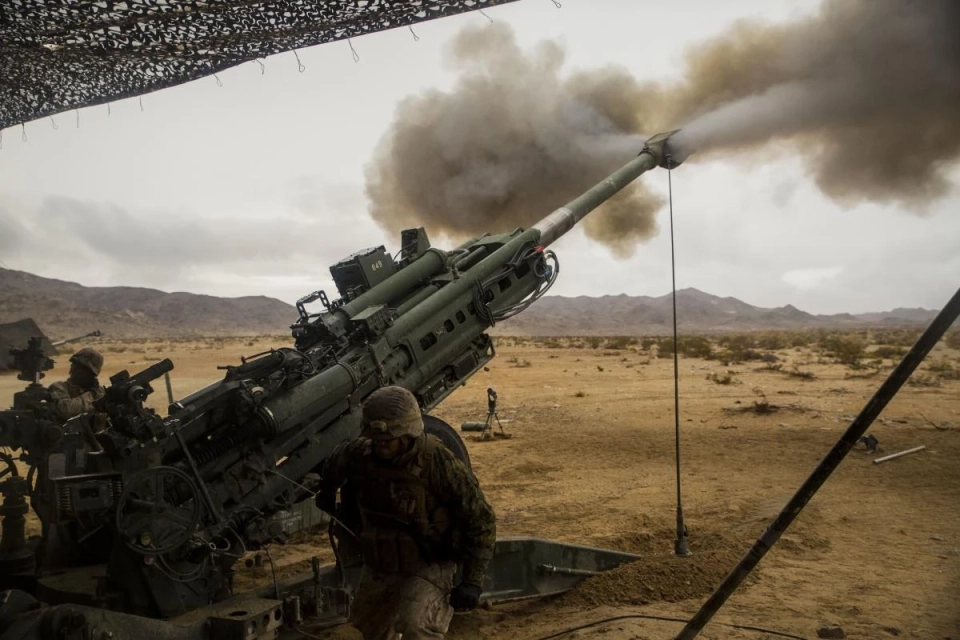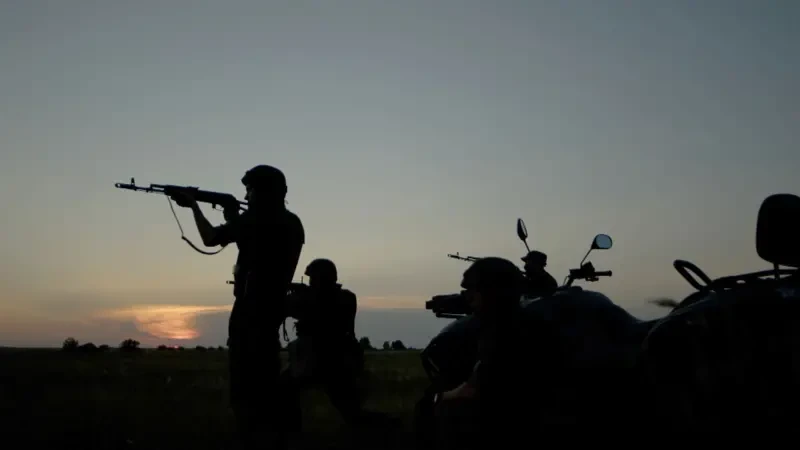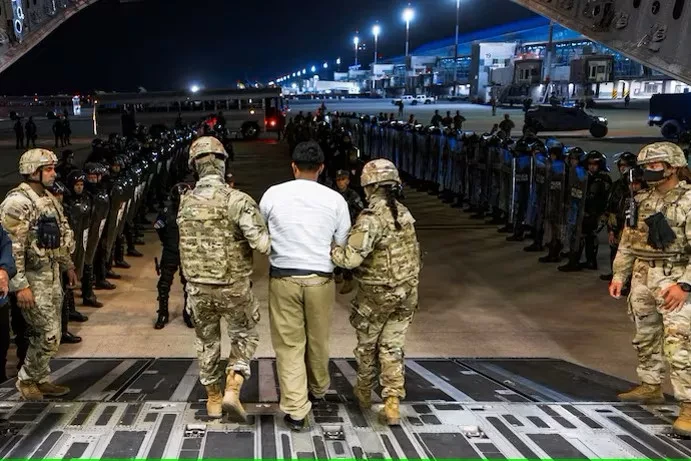
Several years ago, such an open demonstration of military power would have been unimaginable in this city. However, the world beyond Germany is rapidly changing, and this country is changing along with it.
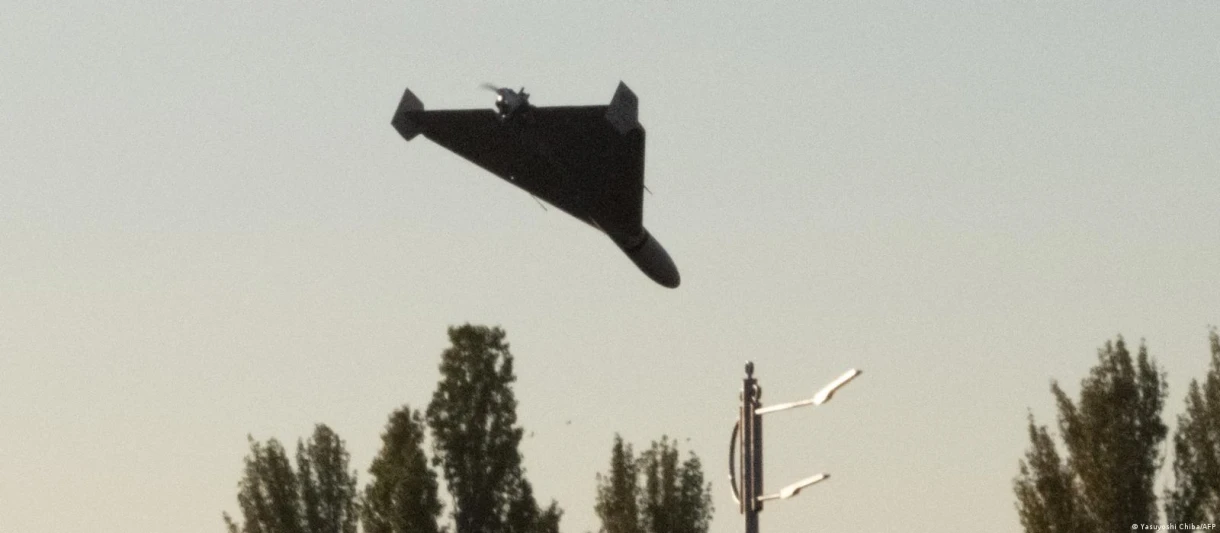
Southern Bavaria has become the center of Germany's defense technologies, focusing on artificial intelligence, drones, and the aerospace industry.
Local residents, like many other Europeans, feel vulnerable, caught between expansionist Russia and the economically active China to the east, while also facing the unpredictable actions of the United States to the west.
According to a recent Eurobarometer survey, 68% of Europeans believe their countries are under threat.
This autumn, the Federal Office of Civil Protection of Germany warned for the first time since the Cold War that war is no longer "unlikely," recommending Germans to stockpile food for a period of three to ten days in case of emergencies.
After the cessation of direct aid from the U.S., Germany has become the largest donor of military and humanitarian aid to Ukraine. Surveys show that voters are also seeking greater security.
For Germany and other European countries, the question arises: are traditional alliances with the U.S., NATO, and the EU sufficient, or should new temporary coalitions with like-minded partners such as Australia, South Korea, and Japan be developed?
Unstable Relations
NATO Secretary General Mark Rutte noted that by 2029, Germany's defense budget will exceed the combined defense budgets of the United Kingdom and France.
He stated that the sum of 150 billion euros that Germany plans to spend on defense is "staggering."
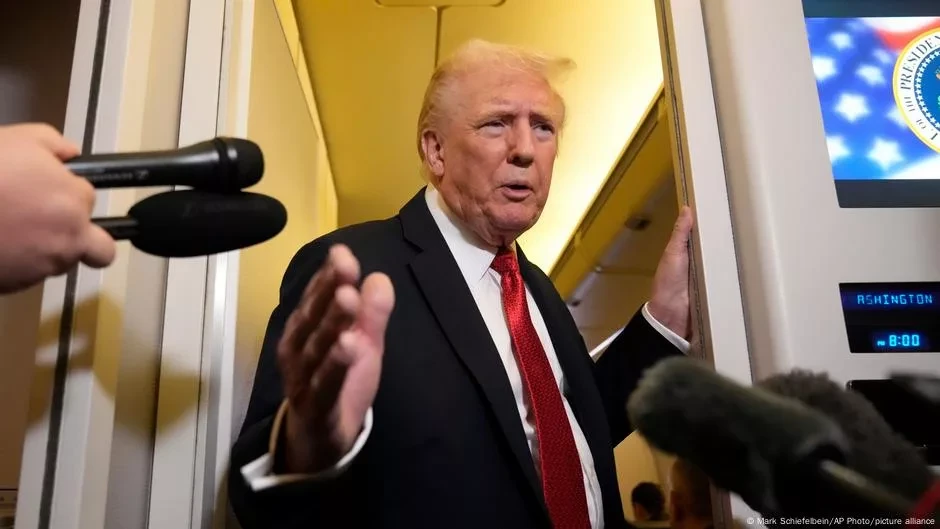
"The United States notices and appreciates this," he added, reminding that Donald Trump is not the first U.S. president to emphasize the need to increase security efforts in Europe, although his approach is more threatening than that of his predecessors.
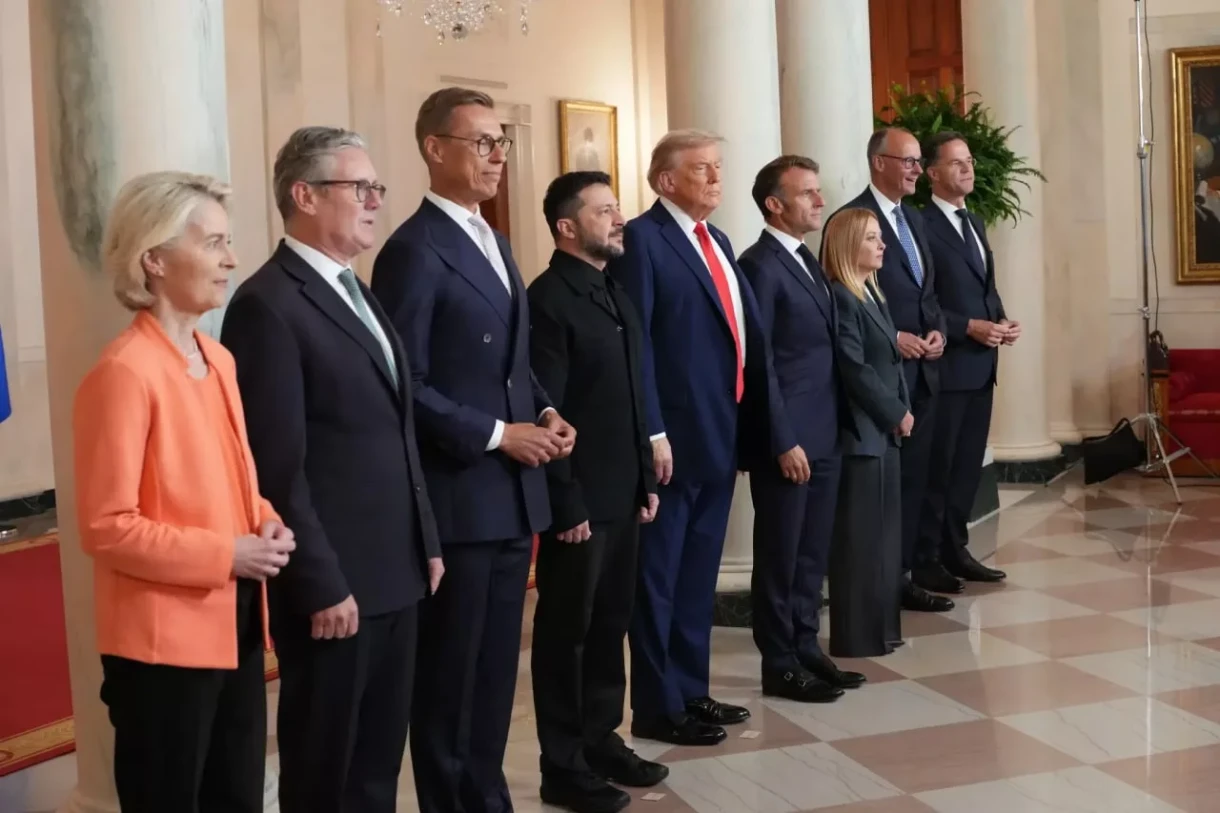
At the Munich Security Conference (MSC) held this past weekend, unstable transatlantic relations became the main topic of discussion. This conference gathers leaders, security experts, and representatives of the defense industry from around the world.
Although such events may seem like a waste of time, they play a significant role, especially informal discussions among leaders, away from the cameras.
The most anticipated speech at the conference was delivered by U.S. Secretary of State Marco Rubio, representing the Trump administration.
European leaders and diplomats were on edge. But why did a 30-minute speech attract such attention?
Because the tension in relations between Europe and the U.S. has reached a historic level over the past 80 years, and this is not just a temporary quarrel.
The Anger of Denmark
Since Trump's return to the White House, he has insulted and undermined the trust of European leaders by imposing high tariffs and threatening Denmark's sovereignty over Greenland, even hinting at the possibility of using force to seize the island.
In her speech at the MSC, Danish Prime Minister Mette Frederiksen, still angry, noted that Trump's plans for Greenland remain "unchanged" amid ongoing negotiations between Greenland, the U.S., and Denmark.
Although Trump ruled out the possibility of a forceful seizure of Greenland and temporarily refrained from imposing economic sanctions against allies, trust between the Atlantic countries has been seriously damaged.
European states perceive Trump as a pragmatic president who uses security relations with allies to achieve his goals. For example, shortly before the elections, he told Europeans that the U.S. would not protect those countries that do not invest enough in their defense.
However, Europe has benefited from U.S. security support for decades. Critics in the U.S. argue that many European countries have been able to afford generous social policies thanks to American security spending.
German Defense Minister Boris Pistorius noted, "We have become accustomed to strong support from the U.S. and have been in a comfort zone, but that time is over. Washington was right."
Nevertheless, the crisis surrounding Greenland and other actions of the Trump administration, such as the temporary suspension of intelligence sharing with Ukraine, have left deep wounds and raise concerns in transatlantic relations.
Therefore, there was great anticipation for Rubio's appearance on stage in Munich.
His speech conveyed a sense of historical unity: "We want Europe to be strong. The two great wars of the last century remind us that our fate will always be intertwined."
Words of Support
Many European politicians, inspired by his speech, stood up and applauded, feeling relieved that he did not threaten or criticize Europe, as U.S. Vice President J.D. Vance did at last year's MSC.
However, for those who were listening closely, it was clear that Rubio's speech touched on themes close to the essence of the Trump administration, such as criticism of globalization, multilateralism, and migration, as well as support for a new era of Christian Western civilization.
Rubio made it clear that the U.S. is not interested in maintaining the old status quo. They are seeking a new path, hoping that Europe will share their values.
The offer of cooperation from the U.S. was conditional and did not imply compromises.
"It feels like abusive treatment of a partner," noted one European diplomat anonymously. "He reminded Europe of how good transatlantic relations were, and then moved to coercion: if you want good relations, do as I say!"
Another diplomat pointed out that while discussing common values, it is surprising that Rubio chose Slovakia and Hungary for his visits after Germany, considering that these are two problematic countries in the EU, where Eurosceptic prime ministers oppose military aid to Ukraine and take a hard stance on migration issues.
Necessary Changes
Rubio's words divided European leaders, who had previously unanimously supported Denmark during the Greenland crisis.
European Commission President Ursula von der Leyen noted that despite Rubio's softer rhetoric, relations with the U.S. have become fragile. "Some boundaries have been crossed, and they cannot be undone," she said. "Europeans have undergone shock therapy."
Some countries may interpret Rubio's warm speech as justification for delaying increases in defense spending. Government financial resources are already stretched, and voters prefer to discuss everyday life issues rather than military expenditures.
RUSI Director Rachel Ellehuus noted that there is a growing divide on the continent.
Scandinavian and Baltic countries, as well as Germany and the Netherlands, are spending significant amounts on defense, while Southern Europe, such as Spain, refuses to increase defense spending as Trump demands.
As Ellehuus points out, France and the UK have promised to increase defense spending but are looking for ways to explain this to their voters: tax increases, cuts to social benefits, or increased borrowing.
"Europeans should have started working on this yesterday and focus on the main issue," she added. "They need 5-10 years to adapt to regular defense challenges."
At a recent NATO defense ministers' meeting in Brussels, U.S. Deputy Defense Secretary Elbridge Colby stated that the U.S. priority has shifted from the European continent to the Indo-Pacific region.
"Under Trump, we are again focused on protecting our interests in our hemisphere," he noted.
Emphasizing that the U.S. still adheres to the principle of mutual defense in NATO, Colby added that the U.S. will be reducing its capabilities in Europe, becoming a "more limited and focused" partner.
Europe must become a partner, not a dependent entity, he urged, proposing the creation of a new "NATO 3.0." The old world order based on the West is fading, but a recent UN Security Council meeting showed that the future of relations between Europe and the U.S. remains uncertain.
Rubio called for a new century of Western civilization, Elbridge Colby wants to revive NATO, while the UK Prime Minister in Munich called for the restoration of the Western alliance.
Starmer's Strategy
Sir Keir Starmer, unlike Rubio's persistent calls for national sovereignty, advocated for closer cooperation between the UK and Europe in defense to reduce rearmament costs, but emphasized that this does not mean abandoning cooperation with the U.S.
Sophia Gaston, a national security expert from King's College London, noted that Starmer has been able to articulate the UK's strategic position more clearly.
"Other European allies may be more candid in their disagreements with Washington, but for the UK, it is critically important to develop triangulation in transatlantic relations. Starmer seems to be looking more confidently in the face of this reality," she added.
"The key point is a deep understanding of national interests and tools of influence. This requires a more competitive approach, which has not always seemed natural for the UK, known for its consensus-oriented diplomacy," she concluded.
In a rapidly changing world, European leaders are increasingly seeking to form new coalitions beyond traditional organizations like NATO and the EU, which often respond more slowly to challenges.
For example, the so-called Coalition of the Willing, led by the UK and France, was created to ensure Ukraine's sovereignty in the event of a possible peace agreement with Russia. Turkey, New Zealand, and Australia are also part of this coalition.
Canada is increasingly collaborating with Baltic and Scandinavian countries that face common geopolitical challenges and share similar values, aiming to promote stability in the region.
One anonymous European politician jokingly remarked that Canada is becoming increasingly "European," and Japan and South Korea are also seen as parts of the "family of like-minded countries."
Not Just Defense
These coalitions are not limited to defense issues. French President Emmanuel Macron has long advocated for Europe's strategic autonomy in security, energy, and technology. In Munich, he called for "risk reduction" related to external threats.
At a recent conference, the President of the European Commission acknowledged that if the EU does not move quickly enough to enhance competitiveness, "a group of member states will have to act independently."
Attempts by small groups of European countries to cooperate for strategic independence have not always been successful. For example, the ongoing conflict between France and Germany over the development of a next-generation fighter jet—the Future Combat Air System (FCAS).
Despite all the talk of European independence, the recent conference showed how much Europe still depends on the U.S. for security, including the nuclear shield and intelligence sharing, and that it is lagging in high technologies.
Nevertheless, changes in Europe, including closer ties beyond the continent, are not merely short-term measures to "survive" Trump. They are likely to have long-term implications. The world seems to be adjusting to the policies of great powers, and even slowly evolving Europe must adapt.