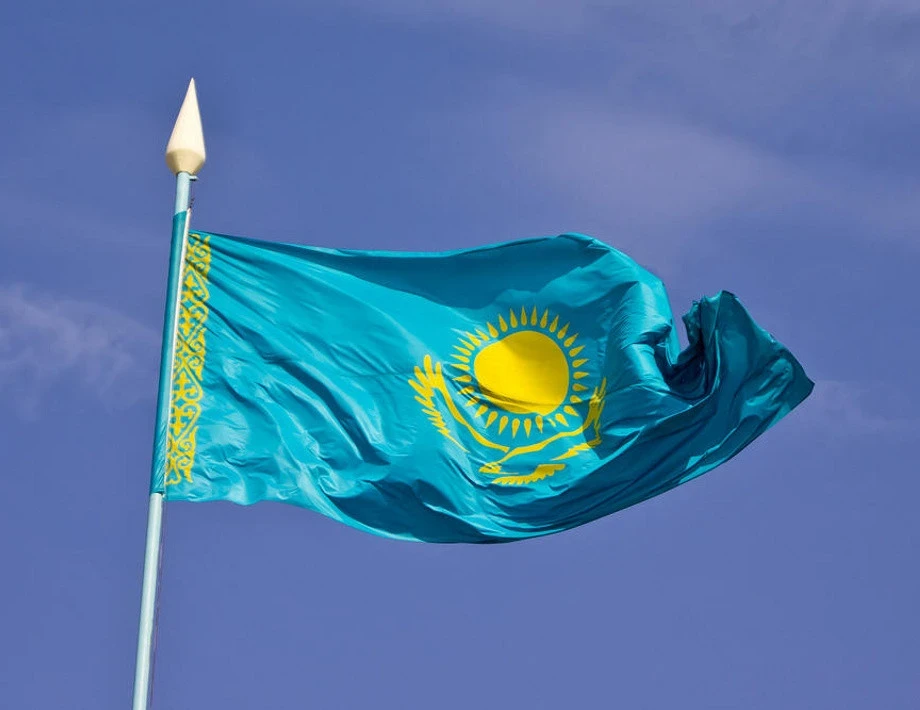
Since the beginning of January, the project of a new Constitution has become a relevant topic in Kazakhstan, sparking active discussion among citizens. This is understandable, as it concerns the country's fundamental law, which has attracted the attention of both human rights defenders and the authorities, notes Daniyar Moldabekov.
On one hand, the Center for Combating Disinformation under the Information and Social Development Ministry published a refutation of several statements, which is interesting in itself, although it cannot be claimed that it is entirely accurate. It is important to note that in their refutation, the authorities did not make direct threats but reproached citizens for wanting to receive clickbait content, which, in my opinion, is not always justified.
The authorities' reaction to such discussions has been quite civilized: they responded to the criticism with their statement. However, it is worth noting that representatives of the Ministry of Internal Affairs also joined the topic, stating that "expressing opinions is not a violation of the law," while not missing the opportunity to warn about possible criminal liability for spreading "knowingly false information."
This wording about "spreading knowingly false information" is present in the Criminal Code, and despite years of calls from lawyers and human rights defenders for its liberalization, the situation remains unchanged. The Union of Journalists has also expressed the need to remove it from the Criminal Code, noting that such issues should be resolved at the level of the civil code.
Despite this, the Ministry of Internal Affairs continues to threaten "harsh reactions to attempts at destabilization." Such threats, in my opinion, are excessive, as it is the authorities who unexpectedly initiated changes to the Constitution, not the citizens themselves.
Thus, the main responsibility for any hypothetical "destabilization" should lie with the Akorda and the subordinate authorities, including the Ministry of Internal Affairs. If it weren't for this ambiguous activity regarding the new Constitution, there wouldn't be such a sharp reaction.
Currently, there is tension in society: people are burdened with debts and uncertain about the future, while many conflicts are occurring in the world. Threatening already weary citizens could lead to the very destabilization that everyone is trying to avoid. Everyone wants to live in a democratic and free society, and the authorities must also demonstrate their intentions in this direction.
The Akorda is trying to create an atmosphere of reform and something new around the project of the new Constitution. However, the propaganda work in this direction leaves much to be desired and is carried out in the usual manner. We see the same authors and template texts that could easily be replaced by artificial intelligence.
In the Constitution, in principle, anything can be stipulated, and this does not present a technical challenge. Much more difficult is to follow what you declare. By promising reforms and a new course, the authorities cannot act according to old templates; otherwise, reality may turn out to be extremely absurd. Isn't this a potential "destabilization"?
Renowned political scientist Dosym Satpaev notes:
The Pareto principle, according to which 80% of results are achieved through 20% of efforts, is applicable to the discussed project of the updated Constitution of Kazakhstan.
At the same time, the "updated" Constitution is not truly new, as even the creation of a unicameral parliament or a people's council does not change the main function of the Fundamental Law in the current system — creating mechanisms that limit society's participation in political life.
It is indicative that despite the active propaganda of the new constitutional reform, the authorities in the updated version of the Constitution even expanded the tools for limiting citizens' electoral rights.
Firstly, the introduction of an exclusively proportional model for forming a unicameral parliament from party lists automatically limits both the passive right of citizens (the opportunity to be elected) and the active right to elect their representatives, as voters who do not support the proposed parties lose the opportunity to express their will.
Secondly, the updated Constitution retains a clause that discriminates against citizens in presidential elections, requiring that a candidate have at least five years of experience in public service. This automatically excludes a large portion of citizens from participating in presidential elections.
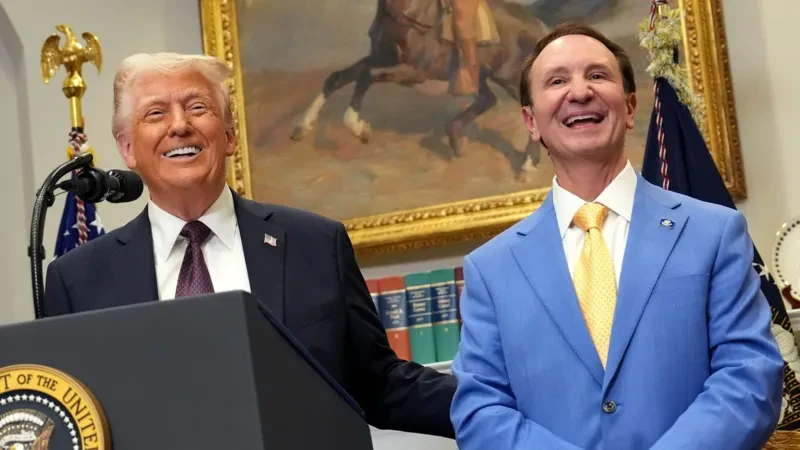
Interestingly, K. Tokayev often admires the initiatives of D. Trump, but under the updated Kazakhstani Constitution, Trump, just like under the old version, would have had no chance of becoming the president of Kazakhstan.
Thus, returning to the Pareto principle, only about 20% of the articles in the Constitution (both old and updated) hold the greatest significance for the authorities. The majority of these articles are aimed at maintaining political monopoly and mechanisms of power succession.
Moreover, these 20% include new vague formulations that open up room for various interpretations and, consequently, for abuses in the area of freedom of speech and citizens' rights to assemble.
When representatives of the authorities start talking about "morality," it should raise alarm. The authorities are far from being a model of spirituality and morality to decide what is moral and what is not.
In a political monopoly, over time, any criticism of the authorities can be deemed immoral. In the absence of clear legal definitions, the interpretation of morality becomes the prerogative of the state.
Another problem of authoritarian systems is that laws and subordinate acts may contradict the Constitution. Although formally the supremacy of the Fundamental Law is maintained, in practice, decisions of the head of state or acts of executive bodies may violate citizens' rights, hiding behind the protection of state interests.
Under "national security," the "security of ruling groups" is often implied. This leads to a desire to expand the possibilities for arbitrary interpretation of the Constitution to justify the adoption of restrictive laws that contradict citizens' rights.
One of the reasons for this is the weak constitutional control of the bodies responsible for checking the compliance of laws with the Constitution. The lack of a system of checks and balances leads to the dependency of the judicial and legislative branches of power on the executive.
Creating a real system of checks and balances is a crucial aspect of any serious constitutional reform. Without such a system, even if rights and freedoms are enshrined in the Constitution, there will be very few real defenders of these rights.