What are the common traits between an embryo, ants, and modern ChatGPT? At first glance, they seem to have nothing in common, but a group of scientists from various fields has identified a hidden algorithm that unites them. They found that any mind, from cells to powerful computers, does not just analyze information but "travels" through imaginary maps of meanings. Intelligence, which we typically consider a privilege of the brain, turns out to be common to both biology and AI. If you understand how this internal compass works, you can see the world as a complex geometric problem rather than just a series of random events. This marks a new era in cognitive science, where mistakes become part of the journey, and geometry represents the essence of thinking, as noted by HighTech+.
Who are the authors of the study?
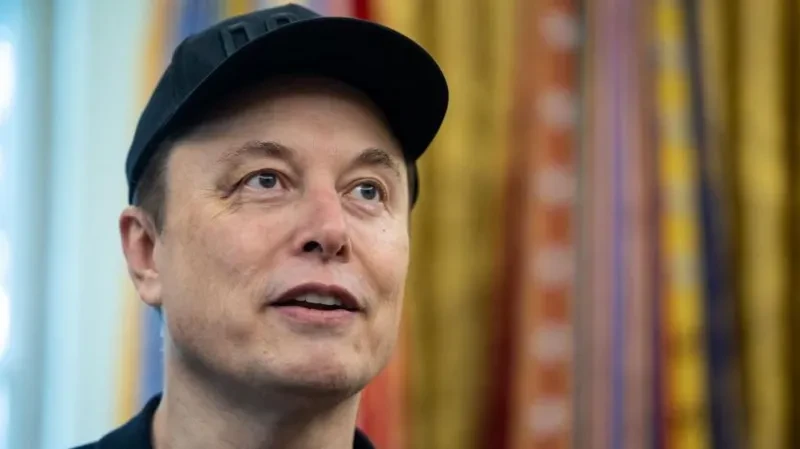
The lead author of the study is Michael Levin from Tufts University, who is considered one of the most advanced innovators in the field of biology. He is referred to as the "hacker of the code of life" for his experiments in creating xenobots — the first living robots made from frog cells. Levin demonstrates that even the tissues of our body possess intelligence and can "reprogram" themselves. His colleague, Benedict Hartl, a physicist and complex systems specialist, translates biological processes into the language of mathematical models. Together, they are developing a unified theory explaining how any matter can think.
Below is a summary of their new scientific paper "Remapping and navigation of an embedding space via error minimization: a fundamental organizational principle of cognition in natural and artificial systems," a recent preprint available on arxiv.org.
Imagine you find yourself in an unfamiliar city. To find your way out, you need two things: a map (awareness of your location and surrounding objects) and a navigator (an algorithm that suggests how to shorten the path).
In Levin and his colleagues' new work, it is emphasized that this duet — mapping and navigating it — is the fundamental principle of any mind. It doesn't matter whether it concerns a human, an embryo cell, or artificial intelligence; they all engage in the same task: transforming the chaos of external signals into a structured internal "map" and striving to minimize errors on the way to their goal.
1. Cognitive invariant: universal software of the mind
The traditional approach to understanding the mind emphasizes "brain-centricity": neurons form thoughts, and their absence means only a mechanical reaction. Levin and Hartl dismantle this stereotype. They introduce the concept of a cognitive invariant — a basic principle of information processing that does not change depending on whether it works with carbon cells or silicon chips.
Every living system faces the same challenges: the world is too complex and chaotic to respond to every stimulus individually. For survival, the system must transform from a simple "assembly" into an active cognitive agent.
- For an embryonic cell, "intelligence" is the ability to create an eye without a clear plan, relying on interactions with neighbors.
- For AI, it is the ability to predict the next word considering the context of world literature.
The authors argue that the mind is not a "privilege" for those who have a brain but a fundamental characteristic of organized matter. Every system striving to maintain integrity must engage in cognitive activity, constantly predicting the future and adjusting its state. This transforms biology from "chemistry" into "informatics."
2. Embedding space: a hidden map of meanings
If the cognitive invariant is the "engine" of thought, then the embedding space is the "road" along which it moves. This can be envisioned as a system of metaphors.
In computers or cellular structures, there are no "apples," "fears," or "liver forms." There are only signals. The embedding space is a mathematical mechanism that transforms qualitative concepts into numerical coordinates.
How it works:
- Multidimensionality. Each concept can be represented as a point in a space that can have thousands of dimensions. For example, the word "dog" might have coordinates along the axes of "living/non-living," "size," "loyalty," and so on.
- Proximity as meaning. Interestingly, the distance in this space corresponds to meaning. For instance, "dog" and "puppy" will be close to each other, while "dog" and "cryptocurrency" will be at a significant distance.
- Biological embeddings. Levin applies this concept to biology, asserting that cells have their own "embedding space." For them, the coordinates are the levels of electrical voltage across membranes and the concentration of proteins. The cell "senses" its position in this state space and understands: "I am too far from the coordinate 'healthy tissue,' I need to move towards recovery."
Thus, thinking is not merely about manipulating objects in reality but navigating this vast mathematical map. We (including our cells and AI) are always searching for the "right address" on this map, recalculating the route to minimize the distance to the goal.
3. Remapping: changing the landscape
If navigation is moving through familiar streets, then remapping is changing the landscape. In Hartl and Levin's work, this process is key to adaptation.
The system not only moves towards a goal; it constantly asks, "Is my map current?"
- In learning: When you suddenly grasp a complex metaphor, your "embedding space" undergoes significant changes. Points that were previously far apart suddenly become close. Your internal space restructures itself to minimize future errors more effectively.
- In evolution and development: If an organ is damaged to the extent that old recovery pathways no longer work, cells can "remap" their signaling pathways, finding new ways to restore function.
This explains the incredible plasticity of life. We are not rigidly programmed automatons but systems capable of changing the scale and structure of their "internal navigation" in the process.
4. Navigation: from abstract thought to actions
If the embedding space can be viewed as a map, then navigation is the process of life. In traditional biology, it is assumed that everything operates on the principle of "stimulus — response." However, Hartl and Levin propose an alternative model: "state — goal — maneuver."
Navigation in biology. Imagine a group of cells needs to form an eye. They do not follow strict instructions from DNA like a chef following a recipe. Instead, they act like an experienced driver. If a traffic jam occurs (for example, due to injury or mutation), the driver does not stop — they look for a detour to reach their destination. This is how navigation works: the system knows the "coordinates" of a healthy organ in the state space and constantly adjusts its course. This is why embryos are remarkably resilient to damage — they "navigate around" obstacles on the way to their final form.
Navigation in AI. When a neural network generates text, it does not simply produce random words. It makes micro-movements in its space of meanings. Each subsequent word is a step that should bring it closer to the most logical and coherent conclusion of your thought. AI "explores" the space, choosing the most probable path.
5. Error minimization: the driving force of cognition
This is the most technical yet simultaneously the most fascinating part of the theory. Why does a system strive to move at all? The answer lies in free energy or "prediction error."
From a mathematical perspective, this manifests as the desire to minimize the divergence that any cognitive system attempts to reduce to zero.
The system constantly compares its current coordinates with its targets. This gap creates "tension." Just as a ball always rolls into a hole, an intelligent system strives to "roll" into a state of zero error.
We have two paths:
- Change the world (Navigation): act in such a way that reality matches our map (for example, grow a tail or complete a text).
- Change oneself (Remapping): acknowledge that the map was incorrect and update it (learning).
6. Examples of biological intelligence: how cells "negotiate" shape
Michael Levin is not just a theorist; he is a practitioner who has observed for decades how living matter solves geometric problems. Examples from his work serve as evidence that navigation in state space is not just a metaphor but a physical reality.
Case #1: Regeneration as the search for the "right address"
The most well-known example from Levin's work is the flatworm planarian. If a worm is cut into 200 pieces, each piece "knows" where it was in the body and will regenerate the missing part. From the perspective of the embedding theory, each cell has its coordinates on the overall map of the body. When the worm is cut, the system registers a significant "error": the current position (a piece of the tail) does not match the target (a whole worm). The cells begin to change their bioelectrical parameters, paving the way to the point "whole organism." Once the "address" is reached, growth stops.
Case #2: Xenobots — intelligence without ancestors
Levin creates xenobots — tiny organisms made from frog skin and heart cells. They have no brain, neurons, or millions of years of evolution behind them (they have never existed in nature in this form). Nevertheless, these cells demonstrate remarkable navigational abilities:
- They group together.
- They find ways to move through space.
- They can collaboratively perform tasks, such as cleaning a surface. This confirms that cells possess an "innate navigator": when faced with a new situation (in a new embedding space), they can remap on the fly and find ways to survive and work together.
Case #3: Bioelectric memory
The article mentions an experiment that seems fantastic: researchers altered the bioelectric code in a worm without touching its DNA. As a result, the worm grew two heads. The most astonishing thing happened later: when the two-headed worm had its heads cut off again, it… grew two heads once more! The worm's DNA was set for one head, but the cognitive map of the system had been rewritten. The cells "remembered" the new coordinates in the embedding space and now strive for that state as their target.
Significance of the research
These examples show that life does not function as a rigidly programmed conveyor belt but as a dynamically adapting agent. Cells are not just bricks but builders equipped with a tablet containing a map. If the tablet is altered or hacked, the builders will reconsider the entire project. This opens new horizons for the medicine of the future: instead of trying to rewrite DNA (changing bricks), we could simply update the map in the "mind" of tissues, prompting them to heal cancer or restore organs on their own.
The work of Hartl and Levin is an attempt to create a "unified field theory" for intelligence, integrating developmental biology, cognitive psychology, and computer science. It asserts: we think not because we have a brain, but because we are systems capable of navigating the maps of our states.