The title "Ат-чабыш" translates to "Horse Herdsman" in English.
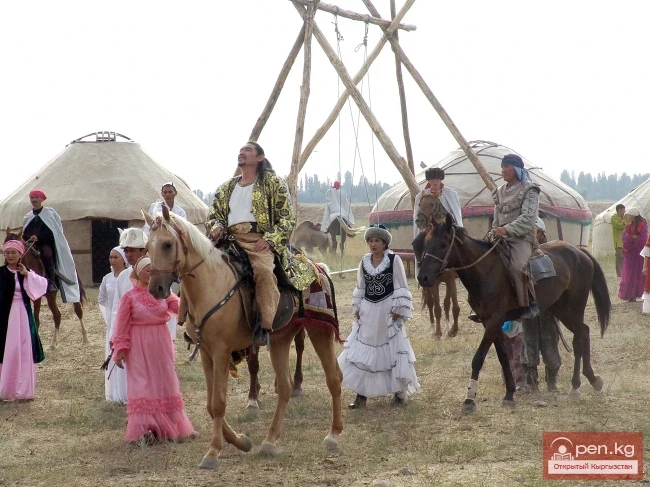
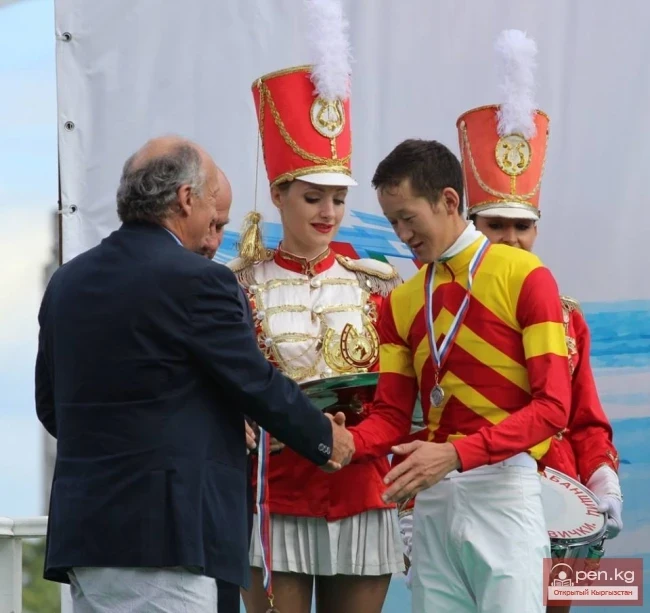
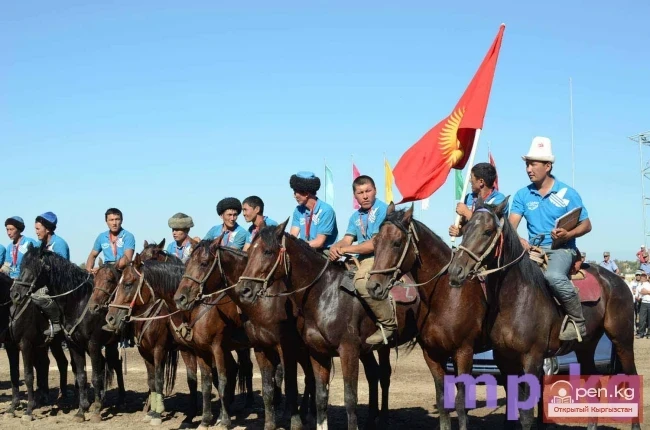
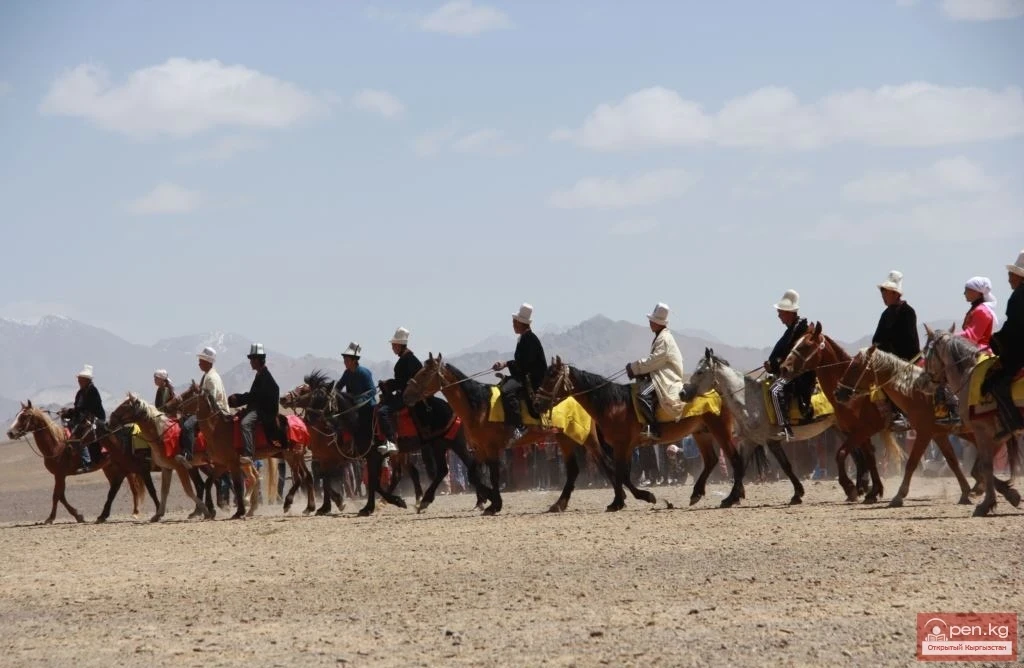
At-chabysh (horse racing) is a very ancient and popular sport among the Kyrgyz people.
“Horse racing,” wrote S. E. Dmitriev, one of the researchers of the Kyrgyz way of life, “is the most popular entertainment among the Kyrgyz—these born riders. No holiday goes by without races.”
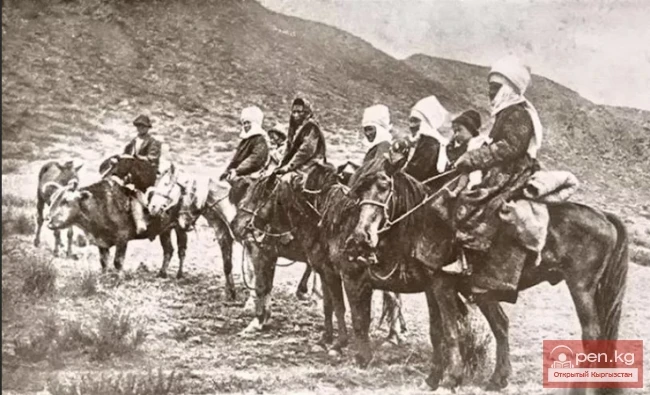
The origins of at-chabysh were linked to the necessity of preparing horses for various transitions from one area to another and other reasons related to the lifestyle of the Kyrgyz as a nomadic people. The Kyrgyz, due to historically established material living conditions, are natural cavalrymen.
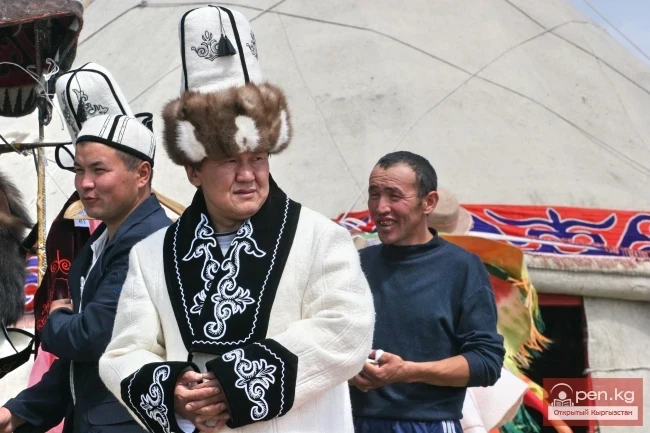
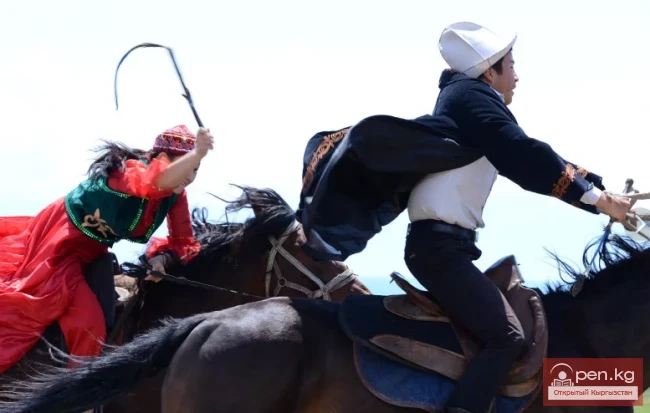
Men and women, boys, girls, and elderly people are skilled at galloping along any mountain road, climbing steep paths to dizzying heights, catching, taming, and training any wild herd horse for work. It is no coincidence that various horse games and equestrian competitions are widespread among the Kyrgyz people. At-chabysh has been and remains the most popular sport among the Kyrgyz population.
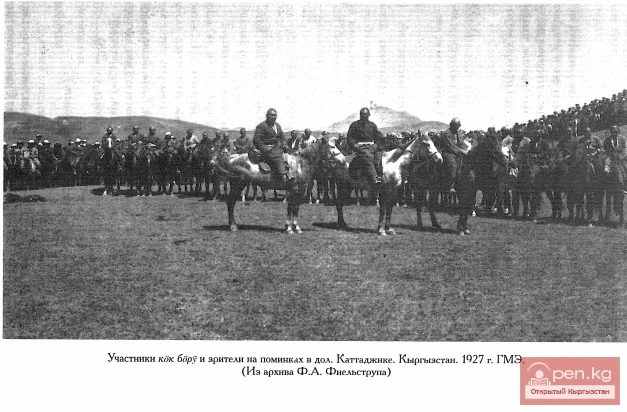
Competitions in at-chabysh, which is also known among the people as “alaman-bayga,” were once held on a grand scale. For instance, during the largest sports festival held in October 1913, up to 40,000 people gathered in the Kichi-Kemin Valley of Kyrgyzstan from all over Central Asia and Kazakhstan. The Kichi-Kemin alaman-bayga was the largest sporting event in pre-revolutionary Central Asia.
The rules for at-chabysh competitions were first introduced in 1952 with the approval of the Committee for Physical Culture and Sports under the Council of Ministers of the Kyrgyz SSR. According to the rules, at-chabysh competitions can be individual or team events and are held over distances of:
a) 5, 8, 10, 12 km for horses aged 3 to 4 years;
b) 15, 20, 25 km for horses aged 5 years and older;
c) 30, 40, 50 km and more for horses no younger than 5 years, specially trained and having a special permit from a doctor.
The distances for competitions can vary depending on the terrain and may be straight, with turns, in a closed loop, or on racetracks.
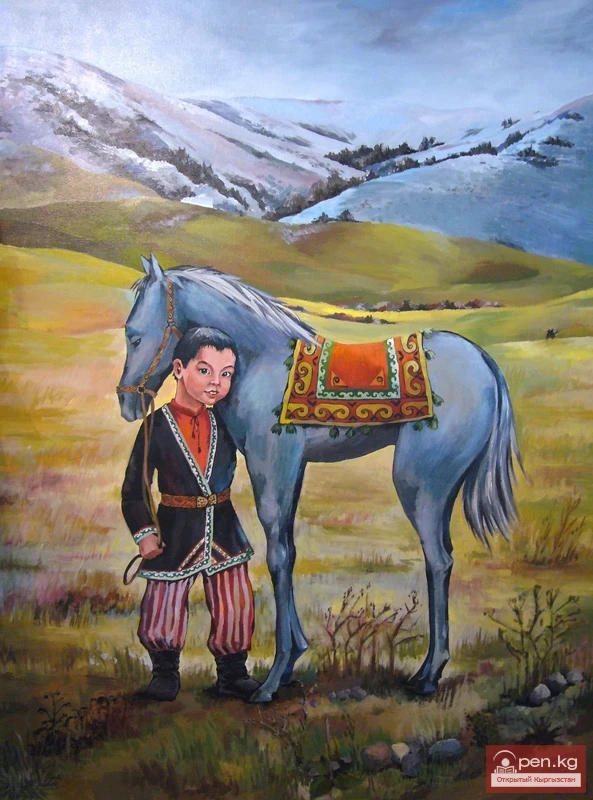
In official competitions, riders must be at least 15 years old, although in popular practice, riders as young as 10-12 years old participate, as their lighter weight eases the load on the horses and allows them to show greater speed. For these same reasons, races are often held without saddles.
Any breed of horse with any equipment can participate in at-chabysh.
Winners in at-chabysh are those who undergo extensive and prolonged training for the competitions.
Read also:
A Bit of History of the National Games of the Kyrgyz People
The voluntary incorporation of Kyrgyzstan into Russia (1863) played an important role in the...
The title "Оодарыш" can be translated to English as "Oodarysh." It appears to be a proper noun, possibly a name or a title, and may not have a direct translation.
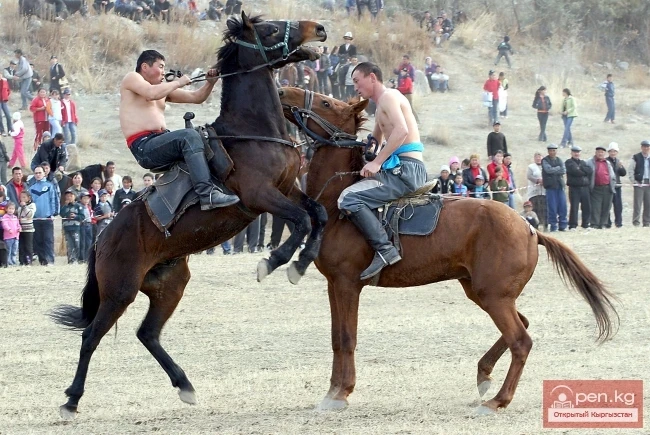
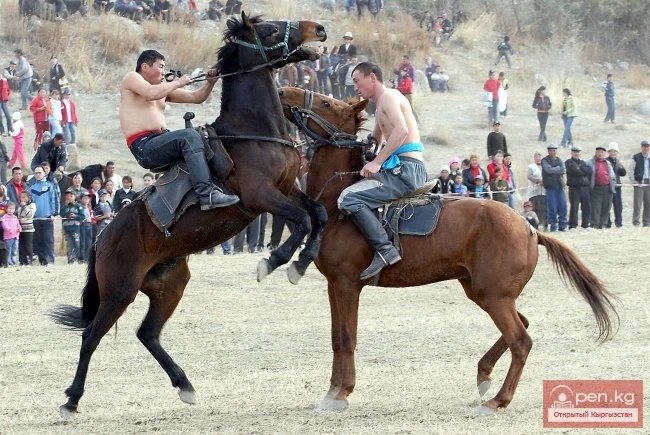
Oodarysh is a horse wrestling competition that requires great physical strength and agility,...
On National Kyrgyz Games
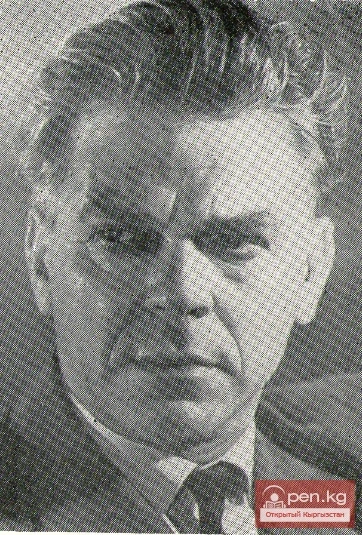
“May the ancestors be blessed, who left us these fearless men's games” CHINGIZ AITMATOV...
Young Talents: A Student from Tyup R. Perizhiga is Fluent in Kyrgyz and Conquering Equestrian Sports in Kyrgyzstan
Ruslan Perezhiga, who lives in the village of Tyup in the Issyk-Kul region, speaks Kyrgyz fluently...
The Role of N. S. Kholfin in the Development of Kyrgyz Ballet
N.S. Kholfin is one of the first enthusiasts of creating Kyrgyz professional ballet One of the...
The title "Теке чабыш" translates to "Tekke Race" in English.
Teke chabysh is a game that resembles a kind of "hockey" on the ground....
A Kyrgyzstani won silver at the World Cup stage for riders and jockeys.
The championship for riders and jockeys from the Mediterranean and Black Sea countries took place...
Tulpar Kokcholok
Once upon a time, there lived a man named Dzhancharbek. He decided to organize a feast and began...
The Dance Art of the Kyrgyz. The History of Kyrgyz Folk Dance. Part 2
Kyrgyz Folk Dance Art We have already mentioned the games and entertainments that became the...
Sport
Like all nations, the Kyrgyz have historically developed and still preserve traditional games and...
The closing ceremony of the World Nomad Games took place in Cholpon-Ata.
The solemn closing ceremony of the First World Nomad Games took place at the racetrack in...
Wrestling
Kuresh — Kyrgyz waist wrestling — is one of the most popular national sports in Kyrgyzstan. This...
Organization of the Kyrgyz State Institute of Physical Culture. Document No. 198 (July 1955)
RESOLUTION OF THE COUNCIL OF MINISTERS OF THE KYRGYZ SSR "ON THE ORGANIZATION OF THE KYRGYZ...
Kyrgyz Sports and Athletes in the Soviet Period
Kyrgyz people have long been close to sports: their nomadic lifestyle was associated with the...
Kok Boru - Strength, Agility, and Excitement!
The Kyrgyz people carefully preserve and develop ancient and unique sports that amaze foreign...
A.N. BERNSTEIN - Researcher of Ancient Cultures of Central Asia. Part - 2
A.N. Bernstein's Interest in the Ethnogenesis of Turkic Peoples During the war years, A.N....
The World Nomad Games Will Become a Worthy Alternative to the Olympics
The First World Nomad Games will take place in the city of Cholpon-Ata on the shores of Lake...
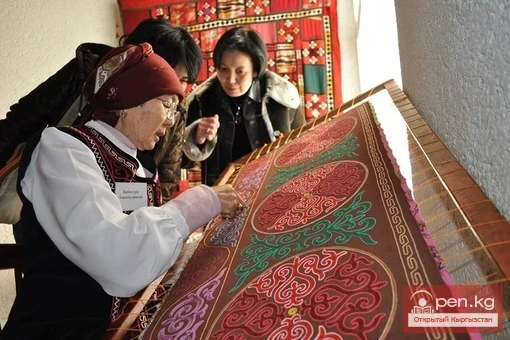
SAYMA (EMBROIDERY)
Embroidery was a very popular and widely practiced form of handicraft, practiced by women of all...
World Nomad Games 2014
From September 8 to 14, 2014, the World Nomad Games will take place in the city of Cholpon-Ata on...
Horses for Hunting
All horses in the mountains of Kyrgyzstan are small but extremely resilient. Many refer to them as...
A concert by the band "KINO" will take place at the Koshomkul Sports Palace.
Dear friends! The band "KINO" is coming! For the first time in Kyrgyzstan and Central...
Historical Perspective of the Kyrgyz People under Soviet Power
The Achievement of Greatness by A. Sydykov Thanks to the Soviet System The fate of A. Sydykov and...
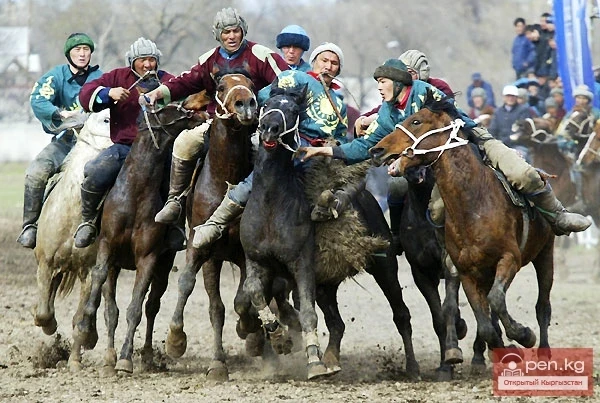
Ulak-tartys (goat wrestling)
Ulak-Tartysh (goat wrestling) is a traditional equestrian sport where riders compete for the...
Klavia Ivanovna Antipina
Antipina K.I. - a renowned domestic ethnographer, specialist in the ethnography of the Kyrgyz...
Localization of the Tribal Groups of the Kyrgyz
Localization of the tribal groups of Kyrgyz...
Kyrgyz Folk Music
Kyrgyz folk music is a rich area of the national culture of the people, expressing their...
Stoffer Yakov Zinovievich
Shtoffer Yakov Zinovievich Theater artist. Honored Artist of the Kyrgyz SSR. The name of Y....
Genealogy of the Bashkir Tribe of Kyrgyz
According to the genealogy (shézhere) preserved from the time of our ancestors, the progenitor of...
Ash. Ritual Life of the Kyrgyz in the Early 20th Century. Part - 17
Ash: first day (kemegesin chavat) sayak Horse races on the day of digging the hearths for the...
Carpet Weaving among the Kyrgyz
In the 19th century, especially in its second half, carpet weaving in southern Kyrgyzstan was...
Traditional Utensils of the Kyrgyz in the Last Century
TRADITIONAL UTENSILS The focus and nature of domestic crafts were determined by the nomadic and...
Youth Asian Games: Results of Athletes from Kyrgyzstan as of October 20
The third Youth Asian Games are currently taking place in Bahrain. On October 20, competitions were...
Organization of the Kyrgyz State Women's Pedagogical Institute. Document No. 188 (May 1952)
RESOLUTION OF THE BUREAU OF THE CENTRAL COMMITTEE OF THE COMMUNIST PARTY (BOLSHEVIKS) OF...
Zalman Lvovich Amitin-Shapiro
Zalman Lvovich Amitin-Shapiro (1899-1968) — a Soviet Orientalist, ethnographer, and classic of...
How the Innate Inclination of the People Towards Rhythm and Plasticity Helped Kyrgyz Artists Create National Dances and Ballet
How the art of folk storytellers helped Kyrgyz artists create ballet As is known, the Kyrgyz did...
Ethnographic Descriptions of the Material Culture of the Kyrgyz
Among the sources utilized to address the issue of the ethnogenesis of a particular people, to...
The newspaper "Megapolis" has been recognized as the best in sports coverage!
On December 24, the results of the work of the City Committee for Physical Culture and Sports under...
Concepts of Notable Historians on the Ethnogenesis of the Kyrgyz People
Key Milestones in the Ethnogenesis of the Kyrgyz People An important stage in the study of the...
Fabrics of Kyrgyz Production
Fabrics of Kyrgyz production are characterized by plain weave, which is considered the simplest...
Alysh - Aiming for the Olympics!
Every nation has its unique sports that were formed in ancient times. The rules have been carefully...
Salburuun as a Sport, or the Features of National Hunting!
The Kyrgyz people have developed a tradition of long group hunting, known as salbuuрун. Hunters...
The Spread of Kyrgyz Pile Weaving
Pile weaving has long been known to the Kyrgyz living in the territory of the modern Osh region,...
Spartakiad of Employees of the State Authorities of the Kyrgyz Republic
From November 8 to 13, the Spartakiad of State Employees of the Kyrgyz Republic will take place at...
The Population of Kyrgyzstan in the Soviet Period (1917-1991)
Population of Kyrgyzstan from 1917 to 1970...
Study of the Kyrgyz from an Ethnographic Perspective
One of the largest Soviet Orientalists, Academician V. V. Bartold, classified the Kyrgyz among the...
90 Years of Kyrgyz Sport
On April 6, a solemn event dedicated to the Day of Physical Culture and Sports Workers took place...
Snooker – the chess of billiards!
Billiards is one of the most popular sports in our country, both at the amateur and professional...
Ethnonyms Included in the Composition of the Kyrgyz People
Ethnic Self-Consciousness of the Kyrgyz People In 1517, the ruler of the Kyrgyz was Muhammad....