Since ancient times, there has been a stable concept in philosophy: the level of morality and ethics prevailing in a state is determined by its attitude towards women.
At the origins of modern civilization stood women. The transition from matriarchy to patriarchy somewhat diminished the role of women, distancing them from active participation in societal development and confining them within the narrow confines of family relations. This process unfolded differently across various continents and lasted quite a long time.
In the pre-Islamic era, the birth of a girl in an Arab family was considered a sign of misfortune and was a tragedy. Newborn girls were buried alive in the ground, and this custom was not regarded as vandalism. The Islamic religion was the first to impose a ban on this inhumane practice.
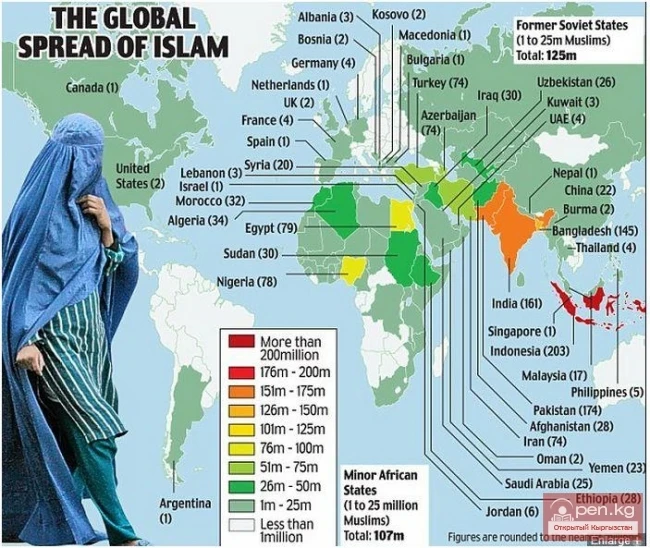
Emerging in the 7th century in Arabia and then spreading over a vast territory from China to the Pyrenees, Islam became the spiritual banner of many peoples of the world. At the same time, it coexisted with certain traditions, customs, and characteristics of the conquered peoples. This is evidenced by the surviving signs of Tengrism, shamanism, totemism, and other cults of Turkic peoples, including the Kyrgyz, who began to embrace Islam even before the 10th century. The complete picture of women's status during that time can be gleaned from the Quran, hadiths, and the works of medieval Muslim theologians. A review of the Quran reveals that there is no unequivocal approach to it.
In the Surah "Women" (verse 38/34), it states: "Men are in charge of women by right of what Allah has given one over the other and what they spend for maintenance from their wealth. So righteous women are devoutly obedient, guarding in [the husband's] absence what Allah would have them guard. But those from whom you fear arrogance - admonish them and send them away from beds and strike them. But if they obey you once more, seek no means against them..." These verses clearly indicate the inequality between men and women and the subordinate position of the latter. However, commentators of the Quran juxtapose this cited verse with another: "And their Lord responded to them: 'Never will I allow to be lost the work of any worker among you, whether male or female; you are of one another'" (Surah 3:195). This verse is interpreted by supporters of Islam as an indication of complete equality for women.
The Quran teaches that men and women are equal before God; they fulfill their social and worldly duties according to their needs and nature. At the same time, they must follow the path predetermined by Sharia and perform only righteous deeds, being morally pure in this world and, as a result, purified in the afterlife.
The Quran also suggests giving preference to defining equality between men and women based on their talents and abilities.
In the pre-Islamic period, women did not have rights to specific inheritance, nor did they have the right to engage in independent work that could benefit them. Islam, however, teaches that a woman's identity is only partially dependent on a man, and she, as a person, has the full right to independence, and like a man, she is expected to receive reward for righteous deeds in the afterlife.
Islam imposes certain requirements on women, but at the same time creates specific opportunities in legal and rights spheres:
• In the area of civil rights, Islam fully recognizes the human dignity of women on par with men;
• In the public sphere, Islam suggests that women should be educated;
• In the legal sphere, Islam grants a girl who has reached adulthood full material independence in all her affairs. No one - neither a husband, nor a father, nor a brother - has the right to encroach upon her property, whether it be a bride price or something else. Islam also does not prohibit women from engaging in labor activities and, on the contrary, the Quran prescribes that they engage in useful work that suits their nature and personality traits, protecting their religion, and Islam also shields women from heavy exhausting work.
In Sharia books, for example, there are recommendations addressed to parents and brothers of girls: "If you have bought gifts and treats for children, then first of all, gift the girls, for their nature is tender and fragile." Raising girls, providing them with food, clothing, and everything necessary, and educating them is a sacred duty of parents, brothers, or close male relatives. After a girl gets married, her husband takes full responsibility for her material support. Many hadiths reveal a deep reverence for women as mothers. The Messenger of Allah, the prophet Muhammad, says: "Humbly serve your mother, be dust at her feet; if you earn her blessing, you will be in paradise, for paradise lies beneath the feet of mothers." Similar sentiments are expressed in the Quran in Surah "Luqman" regarding mothers. This sacred verse particularly emphasizes the hardships and deprivations experienced by women during pregnancy or breastfeeding, and it serves to remind children of their sacred duties - to respect and honor their mothers.
Islam, preaching respect for women as mothers, established and rooted monogamy. This provision, firstly, nullified the view that women are merely females satisfying their animalistic needs; secondly, it strengthened and solidified the family; and thirdly, it had a beneficial impact on child-rearing.
The Islamic religion, from its formation until the end of the 16th-17th centuries, was the only religion that called for valuing and respecting women, their chastity and piety.
The principles preached by the Quran, hadiths, and Sharia laws ultimately led to the strengthening of families, eliminating divorces, undermining the roots of debauchery and adultery; elderly parents peacefully lived out their days in their children's families, not fearing expulsion and being condemned to a hungry and lonely old age.
The Quran canonizes the most important provisions regarding women, starting from the legend of her creation from Adam's rib and ending with the functions of a Muslim woman in various spheres of social, family, and personal life.
"The attitude of Islam towards women," writes the famous orientalist V.V. Bartold, "reflects the same fundamental flaw of the Quran as its criminal legislation: excessive concern for the protection of property rights and excessive neglect of personal rights. Women's property rights were secured by Sharia to a greater extent than many European freedoms of laws of that time; on the other hand, women under Islam from the very beginning found themselves in a more degraded position compared to men than they had been before, and subsequently mothers, daughters, or sisters. Many legends about women's regency have been preserved. According to the accounts of Juvayni, the daughter of the gurgan (ruler) was at the head of the Karakhanid state (in the Semirechye region) in the 70s of the 12th century.
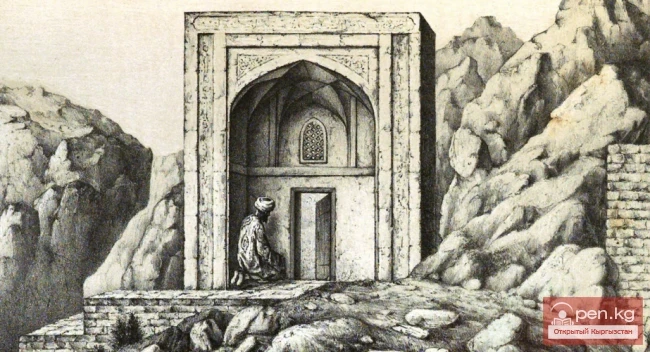
Many magnificent mausoleums have been preserved, built in honor of the mothers and daughters of rulers. Among the masterpieces of the 14th century are the mausoleum of Tyurabek-khanum, the mausoleum of Kyanizek-khatum, known as the Tomb of Manas.