Five hours until departure. The New Year has passed. Outside, it’s a true winter. A snowstorm is raging. I don’t know why, but I always feel a sense of anxiety before a long journey. There’s no joy that slows down the passage of time. I’ve been waiting for this moment, and the closer it gets, the stronger the feeling of anxiety becomes. Perhaps it’s due to my age or the fact that in recent years, the country has lacked political stability and “tomorrow” is constantly unpredictable. But these pre-travel anxieties are finally behind me. The waiting time dissolves. Wishing myself good luck, I step onto the path of adventure.
A fresh, frosty night enveloped us. Bishkek sparkled and twinkled with lights. The fir trees, covered with a blanket of snow, shimmered with facets of color and created a kind fairy tale. Lonely, wandering travelers hurried home to warmth, quickening their pace.
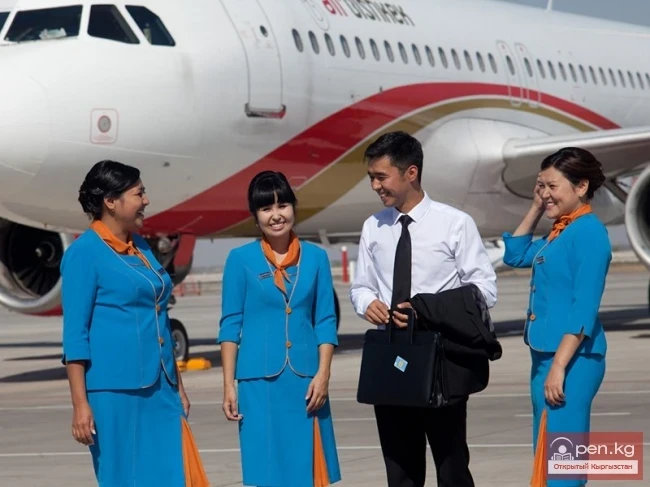
The Airbus A-320, waiting for its passengers, had lowered its head and was sleeping. But suddenly, unnoticed and somehow silently gliding along the illuminated runway, it lifted off the ground and confidently soared into the night sky of Bishkek.
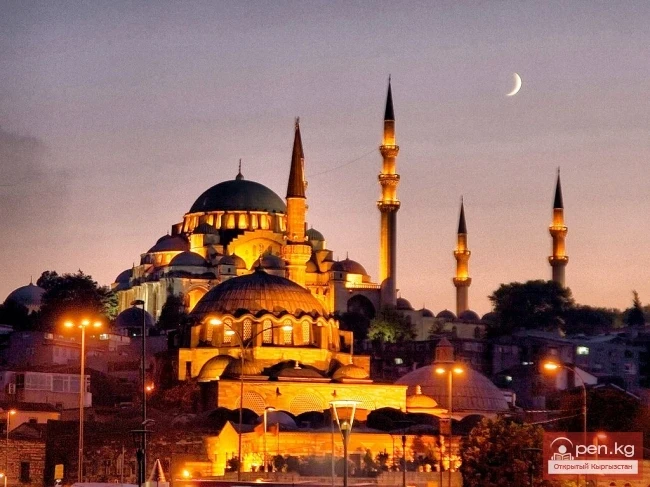
Five hours of flight were exhausting. And here we are in Istanbul. But this is only half of our journey. We are flying to Amman - the capital of Jordan. In Istanbul, it’s just a layover. And almost eight hours of waiting.
The hotel was located in the old part of the city at the foot of the ancient fortress wall, a remnant of the Roman Empire. After settling in, we decided to take a walk around the city. However, these plans were not meant to be. The wind unfurled a blanket of clouds and fog over Istanbul. The sun disappeared. A fine, cold rain began to fall, driving us back to the hotel.
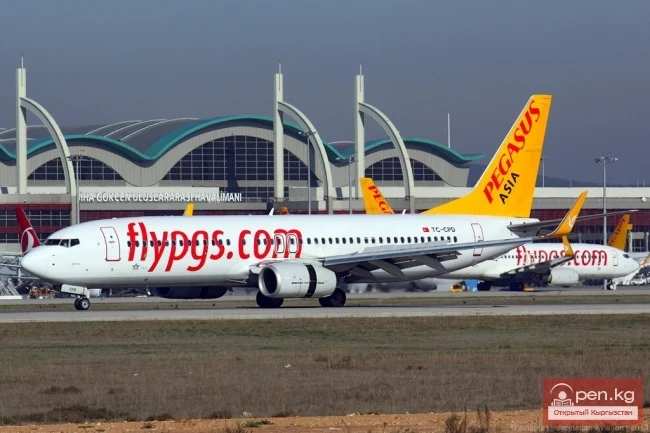
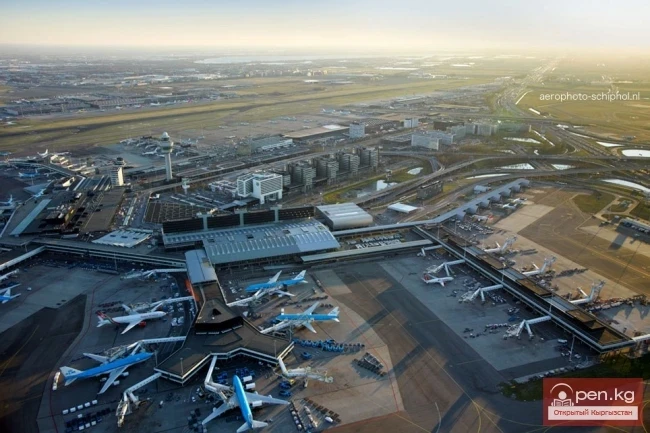
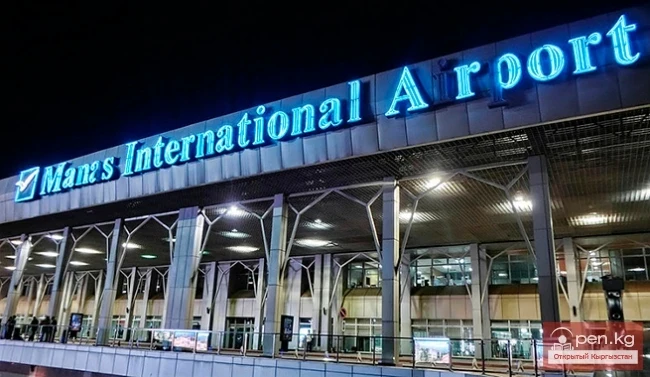
And then again to the Istanbul airport. There was still an hour until boarding. Settling more comfortably in my seat, I looked through the giant glass windows. I could see how a huge, coordinated living mechanism was at work. Every thirty seconds, planes took off and landed. The soundproofing was so effective that no sounds could be heard, giving the impression of a giant monitor revealing views that existed somewhere between the earth, time, and the sky of an interplanetary station.
It’s interesting to wonder where and why all these people are flying? Threads of routes stretch from Istanbul to different corners of the world. Some will be in America tomorrow, some in Africa... How many people, how many destinies intertwine here, at the airport. And how much sometimes depends on each such flight. It would be great to trace, to know what calls them to the road: business, love, misfortune, hope... Or maybe they, like us, are flying to explore the world and return home with impressions and new knowledge...
But enough of fantasizing, our turn to fly has come.
The Amman airport looks somewhat provincial compared to the Istanbul one. You immediately understand that you have entered an Arab country; the signs in Arabic, the clothing, and the faces all speak of it.
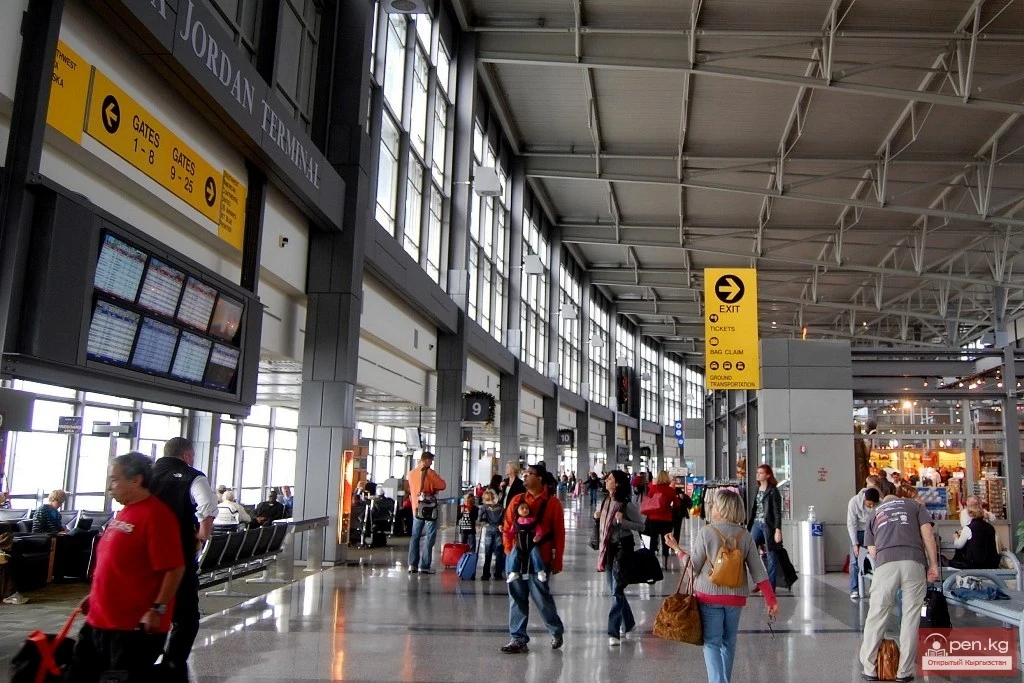
It was night when we were met. A representative of the receiving tour operator took our passports and organized the visas and other formalities himself. It was nice not to have to fill out various forms and stand in lines. In short, I was once again convinced that Arabs can organize tourism at a high level.
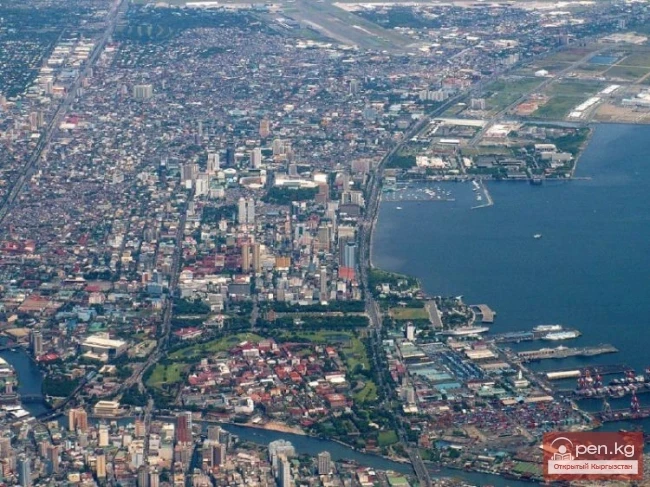
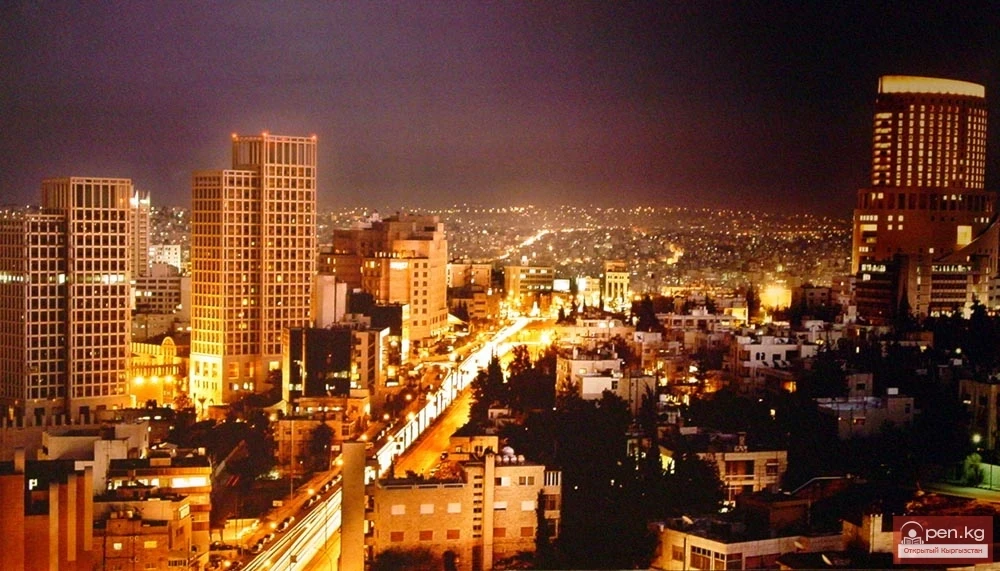
The first impression of night-time Amman is that of a global backwater. However, at dawn, from the hotel windows, a view of a quite respectable modern city with straight streets, luxurious villas, supermarkets, offices, banks, and even nightclubs opened up. However, as it turned out, this is the area of the new modern Amman. There is also the old Amman, which we set out to explore, or rather, we took a minibus with our guide Abdullah. He studied in Ukraine. Now he has his own business and occasionally works as a guide for tourist agencies. By the way, I should mention that in Jordan, there turned out to be unexpectedly many Russian groups from various regions of Russia, with which our route through Jordan intersected in one way or another. The guides are mostly Russian girls who married Jordanians and now live in Amman and other cities. Many Russian girls also work in shops. It’s certainly pleasant when you can speak your native language in a foreign country. On the other hand, it’s unclear why this is happening. Are Russian guys really worse than Jordanians, and is a hijab and money more valuable than the Russian breadth of soul, daring, and nonchalance in the good sense of the word, which Russian traditions and culture are so rich in? But let’s return to Amman and listen to our Abdullah.
Amman is the capital of the Kingdom of Jordan and the main business center of the country. About two and a half million people live here. The city, known in the Bible as Rabbath Ammon, translates to “the fortress of the Ammonites” (the people who settled here in the first millennium BC). Traces of human habitation here date back to 190,000 years ago. Biblical events in the Old Testament mention the Ammonites during the founding of the Israelite kingdoms in the land of Canaan, after Moses and the people of Israel left Egypt. Ammon was one of three ancient kingdoms through which, according to the Bible, Moses led his people towards the Holy Land.
The campaigns of Alexander the Great to the east left many memorable events in the history of this part of the world. After the death of the commander, the zone of influence in the East was divided into two parts: the Ptolemies in the territory of Egypt and the Seleucids, occupying most of Syria. For many years, the territory of Jordan had many masters. Power over it meant control over the most lucrative node of world trade. In the 2nd century BC, as the region entered the Hellenistic era, the Ptolemies built a new city here called Philadelphia, in honor of Philadelphus - the ruler of Egypt.
After the arrival of Rome in the region in 63 BC, the Greco-Roman cities acquired a new status aimed at strengthening the region against threats, particularly from Persia. The concept of Decapolis emerged - an economic and cultural autonomy granted by Rome to its particularly important eastern gateway. As a result, during the Greco-Roman era, Philadelphia became a major center of trade and culture.
During its golden age, Philadelphia was located on seven hills, like ancient Rome. Now the city occupies 25 hills and continues to grow.
During the Byzantine period, Philadelphia was the seat of Christian priests, and therefore several churches, temples, and basilicas with mosaic decorations were built in the city, which was characteristic of that era.
In the late 7th century, the Arabs conquered Philadelphia, bringing Islam with them, and it again became Amman - the capital of the Umayyad dynasty.
After significant destruction due to the earthquake of 750 AD, Amman lost its significance for some time and was revived again with the arrival of immigrants from the North Caucasus, mainly Circassians and Chechens.
In Amman, we saw many interesting things. The Temple of Hercules, now known as the Great Temple of Amman, built between 161 and 180 AD during the reign of Emperor Marcus Aurelius; a wonderful place for excursions - the Citadel. In the center of old Amman is a well-preserved amphitheater. Among the monuments from the time of the Arab Caliphate, the Al-Qasr palace deserves attention. And, of course, like in all Eastern cities, a highlight is the bazaar, which can satisfy the requests of any visitor. It’s not necessary to shop; you can just walk around, observing life, marveling, enjoying the unusual sights of the Eastern bazaar, which is nothing less than an open-air museum.