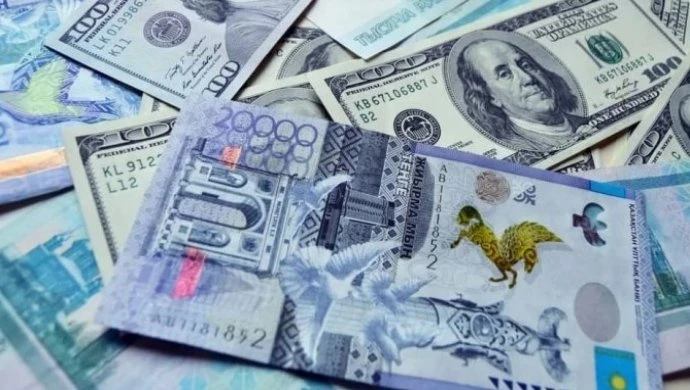
We are used to having just a phone with a mobile banking app to make purchases. Payments via QR codes have become a common practice. However, this year the system has failed: small businesses have started demanding cash for their goods and services.
Kaktus.media investigated the reasons why entrepreneurs are refusing cashless payments and not opening special accounts in banks.
Changes from 2026
The chief inspector of the State Tax Service, Ayana Aitieva, explained to Kaktus.media that new rules came into effect on January 1, 2026. The ban on using personal tools for receiving cashless payments (bank cards, electronic wallets, QR codes) for businesses has existed for a long time, but there was previously no responsibility for violating it.“We conducted explanatory activities for entrepreneurs on how to conduct business correctly and legally. According to the law, banks are required to monitor all money transfers not only to business accounts but also to clients' personal accounts. If an individual entrepreneur uses a personal electronic wallet for business, the bank must control what purposes it is used for,” Aitieva noted.
Since commercial banks did not exercise sufficient control, the tax service took on the functions of administrative responsibility in this area. Now, fines are imposed for using personal wallets in business.A personal account can only be used for personal needs: purchases, utility payments, etc. For business, it is necessary to open a special account and accept payments only to it.
“If the bank detects the use of a personal wallet for business through its tools, it has the right to block the client's account,” she added.
What is behind the fight against transfers to personal QR codes? It is simple control. The tax service only sees operations on business accounts, while personal accounts remain outside their control. Access to personal accounts is only possible by court order, so the tax service believes that payments to personal wallets do not allow for accurate accounting of entrepreneurs' income.
Fines and Sanctions
What are the new fines that have caused panic among entrepreneurs? The Code of Offenses now includes two articles related to cashless payments:- Article 317, Part 1 - using cashless payment tools registered to other individuals. For the first violation - an explanatory conversation, for the second - a fine of 65,000 soms for legal entities.
- Article 317, Part 2 - using personal cashless payment tools. Here, for the first violation, only a conversation is possible, and for the second - a fine from 28,000 to 65,000 soms.
Fines are also provided for refusing to accept cashless payments. Article 27 of the KR Law "On Consumer Rights Protection" prohibits sellers from limiting buyers in payment methods. In case of violation, one can contact the antimonopoly service.
Additionally, according to a government decree, a list of entities required to install cashless tools has been defined. If they do not have them, complaints can be made to the tax service, which will impose fines.
According to Part 1 of Article 318 of the Code of Offenses, this entails a fine of 1,000 soms for individuals and 5,000 soms for legal entities.
Situation in Markets
In practice, the situation differs from the statements of officials. Many small and medium enterprises, frightened by fines, have sharply stopped accepting cashless payments. This is especially noticeable in markets.At the end of December, sellers' QR codes were everywhere. However, since January, the situation has changed: the slips with QR codes have disappeared, and traders have started asking for cash. If it was previously easy to pay via QR code, now it has become a problem.
- Can I pay with a QR code? - I ask the seller.
- No, only cash.
- Why? It was possible before. I don’t have cash.
- There’s an ATM at the entrance, withdraw cash. No QR code.
This dialogue was repeated with many sellers. In the regions, the situation is similar: the transition to new payment methods has been slow, but the rollback to cash has happened quickly.
“We were told that we cannot accept payment on a personal QR code, there will be inspections from the tax service. They can come disguised as buyers and fine us 30,000 soms. Sometimes I don’t even have enough revenue to pay such a fine, so it’s better if they pay in cash,” shared a seller from the Kara-Balty market.
Another seller in Bishkek noted that clients leave due to the refusal to accept cashless payments, leading to conflicts. Previously, he accepted money in an electronic wallet, but now he fears fines and account blocking.
“I pay taxes, I work under a patent. Why should I open a bank account and then submit reports? What if I do something wrong? There’s a problem with that,” he says.
Problems with QR Codes
At first glance, the tax service's requirements seem reasonable. If a person is registered as an individual entrepreneur, they should open a settlement account in a bank.“Entrepreneurs do not want to use QR codes due to a lack of understanding of which ones are permissible. If the QR code is registered to the entrepreneur, there are no problems; if not, there are,” Aitieva explains.
If it were that simple, many would have switched to the correct QR codes long ago. However, there are still pitfalls. Let’s consider a few of them.
- Registration with the tax authority
- Bureaucracy
- Bank fees
For example, if 100,000 soms come through a QR code, the bank will withhold up to 1,000 soms. Additionally, some banks charge fees for cash deposits into the settlement account and for account maintenance.
Limits on transactions and volumes can also vary between banks. While personal accounts often have no fees, legal entities may face significant charges.
Risks of Account Blocking
It is important to understand that banks do not block the accounts of individual entrepreneurs, but they can block personal accounts if they suspect they are being used for business.This can happen upon receiving a letter from the tax service. As a result of an inspection, the tax service may send banks lists of citizens whose accounts require action. In practice, banks often block accounts and then demand explanations about the origin of funds.
The editorial office of Kaktus.media was contacted by an accountant whose clients faced account blockages. One client was left without funds for two days until he could explain the situation to the bank.
Another client received a strange message from a bank employee who requested explanations regarding his personal account. Fortunately, the account was not blocked, but the client found herself in another country without access to her funds.
Banks act strictly, as they risk finances. Administrative fines can reach up to 65,000 soms, so it is easier to block suspicious accounts than to incur a fine.
Will Businesses Go Underground?
The tax service does not record a mass refusal of cashless payments; however, individual cases may occur.The head of the Markets Association, Sergey Ponomarev, believes that small and medium businesses will not be able to return exclusively to cash transactions. This is due not only to state measures but also to competition and the growing popularity of cashless payments among the population.
“Demand creates supply. In conditions of high competition, many entrepreneurs will be forced to accept cashless payments to meet customer needs,” Ponomarev says.
Business always strives to meet customer needs. If people prefer cashless payments, they will be accepted.“If someone refuses, clients may go to competitors. Regular customers are an important source of income,” he adds.
Banks should also consider creating favorable conditions for businesses to avoid potential problems.
Prospects for Simplifying Conditions
Despite the denial of a mass return to cash, the problem exists. This was confirmed at a recent meeting involving the leadership of the tax service and other government structures.At the meeting, issues related to cashless payments and the problems faced by entrepreneurs were discussed. Participants agreed on the necessity of cooperation to improve business conditions and ensure the stable operation of cashless tools.
The State Tax Service expressed its readiness for interaction and joint development of solutions for the advancement of cashless payments. However, for now, entrepreneurs face bureaucracy and additional expenses, making cash more attractive.