
About Kyrgyzstan

{title}
State structure
{title}
National symbols
{title}
Government
{title}
Armed forces
{title}
National currency
{title}
Banknotes
{title}
Circulation coins
{title}
Collectible coins
{title}
Political organization
{title}
Domestic policy
{title}
Foreign policy
{title}
History
{title}
Kyrgyz in antiquity
{title}
Kyrgyz in the VI-XII centuries
{title}
Kyrgyz in the XIII—first half of XVIII century
{title}
The struggle for the independence of the Kyrgyz
{title}
Kyrgyzstan as part of Russia
{title}
Kyrgyzstan during the Soviet period
{title}
Kyrgyzstan — a sovereign state
{title}
Historical records
{title}
Kurmanjan Datka
{title}
Chagatai Ulus. Haidu State. Moghulistan
{title}
History and archeology of the ancient Tien Shan
{title}
Peoples movements of Central Asia in the XIX century
{title}
Kyrgyzstan during the Great Patriotic War
{title}
Kyrgyzstan in the 1920s
{title}
1937 in Kyrgyzstan
{title}
Shabdan Baatyr
{title}
Territory, geography and administrative division
{title}
Chuy Region
{title}
Attractions of Chuy Region
{title}
Issyk-Kul Region
{title}
Sights of Issyk-Kul
{title}
Naryn Region
{title}
Attractions of Naryn Region
{title}
Talas Region
{title}
Attractions of Talas Region
{title}
Osh Region
{title}
Attractions of Osh Region
{title}
Batken Region
{title}
Attractions of Batken Region
{title}
Jalal-Abad Region
{title}
Attractions of Jalal-Abad Region
{title}
Cities
{title}
Bishkek
{title}
Streets of Bishkek
{title}
Pishpek - Frunze - Bishkek
{title}
History of the capital of Kyrgyzstan in documents
{title}
Osh
{title}
Osh - 3000
{title}
Naryn
{title}
Jalal-Abad
{title}
Batken
{title}
Talas
{title}
Karakol
{title}
Tokmok
{title}
Cholpon-Ata
{title}
Uzgen
{title}
Kochkor
{title}
Kemin
{title}
Balykchy
{title}
Kyzyl-Kiya
{title}
Mailuu-Suu
{title}
Sulukta
{title}
Tash-Kumyr
{title}
Toktogul
{title}
Kara-Kul
{title}
Kara-Balta
{title}
Kara-Balta - Black Ax
{title}
Kant
{title}
Villages
{title}
Population
{title}
Language
{title}
Diaspora
{title}
Nature
{title}
Climate
{title}
Natural ecological complexes
{title}
Water resources
{title}
Rivers
{title}
Lakes
{title}
Secrets of Issyk-Kul Lake
{title}
Reservoirs
{title}
Waterfalls
{title}
Mineral waters
{title}
Flora
{title}
Fauna of Kyrgyzstan
{title}
Mammals of Kyrgyzstan
{title}
Birds of Kyrgyzstan
{title}
Fish of Kyrgyzstan
{title}
Amphibians and reptiles of Kyrgyzstan
{title}
Insects of Kyrgyzstan
{title}
Mountains and glaciers
{title}
Mountain ranges
{title}
Mountain peaks
{title}
Mountain passes
{title}
Glaciers
{title}
Caves
{title}
Gorges
{title}
National parks and reserves
{title}
Pastures and valleys
{title}
Soil and minerals
{title}
Red Book
{title}
Fungi and higher plants
{title}
Animals
{title}
Arthropods
{title}
Fish
{title}
Amphibians and reptiles
{title}
Birds
{title}
Mammals
{title}
Economy of Kyrgyzstan
{title}
Entrepreneurship
{title}
Agriculture
{title}
Finance
{title}
Construction
{title}
Industry
{title}
Transport and communications
{title}
Socio-economic resources
{title}
Tourism industry
{title}
Healthcare
{title}
Education
{title}
Sports
{title}
Science
{title}
Environmental science
{title}
Mass media
{title}
Art
{title}
Dances
{title}
Ballet
{title}
Decorative and applied arts
{title}
Musical instruments
{title}
Architecture
{title}
Painting
{title}
Music
{title}
Theater
{title}
Cinema
{title}
Sculpture
{title}
Circus
{title}
Literature
{title}
Photography
{title}
Culture
{title}
Epigraphy
{title}
Folklore
{title}
Kyrgyz heroic epic "Manas"
{title}
The epic "Manas" in prose
{title}
Poetic retelling of the epic "Manas"
{title}
"Semetey" - poetic story
{title}
"Semetey" in prose
{title}
Religion
{title}
Ethnography
{title}
National games
{title}
Customs
{title}
Myths and legends
{title}
Kyrgyz fairy tales
{title}
Kyrgyz cuisine
{title}
Meat and offal dishes
{title}
Soups of Kyrgyzstan
{title}
Main dishes of Kyrgyzstan
{title}
Sweet dishes of Kyrgyzstan
{title}
Drinks of Kyrgyzstan
{title}
Salads and appetizers
{title}
Flour products
{title}
Miscellaneous information about Kyrgyzstan
{title}
Historical and holiday dates of Kyrgyzstan
{title}
Famous personalities of Kyrgyzstan
{title}
Women of Kyrgyzstan
{title}
Historical figures
{title}
Heroes of Kyrgyzstan
{title}
Hero of the Kyrgyz Republic
{title}
Heroes internationalists
{title}
Heroes of Kyrgyzstan in World War II
{title}
Kyrgyzstanis — Full cavaliers of the Order of Glory
{title}
Writers of Kyrgyzstan
{title}
Inventors of Kyrgyzstan
{title}
Scientists of Kyrgyzstan
{title}
Architects of Kyrgyzstan
{title}
Artists of Kyrgyzstan
{title}
Musicians of Kyrgyzstan
{title}
Cinematographers of Soviet Kyrgyzstan
{title}
Actors of Kyrgyzstan
Literature of the Kyrgyz during the Soviet Period
Literature

Literature of the Kyrgyz during the Soviet Period

The foundation of Kyrgyz written literature was the rich oral folk creativity. Therefore, it is not surprising that the first works of Kyrgyz akyns and writers continued the traditions of folklore in both form and content. Before the establishment of national writing and printing, gifted Kyrgyz poets and writers wrote and published their works in Kazakh and Tatar languages.

18.06.2014, 12:22
Kyrgyzstan in the Years of Perestroika
Kyrgyzstan during the Soviet period

Kyrgyzstan in the Years of Perestroika

A Turn in Social and Political Life. By the mid-1980s, a deep crisis had emerged in all spheres of public life in the USSR. Its international prestige had fallen. The existing administrative-command system of governance no longer corresponded to the conditions of the changing times.

17.06.2014, 15:46
Socialism: Achievements and Drawbacks of Soviet Kyrgyzstan (1964-1985)
Kyrgyzstan during the Soviet period

Socialism: Achievements and Drawbacks of Soviet Kyrgyzstan (1964-1985)

Soviet Kyrgyzstan The period when L. Brezhnev was at the head of the state management of the USSR is referred to by historians as "developed socialism." Indeed, during this time, the USSR transformed into a state with a developed economy and a powerful army. The standard of living for people significantly improved. The country gained international recognition. However, at the same time, many economic, social, and political problems and tasks remained unresolved in the country.

13.06.2014, 17:19
Restoration and Development of the National Economy of Kyrgyzstan (1946-1964)
Kyrgyzstan during the Soviet period

Restoration and Development of the National Economy of Kyrgyzstan (1946-1964)

Transition of Industry to Peaceful Rails. Transition of Industry to Peaceful Rails. With the end of the war, new tasks arose for the Soviet people. The USSR adopted a five-year development plan for 1946-1950, under which everything was subordinated to the main goal — to restore the war-damaged national economy and ensure its pre-war level of development. Factories and plants were urgently converted to produce goods necessary for peaceful construction. Life gradually returned to its normal

13.06.2014, 14:21
The Rear in Kyrgyzstan Supports the Front
Kyrgyzstan during the Soviet period

The Rear in Kyrgyzstan Supports the Front

The Rear in Kyrgyzstan Industry. A significant part of the European territory of the USSR was at war, and many industrial regions were occupied by the enemy. To ensure victory on the front, it was necessary to urgently transform the republics in the rear into a military arsenal. All of Kyrgyzstan's industry was converted to produce military orders — weapons, ammunition, food, and clothing. "Everything for the front! Everything for victory!" — under this slogan, workers toiled

13.06.2014, 13:33
The Great Patriotic War. The Feats of the Warriors from Kyrgyzstan
Kyrgyzstan during the Soviet period

The Great Patriotic War. The Feats of the Warriors from Kyrgyzstan

The Beginning of the Great Patriotic War. In 1939, fascist Germany unleashed World War II. In a short time, it occupied many European countries. Strengthening its military potential even further, Germany aimed to conquer world domination and enslave the peoples of the entire planet. At dawn on June 22, 1941, the German-fascist invaders violated the Soviet border and suddenly invaded the peaceful territory of the Soviet Union.

13.06.2014, 12:02
Strengthening the Administrative-Command System of Kyrgyzstan
Kyrgyzstan during the Soviet period

Strengthening the Administrative-Command System of Kyrgyzstan

Establishment of Autocracy. The Soviet power had many enemies—both external and internal. They constantly attempted to overthrow the new authority. To maintain power under these conditions, the Bolshevik party needed a strong government. Therefore, a one-party system had to be established in the country. The Bolsheviks banned the activities of other parties besides their own and removed their representatives from power. To preserve party unity, the Bolsheviks also imposed a ban on the

07.06.2014, 15:52
Formation and Development of the National Statehood of Kyrgyzstan
Kyrgyzstan during the Soviet period

Formation and Development of the National Statehood of Kyrgyzstan

National Policy of Soviet Power Among the main points of the Bolshevik party program, led by V. I. Lenin, was the elimination of social and national oppression. On January 2, 1918, the Soviet government published the Declaration of the Rights of the Peoples of Russia, which proclaimed: “The peoples living in Russia are free and equal.” Initially, there was distrust towards the Soviet power among the people of Turkestan. This was skillfully exploited by its enemies. “The Bolsheviks are

31.05.2014, 15:07
On the Path to Sovereignty and Independence of the Kyrgyz Republic
Kyrgyzstan — a sovereign state

On the Path to Sovereignty and Independence of the Kyrgyz Republic

On the Path to Sovereignty and Independence: The Oath-Taking by Askar Akayev As part of the Soviet Union, Kyrgyzstan went through a complex path to gain independence. However, as an independent republic, it still did not have full freedom, for example, in addressing political, economic, national, and other issues. Kyrgyzstan could not independently establish diplomatic relations with other countries, nor could it manage its natural resources independently. Even for the construction of an

31.05.2014, 12:06
Socialist Transformations in the Economy of Kyrgyzstan
Kyrgyzstan during the Soviet period

Socialist Transformations in the Economy of Kyrgyzstan

Land Redistribution. One of the main issues that the revolution had to address was the question of land distribution to the peasants, who made up the majority of the population in Russia and its outskirts. To win the support of the peasantry, the Soviet government adopted the Decree on Land, which outlined the main directions of the new government's agrarian policy. According to this decree, all imperial, landlord, church, and monastery lands were confiscated along with their inventory

31.05.2014, 11:38
The Overthrow of Autocracy and the Establishment of Soviet Power in Kyrgyzstan
Kyrgyzstan during the Soviet period

The Overthrow of Autocracy and the Establishment of Soviet Power in Kyrgyzstan

The Tsar is Overthrown. The life of the people did not improve. In early 1917, the news spread among the Kyrgyz ails: “The White Tsar has been overthrown!” Hope flickered among the people: “Now Russia has become a free country, perhaps the Kyrgyz will be given freedom too.” But this did not happen. The Provisional Government of landowners and capitalists that took charge of Russia had no intention of meeting the needs of the people. In Kyrgyzstan, no changes occurred. After the uprising, the

31.05.2014, 10:57
The First Kyrgyz Enlighteners
Kyrgyzstan as part of Russia

The First Kyrgyz Enlighteners

The First Enlighteners: Ishenaly Arabayev, Ibraim Abdyrahmanov After Kyrgyzstan joined Russia, conditions arose for the development of education, enlightenment, and scientific research in the region. A significant role in the enlightenment of the people belonged to the first Kyrgyz enlighteners — Osmonaly Sydyk uulu, Belek Soltonoev, Ishenaly Arabayev, Ibraim Abdyrahmanov, and others.

30.05.2014, 20:38
National Liberation Struggle of the Kyrgyz
Kyrgyzstan as part of Russia

National Liberation Struggle of the Kyrgyz

Andijan Uprising. The main reasons for the uprising were unbearable living conditions and the arbitrariness of the tsarist authorities. On May 17, 1898, closer to evening, people began to gather in the village of Min-Tyube — Kyrgyz, Uzbeks, Tajiks. Gradually, their number reached 200 people. The village ishan (religious leader) Madalі — a well-known and respected man who had made a pilgrimage to Mecca — spoke with anger about how the Russians brought drunkenness into the lives of Muslims,

30.05.2014, 17:40
Colonial Policy of Tsarism towards the Kyrgyz
Kyrgyzstan as part of Russia

Colonial Policy of Tsarism towards the Kyrgyz

Administration. Russia introduced its own system of administrative governance in Kyrgyzstan. Kyrgyzstan was divided into regions, regions into districts. Districts, in turn, were divided into volosts, which included ails. Volosts consisted of one or two thousand households (families), while ails comprised one hundred to two hundred households. A total of 73 volosts were established. At the head of the regions and districts were Russian officials. These were usually imperial officers, as the

30.05.2014, 16:44
The Conquest of Southern Kyrgyzstan by Russia
Kyrgyzstan as part of Russia

The Conquest of Southern Kyrgyzstan by Russia

In the mid-19th century, the population of Southern Kyrgyzstan was still under the yoke of the Kokand Khanate. However, the political situation and the status of the khanate were no longer as stable as before. Internal contradictions and ongoing palace coups, on the one hand, exacerbated the already difficult situation in the khanate, and on the other hand, facilitated Russia's task of conquering the Fergana Valley and Southern Kyrgyzstan as a whole.

25.05.2014, 21:13
The Joining of Northern Kyrgyzstan to Russia
Kyrgyzstan as part of Russia

The Joining of Northern Kyrgyzstan to Russia

The Creation of an Independent Kyrgyz Khanate and Its Collapse. In the mid-19th century, the prominent Sarybagysh manap Ormon Niyazbek uulu attempted to unite the northern Kyrgyz tribes living in the Chui Valley, along the Naryn River, and around Lake Issyk-Kul, with the aim of creating an independent khanate. In 1842, he convened a kurultai in the Kyzyl-Tokoy area on the western shore of Lake Issyk-Kul and invited representatives from the Sarybagysh, Bughu, Solto, Sayak, Saruu, Kushchu, and

25.05.2014, 19:48
Historical Preconditions for the Convergence of the Kyrgyz with Russia
Kyrgyzstan as part of Russia

Historical Preconditions for the Convergence of the Kyrgyz with Russia

Until the mid-19th century, the Kyrgyz people were under the rule of the Kokand Khanate. The Kokand khans encouraged inter-tribal strife among Kyrgyz feudal lords to weaken the Kyrgyz in political and military terms; Qing China sought recognition of its supremacy over Kyrgyz lands; military raids and threats from neighboring Kazakh and Uzbek feudal lords—all these circumstances forced the Kyrgyz to look towards Russia. Russian capitalism aimed to seize new markets and sources of cheap raw

25.05.2014, 18:06
Ethnic Origins and Stages of Formation of the Kyrgyz Nationality
Ethnography

Ethnic Origins and Stages of Formation of the Kyrgyz Nationality

The formation of the Kyrgyz people is connected with ethnic processes in ancient and medieval times across the territory from Sayan-Altai and Mongolia to Eastern Turkestan and Tian Shan, historically spanning more than one and a half millennia and concluding only in the 16th century.

25.05.2014, 17:06
The Struggle of the Kyrgyz Against the Conquerors. Tylek Batyr
The struggle for the independence of the Kyrgyz

The Struggle of the Kyrgyz Against the Conquerors. Tylek Batyr

The Kokand Domination in Kyrgyzstan. In the early 1830s, the Kokand Khanate urgently began constructing fortress fortifications to maintain a constant military presence. This was extremely necessary for strengthening its rear and conquering the northern regions of Kyrgyzstan. In 1830, the Jumgal fortress was built. In 1831-1832, the Kurtka fortress was erected in Naryn. The tribes of Central Tian Shan—Sajaks, Basiz, Cheriks, Moguls, and Bugus—who sided with the Kokand against the Chinese

25.05.2014, 16:52
Muhammad Kyrgyz
The struggle for the independence of the Kyrgyz

Muhammad Kyrgyz

The situation in Central Asia. In the early 16th century, feudal fragmentation intensified not only in Eastern Turkestan but also in Central Asia. After the death of Shaybani Khan, the Uzbek Khanate split into two - the Bukhara and Khiva Khanates. Later, this process affected other feudal possessions as well. Dispersed and weakened, the states of Central Asia and Eastern Turkestan could no longer protect their borders, which increased the threat of attacks from neighbors.

25.05.2014, 14:56
Coins of Kyrgyzstan
National currency

Coins of Kyrgyzstan

The Emergence of Money. Since ancient times, people have provided for their basic needs by exchanging products and items with one another. For example, one tribe lived in an area with salt deposits, while another engaged in agriculture and grew wheat. They exchanged these products. Archaeologists have established that such mutual exchange among people existed tens of thousands of years ago. Over time, the value of certain items increased significantly, and they began to serve as a sort of

25.05.2014, 13:42
State Symbols of Kyrgyzstan
National symbols

State Symbols of Kyrgyzstan

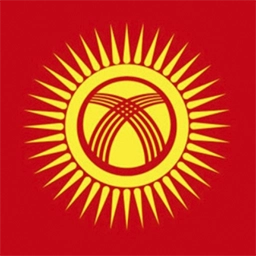
State Symbols. Every state has its own state symbols — coat of arms, flag, anthem. The history of their emergence also dates back to ancient times. The study of the history of coats of arms and their features is a specialized science called heraldry. The first coats of arms can be considered various images and emblems on seals, coins, and medals. Over time, each ruler, city, and state wanted to have their own distinctive signs. Thus, coats of arms emerged. In Western Europe, coats of arms

25.05.2014, 13:39
The Conquest Campaigns of Genghis Khan
The struggle for the independence of the Kyrgyz

The Conquest Campaigns of Genghis Khan

The First Conquests of Genghis Khan. In the 12th and 13th centuries, on the vast territory of Mongolia, Genghis Khan and his successors created a powerful empire of nomads. The numerous and well-trained armies of the Mongols, spreading fear and terror, conquered Southern Siberia, Central Asia, and part of Europe from the 13th century to the 14th and 15th centuries. The Mongol yoke had a negative impact on the historical fate and development of many peoples, including the Kyrgyz. The first to

20.05.2014, 14:29
The Great Silk Road
Kyrgyz in the VI-XII centuries

The Great Silk Road

The Significance of the Great Silk Road. In the historical fate of the Kyrgyz and their state formations, especially in the VI—XII centuries, the Great Silk Road played a significant role.

20.05.2014, 13:44
Mahmud Kashgari and Jusup Balasaguni
Kyrgyz in the VI-XII centuries

Mahmud Kashgari and Jusup Balasaguni

During the era of the Karakhanid khanate, Turkic peoples achieved significant progress in science and artistic culture. The lives and activities of two of the most renowned scholars and thinkers - Mahmud Kashgari and Jusup Balasaguni - are closely associated with this historical period of Kyrgyz development.

20.05.2014, 13:26
The Great Power of the Kyrgyz: Barsbek-Kagan
Kyrgyz in the VI-XII centuries

The Great Power of the Kyrgyz: Barsbek-Kagan

Kagan Barsbek. Central Asia at the end of the 7th century became the arena of significant political changes. As a result of anti-Chinese uprisings, the Second Turkic Kaganate was formed, which posed a serious threat to neighboring states. Weak peoples, not wanting to tempt fate, submitted to it, while stronger ones sought ways to unite in order to confront the formidable enemy together. The anti-Turkic alliance was led by the state of Kyrgyz. The ruler of the Kyrgyz state was the ajo (supreme

19.05.2014, 20:55
The Legend of the Extermination of the Kyrgyz and the Mother-Deer
Myths and legends

The Legend of the Extermination of the Kyrgyz and the Mother-Deer

Mother-Deer An ancient unwritten law of human existence states: when a person is mourned and honored on their final journey, people must forget about enmity and revenge. No matter how strong the motives may be, on such a day, blood cannot be shed. But the dishonorable and conscience-less people violated this law. Hiding in the forest, the enemies waited for the right moment... ... No one had time to grab a weapon, mount a horse, or call for help. An unprecedented massacre began. They slashed

16.05.2014, 20:08
The State of the Yenisei Kyrgyz
Kyrgyz in the VI-XII centuries

The State of the Yenisei Kyrgyz

Resettlement of the Kyrgyz to the Yenisei. The early medieval population of the Yenisei was referred to as "herkis," "khirkhiz" in Greek sources, "syatsazy," "dzilidzisy" in Arabic and Persian, and "kyrgyz" in ancient Turkic, Uighur, and Sogdian texts. The last term was an accurate representation of the self-name of the people.

16.05.2014, 20:01
Turkic Khaganates
Kyrgyz in the VI-XII centuries

Turkic Khaganates

In Central Asia, the Great Turkic Khaganate (552-744 years) emerges. The Turks considered Ashina, the mythical son of a she-wolf, to be their ancestor. Here is what the legend says about this.

14.05.2014, 22:13
Ancient Kyrgyz under the Rule of the Huns
Kyrgyz in antiquity

Ancient Kyrgyz under the Rule of the Huns

The word “Kyrgyz” is first mentioned alongside the name of the king of the Huns, Maodun-khan (Modé). According to a Chinese chronicle, in 201 BC, Maodun-khan sent a large army westward and captured the lands of the Gyanjun. Scholars have established that the Gyanjun were what the Chinese called the ancient Kyrgyz. The territory controlled by the Kyrgyz became known; it was located in the valley of the Manas River in Eastern Turkestan.

13.05.2014, 20:27
Origins of Geographical Names
Ethnography

Origins of Geographical Names

What science studies the origins of geographical names? Every person can easily list hundreds of geographical objects related to their place of residence: villages, cities, rivers. When studying the past, their names can tell us a lot. Try to find out why this area or river is called one way and not another. You will surely hear interesting stories. Scientists have long established that due to their stability, geographical names serve as ancient monuments that allow us to penetrate the depths

13.05.2014, 17:49
Genealogy of the Kyrgyz
Ethnography

Genealogy of the Kyrgyz

Genealogy is the “tree of life” of a person. The Turks, including the Kyrgyz, who, due to their nomadic lifestyle, had well-developed clan relations, also paid great attention to studying the origins of their ancestry.

13.05.2014, 16:45
The State of Dawan
Kyrgyz in antiquity

The State of Dawan

Davan. In the Fergana Valley, a powerful state emerged in the 1st millennium BC. In Chinese sources, it was called Davan. Here is how scholars of that time described Fergana:

13.05.2014, 11:25
Usun State
Kyrgyz in antiquity

Usun State

In the 2nd century BC, the Tian Shan Sakas were defeated by another powerful nomadic alliance — the Yuezhi (Tocharian), who were driven out of Eastern Turkestan by the warlike Huns. Subsequently, the Yuezhi subjugated part of the Tian Shan Sakas. Initially, the Usuns roamed near the Huns and Yuezhi at the western part of the Great Wall of China. Around 160 BC, part of the Usuns, having defeated the Sakas and Yuezhi, settled in Tian Shan and Semirechye. Occupying Semirechye, Dzhungaria, and

12.05.2014, 22:44
Saks in World History: The Struggle for Independence
Kyrgyz in antiquity

Saks in World History: The Struggle for Independence

Central Asia and Tian Shan in the 6th—5th centuries BC In the first millennium BC, a new ethnic community—the Saka—emerged from a conglomerate of Bronze Age tribes. The transition from primitive society to class society was accompanied here by the development of a new mode of economy—nomadic animal husbandry and the formation of large tribal unions. In the 8th—1st centuries BC, nomadic tribes inhabited the vast expanses of Eurasia from Tuva to Ukraine (including its territory), referred to in

12.05.2014, 22:22
Primitive communal system in the territory of the Kyrgyz Republic
Kyrgyz in antiquity

Primitive communal system in the territory of the Kyrgyz Republic

The traces of primitive human activity in the territory of the Kyrgyz Republic date back to the Paleolithic era. There are not many monuments from this time. A stone tool was discovered by Oklandikov in 1953 in the Central Tien Shan, on the left bank of the On-Archa River. Its date of manufacture is approximately 300,000 years ago.

12.05.2014, 22:02
Scientific Achievements and Tasks of Kyrgyz Historical Science in the Study of the History of the Kyrgyz and the Kyrgyz Republic
History / Historical records

Scientific Achievements and Tasks of Kyrgyz Historical Science in the Study of the History of the Kyrgyz and the Kyrgyz Republic

A new stage in the study of the history, population, economy, and nature of Kyrgyzstan began after its annexation to Russia. The imperial government needed reliable information about these "unknown" countries, their internal political and economic situation, natural and labor resources, and communication routes. Only in the second half of the 19th century did Russian scientific societies send 250 scientific expeditions to the Kyrgyz Republic.

12.05.2014, 21:57
Kek-Art
Natural ecological complexes

Kek-Art

The "Kek-Art" Zone encompasses the surroundings of the city of Jalal-Abad, as well as the valleys of the Kek-Art River and its tributaries from the foothills of the Fergana Range to its watershed. It is located 80 km northeast of Osh city along the highway leading to Jalal-Abad. The climate of the zone is characterized by dry and hot summers with slight temperature fluctuations.

12.05.2014, 21:29
Kyzyl-Unkyur
Natural ecological complexes

Kyzyl-Unkyur

The "Kyzyl-Unkyur" Zone is located 15 km northeast of the village of Arslanbap in the valley of the Kara-Unkyur River in the Jalal-Abad region. It is accessible via an asphalt road from the city of Osh. The zone occupies the territory of one of the most picturesque areas of these places — Kyzyl-Unkyur and also includes the ridge part of the Fergana Range.

12.05.2014, 21:13
Zone "Arslanbap" (Arslanbob)
Natural ecological complexes

Zone "Arslanbap" (Arslanbob)

Arslanbap Zone (Arslanbob) is located on the southwestern slopes of the Fergana Range in the eponymous area, stretching up to 10 kilometers and situated 180 km from the city of Osh in the Jalal-Abad region. The entire territory of the zone is intertwined with picturesque serpentine asphalt roads that run along the riverbed of the Kara-Unkur River from the city of Osh through the town of Bazar-Kurgan to the village of Arslanbap (1400 m) and further into the mountains.

12.05.2014, 21:02
Mayluu-Suu (Mayli-Sai)
Cities / Mailuu-Suu / Natural ecological complexes

Mayluu-Suu (Mayli-Sai)

The "Maili-Sai" Zone is located in close proximity to one of the major industrial centers of the Osh region in the Jalal-Abad region. The city of Maili-Sai includes the valley of the Mailuu-Suu River ("fat water"). This area is known for its oil deposits. The distance from the city of Osh to the zone is 170-180 km.

12.05.2014, 20:47