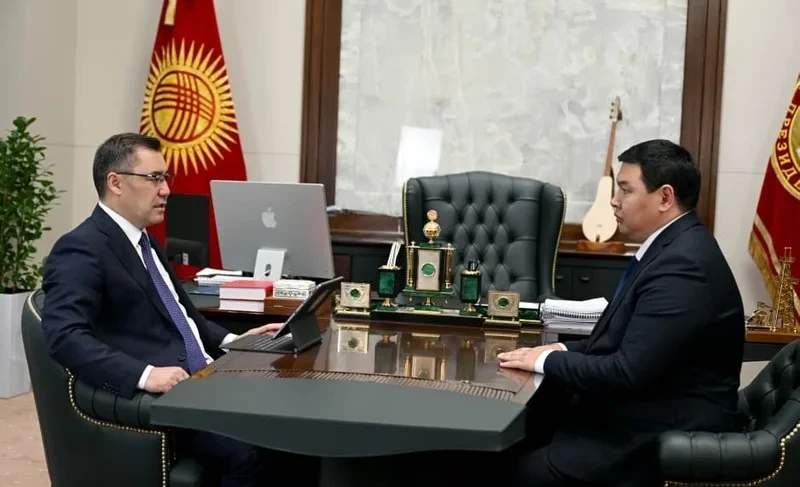
Recall that the Deputy Minister of Economy of the Kyrgyz Republic, Sultan Akhmatov, previously stated that the license of one of the companies was revoked due to improper accreditation.
However, it turned out that the company "Rikha," like many other participants in the food industry, underwent halal certification from a certification body that did not have accreditation.
Currently, this certification body has ceased operations," the center clarified.
Laboratory tests of products from OsOO "Rikha," conducted by accredited laboratories, did not detect the presence of pork DNA in the samples.The Center for the Development of the Halal Industry noted that the approach to the certification process in the halal sector is currently being reviewed. In this regard, changes are being made to the Code of Offenses aimed at combating fraud and protecting consumers in the halal certification sphere. Additionally, the digitalization of halal certificates is planned, and work in this direction will continue from the relevant state bodies of the Kyrgyz Republic.
The company "Rikha," for its part, stated that the information about the revocation of its license is not true.
"As of today, we have valid halal certificates issued by authorized bodies. All production processes meet halal standards and undergo regular inspections," the company stated in an official announcement.
Changes in Halal Product Certification
The state institution reminded that in 2024, the Law "On the Halal Industry" was adopted in Kyrgyzstan. According to its provisions, all products labeled "Halal," "Muslim," "Adal," and similar must have a certificate of conformity issued by an accredited certification body."Currently, there is only one accredited body for halal product certification in the republic - the Bishkek Center for Certification, Testing, and Metrology, which is part of the Center for Standardization and Metrology under the Ministry of Economy and Commerce of the Kyrgyz Republic," the state institution added.
Experts warn that some private non-accredited bodies for halal product certification are still operating in the Kyrgyz market.
Certificates issued by such bodies contradict the Law "On the Halal Industry" and have no legal force, rendering them invalid.In this regard, the "Center for the Development of the Halal Industry" under the Ministry of Economy and Commerce of the Kyrgyz Republic urges all producers engaged in halal products to carefully monitor compliance with the norms of legislation in this area to avoid similar situations in the future and to only contact accredited bodies for certification.