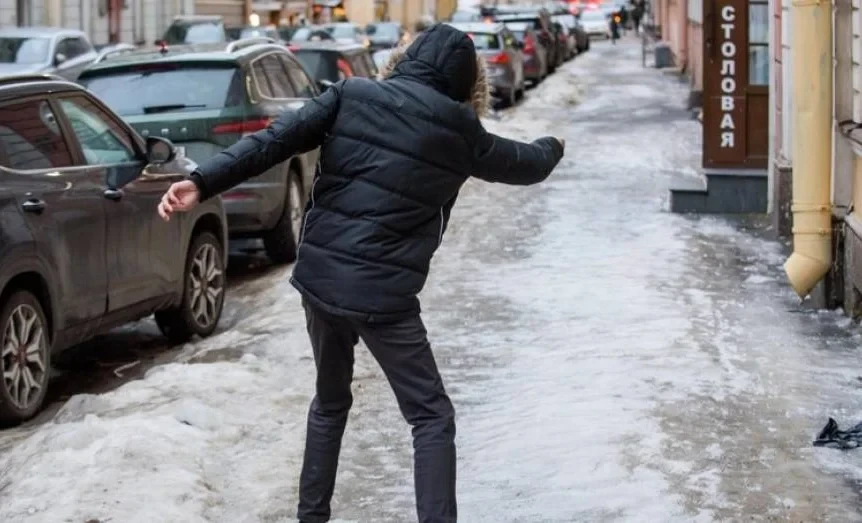
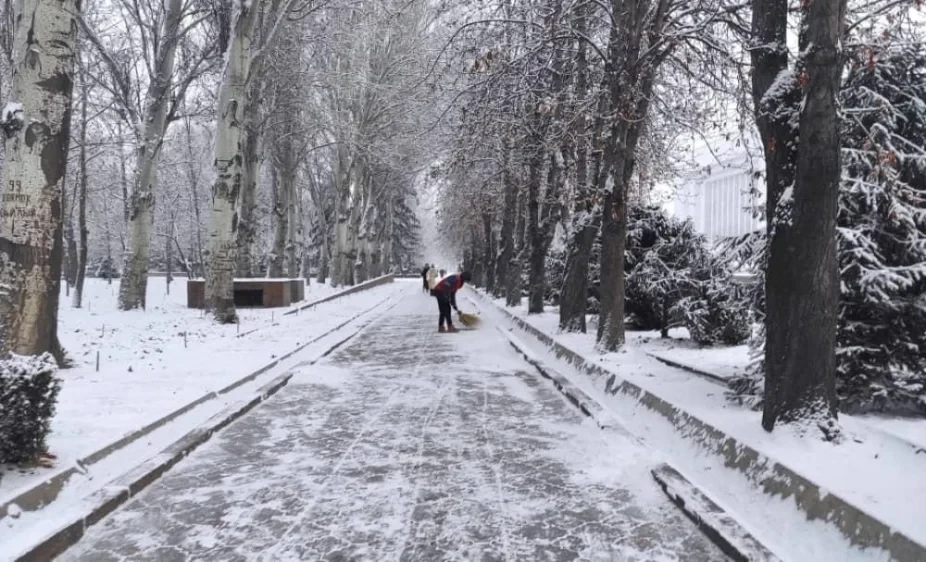
Try to minimize outings in bad weather. Choose well-lit routes with the least amount of ice and sanded paths. Pay attention to potentially dangerous areas, such as sidewalks next to the roadway, bus stops, manhole covers, and steps in stores. When climbing stairs, always hold onto the handrails and place both feet on each step before moving to the next one.
Footwear also plays an important role: it should be stable and non-slip, preferably with a rubber or textured sole. Avoid high-heeled shoes. If necessary, you can use special spiked attachments ("ice grips") or stick adhesive tape on the sole in a crisscross pattern or in a ladder shape.
Try to take small steps, fully placing your foot on the surface, and avoid sloped and slippery areas. Do not keep your hands in your pockets — this will allow you to react more quickly in case of a fall.
Older adults are advised to use a cane with a sharp tip for greater stability. Pregnant women are better off going outside accompanied.
Be especially careful on the roadway: cross the street cautiously, without rushing, and remember that during icy conditions, drivers have an increased stopping distance. When exiting a bus or trolleybus, be sure to hold onto the handrails and do not attempt to chase after departing transport.
Do not walk on icy streets while intoxicated — alcohol reduces pain sensitivity and increases the risk of serious injuries. Also, be cautious of icicles on building roofs and keep a safe distance from them.
Safe Falling Technique on Ice
If you do happen to slip, here are some tips on how to fall safely:
- Try to crouch down to reduce the height of the fall.
- Assume a fetal position: tuck your head into your shoulders, press your chin to your chest, keep your elbows close to your body, if possible, cover your head with your hands, and bend your knees.
- Tighten your muscles — this may reduce the likelihood of bruising compared to fractures.
- It is safer to fall on your side to avoid injuries to the spine, arms, and ankles (but this rule may be dangerous for older adults who are at high risk of hip fractures).
- Do not instinctively try to regain your balance with your hands or feet, as this often leads to injuries.
If you experience a headache, nausea, dizziness, joint pain, or swelling after a fall, seek medical attention immediately.