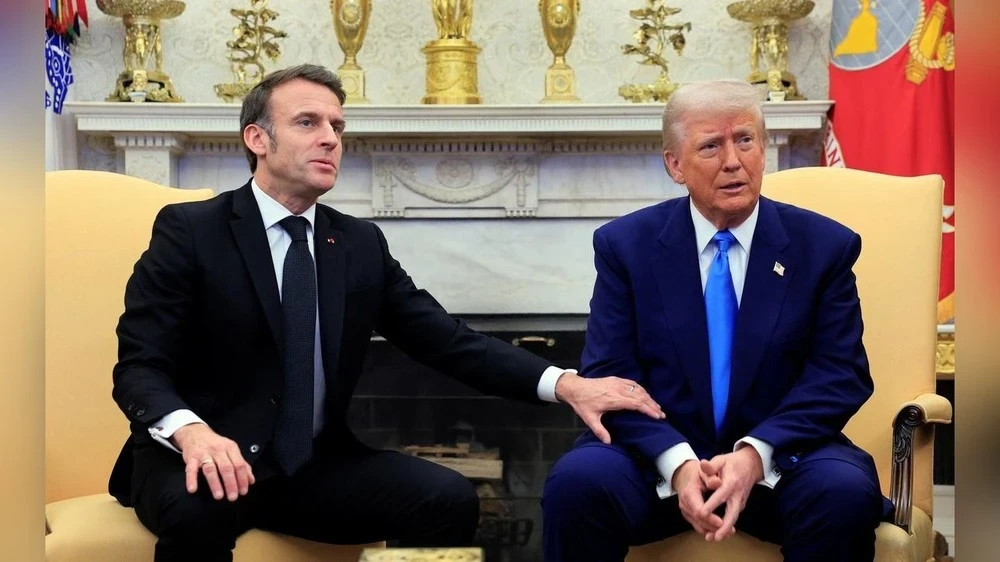
Trump made this statement after learning that Macron is likely to refuse the offer to join the World Council on Gaza, as reported by Bloomberg.
“He will be out of office soon, and nobody wants him,” Trump commented, adding that if Macron refuses, he will impose tariffs on French wines and champagne, which could make Macron reconsider his decision.
Additionally, Trump posted a message from Macron on his social network.
In this message, the French president expressed confusion regarding Trump's actions concerning Greenland and suggested holding several meetings, including a dinner in Davos.
Macron is also willing to invite representatives from Ukraine and Russia to these meetings.
“My friend,
We agree on Syria. We have opportunities for cooperation on Iran. I don’t understand what you are doing with Greenland.
How about making a few significant steps:
1. I can organize a G7 meeting in Paris on Thursday after Davos, inviting Ukrainians, Danes, Syrians, and Russians.
2. Let’s have dinner in Paris on Thursday, before your return to the USA,” Macron suggested.
According to Bloomberg, on January 19, it became known that Macron does not plan to accept Trump’s invitation. The French president believes that the charter of the new Council goes beyond the issues related to Gaza, as initially intended. This information was also confirmed by Le Monde, citing its sources.
Trump announced the creation of the World Council on January 16 and presented its executive committee. It includes figures such as U.S. Secretary of State Marco Rubio, Special Envoy Steve Witkoff, Trump’s son-in-law Jared Kushner, and former UK Prime Minister Tony Blair. According to the charter, the Council will initially focus on the situation in Gaza and then address other conflicts.
As Bloomberg reported, the Trump administration requires countries wishing to obtain a permanent seat on the Council to contribute at least $1 billion. The first chairman of the Council will be Trump himself, who will have the right to decide whom to admit, as well as to approve or reject decisions made by a majority vote.