Key issues of security, economy, and artificial intelligence are being discussed
At the 56th session of the World Economic Forum (WEF), taking place in Davos from January 19 to 23, 2026, representatives from global political and economic circles have gathered. This was reported by RBC.
The main theme of the forum will be "The Spirit of Dialogue," during which participants will discuss international security, economic challenges, and issues related to artificial intelligence.
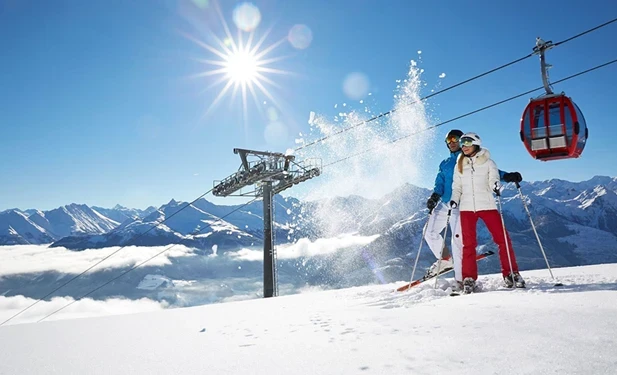
Davos, located in the Swiss Alps at an altitude of over 1500 meters, has hosted the forum annually since 1971 and is known as a popular skiing destination.
More than 60 heads of state and government, 55 ministers of economy and finance, and over 800 company executives are expected to attend the event. Among the business delegates are figures such as Nvidia President Jensen Huang and the heads of Microsoft and Anthropic — Satya Nadella and Dario Amodei.
Companies pay 27,000 Swiss francs (about 33,600 dollars) for each member of their delegation, in addition to the annual membership fee.
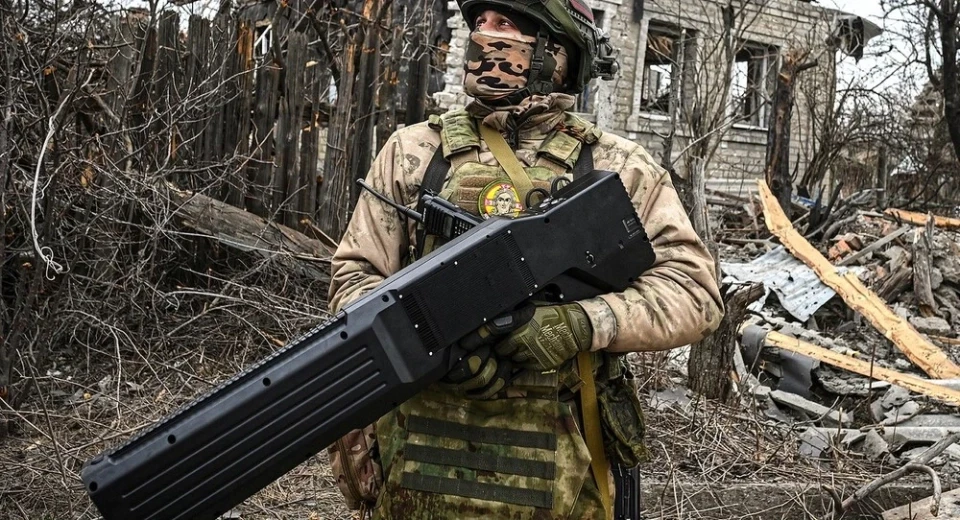
The security of the forum is ensured by over 5,000 military personnel, including snipers, as well as drones equipped with artificial intelligence. The expected security costs in 2026 will amount to about 9 million Swiss francs ($11.2 million).
Before the summit, a survey was conducted among 1,300 businessmen, scientists, and representatives of public organizations. The most significant threat identified by participants was "geoeconomic confrontation" — economic conflicts between major powers, as indicated by 18% of respondents. The threat of armed conflicts was mentioned by 14% of respondents, while extreme weather events ranked third with 8%.
According to UN data, global military spending in 2024 reached $2.7 trillion, a 9.4% increase compared to the previous year — the sharpest rise since the end of the Cold War.
Which leaders will come to Davos: Trump, G7 representatives, and the Ukrainian delegation
Leaders of the "Group of Seven" countries, including French President Emmanuel Macron, have arrived at the forum in Davos. Japanese Prime Minister Sanae Takahichi will not be able to attend; instead, the country will be represented by Economy Minister Ryosei Akazawa, Finance Minister Satsuki Katayama, and President of Mitsubishi Heavy Industries Eisaku Ito.
Also attending the forum will be European Commission President Ursula von der Leyen, UN Secretary-General António Guterres, and World Trade Organization Director-General Ngozi Okonjo-Iweala. China will be represented by Vice Premier He Lifeng.
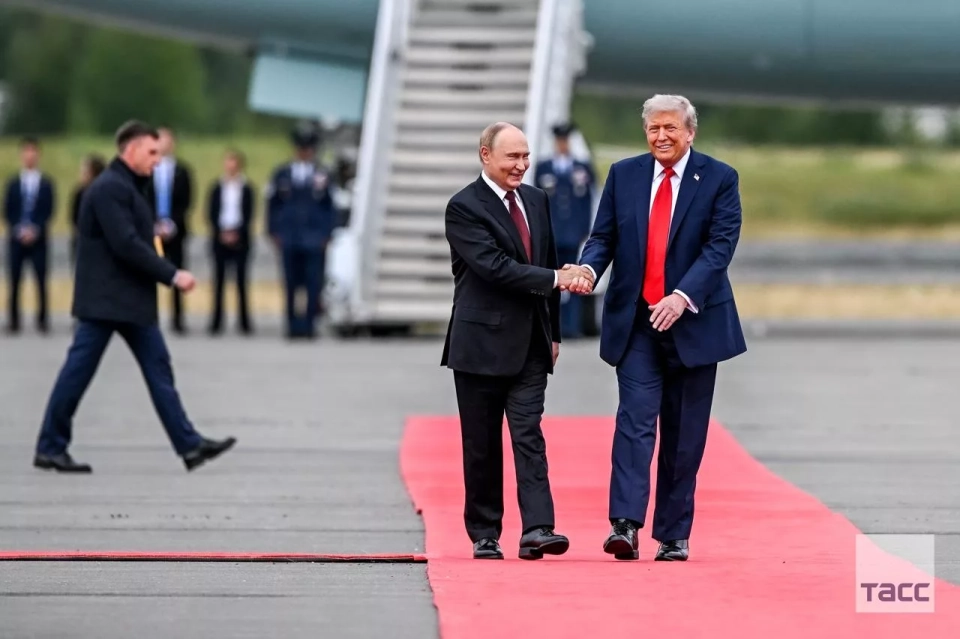
The largest delegation will be the American one, led by President Donald Trump. The delegation will include Secretary of State Marco Rubio, Finance and Trade Ministers Scott Bessent and Howard Latnik, Trade Representative Jamison Greer, Presidential Special Envoy Stephen Witkoff, Trump’s son-in-law Jared Kushner, and members of Congress.
Russia has not been invited to the forum in Davos since 2022, regarding official representatives and business figures. However, on January 19, Reuters reported that Russia's special envoy Kirill Dmitriev plans to attend the forum and meet with members of the American delegation, although this information has not yet been officially confirmed.
The Ukrainian delegation will also be present at the forum. Ukraine's Foreign Minister Andriy Sibiga stated that Kyiv plans to hold meetings with US representatives.
According to the Financial Times, Ukraine's allies from the G7 want to secure Trump's support for ensuring Kyiv's security. A meeting between the presidents of the US and Ukraine may take place on the sidelines of the forum, with G7 leaders and von der Leyen also participating. Trump has not confirmed his plans to meet with Zelensky but has not ruled out contacts if the Ukrainian president is at the forum.
According to The Telegraph, at the WEF in Davos, the US and Ukraine may sign an agreement for the country's reconstruction after the conflict amounting to $800 billion, as mentioned by Ukraine's ambassador to the US, Olga Stefanishina.
On January 19, FT reported adjustments to the forum's agenda. Initially, discussions on Ukrainian peace negotiations were planned, but due to foreign policy activity and threats from the US, the topic was changed to also consider the situation around Greenland.
Ahead of the forum, Trump announced the creation of a Council for Peace, aimed at the reconstruction of the Gaza sector. According to Axios, he intends to launch the Council's work at the forum in Davos.
The structure of the Council has not yet been determined, but it is known that it will be headed by Trump, who will decide whom to invite. Invitations have already been sent to Argentine President Javier Milei, Canadian Prime Minister Mark Carney, Turkish President Recep Tayyip Erdoğan, and von der Leyen. Leaders of France, Germany, and Australia have also received invitations, Reuters reports.
According to The Atlantic, the future organization's charter does not mention the Gaza sector. However, the Council has a two-year UN mandate for reconstruction in the sector, with members serving a three-year term, and a $1 billion contribution in the first year of the Council's operation may indicate more ambitious plans. Reuters described the Council as "Trump's UN, which ignores the main provisions of the UN Charter." Trump has previously criticized the international organization for its ineffectiveness.
Photo www