In 2026, Google and Microsoft are launching unique projects in Finland, where the waste heat from servers running artificial intelligence is used to heat residential buildings.
Technology companies have implemented innovative heat recovery systems that direct excess heat from server cooling into municipal heating systems. Instead of discarding heated water, companies have found a way to transform technological waste into a valuable resource.
Google's Initiative in Hamina
The first step in this direction is Google's project in Hamina, a port city where a data center operating since 2009 will be able to provide up to 80% of the heating for the local network. A partnership with Haminan Energia allows for the heating of about 2,000 homes, schools, and administrative buildings, with the heat provided free of charge. The data center uses carbon-neutral energy, which helps maintain low emission levels.
In November 2024, a heat pump station with a capacity of 7.5 MW was established in Hamina, which is expected to start operating by the end of 2025 and reduce CO2 emissions by approximately 2,000 tons per year. By early 2026, the project is in the final launch phase.
Microsoft's Large-Scale Project for the Capital
Microsoft, for its part, is implementing an even more ambitious project in collaboration with Fortum. This largest heat recovery project in the world is expected to be completed by 2027.
Two new data centers in Espoo and Kirkkonummi will provide heat for about 250,000 users, which corresponds to the needs of approximately 100,000 homes. The project is expected to cover up to 40% of heating needs in the area.
Fortum plans to invest 225 million euros in the construction of heat pump stations and pipelines from 2023 to 2027. The project is expected to reduce carbon dioxide emissions by 400,000 tons per year, equivalent to removing nearly 100,000 cars from the roads.
As of early 2026, construction work on the heat pump stations is ongoing, and the first test launches are scheduled for this year.
Technology of the Future
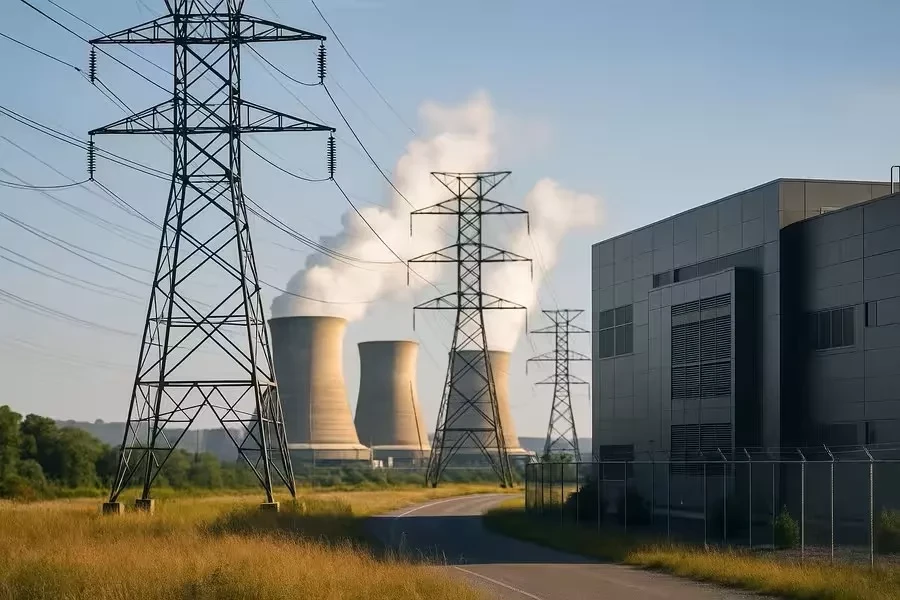
The principle of these systems is that servers emit heat during data processing, including tasks related to artificial intelligence, which typically goes into cooling systems. Instead of discarding this heat, heated water (around 30°C) is directed to heat pump stations.
Here, the temperature is raised to 60-90°C, which meets the standards for district heating. The hot water is then delivered to consumers through underground pipes, while the cooled water is returned to the data centers for reuse.
The Finnish approach has a key advantage: data centers are built close to existing heating networks, facilitating integration. Microsoft confirms that the full launch of the system in Espoo is planned for 2027.
Finland as a Model to Follow
Finland is actively developing a circular economy model, where the waste of one process becomes resources for another. Fortum has been producing heating without using coal since 2024, relying on renewable sources and heat recovery.
According to Business Finland, the share of renewable sources and heat recovery in the country increased from 70% to 73% from 2023 to 2024. The share of CO2-neutral electricity reached 95%, and these figures continue to grow towards 2026.
The projects are supported by the European Union under the NextGenerationEU program and receive investments from the Ministry of Economic Affairs and Employment of Finland. Finnish initiatives are attracting the attention of other Nordic countries considering implementing similar solutions.
From Experiment to Industrial Scale
What began as experiments is becoming a full-fledged industry by 2026. For example, in Myntsäla, a 75 MW data center has successfully provided heat for two-thirds of the city's needs for several years, confirming the viability of this concept.
Finnish data centers offer a real solution for reducing carbon emissions in city heating amid growing AI capacities. They transform inevitable technological waste into a resource, reducing dependence on fossil fuels and creating a new model for the interaction of digital infrastructure with the urban economy.
Geopolitical Aspect
From a geopolitical perspective, the Finnish model creates a new precedent for energy dependence on major technology companies. Municipalities are effectively tying their essential utility needs to business solutions from American corporations—a situation that seems incredible even by modern standards. While examples of industrial heat utilization are known, no digital companies have previously become critically important utility providers for entire regions.
From a technical standpoint, there are risks: data centers are optimized for computational tasks, not for stable heating supply. Peak loads from AI computations may not coincide with peak heating needs, especially during cold periods. This raises questions about the readiness of municipalities for a situation where heating depends on the distribution algorithms of servers across continents.
Source: hashtelegraph.com