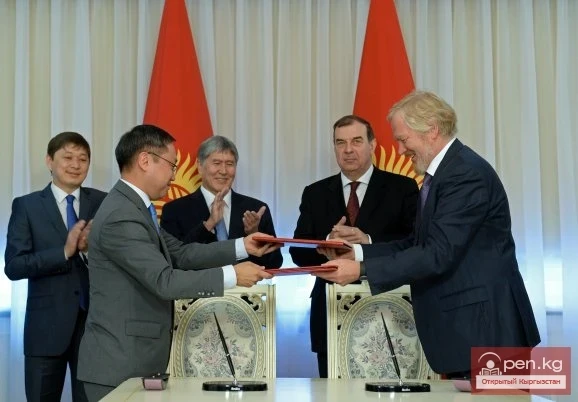
A special direction of foreign policy activity during the past period has been the development of cooperation between Kyrgyzstan and donor countries and international financial institutions. This cooperation has played a significant role in carrying out economic and political reforms.
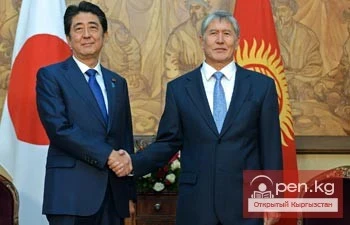
The Government of Japan allocated to Kyrgyzstan:
• two grants for the reform of medical services amounting to 688 million and 399 million Japanese yen;
• two grants to support the ongoing agrarian and land reform amounting to 3 billion 290 million and 1 billion 500 million Japanese yen (1995-2001). Kyrgyzstan used these funds to acquire 706 tractors, 269 grain harvesters, and 512 units of other agricultural machinery, 23.5 thousand tons of diesel fuel, and 43.9 thousand tons of mineral fertilizers.
Technical assistance from Germany was provided by the Society for Technical Cooperation (GTZ), with which contacts began in 1993. Financial resources were directed towards the implementation of seven projects totaling 17 million dollars. Among them:
• planning and monitoring the German contribution to projects or programs;
• selection and management of experts;
• training and upgrading the qualifications of technical personnel;
• acquisition of technical equipment;
• provision of non-repayable financial contributions.
Assistance from the United Kingdom was aimed at promoting sustainable development in the Kyrgyz Republic and reducing poverty levels:
• GSAC — support for the programs of the Government of Kyrgyzstan;
• promotion of tariff policy and reform of public utilities;
• assistance to the National Statistical Committee;
• reform of medical services; support for the national HIV/AIDS program;
• technical support for the rural investment program.
Throughout the cooperation with the Asian Development Bank, Kyrgyzstan received 22 loans totaling 536 million dollars and 52 grants for technical assistance amounting to 31.5 million dollars. The Asian Development Bank has become one of the largest international donors to Kyrgyzstan and included it in the list of borrowers that will receive the largest share of concessional lending. This bank has become a primary source of assistance for the country's development and poverty reduction.
Since Kyrgyzstan joined the Islamic Development Bank, six technical assistance projects and four special assistance projects have been developed, totaling 3.059 million dollars. The IDB approved six loans totaling 43.61 million dollars and two installment sale projects amounting to 18.5 million dollars. The transport and communications sector has become the most important, accounting for 40.1% of the IDB's project portfolio. Loans totaling 28.65 million dollars were provided for the rehabilitation of the Bishkek — Osh road, and the Taraz — Talas — Suusamyr road. The energy sector became the second largest sector (28.2%), while industry and mining ranked third (25.9%), and the share of the social infrastructure development sector accounted for 6.8% of total borrowing from the IDB.
Friendly China provided assistance in the form of 4 grants and 6 projects of non-repayable assistance totaling 174 million Chinese yuan. These were directed towards exploratory work and the development of a feasibility study for the construction of the China — Kyrgyzstan — Uzbekistan railway line, rehabilitation of the Osh — Sary — Tash — Irkeshtam road, development of technical and economic cooperation, strengthening the material base of law enforcement agencies, and others.
The Turkish International Cooperation Agency (TIKA) allocated 12 million dollars to Kyrgyzstan for the implementation of economic, trade, technical, educational, social, and cultural programs and projects from 1992 to 2004.
Switzerland allocated grant funds totaling 40 million Swiss francs (about 24 million dollars) and 38 million Swiss francs (about 23 million dollars) to Kyrgyzstan from 1993 to 2001 as part of financial and technical assistance programs. In 2002, funds amounting to 21.5 million Swiss francs were allocated.
The World Bank is the largest donor to the Kyrgyz Republic, with annual funding of about 70 million dollars. Since the Kyrgyz Republic joined the World Bank (1992), it has committed to pay 621.4 million dollars for 25 projects financed by the International Development Association, of which 469.7 million dollars has already been disbursed. In addition, two projects are financed on a grant basis by the Global Environment Facility (GEF) (6 million dollars). During the World Bank's operations in the Kyrgyz Republic, targeted projects have led to the reform of the agricultural sector, modernization of the flood protection system, improvement of water user associations, provision of broad access to credit services in rural areas, establishment of clean drinking water supply in rural areas, and improvement of sanitary conditions. With the help of the World Bank, 73 km of roads have been reconstructed in the cities of Bishkek, Osh, and Jalal-Abad, and 278 medical institutions have been modernized and equipped with modern equipment.
The Kyrgyz Republic joined the International Monetary Fund (IMF) in 1992 and has since received official assistance under various programs. The key area of cooperation between Kyrgyzstan and the IMF has been the development of policies aimed at maintaining macroeconomic stability, reducing external debt, and strengthening the banking system. The first joint structural adjustment programs were called ESAF-1 and ESAF-2. The funds allocated to the republic contributed to macroeconomic and financial stability. Thus, hyperinflation of 1993 was suppressed to 2.3% in 2002. The budget deficit was reduced from 13.89% of GDP in 1992 to 5.24% of GDP in 2004.
Reforms in the monetary and credit system ensured the convertibility of the national currency. Under a three-year program signed by the government and the National Bank from October 1, 2001, to September 30, 2004, support was provided for reasonable budgetary and tax policies, as well as structural reforms outlined in the National Strategy for Poverty Reduction. On October 1, 2003, the second year of the agreement with the IMF under this program was completed, and the third year of the PRGF implementation began.
The restructuring of interest and principal payments on bilateral loans, achieved in March 2002 with members of the Paris Club, was made possible only due to the results of Kyrgyzstan's work under the PRGF program, prepared jointly with the IMF. The liquidity problem in the medium term was resolved, deferring the payment of unsustainable amounts for the economy of a developing country. Through the PRGF program, concessional loans specifically designed for low-income countries have been flowing into the republic.
The International Finance Corporation's (IFC) unified portfolio grew to 27.72 million dollars (financed as of September 2002). The largest investments in the existing portfolio were made in the Kumtor gold mine project, with additional investments in a packaging factory (Altyn-Azhidar) and three financial sector projects (Demir Bank, KICB, and FINCA). The IFC also approved investments in a regional small equity fund (CASEF). Recently, within the framework of the Small Enterprises Fund, the IFC made direct investments in a pasta production factory (Akyn) amounting to 1.4 million dollars.
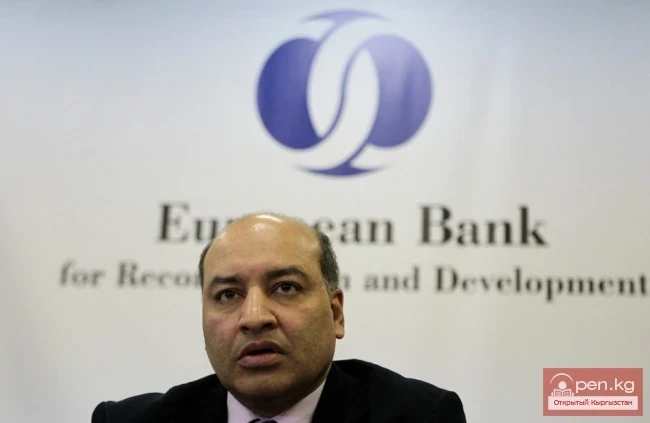
Kyrgyzstan has been a member of the European Bank for Reconstruction and Development (EBRD) since June 1992 and is one of its shareholders (1000 shares) totaling 10 million euros. Since the establishment of cooperation, the EBRD has approved 30 investment projects in Kyrgyzstan totaling 155 million euros. The EBRD provides financing under the following main programs: direct investment program, trade facilitation program, micro and small enterprise financing program, EBRD credit line. Over the past years, the EBRD has approved trade financing programs totaling 4 million dollars. In total, since the involvement of Kyrgyz commercial banks, trade operations amounting to 3.5 million dollars have been financed.