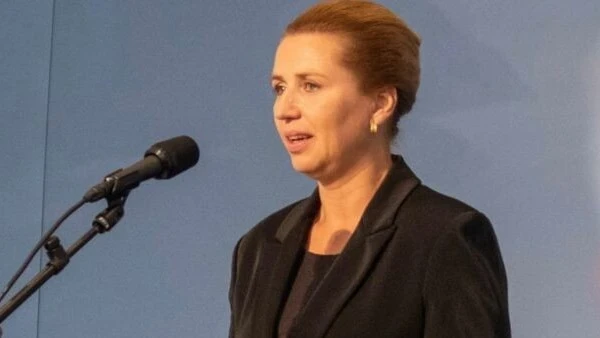
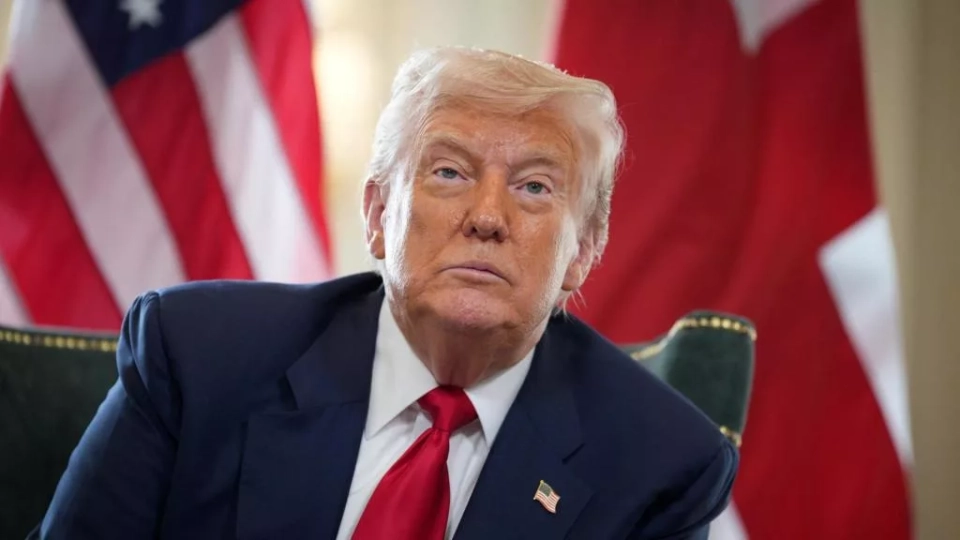
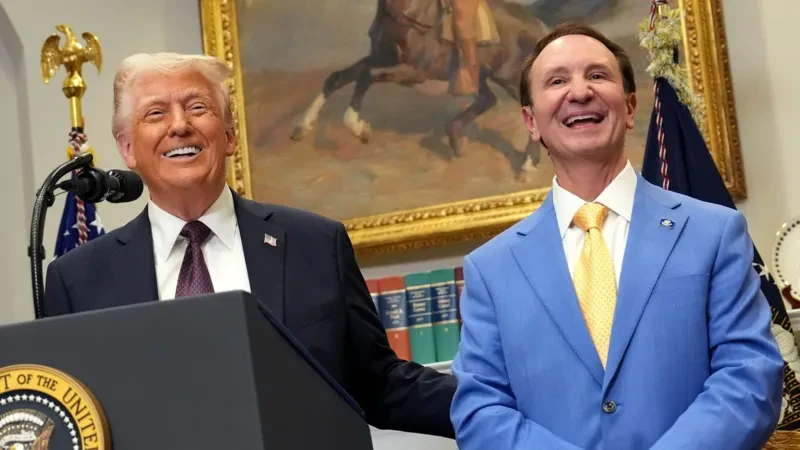
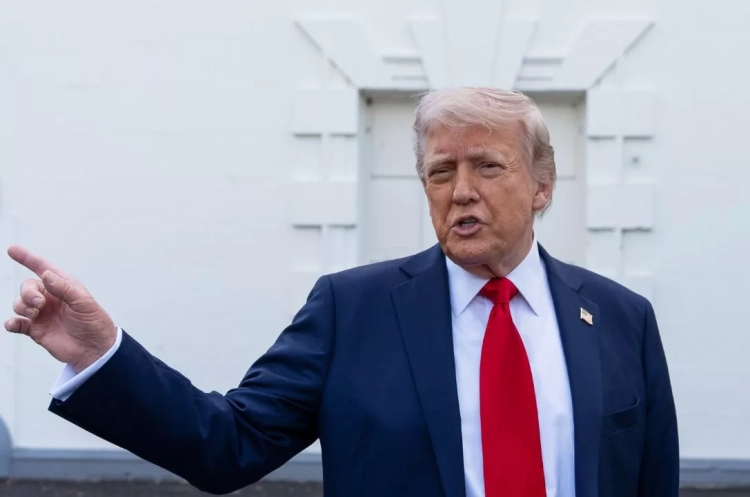
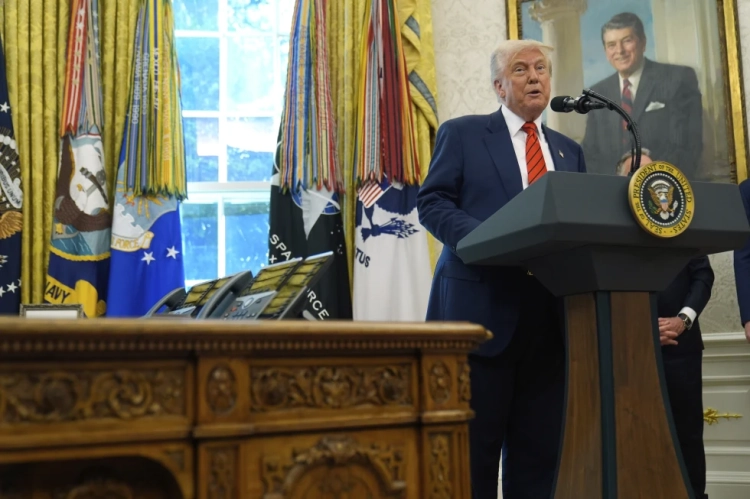
Last weekend, Trump emphasized that the United States "needs" Greenland to ensure its security. This prompted a reaction from Danish Prime Minister Mette Frederiksen, who warned that any potential attack by the U.S. could mean the end of NATO.
On Tuesday, White House representatives told BBC that "the president and his team are considering a variety of ways to achieve this important foreign policy goal," adding that the use of armed forces is one of the possible options.
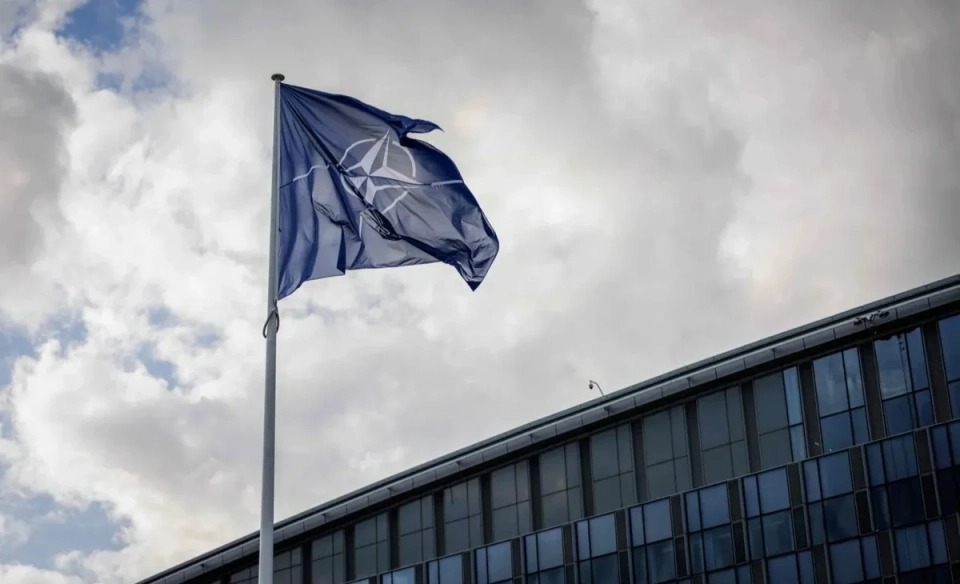
NATO, as is known, is a transatlantic military alliance whose members commit to assisting each other in the event of external threats.
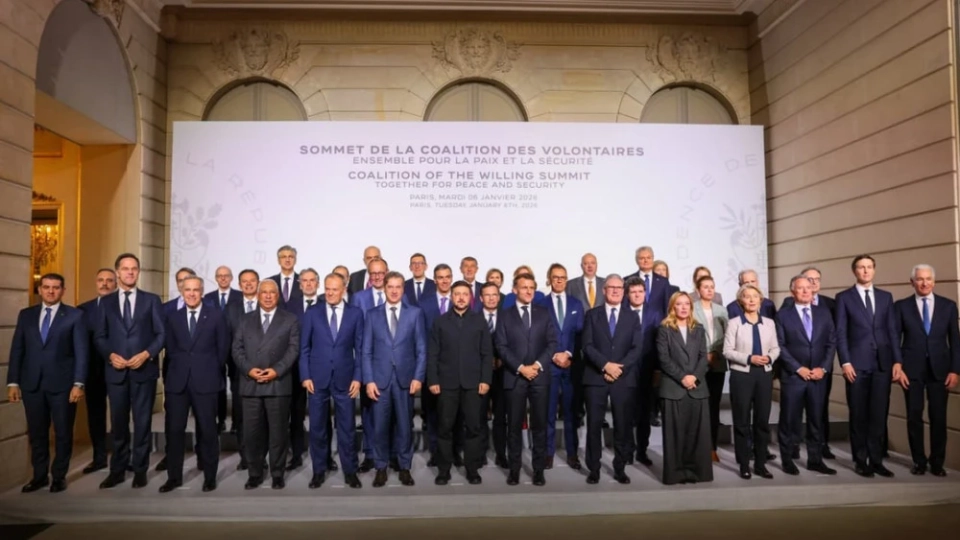
A few hours earlier, six European countries expressed unanimous support for Denmark. In a joint statement from the leaders of the United Kingdom, France, Germany, Italy, Poland, Spain, and Denmark, it was stated: "Greenland belongs to its people, and only Denmark and Greenland have the right to make decisions regarding their relationships."
In their statements, European leaders also noted that they are interested in ensuring security in the Arctic and that this can only be achieved through "collective efforts" of NATO allies, including the U.S.
They called for adherence to the principles of the UN Charter, particularly respect for sovereignty and territorial integrity.
Greenland's Prime Minister Jens-Frederik Nielsen welcomed this statement, calling for "respectful dialogue." "It is important that the dialogue takes into account that Greenland's status is defined by international law and principles of territorial integrity," Nielsen added.
The issue of Greenland was raised again against the backdrop of the U.S. military intervention in Venezuela, when elite troops captured President Nicolás Maduro and transported him to New York for a trial on charges of drug and weapon possession.
The day after this operation, Katie Miller, the wife of one of Trump's advisors, posted a map of Greenland colored in the colors of the American flag on social media, captioning it with the word "SOON."
On Monday, her husband, Stephen Miller, confirmed that "the official position of the U.S. is that Greenland should become part of America." In an interview with CNN, he also stated that the use of force to annex Greenland is not ruled out: "No one will oppose the U.S. over Greenland."
According to an unnamed senior U.S. official, among the options being considered are a direct purchase of Greenland or entering into a free association agreement with the region.
A State Department representative, in response to a BBC inquiry, emphasized that the U.S. "is focused on establishing strong trade ties that will benefit both Americans and the people of Greenland."
"Our adversaries are becoming increasingly active in the Arctic, which raises serious concerns for the U.S., Denmark, and our NATO allies," the State Department representative noted.
U.S. Secretary of State Marco Rubio informed lawmakers in a closed briefing at the Capitol that the Trump administration does not plan a military invasion of Greenland but is considering the possibility of purchasing it from Denmark, as reported by the Wall Street Journal.
Greenland and Denmark had previously raised the need for an urgent meeting with Rubio to discuss American plans.
Danish Foreign Minister Lars Løkke Rasmussen noted that a conversation with the Secretary of State would help clarify "some misunderstandings."
Republican Senator Eric Schmitt from Missouri also emphasized national security issues in an interview with BBC. "I think this is just negotiation," he added, expressing hope that Europe will understand that a strong U.S. is good for all of Western civilization.
During his first term, President Trump had already expressed ideas about purchasing Greenland as a strategically important American center in the Arctic, calling it "a big real estate deal" in 2019.
With increasing interest from Russia and China in resource-rich Greenland, melting ice opens new opportunities for trade routes.
In March, Trump stated that the U.S. "will do whatever it takes" to control this region.
During congressional hearings last summer, Defense Secretary Pete Hegseth was asked whether the Pentagon plans to use force to seize Greenland, and he replied that "we have plans for any scenario."
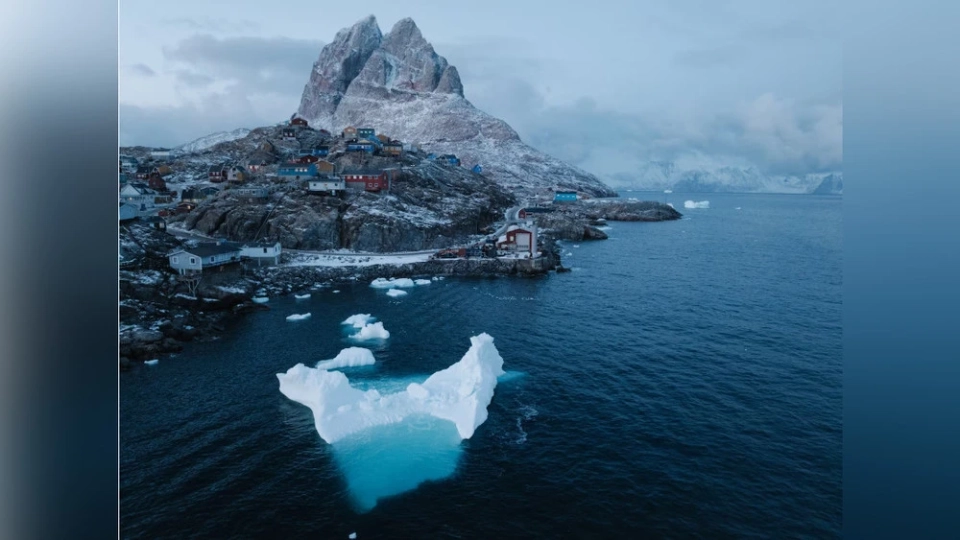
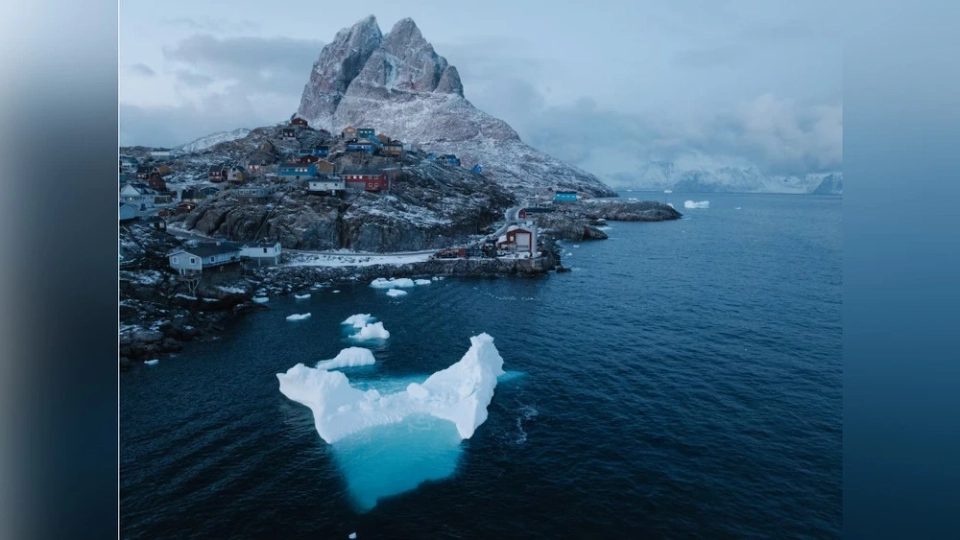
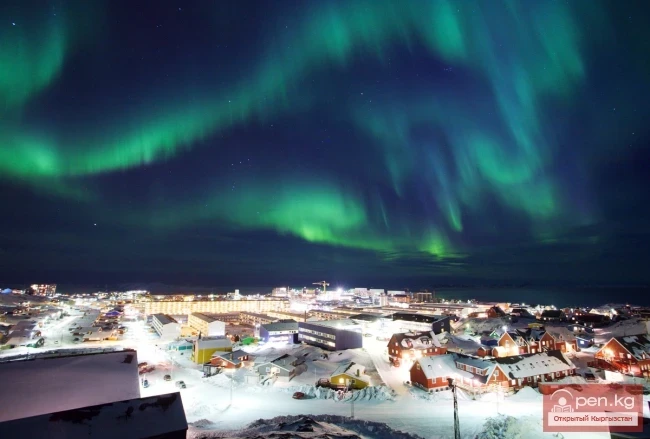
Greenland, with a population of about 57,000, has had extensive self-governing powers since 1979; however, defense and foreign affairs remain under Denmark's jurisdiction.
Although many Greenlanders strive for independence from Denmark, polls show that they oppose joining the U.S., where an American military base is already located.
Morgan Angadju, a 27-year-old Inuit from Ilulissat, shared his concerns with BBC regarding Trump's statements: "It was terrible to hear the leader of the free world talk about Denmark and Greenland as if we are just an object for acquisition." He added that concerns about the future are justified: "What if the Prime Minister of Greenland meets the same fate as Maduro, or if the U.S. decides to invade our country?"