"What kind of inferiority complex is this?"
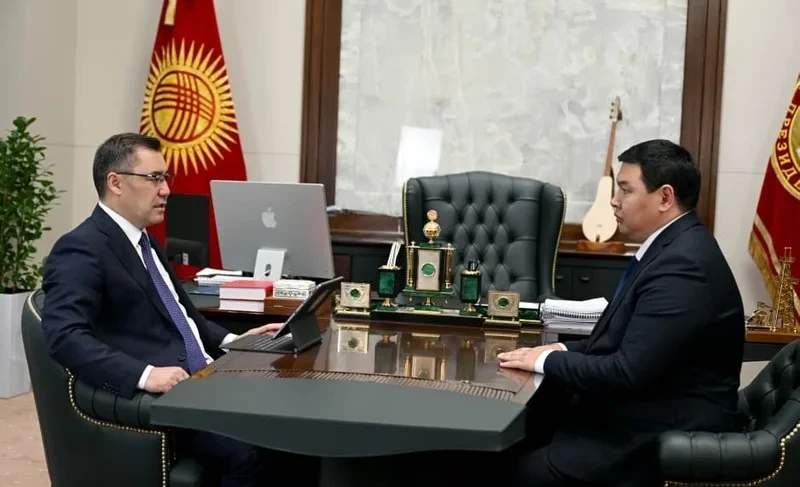
In a recent interview with the BBC, Syimyk Zhapikeev shared his thoughts on society's reaction to his remarks regarding the "five-kopeck stories" of Chinghiz Aitmatov.
According to him, he did not intend to offend the writer but merely expressed his opinion about his literary works.
"What did I say that was bad about Chinghiz Aitmatov? Did I attack him personally or call him a bad person? If I don't like his work, what's wrong with that? I mentioned that I prefer reading Persian poetry, such as the works of Rumi and Omar Khayyam. I noted that Aitmatov's works do not attract me, and I keep hearing questions: why? People should respect the right to an opinion. I did not slander the writer. If I said I didn't like Pushkin or Solzhenitsyn, would there be the same reaction? What kind of inferiority complex is this?" Zhapikeev poses a rhetorical question.
It is worth noting that in Ernist Kyazov's podcast, Zhapikeev raised questions about "mankurtism" in modern realities and also commented on Aitmatov's works.
He added that he is not interested in Aitmatov's creativity and does not wish to delve into such discussions.
"Chinghiz Aitmatov always praised the Soviet Union. Reading his books, one can see: if you are a welder, you will remain one forever; if you are a doctor, you will be a doctor for life. These works do not provide any hidayah (guidance in Islam) and do not contribute to development. I have not read the story about the mankurt, but it is not such a significant plot. There are authors who write much more engagingly. His stories about the first teacher or the collective farm are true 'five-kopeck stories.' They do not inspire, like, for example, films with Bruce Lee," the general emphasized.
These statements caused a wide public resonance; in the Jogorku Kenesh, there were calls to provide a legal assessment of Zhapikeev's words, and the Deputy Minister of Culture expressed the opinion that the general needs a psychiatric evaluation.
Photo www