“A glimpse of a new light gave us the strength of youth”
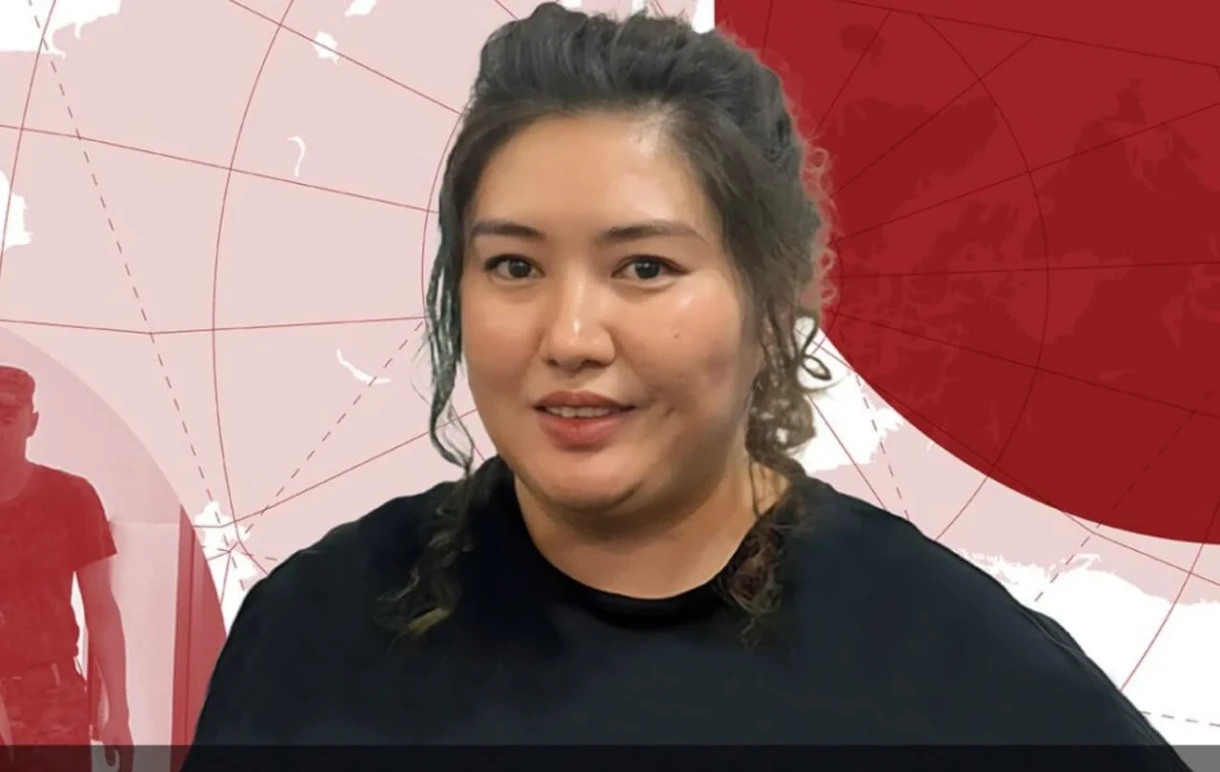
My name is Tinka Garengi, I am a Spanish writer, and for several years I have been actively promoting Soviet literature. The works of Chinghiz Aitmatov deeply inspire me, and I consider him one of the greatest humanists of the 20th century.
The bridge between Spain and Kyrgyzstan has been Chinghiz Aitmatov and Federico Mayor, who previously held the position of Director-General of UNESCO. These two outstanding individuals were united by a strong friendship and a desire for a humanistic dialogue between nations.
It is not surprising that Federico Mayor, recalling Lake Issyk-Kul after the Issyk-Kul Forum of 1986, wrote: “A sprout of hope arose suddenly, timidly… a glimpse of a new light gave us the strength of youth… The decision is to see each other, to talk to each other, to walk hand in hand.”
Inspired by this legacy, I decided to initiate the creation of a branch of the Issyk-Kul Forum in Spain to develop cultural dialogue and mutual understanding between our countries, between the West and the East. I am currently a researcher at the University of Valencia.
My doctoral work is dedicated to the life and works of Aitmatov, and I am writing his first biography in Spanish, covering his life, literary journey, and historical context.
As an author, I have written two novels — “The Chosen” and “Circles of Solitude,” as well as several short stories and a play titled “Drowned Dreams.”
Right now, my biggest dream is to visit Kyrgyzstan and participate in the anniversary Issyk-Kul Forum in June.
_______
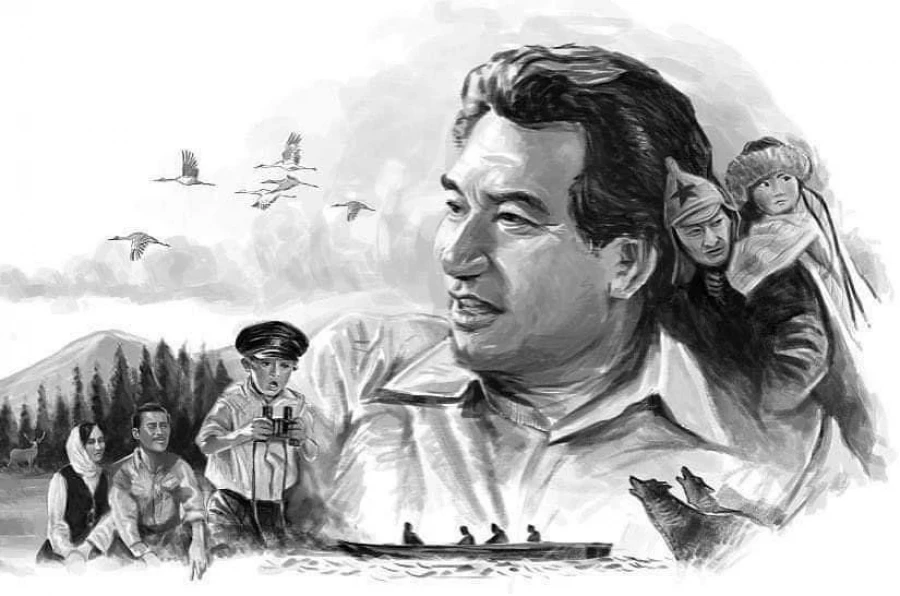
After the collapse of the Soviet Union, the fates of writers in European literature developed differently: some managed to maintain their presence, while others gradually lost it. Among the latter is Chinghiz Aitmatov. However, his fame did not diminish — according to UNESCO data, he was one of the most translated authors from the Soviet space, and his works are available in more than 170 languages worldwide. The issue was not recognition, but how he was perceived by the European cultural system.
For a long time, Russian literature reached Spain not directly, but through the French language, which led to the adaptation and even distortion of texts. A vivid example is Ivan Turgenev's novel “Rudin,” which for a long time was published in Spain without one of its chapters.
From the 1880s to the 1920s, Russian literature was present in Spain, but this depended on the activity of individual publishers and translators, as there were no systematic translation programs from Russian at that time.
In the 20th century, the political context began to play a key role. During Francoism (1939–1975), the lack of diplomatic relations with the Soviet Union and censorship significantly limited the publication of Soviet literature. Spanish publishers preferred pre-revolutionary classical literature or contemporary works that could be presented as humanistic.
_______
Chinghiz Aitmatov first appeared in Spain in 1966 when the publishing house “Planeta” released his novella “Mother's Field” translated by Augusto Vidal Rojet. This text went through censorship several times before receiving permission for publication. The book was not released in the “Maestros rusos” series but in the “Infinito” collection, making it more accessible to a wider audience.
In the following years, “My Little Poplar in a Red Scarf” (1967) and “The White Steamship” (1973) were published. During these years, Aitmatov was perceived by the Spanish reader as a Soviet writer known not only in the USSR but also beyond its borders. His Kyrgyz identity remained in the background.
Under Francoism, the publication of works with explicit political undertones was avoided. Aitmatov's prose, although containing critical motifs, was perceived as humanistic, which facilitated its dissemination.
In 1974, Aitmatov visited Spain at the invitation of the publishing house “Planeta.” In Barcelona, he met with his translator Augusto Vidal Rojet and representatives of the literary community. Despite the political atmosphere, the country left a positive impression on him.
________
After the death of Francisco Franco in 1975 and the restoration of diplomatic relations between Spain and the Soviet Union in 1977, cultural exchange became more active. A new wave of translators, many of whom were trained in the Soviet Union and were connected to the Spanish republican emigration, significantly improved the quality of translations from Russian.
Aitmatov achieved the greatest success in Spain in the 1980s when his works were published in various formats — from youth series to large commercial editions. Clubs like “Círculo de Lectores” actively distributed his books, including “Jamilya” and the novel “And the Day Lasts More Than a Century.” This was not a marginal phenomenon — Aitmatov became part of the everyday reading experience.
This growth coincided with the beginning of perestroika initiated by Mikhail Gorbachev in 1985, which simplified the dissemination of texts and the publication of previously banned works. In 1991, the Spanish edition of the novel “And the Day Lasts More Than a Century” included the chapter “The White Cloud of Genghis Khan” for the first time, which became fully available only during the reform period.
_______
By the early 1990s, Aitmatov's influence in Spain appeared to be stable. But after the collapse of the Soviet Union, the situation changed. The literary space fragmented into separate national traditions, and Central Asian literature did not find its place in the European book market. Aitmatov, long perceived as a Soviet author, began to be defined as a Kyrgyz writer. As a result, his name gradually disappeared from the publishing and educational context: from 1993 to 2021, no new translations into Spanish were published.
The return began in 2021 when the independent publishing house “Automática” released a new translation of “Jamilya.” In 2024, the novel “And the Day Lasts More Than a Century” was published. In 2025, “Jamilya” was released in Catalan in Barcelona, becoming part of one of Spain's official literary systems.
Today, new publications are aimed at a narrower circle of readers interested in post-Soviet literature. Aitmatov has returned to Spain, but his presence has changed — from mass to more niche, focused on the intellectual and cultural environment.
Nevertheless, interest in his work remains: his works continue to resonate with new generations of readers, confirming their universal significance.
This continuity also reflects my personal interest — the dream of participating in the anniversary Issyk-Kul Forum in 2026, which remains a symbol of cultural interaction and the preservation of the memory of Chinghiz Aitmatov's literary heritage.
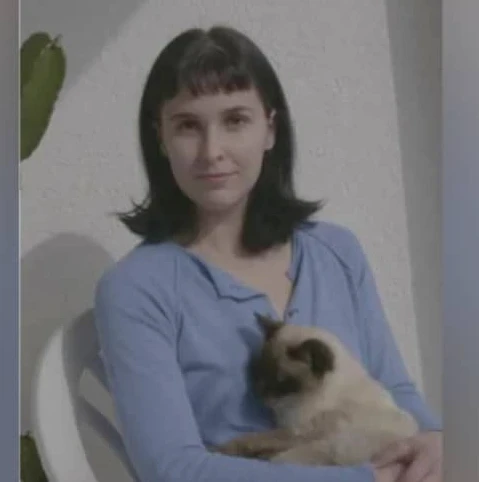
Author: Tinka Garengi (Spain)