In the Jogorku Kenesh, you can find people whose names are unfamiliar to voters
There is a famous poem by Vladimir Mayakovsky in which he criticizes Soviet bureaucracy for wasting time in various meetings. This phenomenon can be observed not only in public service but also in other areas.
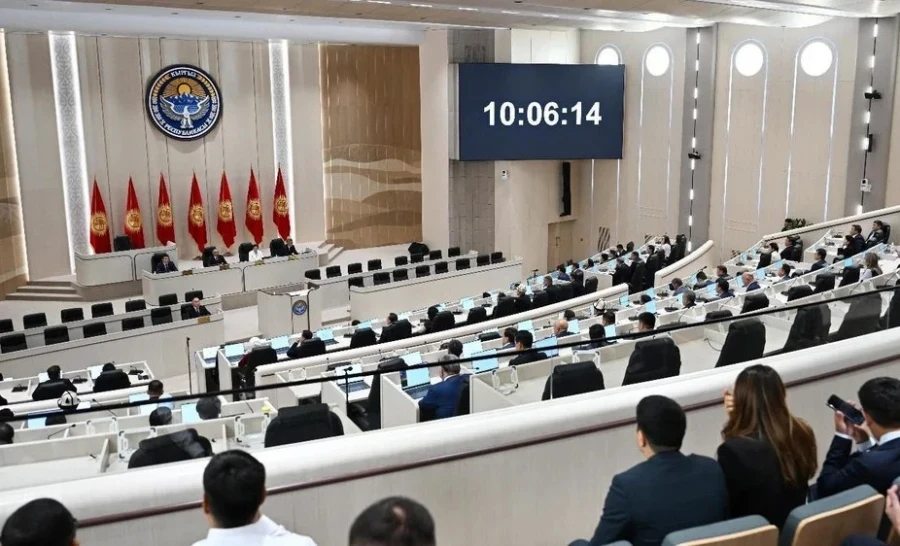
In the Jogorku Kenesh, there are also quite a few such people. Among the deputies, one can distinguish activists, passive participants, silent ones, as well as those who have been elected multiple times and newcomers. At first glance, their names may not mean anything, even if they have been in parliament for many years. The diversity of characters, skills, and experience is evident.
My reflections on the topic of "prolonged" deputies arose in connection with the fact that among numerous candidates, favorites, average contenders, and outsiders stand out. At the same time, the number of mandates in the districts is limited — only 3, of which 2 are intended for men and 1 for women. On social media, many election participants discuss who among the favorites is better and struggle with their choice.
In this regard, I want to propose an innovation based on the practices of developed countries.
In some countries, there are restrictions on both presidential and parliamentary positions that are not always formalized legally. For example, in Sweden, an ordinary deputy who does not stand out among colleagues is "improper" to be elected more than twice. In such cases, they must leave their positions voluntarily, and if they do not want to, they are simply not included in the party lists. Only party leaders who can be nominated for ministerial and prime ministerial positions remain for the third and subsequent terms, becoming significant political figures.
There are also countries where deputies can hold their positions for only one term. This practice is common in Latin America, where even presidents cannot run for election more than once. The main reason for this is to prevent the formation of stable connections and acquaintances in power, allowing new people with fresh ideas to come to power more often.
The frequent change of ruling elites is one of the reasons for the faster development of former socialist countries in Europe compared to our Eurasia. Over the past 35 years, the fourth or fifth generation of politicians has changed there, while in some places here, representatives of the first generation who worked with Brezhnev still remain.
In light of the above, I advise voters that if candidates have similar characteristics (education, work experience, achievements), to prefer those who have not exhausted their potential and can bring new opportunities to politics, rather than experienced but "prolonged" deputies. In the Jogorku Kenesh, there are those who have been elected 3-5 times, but their names remain unfamiliar. Such people will no longer be of use, and they usually do not leave their positions.
Ilyas Kurmanov, Doctor of Political Science
Photo www