Nature

{title}
Climate
{title}
Natural ecological complexes
{title}
Water resources
{title}
Rivers
{title}
Lakes
{title}
Secrets of Issyk-Kul Lake
{title}
Reservoirs
{title}
Waterfalls
{title}
Mineral waters
{title}
Flora
{title}
Fauna of Kyrgyzstan
{title}
Mammals of Kyrgyzstan
{title}
Birds of Kyrgyzstan
{title}
Fish of Kyrgyzstan
{title}
Amphibians and reptiles of Kyrgyzstan
{title}
Insects of Kyrgyzstan
{title}
Mountains and glaciers
{title}
Mountain ranges
{title}
Mountain peaks
{title}
Mountain passes
{title}
Glaciers
{title}
Caves
{title}
Gorges
{title}
National parks and reserves
{title}
Pastures and valleys
{title}
Soil and minerals
{title}
Red Book
{title}
Fungi and higher plants
{title}
Animals
{title}
Arthropods
{title}
Fish
{title}
Amphibians and reptiles
{title}
Birds
{title}
Mammals
Jackal - chöo
Fauna of Kyrgyzstan / Mammals of Kyrgyzstan

Jackal - chöo

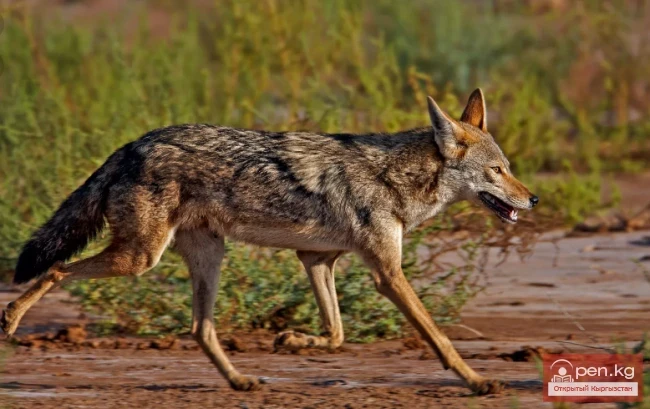
Jackal (чөө). Appeared in Kyrgyzstan in the 1960s. Externally, the jackal resembles a small wolf. Height at the withers is 45–50 cm, weight ranges from 7 to 13 kg. The winter coat is pale, dirty yellow, with noticeable reddish and black shades; the tail is reddish-brown with a black tip. The jackal prefers dense thickets of shrubs and reeds in plains, near rivers and lakes, and often lives close to human settlements. It is less commonly found in the foothills and is believed not to ascend into

21.02.2019, 09:20
Kolonok - Beket
Fauna of Kyrgyzstan / Mammals of Kyrgyzstan

Kolonok - Beket

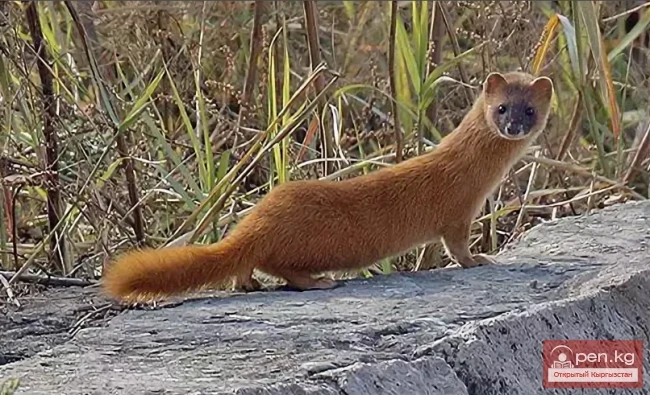
Kolonok. Introduced in 1941 from Russia. The fur of the kolonok is reddish-yellow in winter and reddish-red in summer, with grayish paws, a light belly, a brown upper side of the snout and whiskers, and a white tip on the snout, lips, chin, and 1-3 spots under the neck, sometimes with a spot extending from the chin down the neck; the length from the end of the snout to the base of the tail is 28-30 cm, and the tail length is 16.5 cm; the tail is fluffy in winter, almost like that of a marten,

21.02.2019, 09:09
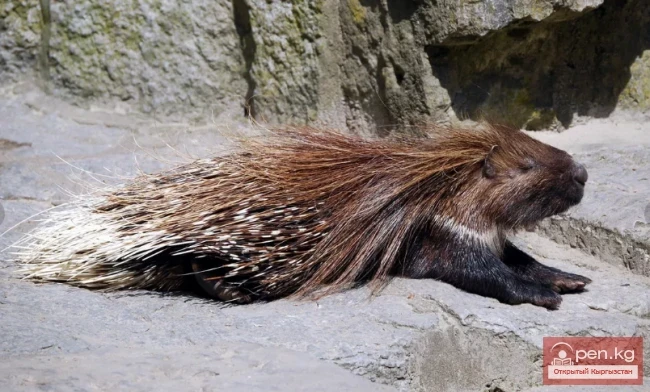
Indian Porcupine - Chutkor, Karmushtik
Fauna of Kyrgyzstan / Mammals of Kyrgyzstan

Indian Porcupine - Chutkor, Karmushtik

Porcupine, Indian (Chutkur, Karmushtak). The porcupine is a rare animal in Kyrgyzstan, an endangered species. Previously, it could be observed in large numbers throughout almost the entire territory of Kyrgyzstan. Today, encounters with this animal are extremely rare and few. Externally, the porcupine is difficult to confuse with another animal. The largest rodent in Central Asia inhabits dry, open areas with thickets of shrubs and forest edges. The body length of an adult animal ranges from

20.02.2019, 21:39
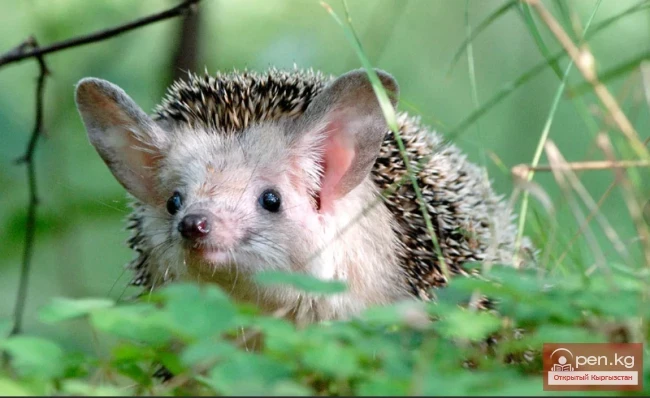
Hedgehog - Erinaceus
Fauna of Kyrgyzstan / Mammals of Kyrgyzstan

Hedgehog - Erinaceus

Eurasian Hedgehog (Erinaceus concolor). In Kyrgyzstan, there lives the Eurasian hedgehog, which is twice lighter than the common hedgehog. While the latter can weigh up to a kilogram, the former rarely exceeds 400 grams, although its body length is only slightly shorter. It is also distinguished by its long ears. If they are bent forward, they reach the base of the snout. The animal can fold them back. It is a true southerner, loving warm, sunlit habitats, and does not shy away from open

20.02.2019, 21:27
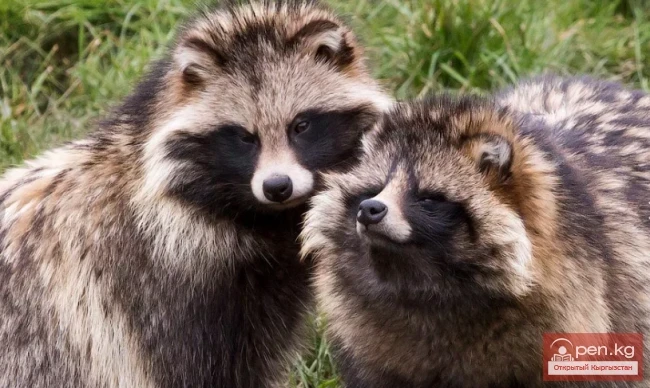
Raccoon Dog - I Love You, Dog
Fauna of Kyrgyzstan / Mammals of Kyrgyzstan

Raccoon Dog - I Love You, Dog

Raccoon Dog. Family of Dogs. Introduced from the Far East and North America in 1934. Initially, it was brought to nut forests and to Susamyr, but for the same reason as the raccoon, it completely disappeared from these areas. Finally, in 1945, one and a half dozen raccoon dogs were released into the sea buckthorn thickets (dzherganaka) along the shores of Lake Issyk-Kul. The conditions here turned out to be better: plenty of food and shallow snow. The very fact of successful acclimatization on

19.02.2019, 21:23
Raccoon: Acclimatization in the Forests of Arslanbob
Fauna of Kyrgyzstan / Mammals of Kyrgyzstan

Raccoon: Acclimatization in the Forests of Arslanbob

Raccoon. In 1936, the North American raccoon was acclimatized in the walnut forests of Arslanbob (Kyrgyzstan), where it readily occupied the hollows of walnut trees. The raccoon is the size of a cat. Its body length is 45—60 cm, tail length 20—25 cm; weight 5—9 kg. The fluffy tail is marked with 6-7 dark rings across. Its legs are short, with such well-developed fingers that its tracks resemble the imprint of a human hand. There is a brown patch around the eyes, giving its sharp snout a

19.02.2019, 21:08
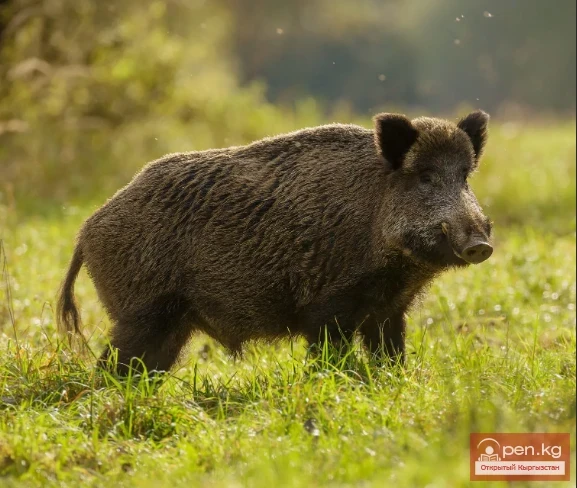
Wild Boar — Kaman, Wild Pig
Fauna of Kyrgyzstan / Mammals of Kyrgyzstan

Wild Boar — Kaman, Wild Pig

Wild Boar — Sus scrofa Linn. (in Kyrgyz: kaman, japaiy chotchko) Just a hundred years ago, a great number of wild boars inhabited the territory of Kyrgyzstan and southern Kazakhstan. The first researchers of Kyrgyzstan in the mid-last century noted that "everywhere, both in the steppe and in the mountains, although sporadically, the wild boar is the most numerous species of large animals" (Severtsov, 1847). Wild boars in Kyrgyzstan lived not only in large intermountain valleys but

18.02.2019, 21:38
The title translates to: "The Shrew - Reptiles"
Fauna of Kyrgyzstan / Mammals of Kyrgyzstan

The title translates to: "The Shrew - Reptiles"

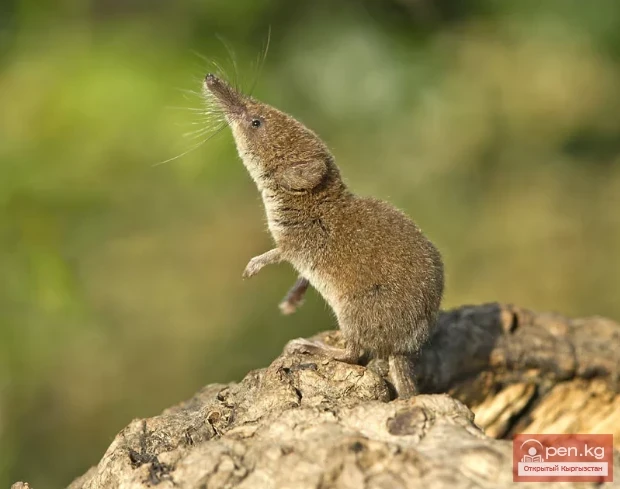
Mole (Tian Shan, mountain, small). Medium-sized mammals with long tails and large hind legs. The common mole reaches a length of 55—82 mm and weighs 4—16 g. The tail length is 60—75 mm, and the foot length is 10—15 mm. The coloration of the upper body is dark brown, sometimes almost black-brown, while the underside is lighter. Young individuals are somewhat lighter in brown color. The tail is covered with short hairs or is bare, and is approximately the same length as the body. The ear pinna

17.02.2019, 13:10
Squirrel - The Chipmunk
Fauna of Kyrgyzstan / Mammals of Kyrgyzstan

Squirrel - The Chipmunk

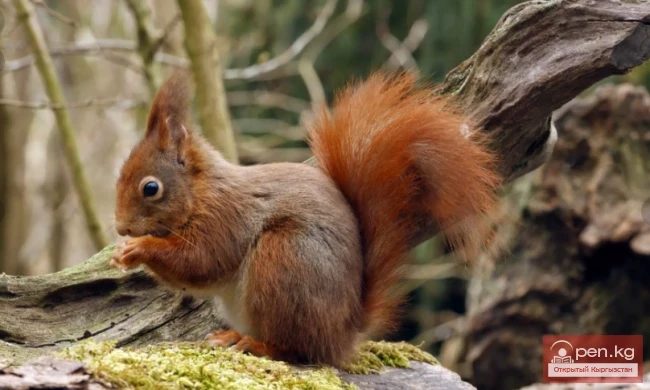
Squirrel (Tiyin Chychkan). In 1952, 200 Tiyin squirrels were brought from the ribbon forests of Kazakhstan and settled in the spruce forests near Przhevalsk (Jilandy Gorge). The following year, a second batch of 73 was released into the forests of the Naryn Ridge. Each female gives birth to two litters a year, with 4-5 offspring in each. The squirrels reproduced so well that by 1955 their numbers had increased tenfold. This allowed for the capture of about 100 of their already acclimatized

17.02.2019, 13:08
Otter - Beaver
Fauna of Kyrgyzstan / Mammals of Kyrgyzstan

Otter - Beaver

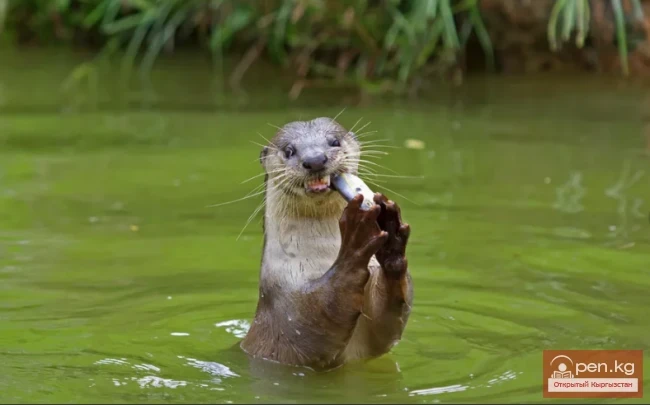
Otter (Kunduz). It lives in and near water. This is a large animal with a long, flexible, streamlined body. The fur is dark brown on top and light, silvery underneath. The guard hairs are coarse, while the underfur is very dense and soft. The head is flattened, almost merging with the body, which ends in a long, muscular tail. The legs are short and equipped with well-developed webbing. The body length is 55–95 cm, the tail length is 26–55 cm, and the weight is 6–10 kg. Once, the otter

15.02.2019, 21:44
Ferret - White Fury
Fauna of Kyrgyzstan / Mammals of Kyrgyzstan

Ferret - White Fury

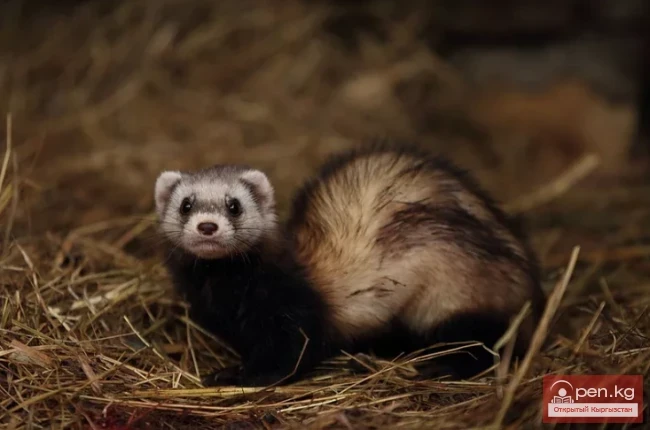
Steppe or White Ferret — Mustela (Putorius) eversmanni Lessor. (in Kyrgyz: сасык-кусен, ач-кусон) The ferret is about the size of a small cat with a long body covered in even straw-gray fur, dark brown between the eyes, on the belly, paws, and tip of the tail. In Kyrgyzstan, the Turkestan subspecies is found, which provides relatively good quality fur. It is widespread throughout the republic. It inhabits open areas - in the steppe, semi-desert, high mountains, spreading across steppe sections

15.02.2019, 21:40
Solongo in Kyrgyzstan
Fauna of Kyrgyzstan / Mammals of Kyrgyzstan

Solongo in Kyrgyzstan

Solongoi — Mustela altaica Pall. A small animal with a slender and sleek body, short limbs, and a long fluffy tail. The body length is 19–26 cm, and the tail is 8–14.5 cm. The snout is pointed, the ears are short and relatively wide, rounded, and the fur is short. The coloration is a uniform brownish-gray, with a gray-brown spot on the head from the nose to the ears, somewhat darker on the head, and the sides and belly are noticeably reddish compared to the back.

12.02.2019, 20:13
Ermine — arys, black-tailed
Fauna of Kyrgyzstan / Mammals of Kyrgyzstan

Ermine — arys, black-tailed

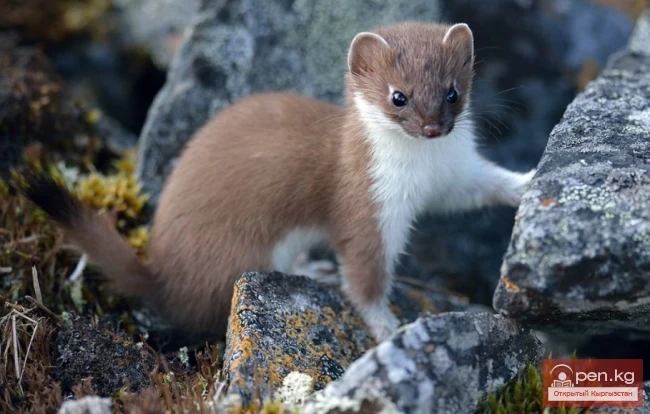
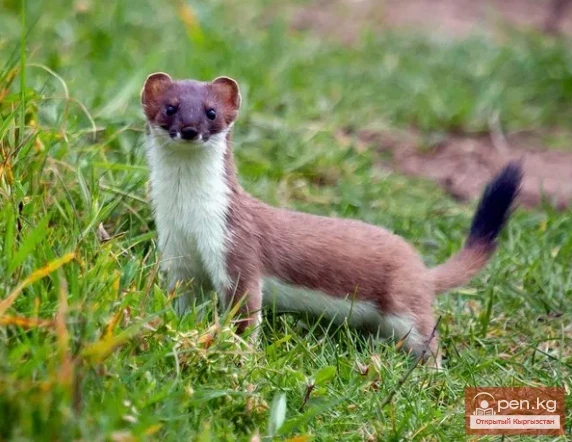
Stoat — Mustela erminea Linn. (in Kyrgyz: arys, kara-kuyruk) The territory of Kyrgyzstan is inhabited by the Fergana subspecies, which differs from other forms found in the territory of the former Soviet Union by its lighter coloration of summer fur. However, this coloration is subject to significant variations among the Tien Shan stoats. For instance, we have observed body coloration in various individuals ranging from ochre-gray and light brown to chestnut. A small portion of individuals

12.02.2019, 20:03
Weasel — a type of rodent
Fauna of Kyrgyzstan / Mammals of Kyrgyzstan

Weasel — a type of rodent

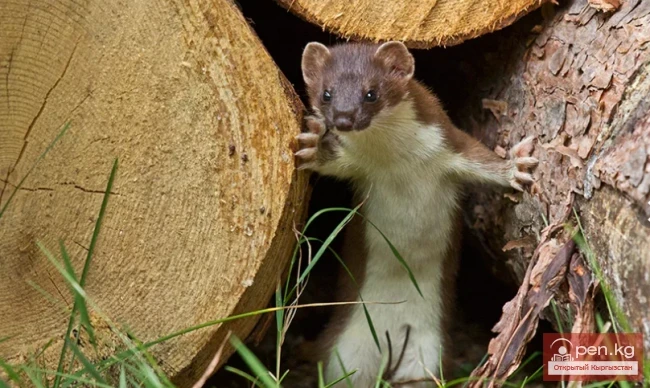
Weasel — Mustela nivalis Linn. (in Kyrgyz: arys-chichkan) Kyrgyzstan is inhabited by the mountain Turkestan subspecies, which has a light brown coloration in summer fur (on top) and medium body size compared to other forms inhabiting the territory of the Soviet Union. In Kyrgyzstan, it is found everywhere, from lowlands to high mountains, but is distributed extremely unevenly. Almost everywhere, the weasel is significantly outnumbered by the ermine, and it only predominates over it in certain

11.02.2019, 20:18
Dressing - Chaar Kusen, Sasyk Kusen
Fauna of Kyrgyzstan / Mammals of Kyrgyzstan

Dressing - Chaar Kusen, Sasyk Kusen

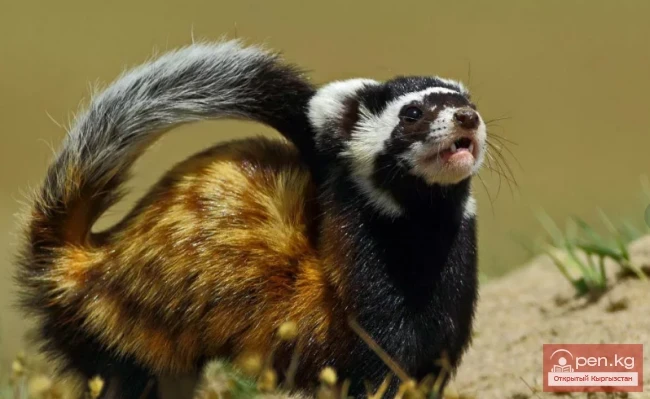
Vormela peregusha Guld. (in Kyrgyz: чаар кусон) In appearance, the Vormela resembles the forest and steppe ferrets but is a smaller species than they are, with a body length of 29 to 38 cm and a tail length of 15 to 22 cm. The weight of adult Vormelas ranges from 370 to 730 g. The body structure of Vormelas features an elongated narrow torso and short legs, typical of many weasel-like animals. The upper part of the body is colored in dark brown tones and covered with yellow spots and stripes.

10.02.2019, 13:22
Mountain marten, stone marten — suu cap
Fauna of Kyrgyzstan / Mammals of Kyrgyzstan

Mountain marten, stone marten — suu cap

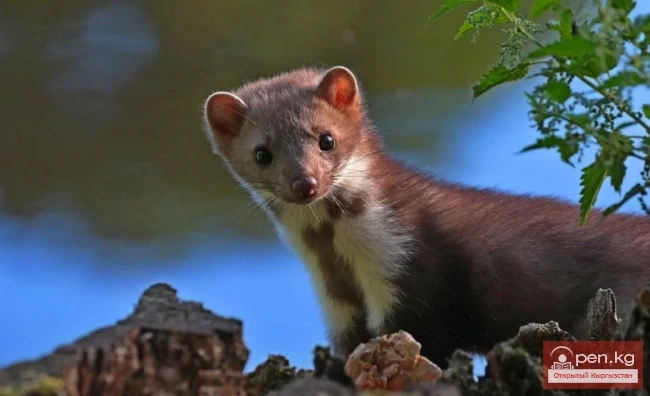
Mountain marten, stone marten — Martes foina Erxb. (in Kyrgyz: суу cap) Kyrgyzstan is inhabited by a Central Asian subspecies of the stone marten, which is relatively large in size. It is found in almost all mountainous regions of the republic, predominantly in the mid-mountain altitude zone. The population density is generally quite low, averaging about 0.015 individuals per 10 km². The highest density is observed in the mountains of the Osh region, where there are 0.021 individuals per 10

10.02.2019, 13:19
Badger - Kashkulak
Fauna of Kyrgyzstan / Mammals of Kyrgyzstan

Badger - Kashkulak

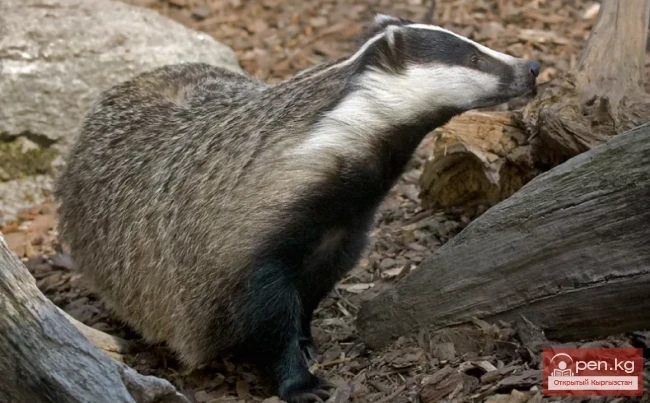
Badger — Meles meies Linn; (in Kyrgyz: Kashkulak) The badger is widely distributed across the territory of Kyrgyzstan; it is perhaps even difficult to say where it is not found. Its vertical range is broad — from valleys cultivated for agriculture (Chuy, Talas, Issyk-Kul) to high mountain ridges at altitudes of 3500—4000 m above sea level.

09.02.2019, 10:27
Steppe or Spotted Cat - Talai Cat
Fauna of Kyrgyzstan / Mammals of Kyrgyzstan

Steppe or Spotted Cat - Talai Cat

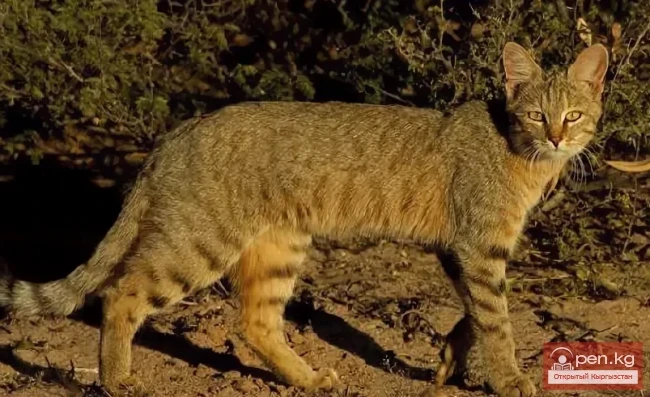
Steppe or spotted cat— Fells libyca Forst. (in Kyrgyz: ала-мышык) In Kyrgyzstan, the spotted (steppe) cat is common in all low-lying valleys and is numerous in the Issyk-Kul basin, as well as in the Chuy, Kochkar, and Talas valleys. In general appearance, the steppe cat is quite similar to the forest cat, but looks somewhat smaller and lighter.

07.02.2019, 19:59
Manul - Sulvsun
Fauna of Kyrgyzstan / Mammals of Kyrgyzstan

Manul - Sulvsun

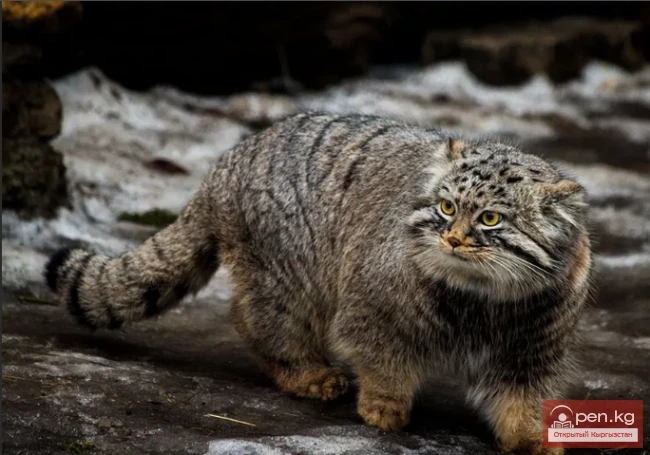
Manul — Felis (Otocolobus) manul Pall. Externally, the manul is very similar to a large domestic cat, with a body length of 52 to 65 cm, a tail length of 23 to 31 cm, and a weight ranging from 2 to 5 kilograms. It differs from the domestic cat by its denser, more massive build, short thick legs, and very thick fur (there are 9,000 hairs per square centimeter, which can reach a length of 7 cm).

07.02.2019, 19:44
Lynx — Suleesun
Fauna of Kyrgyzstan / Mammals of Kyrgyzstan

Lynx — Suleesun

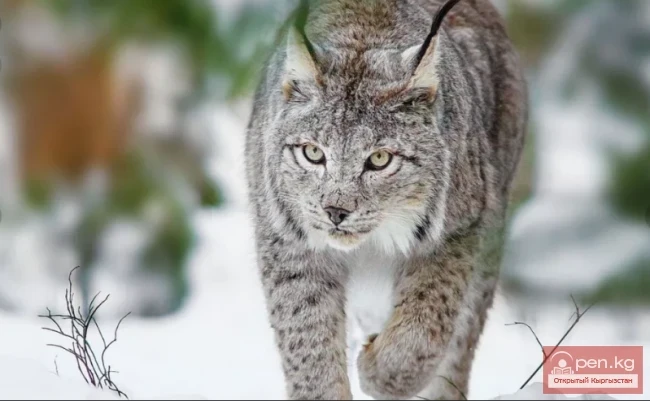
Lynx — Felis lynx Linn. (in Kyrgyz: suleesun) A fairly large animal. Body length 82–105 cm, weight 8–15 kg, rarely more. The body is short and dense, on high strong legs with very wide furry paws. There are wide cheeks on the sides of the head, and tufts at the ends of the ears. The tail is short, appearing to be truncated at the end. The fur is brownish-white in winter and pale-red in autumn. It is quite widely distributed in Kyrgyzstan, found across all ridges where there is forest. Its

07.02.2019, 19:32
Leopard - Ilbirs
Fauna of Kyrgyzstan / Mammals of Kyrgyzstan

Leopard - Ilbirs

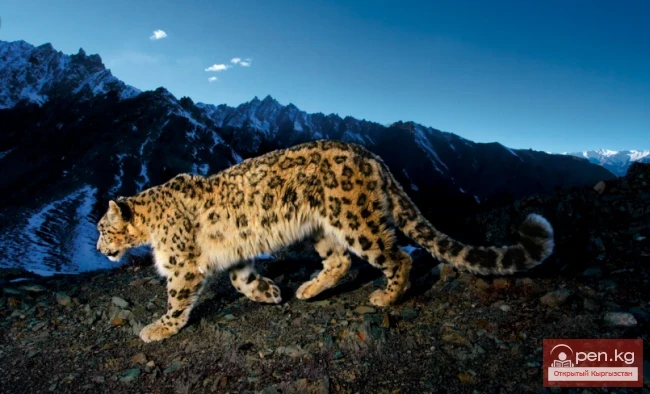
Snow Leopard — Felis uncia Schreb. (in Kyrgyz: Ilbirs) In Kyrgyzstan, the snow leopard is found in almost all mountain ranges, where it inhabits the belt of alpine meadows, treeless cliffs, and snowfields. Only in winter, when a thick layer of snow covers the slopes of the mountains and alpine meadows, do snow leopards descend to lower altitudes. All movements of snow leopards in winter, as well as in summer and other seasons, are mainly associated with the movements of ibex, which are their

05.02.2019, 16:52
Waterfalls of the Issyk-Ata Gorge
Waterfalls

Waterfalls of the Issyk-Ata Gorge

Issyk-Ata — a gorge located 77 km from Bishkek. It is here that the famous Issyk-Ata hot hydrogen sulfide springs, an ancient depiction of Buddha, and a multitude of other attractions can be found. In the 12th-14th centuries, the gorge was the cradle of Buddhism in the region, which is why Issyk-Ata is not just a unique natural monument, but also a place with its own amazing history. The mountain river Issyk-Ata also attracts fishermen from all over Kyrgyzstan, primarily because there is

01.02.2019, 15:54
Bear — ayu
Fauna of Kyrgyzstan / Mammals of Kyrgyzstan

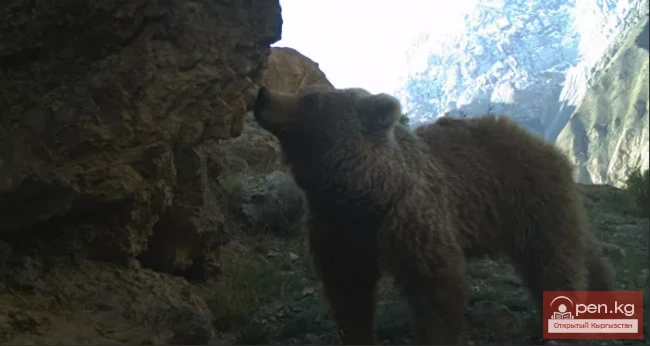
Bear — ayu

Bear — Ursus arctos Z. (in Kyrgyz: аю) In Kyrgyzstan, it is a typical inhabitant of the highlands. It ascends to 4000 m above sea level and higher. The following locations of bears are known to us: the Terke ridge, the Kungoy Ala-Too, Naryn, At-Bash, Kyrgyz, Talas, Chatkal, Fergana, Alai, and Zaalai ridges. Bears have been repeatedly observed throughout the mountain strip, from the Khan-Tengri peak in the east to the Fergana ridge in the west, including the Ak-Sai and Arpin valleys, as well as

01.02.2019, 02:58
Fox - Tulkу
Fauna of Kyrgyzstan / Mammals of Kyrgyzstan

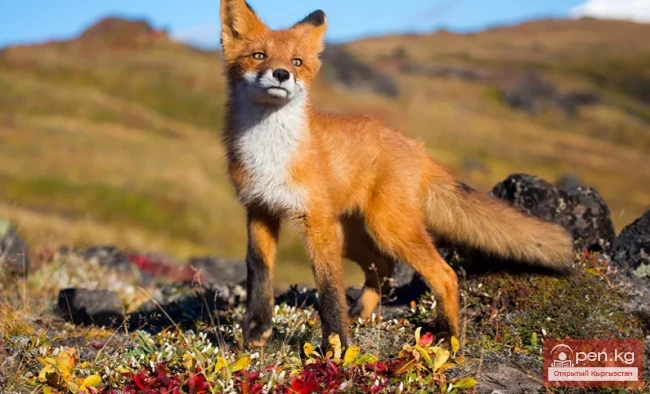
Fox - Tulkу

Fox— Vulpes vulpes Linn (in Kyrgyz: tulku) In Kyrgyzstan, it is widespread, from areas cultivated for agriculture (Chui Valley, Pre-Fergana regions) to high-altitude ridges (3500—4000 m above sea level). It can be found in various types of habitats, including areas located near human dwellings. It particularly favors territories abundant in mouse-like rodents and where there are many ravines, thickets, and other suitable places for burrowing. In high-altitude meadows, it often uses the burrows

26.01.2019, 16:23
Wolves - Karyshkyr
Fauna of Kyrgyzstan / Mammals of Kyrgyzstan

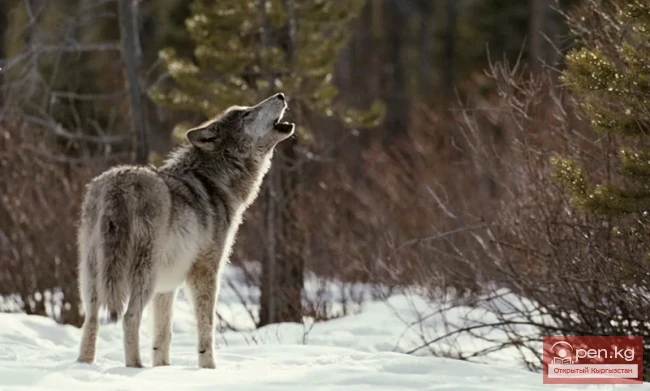
Wolves - Karyshkyr

Wolf — Canis lupus L. Widely distributed throughout Kyrgyzstan, from its valley regions to high mountain ridges. Within its range, it adheres to seasonal pastures, where tens, and sometimes hundreds of thousands of small and large livestock concentrate, or places abundant with game (ibex, argali, roe deer); in summer, it can be found in areas inhabited by marmots. Despite such a wide distribution of wolves across the republic, their numbers have significantly decreased in recent years, and

25.01.2019, 18:56
Glaciations in the River Basins of Kyrgyzstan
Glaciers

Glaciations in the River Basins of Kyrgyzstan

CHARACTERISTICS OF GLACIERS IN RIVER BASINS To provide a complete understanding of the glaciation in the upper reaches of the Sarydzhaz River, we present brief characteristics of glaciation in the basins of its tributary rivers. Basin of the Otyuka River (glaciers No. 1 — 18).

25.01.2019, 17:29
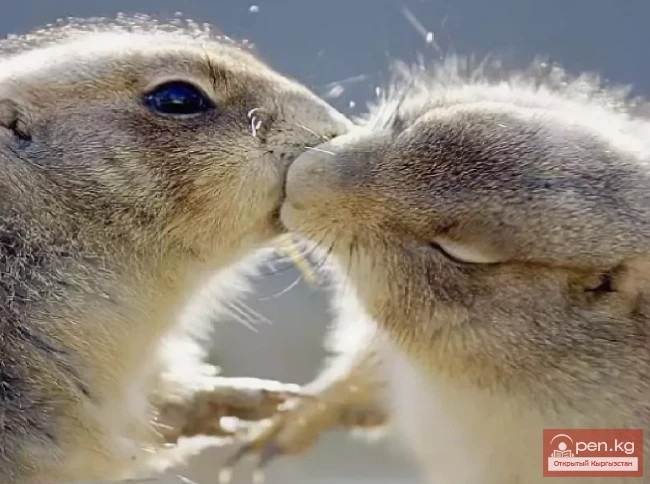
Ground Squirrels - Yellow Gophers
Fauna of Kyrgyzstan / Mammals of Kyrgyzstan

Ground Squirrels - Yellow Gophers

SUSLIKS (in Kyrgyz: sary chychkandar) Kyrgyzstan is home to two species of susliks: the yellow or sand suslik — Citellus fulvus Lich. and the relict suslik — Citellus relictus Kaschk. Both are significant in fur harvesting, ranking fourth in terms of their share in the republic. Yellow Suslik (in Kyrgyz: sary chychkan) A fairly large animal. Body length exceeds 300 mm, tail length up to 120 mm. The fur color is sandy-yellow with a small admixture of black hairs, uniform. The belly is somewhat

23.01.2019, 18:10
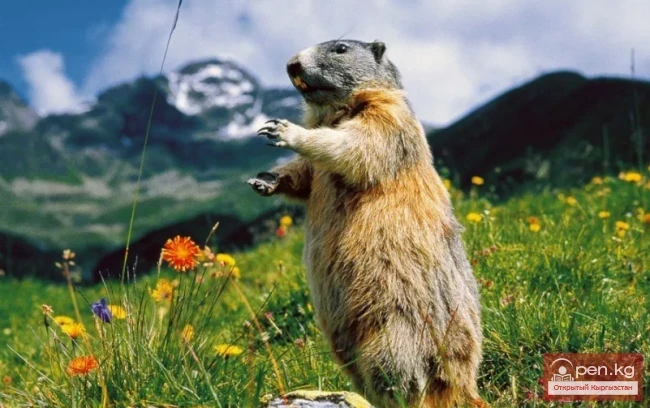
Marmots - Marmots
Fauna of Kyrgyzstan / Mammals of Kyrgyzstan

Marmots - Marmots

Marmots (in Kyrgyz: суурлар) In Kyrgyzstan, there are two species of marmots: the gray or Altai marmot—Marmota baibacina Kastsch and the red or long-tailed marmot—Marmota caudata Qeoffi. Some authors (Kashkarov, 1925, 1932; Kuznetsov, 1948; Blagodarova, 1947) indicate the presence of the Menzbier marmot—Marmota menzbieri Kaschk within Kyrgyzstan. This marmot was first described by D. N. Kashkarov in 1925 for the western part of the southern slope of the Talas Ala-Too, and in 1932 he suggested

19.01.2019, 05:35
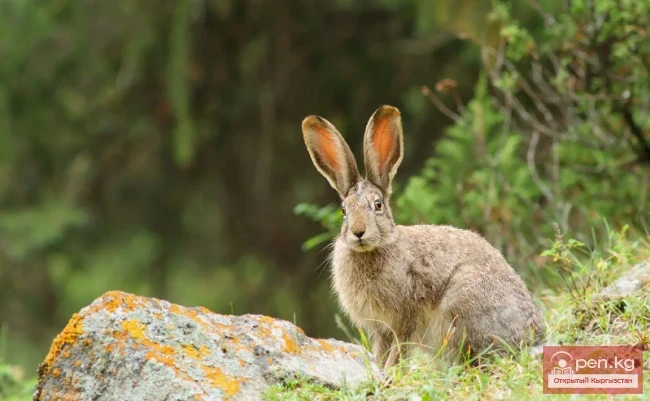
Hare-Tolai — the Rabbit
Fauna of Kyrgyzstan / Mammals of Kyrgyzstan

Hare-Tolai — the Rabbit

Tolai Hare — Lepus tolay Pall (in Kyrgyz: kojon) It inhabits almost the entire territory of Kyrgyzstan, except for areas of intensive agriculture (Chui Valley and the Pre-Fergana regions). It is distributed from the foothills to an altitude of 4000 m above sea level. It lives in quite diverse ecological conditions, but prefers desert or semi-desert areas and dry steppes. It usually adheres to sparse shrubs, chia thickets, dried riverbeds, and ravines, slopes of mountains covered with large

19.01.2019, 05:05
Glacier Archa-Bashi
Glaciers

Glacier Archa-Bashi

Archa-Bashi Glacier on the Alai Range The Archa-Bashi Glacier is large and dendritic, located at the western foothills of the Tandy-Kul peaks (5539 m) and Snowy Shelter (5529 m) — both geographically belong to the High Alai. The polluted morainic trunk of Archa-Bashi has carved a distance of almost 6 km between the sheer walls of the spurs. The end of the glacier is situated at an altitude of approximately 3000 m. The gentle firn fields of the glacier's branches lie at the ridges, like on

19.01.2019, 02:26
Aksai Glacier
Glaciers

Aksai Glacier

Ak-Sai Glacier The glacier is located 40 km from Bishkek in the picturesque Ala-Archa gorge at an altitude of 3500 meters above sea level, within the Ala-Archa National Park. This gorge is the largest of all the gorges of the Kyrgyz Ala-Too range (part of the Tien Shan mountain system), with a length of over 35 km. The 5 km long Ak-Sai Glacier is the most beautiful of the largest glaciers in the range: Golubina, Top-Karagay, Tuyuk, Adygene, and Ala-Archa. The glacier and the waterfall of the

16.01.2019, 21:12
The Tauşkandarya River
Rivers

The Tauşkandarya River

Tauskandarya - "Raging River" A river in Kyrgyzstan and the Xinjiang Uygur Autonomous Region of China, in its upper reaches known as Kokshaal. It originates in the mountains south of the Kyrgyz city of Naryn. It flows eastward and merges with the Aksu River, which in turn is a tributary of the Tarim River. It is formed by the confluence of the Aksay and Myuduryum rivers. The name "Tauskandarya" likely comes from the combination of the words dar'ya ("river")

14.01.2019, 20:45
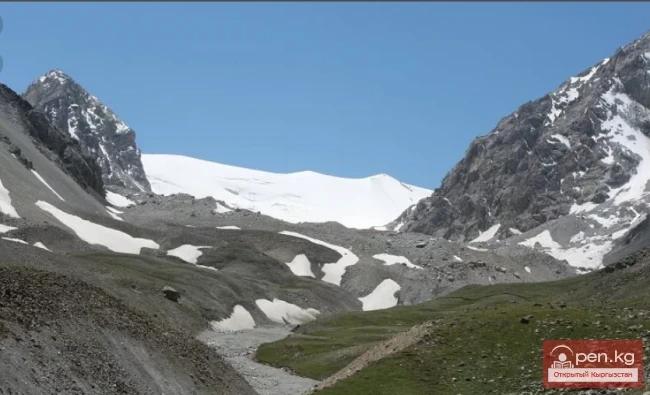
General Characteristics of Glaciation in the Kyrgyz Republic
Glaciers

General Characteristics of Glaciation in the Kyrgyz Republic

General Characteristics of Glaciation According to satellite images from "Landsat-8" for the years 2013-2016, there are a total of 9,959 glaciers in the territory of the Kyrgyz Republic, covering an area of 6,683.9 km², including: 6,227 glaciers larger than 0.1 km², with a total area of 6,494.0 km², and 3,732 glaciers smaller than 0.1 km², covering an area of 189.9 km². According to the Catalog of Glaciers of the USSR (1940s-1970s), there were 8,164 glaciers in the territory of the

13.01.2019, 22:19
Komarov Glacier
Glaciers

Komarov Glacier

Komarov Glacier (Ak-Sai), Kokshaalsky Ridge The first survey of the glaciation in this area was conducted by N. N. Palgov in 1928, so we refer to his article. The glaciers of the upper reaches of the Ak-Sai River flow down from Kok-Shal-Tau onto a wide plateau known as the Kogaly-Chap area. The relief of this plateau-lake, with its huge boulders, reveals its glacial origin. Therefore, all the glaciers of the upper Ak-Sai can be considered remnants of an ancient glacier that, in its final

12.01.2019, 22:37
Shaar Waterfall
Waterfalls

Shaar Waterfall

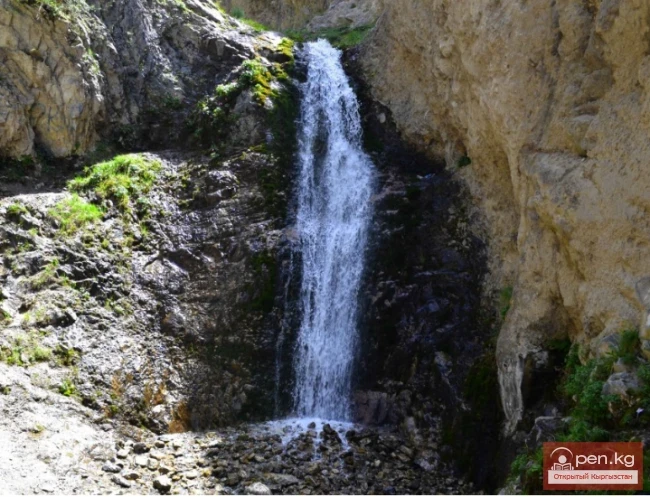
Baš-Kaindy or Shaar Naryn Region, Baš-Kaindy Gorge. The height of the waterfall is 220 m, considering the cascades – 400 m. Height above sea level: 3200 m. It is also called Shaar. In Kyrgyz, waterfall is "sharkyratma." Possibly derived from the shortened word "shar."

12.01.2019, 19:35
River Kyzyl-Suu
Rivers

River Kyzyl-Suu

Kyzyl-Suu (Kyzyl-Suu River, Красная река) - a river in Kyrgyzstan and Tajikistan, the right source of Surkhob. It flows from east to west through the Alai Valley. At an altitude of 1834 m, merging with Muksu near the village of Dombrach, it forms the Surkhob River. The length is 242 km (from the source of Aylama to Muksu). Of these, 193 km flows through the territory of Kyrgyzstan and 49 km - through Tajikistan. The basin area is 8380 sq. km.

11.01.2019, 20:13
The River Kashgar
Rivers

The River Kashgar

Kashgar Kashgar (Kyzyl-Suu, Uluu-Chat (Ulugchat), Kabaatsu, Kyzylsu, Aavatusten Canal, Kashgar, Faizabad Darya, Chon-Kashgar Darya) is a river in the west of China, with its upper reaches in Kyrgyzstan and Tajikistan. Previously, Kashgar flowed into the Yarkand River, but now it is lost in the sands. Length — 765 km, including 685 km on the territory of China, with a catchment area of 90.8 thousand km². The average water flow near the village of Kafka is 80 m³/s.

11.01.2019, 20:02
River Ak-Suu
Rivers

River Ak-Suu

The main channel of the Ak-Suu River is at least 20-22 kilometers long. The lower part of the valley, crossing the first terrace of the Chatkal Valley, has a wall-like character. Passing through the second terrace of the main valley of the Chatkal River, the Ak-Suu has carved a deep canyon that is completely impassable for 1-1½ km. Then the valley widens somewhat, with mixed forests growing near the water, and many junipers and shrubs on the slopes. As it approaches the Main Ridge, the valley

10.01.2019, 21:35
Nura Glacier
Glaciers

Nura Glacier

The Nura Glacier is located in the basin of the Eastern Kyzylsu River A large complex valley glacier formed from small and medium glaciers flowing from different sides into the main trunk, glacier 85,86. The glacier is gentle, closed, and has crevasses. The overall short and passive tongue is covered by a thick layer of moraine, containing buried and dead ice. The end of the tongue transitions into dissected loose deposits of significant thickness with deep incisions from modern flows. The

10.01.2019, 21:16
The River Aflatun
Rivers

The River Aflatun

Aflatun River – the largest right tributary of the Kara-Suu River in the Jalal-Abad region. The valley of the Aflatun River leads to the most accessible pass connecting the Chatkal Valley with Fergana. The lower steppe part of the valley stretches for about 6-7 kilometers. Two river terraces are covered with dry grass, and only at the very bottom, by the riverbed, there is a narrow strip of green trees. Further, the river deepens into a rocky canyon, the walls of which rise as they approach

08.01.2019, 21:24
Glacier Kyzylsu
Glaciers

Glacier Kyzylsu

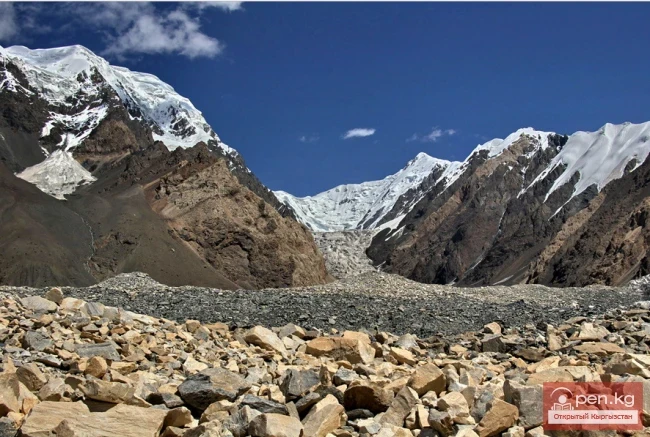
Kyzylsu - Red Water The Kyzylsu Glacier (often referred to as the Eastern Kyzylsu) is a complex valley glacier of the Eastern Zaalai. It is 15.1 km long and covers an area of 43.0 sq. km. The height of the glacier's tongue is 3780 m, and the firn line is at 4500 m. The main flow of the glacier extends from the southwest to the northeast and has a three-chamber accumulation area. These chambers are located on the northern slopes of the Kulumdy (6613) and Chorku (6283) peaks. The glacier

03.01.2019, 19:17
River Karakulja
Rivers

River Karakulja

Karakulja The Chatkal River in its upper reaches is called Karakulja (translated - Black Ram), which is formed by the confluence of Kara-su and Ak-su. It flows through the territory of the Osh region of Kyrgyzstan. The two main sources of Kara-su originate from small glacial lakes at the foot of the ridge connecting the Chatkal Range with the Uzun-Akhmat and Talas ranges. The more water-rich Ak-su River originates from a valley-type glacier flowing down from the Chatkal Range. This glacier,

03.01.2019, 18:51
Kursheb River
Rivers

Kursheb River

Kursheb, Kursheb River, in the upper reaches — Gulcha, A river in Kyrgyzstan, flowing through the Osh region, a left tributary of the Karadarja River (Syr Darya basin), it flows into the Andijan Reservoir. The river originates from the northern slope of the Alai Range and is classified as a snow and glacier-fed river. After receiving the Jusal River from the right, the river Gulcha is named Kursheb. Kursheb flows through a deep valley and has about 40 tributaries along its entire length. It is

02.01.2019, 20:40
Glacier Starlet
Glaciers

Glacier Starlet

Zvezdochka The Zvezdochka Glacier flows into the Inylchek Glacier, 40 km from the tongue of the latter, and is the most powerful of its southern (left) tributaries. The elevation at the confluence of the Zvezdochka Glacier is 4000 m above sea level, and its width reaches 3 km, which is almost the same as that of the Southern Inylchek Glacier. The total length of the Zvezdochka Glacier is 20 km. The glacier is sharply divided into two parts: the upper and lower sections. The upper part runs

01.01.2019, 17:03
Kugart River
Rivers

Kugart River

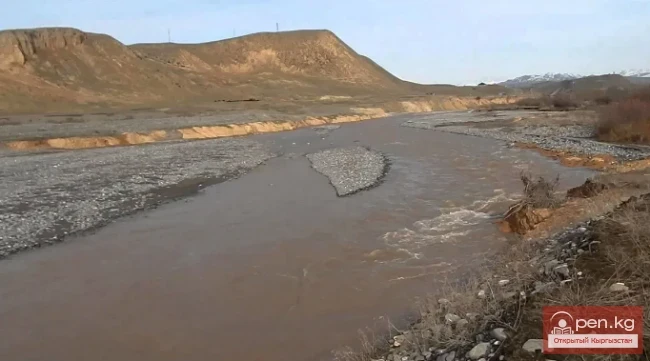
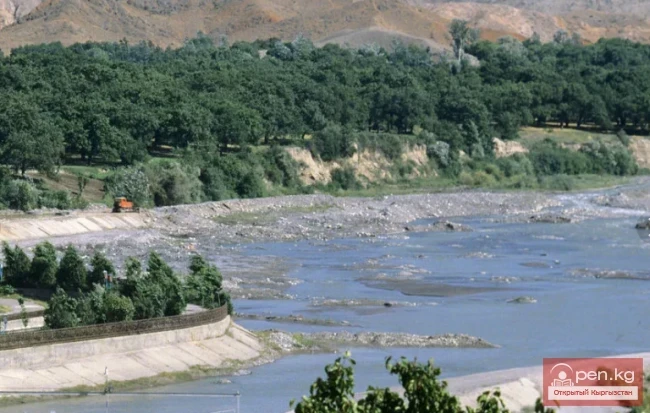
Kugart The Kugart River (Kek-Art), in the valley of the same name in southern Kyrgyzstan, is a right tributary of the Karadarja River, originating on the southwestern slopes of the Fergana Range. It flows through the city of Jalal-Abad. The river is fed by snow, has a wide gravel floodplain, and steep banks, and is characterized by significant variability in flow, increased sediment transport, and a debris flow nature. A feature of the Kugart River is that it practically does not carry its

26.12.2018, 19:20
Glacier Koy-Kap
Glaciers

Glacier Koy-Kap

Koy-Kap - Glacier in the Khan-Tengri Massif The Kaindy Ridge, which separates the valleys of the Kaindy and Koy-Kap glaciers, adjoins the Inylchek-Tau ridge in the area of the Red Army Peak in the eastern part. The northern slopes of the ridge have significant glaciation. In the wide lateral valleys of the ridge, there are relatively large (3-7 km long) valley glaciers. The southern slope of the ridge has less glaciation and a steep gradient; it is cut by narrow canyon-like gorges through

24.12.2018, 20:34
Isfara River
Rivers

Isfara River

Isfará — a river of the Syr Darya basin The river basin encompasses the Isfara and Kanibadam districts of the Sughd region of Tajikistan, the Batken district of the Batken region of Kyrgyzstan, and the Besharik district of the Fergana region of Uzbekistan. It originates from the glaciers of the Turkestan Range at an altitude of over 5000 m and flows north through the Fergana Valley to the Syr Darya River. From the Isfara district to the northern foothills of the Turkestan Range, where the
23.12.2018, 15:32