A recent article in "Evening Bishkek" titled "Inventions with a Stunning Effect Are Not Used in the Country" (December 20, 2025) attracted significant attention from readers.
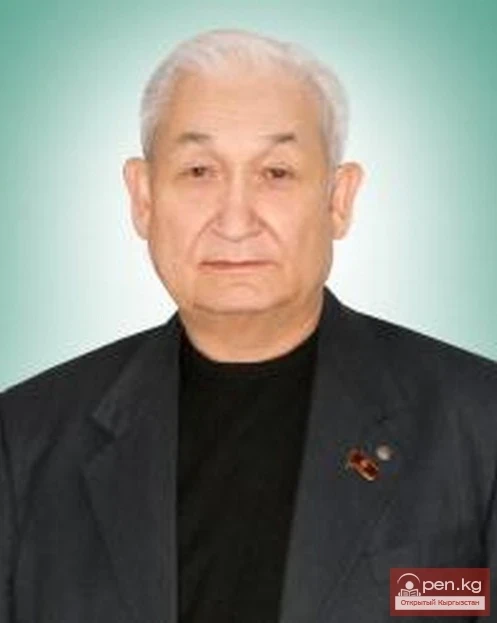
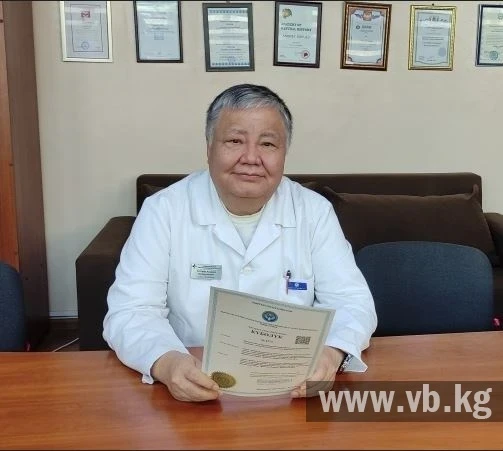
Andrey Asankulovich Sopuev, a well-known professor in Kyrgyzstan, Doctor of Medical Sciences, and head of the Department of Hospital Surgery at the I.K. Akhunbaev Medical Academy, as well as Honored Doctor of the Kyrgyz Republic, Academician of the KGMA, the Russian Academy of Natural Sciences, and the European Academy of Natural Sciences, gave an interview to vb.kg, in which he expressed his opinion on this issue.
— Let's be frank, — he began. — To date, our medicine lags significantly behind world standards, by at least 25 years. We are unable to master new methods that are already being used in international practice, especially in surgery. What inventions can we talk about if we haven't even mastered what has already been created by others?
Sopuev is confident that his colleagues have creative potential; however, the level of foreign technologies and our own are completely different. The main barriers are related to financing, the economy, and the lack of modern equipment. For example, robotics has been actively used in the world for 20-25 years, but we have no robots at all. The reason is simple — the cost of such a device is at least five million dollars. Six months ago, the idea arose at the National Surgical Center to acquire a Da Vinci robot, which is one of the best in surgery. We have the opportunity to make such a purchase, but the costs for consumables and specialist services will amount to two million dollars a year. Where can we get this money? We will have to ask again, and it’s not certain that they will allocate it.
Another example: just over a year ago, the president ordered free liver transplant surgeries, for which significant funds were allocated, renovations were made, and equipment was purchased. During Vladimir Putin's visit, our center was visited by Academician Sergey Goutye, the chief transplantologist of Russia, who highly praised the level of training of our specialists. He believes that we are ready to perform such surgeries independently.
However, the problem is that the postoperative care for one patient costs two million soms, while the president emphasized the need for free transplants. We are looking for funding; they promise to provide it, but when? Of course, funds will be allocated, but only for one patient. There is no money for others. We have specialists, equipment, and a need for these operations, but we cannot start them.
According to statistics, over five thousand applications for inventions from doctors are submitted annually in the post-Soviet space, but only a few of them become in demand and recognized. There have always been many talented scientists, both in the Russian Empire, in the Soviet Union, and now in Kyrgyzstan and Russia. But only a few have gained recognition in world medicine, such as Professor Nikolai Pirogov and Vasily Kolesov, who performed the first mammary coronary bypass surgery in 1964. It is also worth mentioning Gavriil Ilizarov, the creator of the apparatus for limb lengthening, and Alexander Prokhorov and Nikolai Basov, who received the Nobel Prize for creating the laser.
As noted, there are talented doctor-inventors in Kyrgyzstan, but it is difficult for us to compete with colleagues from developed countries, partly due to a lack of funding. Only 0.08% of the budget is allocated to science, while in Western countries this figure is 2-3%. For example, in the USA, it is several trillion dollars, and it is difficult for us to compete with them. While we are developing something new, our foreign colleagues have long been ahead of us.
I have 15 inventions, two of which were registered back in the USSR. Recently, I received a certificate for another invention, but what does that give? Patents do not bring any benefit to the inventor. There is no incentive, no material gain, which is why doctors do not show interest in scientific work, and researchers leave for practice.
Andrey Asankulovich, are your inventions in demand in medicine? Which of them were approved during the Soviet era?
- In 1986, at the A.V. Vishnevsky Institute of Surgery, where I was a graduate student, pneumothermocoagulation was successfully applied for the first time in the USSR during liver surgeries. We also introduced the polymer draining sorbent Gelevin and biologically active compositions based on it for the treatment of purulent wounds. I improved the methodology for treating acute destructive pancreatitis, which includes the use of various medications and surgical manipulations in the postoperative period.
Some of these methods we continue to use.
I heard that the Ministry of Health will now fund medical science. If they evaluate and implement inventions, will there be an incentive for researchers?
- Even if the Ministry of Health engages in evaluating developments, it will not solve the problem. Large-scale scientific research requiring significant investment is necessary for the implementation of innovations. We do not have enough funds even for the salaries of researchers, and the best of them leave for practical medicine, often in more profitable fields such as plastic surgery or dentistry. Working in abdominal surgery is difficult, and there are no conditions for growth.
Nevertheless, the number of inventions is growing, and our doctors continue to improve known methods. What drives them if everything has already been created?
- All our developments are based on personal experience and aimed at improving surgical and diagnostic outcomes. However, in my opinion, there are no inventions in Kyrgyzstan that would produce a "wow!" effect. Mostly, we use the developments of our foreign colleagues.
But we also have our achievements. For example, the micro-surgery technologies of our doctors are also of interest abroad.
- I agree. The scientific works of microsurgeon Musa Mateev, who unfortunately has passed away, always attracted great interest at international congresses. Our surgeons have unique treatment methods that genuinely help patients. But these are just isolated examples that have gained recognition in the medical community.