Today, Kyrgyzstan faces the challenge of achieving technological progress in various fields. However, to realize these ambitious goals, it is necessary to create an effective system for the protection and support of intellectual property, as well as to provide financial backing. Unfortunately, registered patents in our country often lack real value and only satisfy the vanity of inventors, bringing no benefit to either them or society.
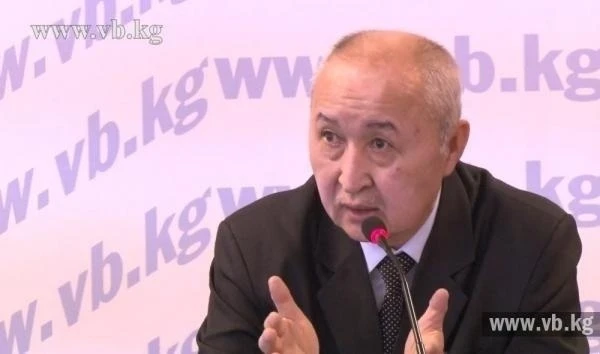
Despite the presence of talented scientists, their developments remain unclaimed. We discussed this aspect with a well-known scientist, laureate of the State Prize of Kyrgyzstan in the field of science and technology, professor of the Department of Pathological Physiology at the I. Akhunbaev Kyrgyz State Medical Academy, Doctor of Medical Sciences Rustam Tukhvatshin. Despite having dozens of unique inventions, many of which have found application abroad, they are not utilized in our country.
- Have you ever heard the opinions of scientists on important issues in parliament? – the professor posed a rhetorical question. - Most likely, no. It is precisely doctors and candidates of sciences who have been dealing with energy issues for a long time who can explain why electricity losses occur and how they can be reduced. However, from high tribunes, we more often hear justifications from officials who can change at any moment. The word of a competent specialist evokes more trust and interest, especially if it is based on scientific data. For example, modernization in China is built on scientific discoveries and technologies, where scientists and engineers are becoming increasingly valuable resources. Our developments attract interest abroad, but patents for them often remain unused in Kyrgyzstan.
What do you think can be done to increase the effectiveness of patents in medicine?
- Many of our doctors, especially surgeons, have unique developments and patents, but they are not in demand. The state, represented by the Ministry of Health, should be interested in implementing new methods. It should evaluate and purchase innovative technologies for implementation in practice. Authors of such technologies should receive rewards for training other doctors. Otherwise, doctors have no incentive to share their methods, except with their students. The introduction of new technologies is happening extremely slowly.
We really have technologies that contribute to improving health. In fact, it is not always necessary to go abroad to study. Many of our surgeons are true masters. For example, Professor Mateev, who unfortunately passed away from coronavirus, had colleagues from the CIS, Europe, and Asia come to learn his flap transplantation technique, which became a real sensation in microsurgery.
I believe that clinical protocols should incorporate the developments of domestic doctors, rather than copying foreign methods. If we blindly follow others' examples, then what is the purpose of our science?
Do you have many scientific developments besides medicine? Are any of them in demand?
- There are several, but unfortunately, not in Kyrgyzstan. The reason for this is the weak connection between science and business. We, scientists, are not businessmen. We do not have the time and resources for implementation. For example, I have a patent for a flori-test for diagnosing inflammatory diseases in women. This is an important issue, as about 60% of women suffer from such diseases, which can be dangerous if left untreated.
What is the advantage of your invention?
- The flori-test is a compact device that allows a woman to independently determine the presence of inflammation in just five minutes. We have gone through the entire process from obtaining a patent to production and distribution of the tests. We manufactured 30,000 devices and distributed them to women, which led to an increase in the number of patients seeking treatment after using our test. Unfortunately, the Ministry of Health showed no interest in purchasing our device, and we had to stop its production despite its availability.
There are many analogs of our test on the market now, but they are more expensive and do not have the dual purpose that ours does. Modern devices do not allow for determining the cause of inflammation.
We faced a similar situation with the tincture of Rhodiola linearifolia. My student, now a professor, was the first to study the properties of this rhodiola and compared them with those of Rhodiola rosea. The effectiveness of our rhodiola was significantly higher. The tincture from it promotes increased physical and mental activity, which was confirmed by our studies, but the market is dominated by tincture from the Altai root.
We have many good developments, but they are not implemented. Doctors cannot realize them, as it is not their task. If funding does not change, the introduction of new technologies is impossible. The Ministry of Health must support these developments for the benefit of the country and patients, and the National Surgical Center can become a school for training surgeons in unique technologies.
How are inventions implemented in other countries?
- In the West, they actively track new developments and offer cooperation. Once, a company representative called me, interested in my patents and offered to formalize them according to Western standards. I didn’t believe it, but when I went to the agency, they confirmed that a ticket in my name had been purchased. We formalized five patents, and the developments were implemented in practice. Later, I was offered a job with them, but I declined. This confirmed that our developments are subject to study and analysis in the West.
Recently, I was invited to the Presidential Administration, where they were interested in three of my projects presented at Science Day. The staff decided to prepare information for the president and create an expert group for the financial assessment of the projects.
What ideas are you currently working on?
- I have many ideas (laughs), but one of them is particularly concerning. The city administration plans to open a rehabilitation center for children with autism spectrum disorders, the number of which is increasing. I analyzed the condition of such children and saw that it resembles the condition of astronauts after returning from space. Perhaps the technologies used for the rehabilitation of astronauts will also help in the rehabilitation of children with autism. We have already developed a rehabilitation method using space technologies, which interested colleagues from the Institute of Medical and Biological Problems in Moscow.
Our method is ready, but first, we will test it on animals with an autism model. We have technologies that can create a weightlessness effect. Solving the problem of rehabilitating children with ASD is an important task for both Kyrgyzstan and Russia, and we will work on it together.