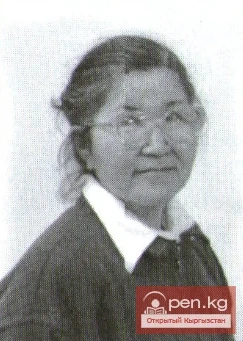
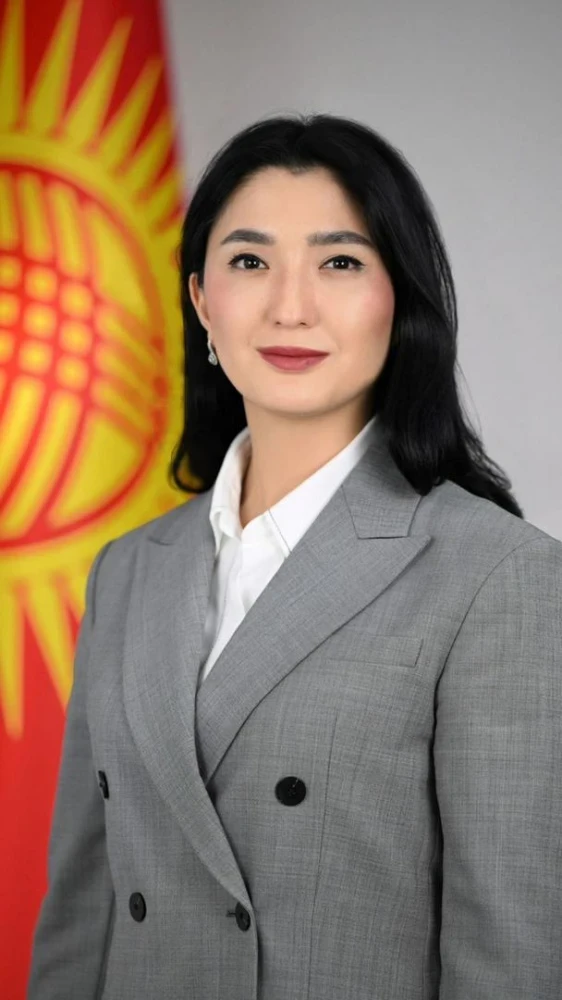
Salima was born on June 23, 1975, and received a higher education in economics. She currently works at the Karakol incubation station and teaches English to children, actively developing the cultural heritage of her people through dance.
“Fifteen years ago, I attended a city event and was disheartened to see that our ethnic group was almost unrepresented in the cultural sphere. This inspired me to create a dance group. Initially, it was just an idea, but over time, children from the city and the village of Irdyk began to join us,” she shares.
Salima emphasizes that Dungan dances are characterized by restraint: they include small steps, slow melodies, and the use of various attributes.
“Dungan dances are similar to Chinese ones: they feature small steps and attributes such as umbrellas, fans, ribbons, and paper balls. These dances are very modest and restrained, and the melodies are usually slow. They reflect the simplicity and tenderness of the girls,” she explains.
According to Alieva, they create their performances without strict rules, relying on improvisation and the peculiarities of the Dungan style.
“In Dungan dance, certain elements cannot be used, such as sharp movements or animal imitations. We sometimes incorporate elements from ballroom dancing, but for example, we do not use the stance on one leg,” she adds.
Over time, the dance group has significantly expanded, and over the years, about 100 girls have participated. Today, the group consists of about 20 members who not only develop physically but also spiritually, showcasing the beauty and modesty of Dungan culture.
“We perform at various events, supporting athletes, participating in charity concerts, and performing in schools, parks, and squares. We do not charge for our performances, as our goal is to show the world our modest ethnicity, introducing the youth to the diversity of cultures,” Salima explains.
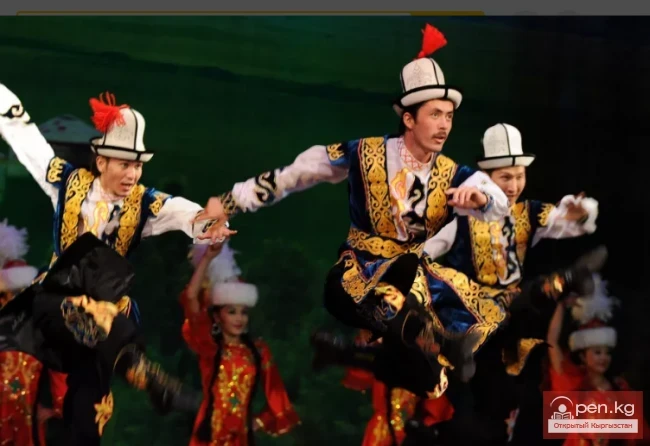
In recent years, they have also started performing dances from other peoples living in Kyrgyzstan, such as Uyghur, Uzbek, Tatar, and Georgian dances.
“Our favorite dance is the Kyrgyz one,” she adds. The name of the group is “Asal.”
“I still remember each of the 100 girls who have ever been in the group. I am supported by choreographer Nadira Rysbekovna from the music school. It is very important to pay attention to the costumes, which help maintain a connection with our roots and make the performances vibrant. I am looking for sponsors to make them. We have traditional clothing: dresses in red, pink, or raspberry colors with trousers and long dresses in Chinese style, adorned with patterns of peonies, cherry blossoms, and dragons. The main headdress of Dungan girls is large flowers, symbolizing purity and uniqueness,” Salima shares, emphasizing that their costumes are almost identical to Chinese national ones.
“The culture of each people is unique, and I am always interested in studying their traditions, customs, language, and even recipes. In this lies wisdom and simplicity. I constantly work on myself and teach this to my children, as life is full of wonders and mysteries; one just needs to set the right priorities,” she says.
Organizing concerts requires a lot of effort, and one of the main concerns remains the safety of the children during performances in any weather conditions.
“Every job has its difficulties. Organizing concerts is full of nuances, and I bear responsibility for the health and lives of the children during performances and trips. They dance all year round, and I always worry about their health. Sometimes the children experience moral burnout, and then I apply motivational methods to support their spirits. To become a successful dancer, one must have a strong desire and discipline. If a person wants to achieve their goal, they must put in maximum effort,” she emphasizes.
Salima's plans include touring to introduce people to the dances of small peoples of the world, as well as expanding the group and continuing to study folk dances. Her dream is to travel with the group and organize tours.
She actively participates in the Dungan public association “Tepin.”
“We participate in various events such as Nowruz, Maslenitsa, Victory Day, Mother Language Day, Independence Day, Sabantuy, and the Games of Nomads. We are often invited by local authorities and the Assembly of the People of Kyrgyzstan. The most memorable was participating in the festival at the Games of Nomads. We organize tables with national food and exhibitions of applied arts and books in the Dungan language together with chairman Anvar Nanshanla,” Salima concluded.