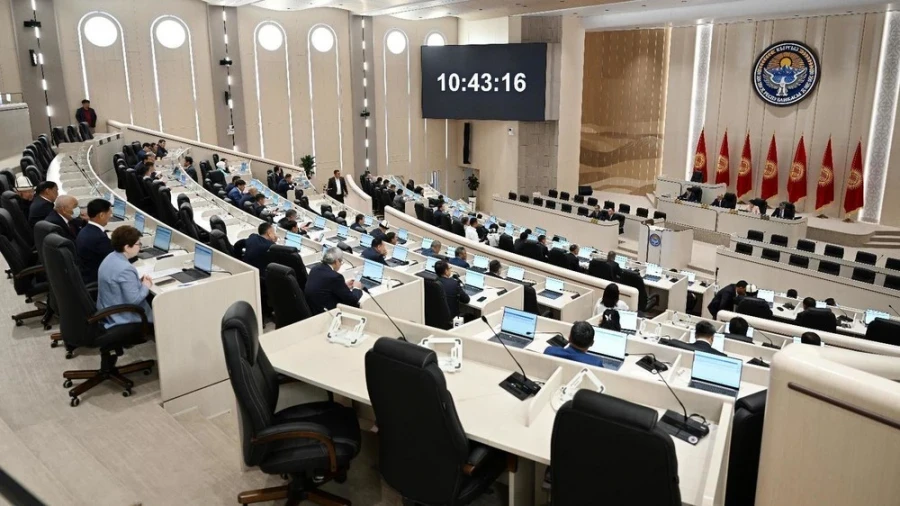
Deputies expressed the opinion that the law could provide "immunity" for officials.
The discussion in the Jogorku Kenesh focused on the bill from the Ministry of Internal Affairs, which proposes to restore the institution of recidivism in criminal law, as well as to tighten penalties for individuals previously convicted of similar crimes and to introduce property confiscation for a number of offenses.
The goal of the proposed bill is to combat organized crime and prevent repeat offenses. Intentional crimes committed by individuals previously convicted of similar acts are proposed to be considered as recidivism. For such offenders, penalties are being tightened: the minimum prison term is increased, and parole and probation supervision become unavailable. In cases of particularly dangerous recidivism, the maximum penalty reaches its limit.
The document also details the responsibility for actions taken in the interests of the state, security, and constitutional order. According to the authors of the bill, this is necessary to protect the rights and safety of citizens; however, these provisions have become a subject of discussion among deputies.
Deputy Dastan Bekeshev expressed concern that some articles of the law place the Criminal Code above the Constitution. He noted: "We are providing an opportunity for actions that can be formally classified as criminal offenses, justifying this by the need to protect economic, informational, or environmental security. Such a bill harms the interests of citizens and should be rejected."
The Committee on Law and Order recommended removing Articles 18 and 50 of the Criminal Code from the draft, as they allow justifying crimes by actions in the interests of the state. Deputy Elvira Surabaldiyeva emphasized that such norms cause public division and called for their exclusion.
Nevertheless, the authors of the bill emphasize that recidivism is necessary to prevent repeat crimes and combat organized crime. According to their data, after the abolition of the institution of recidivism, the rate of repeat offenses among convicts was 88-89%, with many crimes being committed by groups.
The concept of the bill was approved in the first reading with the condition of further refinement and agreement on contentious points. The discussion of the bill will continue in order to find a balance between increasing responsibility and protecting the rights of citizens.
Photo www