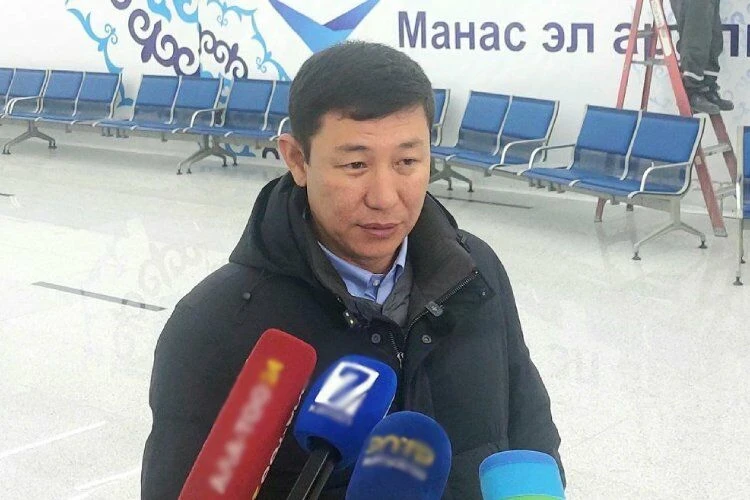
Today, significant reforms are taking place in Kyrgyzstan's civil aviation sector, encompassing both the exit from the European Union's blacklist and the implementation of new rules for drones, as well as infrastructure development. We discussed the main deadlines, EU requirements, and the need for drone regulation with Daniyar Bostонов, the director of the State Agency for Civil Aviation.
— What specific deadline do you set for lifting restrictions from the EU, and what requirements remain critical at this moment?
— We plan to complete key procedures by February 2026. This is due to the fact that by February 13, the main stage of the re-certification of airlines must be completed in the republic, as well as a complete package of materials prepared for European partners.
Currently, three areas remain important for the EU:
— How ready are we to present all the necessary documents by February 2026? What risks may arise?
— By March next year, the European Union, as part of a possible field mission, will demonstrate our system: inspections, making supervisory decisions, monitoring the elimination of non-compliance, and the work of inspectors.
Overall, we are ready. The main risks are related to the need for prompt elimination of remarks from certain operators and the quality of the evidence base.
Daniyar Bostонов
— How many airlines operate in Kyrgyzstan? Which of them underwent re-certification in 2025, and what restrictions were imposed on them?
— There are 15 airlines operating in the republic, including passenger, cargo, and those engaged in aviation work.
In 2025, based on the planned inspections and audits:
31 orders were issued to eliminate violations;
11 airlines had their activities temporarily suspended until non-compliance was addressed;
special permits were temporarily revoked from four airlines.
— What violations are most commonly recorded, and can the results of inspections be reviewed?
— Violations vary and depend on the specifics of the work of individual airlines. There is no unified list of typical violations.
Summarized results of inspections are discussed at annual flight safety meetings with the participation of airlines; however, there is no publication of sensitive information in the public domain.
— Is the agency a budget organization or does it operate on self-financing?
— The State Agency for Civil Aviation is funded from the state budget.
— Tell us about the process of forming drone regulation in Kyrgyzstan.
— Work on creating a regulatory framework for unmanned aviation began in 2022. The draft aviation rules were put out for public discussion and refined taking into account the opinions of government agencies, experts, and drone users.
In 2025, interdepartmental and working meetings were held with participants from the drone association and drone users.
Daniyar Bostонов
The results of the discussions were incorporated into proposals regarding registration, permitting procedures, operator training, and process digitalization.
Kyrgyzstan is a member of JARUS (Joint Authorities for Rulemaking on Unmanned Systems), which allows for the adaptation of national requirements to international standards.
— When will the aviation rules for drones come into effect, and what will happen next?
— After all procedures are completed and the APRK-6 (Aviation Rules of the Kyrgyz Republic – 6) are officially published, they will come into effect in accordance with the law. Then, the State Agency for Civil Aviation will begin practical regulation of UAV flights, including registration, issuing permits for airspace use, and operator certification.
— What is the current number of drones in Kyrgyzstan?
— The state register of GAGA lists 42 unmanned aerial vehicles, but the actual number is significantly higher, as many drones are not officially accounted for.
— What classes of UAVs are provided, and who must register? Can a drone be used in a private yard or in the mountains?
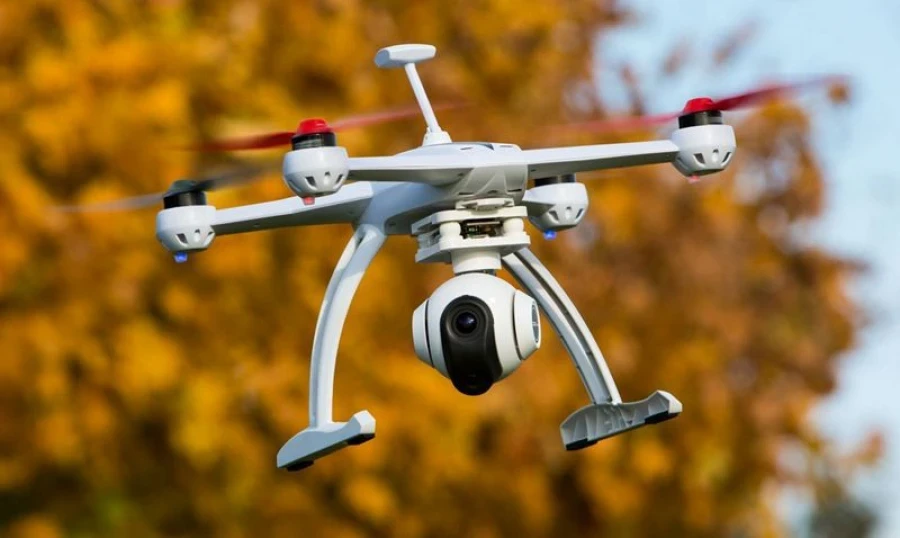
— The draft rules provide for the classification of UAVs by weight and risk level (categories C0-C4).
Drones that meet established criteria for weight and purpose are subject to registration. We plan to implement an online system for registration and obtaining permits.
The rules differ for:
Flights outside populated areas, at a distance from people and infrastructure, in so-called green zones, will be allowed in a simplified manner. In populated areas and near infrastructure, additional requirements and restrictions apply.
— How will the training and certification of UAV operators be organized?
— Training for UAV operators will become mandatory and will include theoretical and practical parts.
Operator certificates will be issued for a specified period and must be periodically confirmed. To increase the accessibility of training, including in the regions, the development of online formats is planned.
Daniyar Bostонов
— What territories will be considered prohibited or restricted for drones?
— Restrictions will apply to the following territories:
Control over compliance with the rules will be carried out by GAGA together with authorized state bodies.
— What is the responsibility for violations?
— Administrative measures are provided for violations in UAV operation, including refusal or revocation of permits for airspace use. Responsibility for violating legislation on safety, state secrets, and privacy is established in accordance with current legislation.
— Journalists operating UAVs also need to undergo training. What are the timelines for obtaining permits?
— Drones in populated areas and in emergency situations will be used in coordination with authorized state bodies. We are working on simplifying and digitizing procedures to reduce the timelines for obtaining permits.
Currently, operator training is conducted at the Kyrgyz Aviation Institute named after Ishembay Abdrayimov. The cost of training is 12,300 soms for the theoretical and practical parts.
Daniyar Bostонов
— Why is drone regulation necessary?
— Unmanned aerial vehicles can pose a serious threat to aviation safety and the privacy of citizens. Even one incident involving a drone can have serious consequences for civil aviation.
For example, every driver, even if they have driven a car with their parents, is required to study theory and pass exams, including a practical exam.
Regulation in this area is extremely necessary. It is important to start with basic rules and then gradually improve them based on accumulated experience and international practices. Countries around the world face similar challenges.