Economic and Cultural Development of the City of Frunze in the Post-War Years
The victorious conclusion of the Great Patriotic War and the end of World War II marked a new stage in the history of the development of the peoples of the Soviet Union and in the entire world history. The country returned to peaceful labor. A restructuring of state leadership over the national economy was necessary, along with the right to regulate social relations. The system of state management bodies underwent serious changes, with the State Defense Committee and the union ministries of the defense industry being abolished. The Council of People's Commissars of the USSR and the Councils of People's Commissars of the union and autonomous republics were renamed the Councils of Ministers.
The internal functions of the Soviet state were strengthened. There was an opportunity to reduce military expenditures and direct significant funds towards the development of the national economy.
The work of state authorities was reorganized in the capital of Kyrgyzstan. Several departments that served defense needs were liquidated, while some were newly created. In particular, departments for the accounting and distribution of labor force, as well as the bureau for food and consumer goods ration cards, were abolished. Departments for the state and domestic arrangement of military personnel's families were merged with the social security department, and a department for cultural and educational work was established. The elections of the Councils initiated the restoration of full-fledged collegial bodies of power. The leadership of the city council was renewed. The session of the city council on January 18, 1945, due to the departure beyond the borders of Frunze, relieved Svyshov Ya. G. of his duties as chairman of the executive committee and approved Makesh Koibagarov as the chairman of the city executive committee. Firsov worked as the deputy chairman of the executive committee for industry. On June 27, 1945, the executive committee of the city council expressed gratitude to 45 healthcare workers for their high-quality work in serving the population and providing medical assistance during the war, and in July 1945 approved measures for the sanitary improvement of the city. On December 10, it increased the allocation for state support for the issuance of a one-time allowance to veterans of the Patriotic War in the amount of 7 thousand rubles, on December 16 approved the General Plan for the improvement of the city market area, and on November 19 approved the list of individuals nominated by the executive committees of city and district councils for the award of the medal "For Valorous Labor in the Great Patriotic War of 1941-1945."
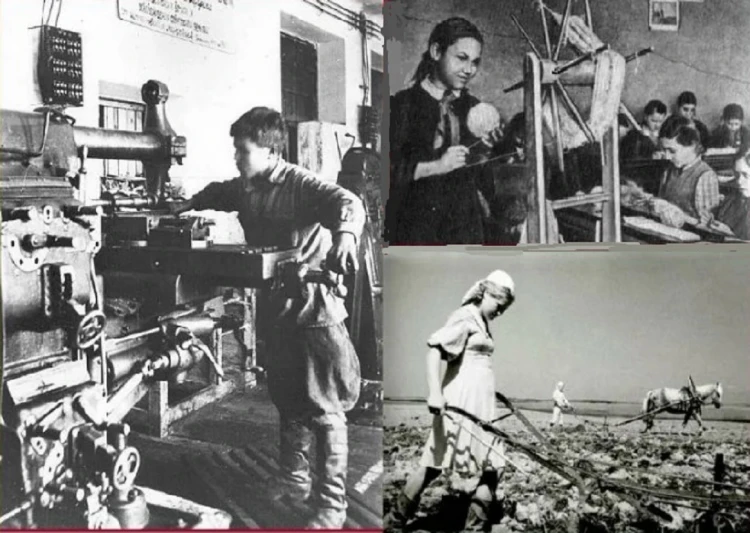
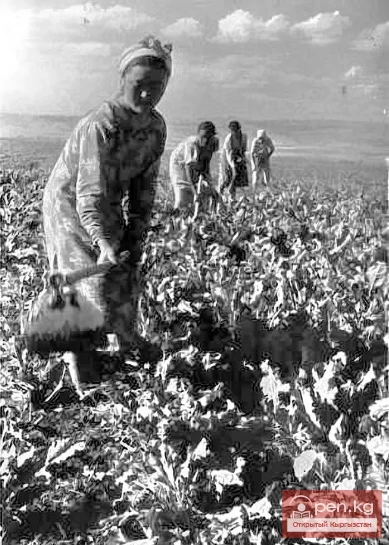
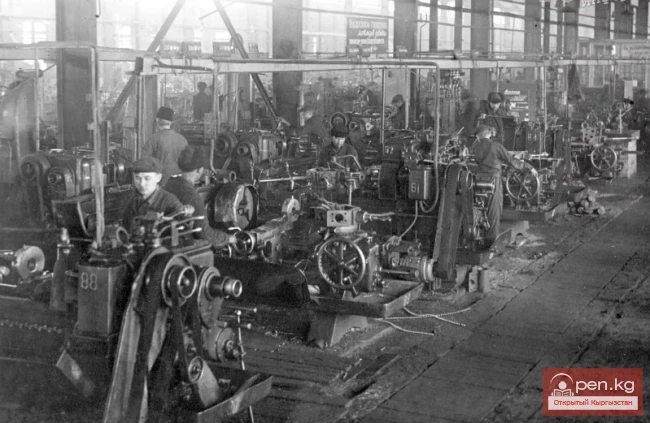
At enterprises, the eight-hour workday was restored, weekends and vacations were provided, and mandatory overtime work was abolished. Factories and plants in the city switched to the production of civilian goods. The demobilization from the Soviet Army had immense significance for the restructuring of the national economy towards peaceful endeavors. Thousands of soldiers returned to peaceful creative labor. The teams of many enterprises enthusiastically took on the development of industry. At the session of the Frunze City Council on January 18, 1946, it was noted that many teams of industrial enterprises successfully fulfilled their annual production plans in 1945: the May Day and "Proletarian District" industrial combines achieved 178.8% and 163.7% respectively, the "Red Metallurgist" plant achieved 132.6%, the "First of May" artel achieved 107.4%, and the "Red Pymokat" achieved 137%.
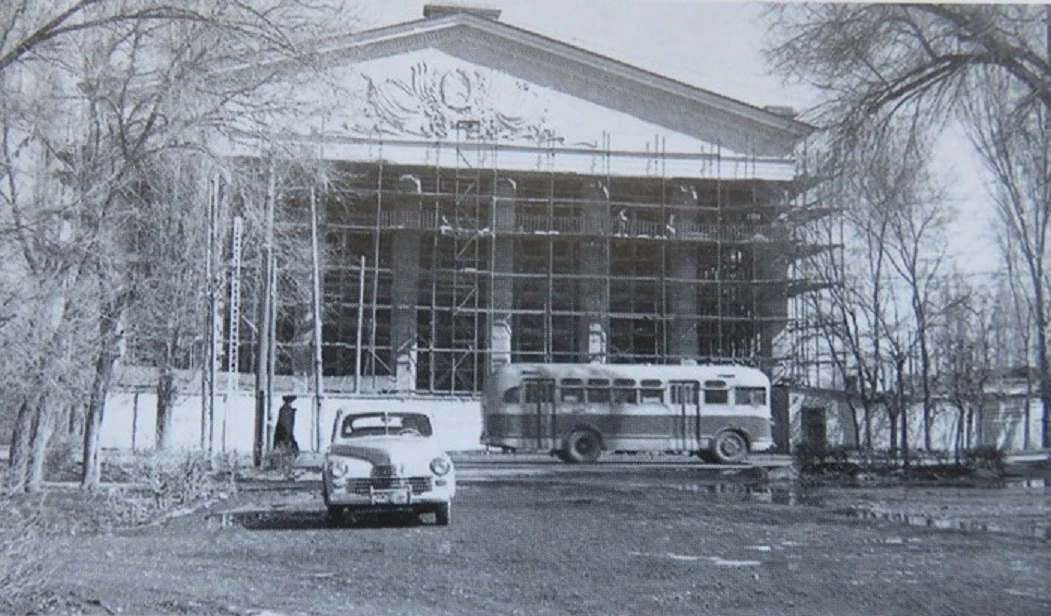
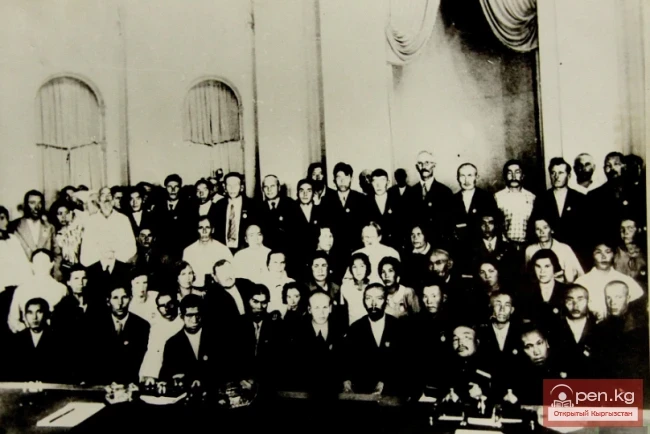
In the post-war period, sessions of the Supreme Soviet of the republic were periodically held in the Kyrgyz State Opera and Ballet Theater in the capital. Delegates from southern regions, from the high mountain Tian Shan, from the shores of Issyk-Kul, and from the Chui and Talas valleys—representatives of the people from everywhere—discussed and approved plans for the development of the national economy, approved state budgets and their execution. Thus, on March 1, 1946, a jubilee session of the Supreme Soviet dedicated to the 20th anniversary of the Kyrgyz SSR took place in the capital's opera and ballet theater. The chairman of the Council of People's Commissars of the republic, Iskak Razzakov, delivered a report on this issue. Leaders of delegations from fraternal union republics participating in the celebration of the republic's anniversary also delivered welcoming speeches.
The contribution of the people of Frunze to the victory of the peoples of the Soviet Union in the Great Patriotic War.
Read also:
Reconstruction of the National Economy of the Kyrgyz SSR for Military Purposes
To ensure the tasks of reconstructing the national economy for military purposes, from the very...
Military Mobilization Work of Local Government Authorities in Kyrgyzstan
Activities of the Councils of Workers' Deputies in Military Conditions The Councils of...
Creation of an Extraordinary Governing Body — State Defense Committee (GKO)
The Work of the Party Organization of Kyrgyzstan on the Front The war that the Soviet people waged...
Testing the Functionality of the State Apparatus of Frunze During the Great Patriotic War
The harsh test of the functionality of the state apparatus of the capital came during the years of...
The First of the Kyrgyz to Become a Hero of the Soviet Union
The war required the mobilization of large human and material resources. It was the organization...
Law on the Five-Year Plan in the City of Frunze
The adoption on March 18, 1946, by the Supreme Soviet of the USSR of the law "On the...
Refined Data on the Number of Mobilized Citizens of Kyrgyzstan at the Front During the Great Patriotic War
In accordance with the instruction of the Prime Minister of the Kyrgyz Republic, Temir Sariyev,...
The Contribution of the Frunzens to the Victory of the Peoples of the Soviet Union in the Great Patriotic War.
In wartime conditions, the role of the communications workers in the capital significantly...
Eternalizing the Memory of the WWII Hero Major General Panfilov. Documents No. 130 and No. 131 (November 1941)
DECREE OF THE COUNCIL OF PEOPLE'S COMMISSARS OF THE KYRGYZ SSR "ON TEMPORARY HOUSING...
Frunze in 1938-1939
Development of Industry and Culture in the Capital The number of industrial enterprises and...
Documents Characterizing the State of the National Economy of Kyrgyzstan During the War Years
Archives for 1941—1945 The first edition of the book "Soviet Kyrgyzstan in the Great...
Kyrgyzstan during the Great Patriotic War
The people of Kyrgyzstan will never forget Victory Day, May 9, 1945 Time has no power over the...
The Contribution of Oshan to the Victory in the Great Patriotic War
Osh during the Great Patriotic War. As everywhere, people lived and worked under the slogan...
Eternalizing the Memory of the Commander M. V. Frunze.
Renaming of the city of Pishpek by the decree of the All-Russian Central Executive Committee on...
History of Bishkek. Introduction
History of Bishkek In the state-building of a nation, its capital holds an important place. The...
Elections of the City Council in 1928-29.
Work of the City Council The City Council was the highest authority within the city territory. Its...
A Comprehensive and Systematic Study of the History of Kyrgyzstan 1941-1945
New Research on the History of the Republic during the Great Patriotic War. A more comprehensive...
The Activities of the Local Councils of Frunze in Managing Enterprises During the Great Patriotic War
The local authorities showed particular concern for the veterans of the Great Patriotic War and...
Petrovets Vera Mitrofanovna
Petrovets Vera Mitrofanovna (1919), Doctor of Historical Sciences (1974), Professor (1981)...
Industry and Collective Farm Production of Kyrgyzstan During the War
Industry and Collective Farm Production of Kyrgyzstan during the Great Patriotic War. The fourth...
Mobilization National Economic Plan of 1941
First Wartime Plan On June 30, 1941, the Council of People's Commissars of the USSR approved...
The Development of Art During the Patriotic War in Frunze
During the war, the capital was the center of scientific thought in the republic, and the science...
Commissioning of Evacuated Industry from Frontline Areas of the USSR in the City of Frunze in 1942
In response to the request of the Frunze Mechanical Plant, on February 2, 1942, the Executive...
The Beginning of World War II
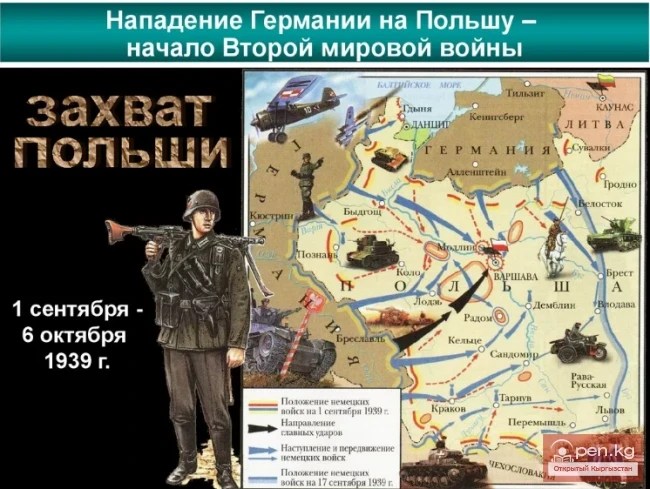
The Attack of Nazi Germany on Poland. On September 1, 1939, Nazi Germany attacked Poland. Two days...
In the city of Manas, more than thirty protocols were drawn up against parents during a nighttime raid.
In Manas, as part of the operation "Teen-Night," law enforcement officers drew up 32...
Steps in Studying the History of Kyrgyzstan During the Great Patriotic War
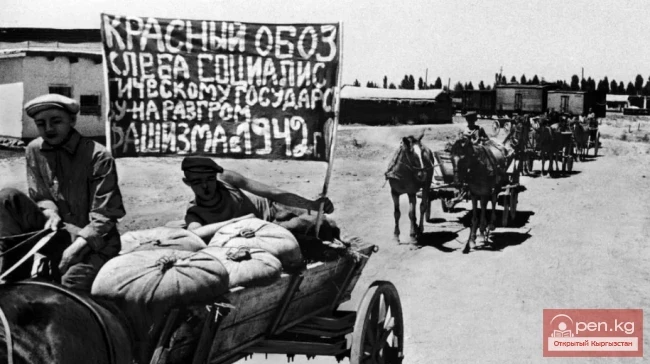
Convoy with bread. Kyrgyz SSR 1942 Steps in the Study of Kyrgyzstan's History during the...
Kyrgyzstan in the Years of Perestroika
A Turn in Social and Political Life. By the mid-1980s, a deep crisis had emerged in all spheres of...
Assistance of the Population of Frunze to the Front During the Great Patriotic War
During the war, many vivid heroic-patriotic essays were published in the republic, revealing the...
Kyrgyzstan during the Great Patriotic War. Video
Kyrgyzstan during the Great Patriotic War [video= ]...
Kyrgyzstan on the Eve of the Great Patriotic War
Kyrgyzstan on the Eve of the Great Patriotic War Alongside the expansion of the industrial base,...
A Brief History of Tourism in the Kyrgyz SSR
Despite the fact that tourism began to develop from the very beginning of the existence of the...
Professional Unions and the Leninist Komsomol of Kyrgyzstan during the Years of World War II
Participant of the Great Patriotic War A. Barditsky shares combat experience with Komsomol members...
January 16, 1925 — the day of the publication of the declaration on the formation of the national statehood of the Kyrgyz people
Official Proclamation of the Formation of National Statehood of the Kyrgyz People When forming the...
The arrangement for evacuated children in Kyrgyzstan who were left orphaned by fascist invaders.
The countless sufferings brought by the fascist invaders to children in the occupied territories...
Kerimbaev Suyun Karimovich
Kerimbaev Suyun Karimovich (1915), Doctor of Historical Sciences (1984), Laureate of the State...
Ceremonial Event Dedicated to the 175th Anniversary of the Birth of the State and Military Figure Shabdan — the Hero
Today, the Prime Minister of the Kyrgyz Republic, Joomart Otorbaev, participated in a ceremonial...
State Emblem of Kyrgyzstan
Emblem — one of the official symbols of a sovereign state, its emblem. It reflects the...
Hero of the Great Patriotic War, Kyrgyzstani Ismailbek Taranchiev
Hero of the Soviet Union Taranchiev Ismailbek Pilot of the 566th Assault Aviation Regiment of the...
Establishment of the Academy of Sciences in Frunze. Document No. 197 (December 1954)
Frunze, December 21, 1954. The Council of Ministers of the USSR adopted a resolution on August 17,...
VISUAL ART 1945—1960s
VISUAL ART 1945—1960 After the end of the Great Patriotic War, Kyrgyz visual art developed...
Reconstruction of Industry and Transport in Kyrgyzstan for Military Purposes
Everything for the Defeat of Fascist Aggressors From the very first days of the war, the efforts...
Hero of the Great Patriotic War, Kyrgyzstani Trjasin Erminingeld Vasilyevich
Hero of the Soviet Union Trjasin Erminingeld Vasilyevich Erminingeld Vasilyevich Trjasin was the...
The Arrival of Evacuated Enterprises and Population in Frunze in October 1941
The temporary retreat of Soviet troops at the beginning of the war required urgent measures to...
Population of Kyrgyzstan as of January 1, 2013
Population of Kyrgyzstan Thanks to the fundamental changes that occurred in Kyrgyzstan after the...