Administration in Kyrgyzstan within the USSR (1917-1991)
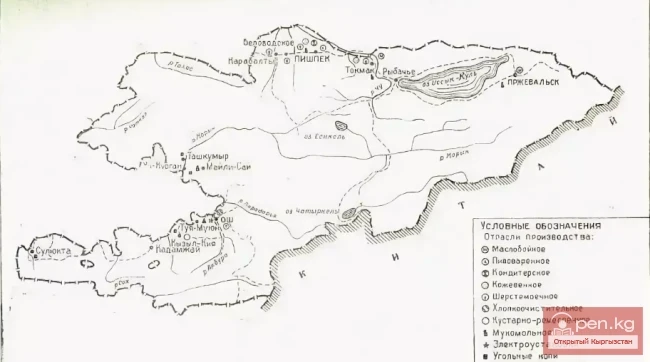
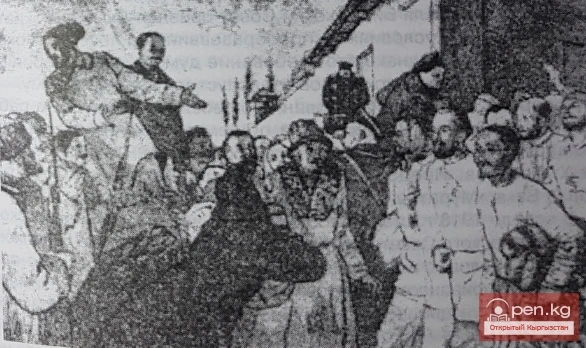
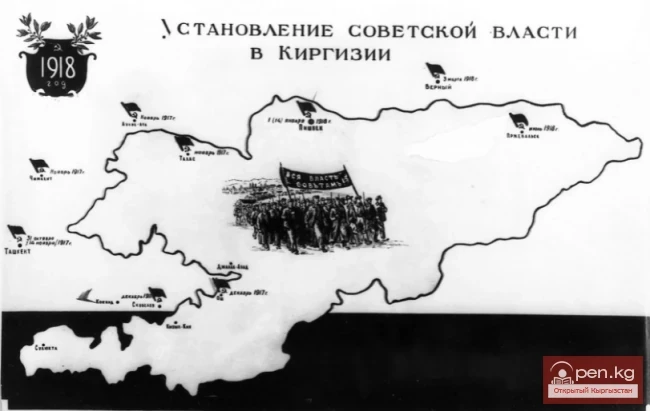
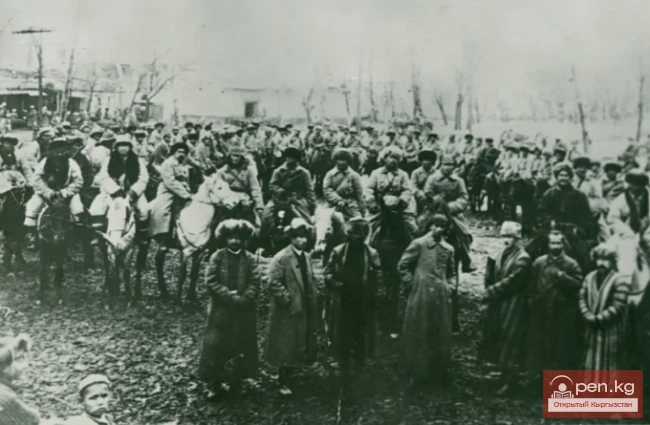
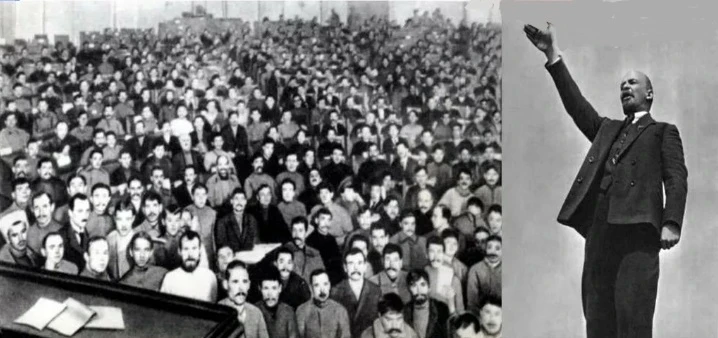
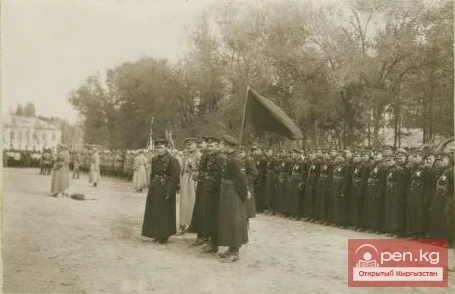
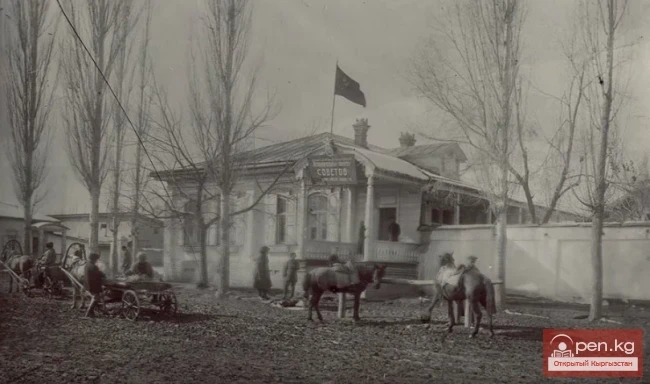
The establishment of Soviet power and statehood in Kyrgyzstan began after the October Revolution of 1917. This process was quite lengthy. The first to establish Soviet power in the territory of Kyrgyzstan were the miners from Suluktu, followed by the miners of the city of Kyzyl-Kiya. In the city of Osh, the power was transferred to the Soviets only in January 1918 amidst fierce opposition. In Pishpek, the establishment of Soviet power was delayed until mid-January 1918, as a powerful center of opposition operated in Semirechye. There was an idea to detach Semirechye from Soviet power. In Naryn and Przhevalsk, victories were achieved in April-May 1918. Soviet power was established throughout Kyrgyzstan only at the end of May 1918.
During the civil war that broke out in Russia in 1918, Turkestan was one of the strongest centers of resistance. The political and economic measures of the Soviet power met with fierce opposition from the overthrown beys and manaps, who, with the support of the Muslim clergy in the southern regions of Kyrgyzstan, organized bands of basmachi in the summer of 1918, established connections with representatives of foreign empires, and, relying on their assistance, began an armed struggle against Soviet power. The fight against them was constant, and only in 1919, after M. V. Frunze was appointed commander of the Turkestan Front, did a broad offensive against the basmachi movement begin. The situation worsened in November 1920 when a White Guard uprising broke out in At-Bashi district of Naryn. By the end of November, the rebels were defeated, and their remnants fled to Xinjiang. The struggle against individual basmachi groups continued until 1923, when basmachism was completely destroyed.
Even during the Civil War, the question of the self-determination of the peoples of Central Asia within the RSFSR arose. At the V Congress of Soviets of Turkestan on April 30, 1918, a decision was made to form the Turkestan ASSR of the Russian Federation. In 1922, an attempt was made to create the Kyrgyz Mountain Region in the northern part of Kyrgyzstan, but it was only on October 14, 1924, that the Kara-Kyrgyz Autonomous Region was established within the RSFSR.
On May 25, 1925, the Kara-Kyrgyz Autonomous Region was renamed the Kyrgyz Autonomous Region. From this moment, for the first time, the ancestral territories of the Kyrgyz, divided by administrative barriers during the Tsarist regime, were reunited within a single autonomous region. This contributed to the formation of a stable territorial community of the Kyrgyz people and their consolidation into an independent nation. On February 1, 1926, the Kyrgyz Autonomous Region was transformed into the Kyrgyz ASSR. The further development of national statehood was associated with the adoption of a new Constitution of the USSR in 1936, which made Kyrgyzstan a union republic. This decision was legislatively enshrined in the Constitution of the Kyrgyz SSR on March 23, 1937.
On June 24, 1938, elections were held for the Supreme Soviet of the Kyrgyz SSR — the highest organ of state power of the union republic. The Supreme Soviet of the Kyrgyz SSR was elected for a term of four years at the rate of one deputy per 8,000 residents. Between sessions of the Supreme Soviet, the Presidium of the Supreme Soviet operated. The Supreme Soviet approved the government of the republic — the Council of Ministers of the Kyrgyz SSR, and adopted laws of the Kyrgyz SSR. The local authorities in regions, districts, cities, towns, auls, and villages were the corresponding Councils of Deputies, which were elected for a term of two years. In the Council of Nationalities of the Supreme Soviet of the USSR, Kyrgyzstan was represented by 32 deputies. All this was done under the guidance of party organs.
In the Kyrgyz SSR of that time, as in many republics that were part of the USSR, the government consisted of ministers of two ranks: union-republican and simply republican. Ministers of the second rank, with rare exceptions, were not part of the government; their role and influence on the socio-political life of the republic were generally insignificant.
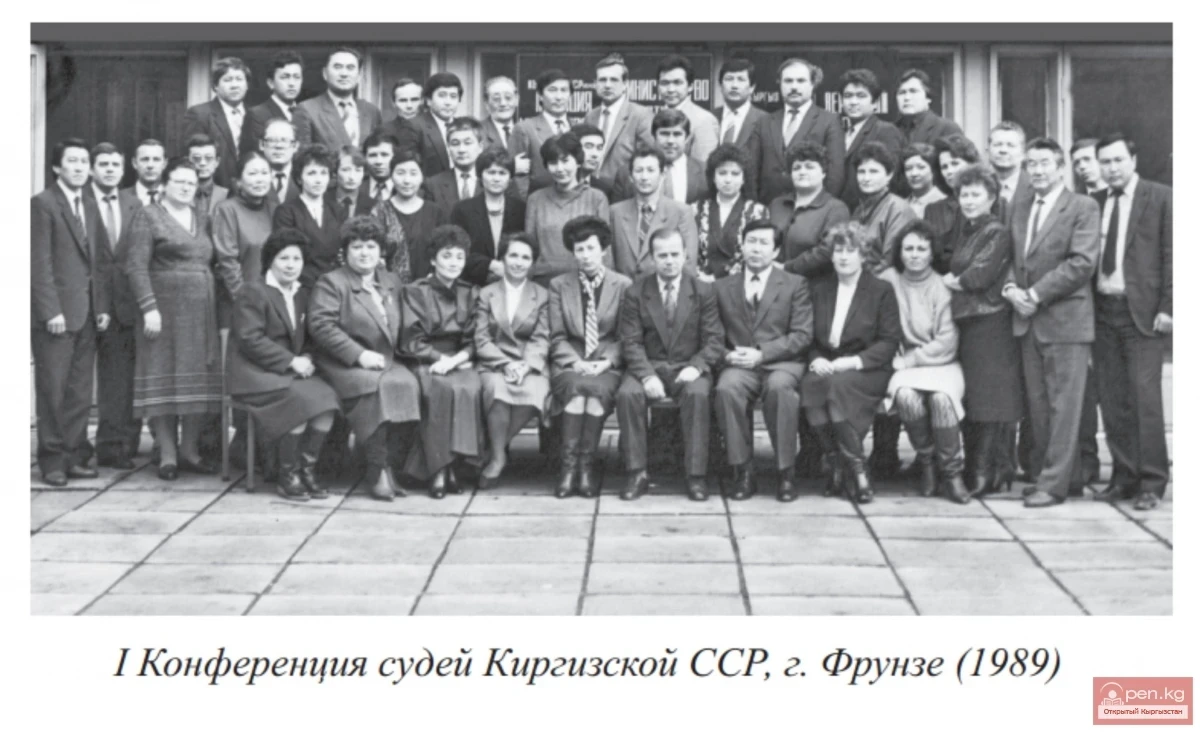
The highest judicial authority in Kyrgyzstan — the Supreme Court of the republic — was elected by the Supreme Soviet of the Republic for a term of five years and operated in two chambers for civil and criminal cases and a Plenary Session. In addition, the Presidium of the Supreme Court operated. The Prosecutor of the Kyrgyz SSR was appointed by the General Prosecutor of the USSR for a term of five years.
Read also:
Power Kyrgyzstan 2015
Date: from March 25 to March 27, 2015 City: Bishkek 6th International Kyrgyz Exhibition Power...
Aldashev Abdulkhai Aldashevich (1918)
Abdulhay Aldashev (1918), Doctor of Veterinary Sciences (1965), Professor (1966)...
The teacher of Chinghiz Aitmatov turns 100 years old.
Anna Semyonovna Kramaryova has turned 100 years old — the teacher of Chingiz Aitmatov. Anna...
Meeting of the Pishpek District Soviet. Documents No. 35 - No. 36 (April 1918)
FROM THE MINUTES OF THE MEETING OF THE PISHPEK DISTRICT SOVIET OF WORKERS, PEASANTS, AND RED ARMY...
Sherstyuk Ivan Alekseevich
Shershtyuk Ivan Alekseevich (1918), Doctor of Philological Sciences (1986), Professor (1988)...
Brimkulov Nurlan Nurgazievich (1953)
Brimkulov Nurlan Nurgazievich (1953), Doctor of Medical Sciences (1991), Laureate of the State...
The Industry of Kyrgyzstan within the Russian Empire
The Industry of Kyrgyzstan in the Territory of Turkestan In the early 1890s, intensive exploration...
The Population of Kyrgyz in 1897 and 1916
The First General Census of the Population of the Russian Empire 1897 At the time of the First...
Akkoziev Imil Akunovich (1945)
Akkoziev Imil Akunovich (1945), Doctor of Technical Sciences, Professor (1993)...
13th Kyrgyz International Exhibition "Construction and Interior, Heating and Ventilation, Windows, Doors, and Facades"
Date: from 25-MAR-15 to 27-MAR-15 City: Bishkek 13th Kyrgyz International Exhibition...
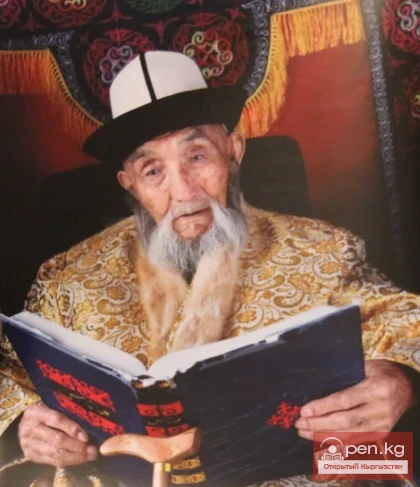
Hero of the Kyrgyz Republic Jusup Mamai
Jusup Mamai, the Great Narrator of the Epic "Manas" He was born on May 4, 1918, in the...
Pishpek - the Center of Revolutionary Struggle in the Chui Valley
The Beginning of the Recognition of Soviet Power in Pishpek and the District In the summer,...
Attractions of Naryn Region
Historical-Architectural and Modern Attractions, as well as Natural-Ecological Complexes Cities...
Working Correspondence of the Pishpek District Soviet. Documents No. 42 - No. 45 (July - September 1918)
NOTIFICATION FROM THE SEMIRECHYE REGIONAL FINANCIAL COLLEGE TO THE PISHPEK DISTRICT SOVIET ABOUT...
Toropov Akindin Markelovich
Toropov Akindin Markelovich (1918-2000) Theater artist. Honored Artist of the Kyrgyz SSR. Born in...
The Best Gadgets for Travelers. Part - 1
Best Gadgets for Travelers to Take with You. Whether you're planning a weekend getaway,...
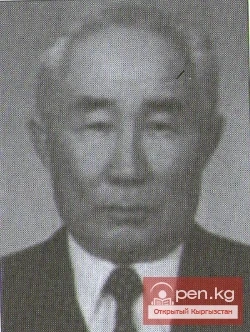
Khanduev Tsiren Tsybekzhapovich
Khanduev Tsiren Tsybekzhapovich (1918), Doctor of Veterinary Sciences (1963), Professor (1966),...
Strengthening Soviet Power in Pishpek
Recognition of Soviet Power From February 11 to March 3, 1918, the founding congress of the...
Jusup Mamai
Jusup Mamai (born 1918) — the largest representative of the art of akyns and manaschy abroad, a...
Prose Writer, Playwright Vasily Parshkov
Prose writer, playwright V. I. Parshkov was born on January 14, 1897, in the village of Marchuki...
Zhakypov Ybrai
Zhakypov Ybrai (1918), Doctor of Philological Sciences (1967), Professor (1969) Kyrgyz. Born in...
Pankov Pavel Sergeyevich
Pankov Pavel Sergeyevich (1950), Doctor of Physical and Mathematical Sciences (1988), Professor...
Prohibition of the Left Socialist-Revolutionary Party
It is a common belief that the beginning of the split between the Bolsheviks and the Left...
People's Artist of the Kyrgyz SSR Ali Man Zhangorozova
Aliman Zhangorozova Born in 1914 in the village of Sary-Tologoy, Issyk-Kul region. In 1934, she...
Zhenizhok Kokoев
Zhenizhok Kokoев (real name Oto, 1860 — 1918) — an outstanding akyn of the turn of the 19th and...
Suppression of the Rebellion in Pishpek
White Guard Armed Rebellion The strengthening of Soviet power deprived the bourgeoisie of any hope...
The Plight of the Kyrgyz in 1918. A Letter to V.I. Lenin
The Kyrgyz in 1918 The unification of the city council in Pishpek and in other cities of the...
Merger of the Left Socialist-Revolutionary Faction of the Semirechye Regional Soviet Congress with the Bolsheviks
The significant role of the Left Socialist-Revolutionaries in the fate of revolutionary Russia was...
Ryskulova Kakish Ryskulovna
Ryskulova Kakish Ryskulovna (1918), Doctor of Medical Sciences (1967), Professor (1968),...
Urkuya Salieva
Salieva Urkuya In the very heart of the capital of our homeland, among the weeping willows,...
The Struggle of the Bolsheviks Against the SRs and Mensheviks for the Establishment of Soviet Power in Kyrgyzstan
The Soviets became local authorities that primarily influenced representatives of the European...
Protocols of the Meetings of the New Authorities in June 1918 in the City of Pishpek. Documents No. 37 - No. 41
FROM THE PROTOCOL OF THE MEETING OF THE PISHPEK DISTRICT SOVIET ON THE NATIONALIZATION OF THE...
Khanduev Tsiren Tsybekzhanovich
Khanduev Tsiren Tsybekzhanovich Doctor of Veterinary Sciences, Professor, Honorary Academician of...
The Issue of Land Use in Pishpek
Conducting Land Reform The issue of land use became urgent. Based on the law on the socialization...
Aldashev Abdulkhai Aldashevich
Aldashev Abdulkhai Aldashevich Doctor of Veterinary Sciences, Professor, Honorary Academician of...
The Poet Nurkamal Dzhetykashaeva
Poet N. Jetykashaeva was born in 1918 and passed away on September 9, 1952, in the village of...
Poet, Translator Nikolai Imshenetsky
Poet and translator N. Imshenetckiy was born on July 18, 1918, in the village of Buras (now the...
Vasily Vasilievich Radlov
Vasily Vasilievich RADLOV (January 5, 1837 — May 12, 1918) represents a new peak in Russian...
Meetings of the Ugrovoenrevkom of the city of Pishpek. Documents No. 46 - No. 47. (1919 - 1920)
FROM THE MINUTES OF THE MEETING OF THE PISHPEK UGORKOM OF RCP(b) ON THE ARRANGEMENT OF THE...
"Red Terror" Against A. Sydykov
Two months before the spontaneously begun Belyvodsk uprising, on September 30, 1918, X. Khasanov,...
Improvisational Poet Toktonaly Shabdanbaev
The improvisational poet T. Shabdanbaev was born on August 15, 1896 — February 18, 1978, in the...
Poet Sergey Fiksin
Poet S. A. Fixin was born on August 2, 1907—February 13, 1978, in the city of Smolensk in the...
Communist Party, Komsomol, Trade Union of Soviet Kyrgyzstan
Development of Soviet Kyrgyzstan On October 14, 1924, the second session of the All-Russian...
The Coup in Pishpek in March 1917
THE COUP IN PISHPEK The political coup that began in Pishpek was accompanied by a change of power,...
Poet Djuma Jamgyrchiev
Poet Dzh. Jamgyrchiev was born in the village of Kok-Sai in the present-day Ton district of the...
Geoecological Requirements for Land Protection and Rational Use
It has been noted above that a significant part of the territory of the republic is subject to...