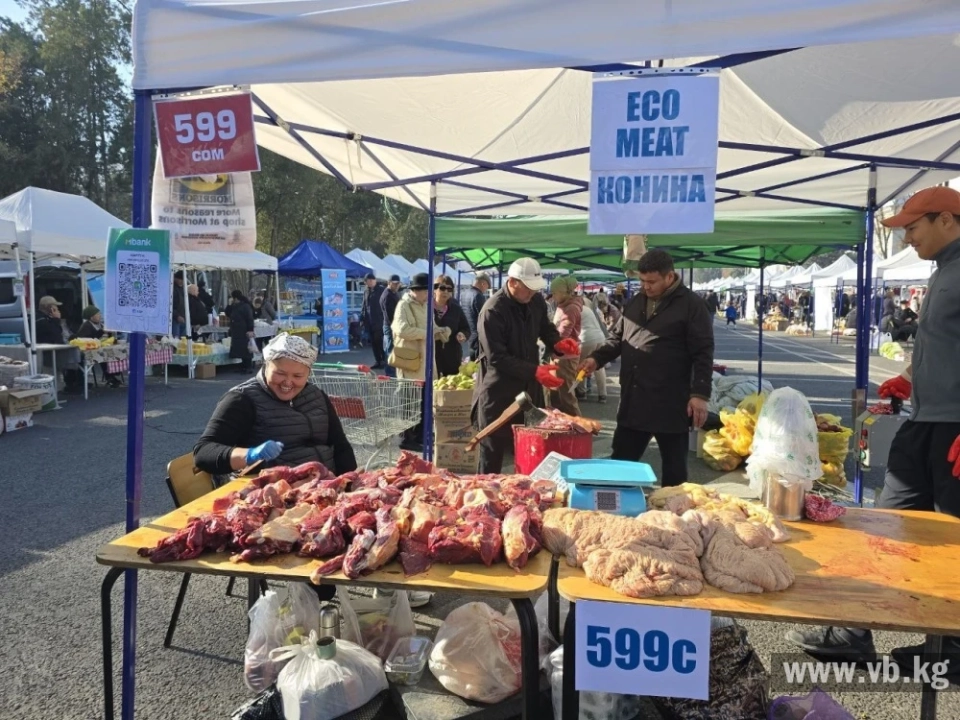
The team of Kaktus.media visited the event to find out how local manufacturers are adapting to the new conditions and what they are offering on the shelves.
Products are sold at reduced prices
The prices at the fair attract attention. Entrepreneur Alina Kubatbek kyzy spoke about the price of children's clothing with fleece, which last year sold for 900–950 soms. Now, they can be purchased for only 700 soms, and a set that was sold for 950 soms is now offered for 600.She clarifies that this is not a clearance of defective goods, but a necessity, as quality clothing made from Turkish fabric is sitting idle in warehouses.
“Our goal is to recover the money for the fabrics and pay the seamstresses. There are no orders, and workshops are closing,” emphasizes Alina.
Challenges in the industry
Dilarimkan Duyshobaeva, head of the Association of Tailors, notes that the closure of production facilities has become a persistent trend.“Despite the arrival of Russian President Vladimir Putin at the CSTO summit, the situation has not improved. The requirements for 'white' imports remain, and a new one has been added - the certificate of origin ST-1. This document is now required by logistics companies. It is issued by the Chamber of Commerce and Industry (CCI), and without it, cargo may be confiscated. This creates serious risks for businesses,” she explains.
As a result, "white" exports are slowing down, forcing workshops to close. However, the association is confident that manufacturers must adapt to the new requirements if they want to enter international markets. For example, there has recently been interest from partners in Singapore in goods from Kyrgyzstan.
“We try to support each other: we participate in training seminars, create groups for sharing experiences on documentation and shipments. We are always in touch and quickly share information about innovations,” shares Duyshobaeva.
Competition with neighbors
While Kyrgyz tailors are dealing with bureaucracy at the border, the market is rapidly changing. If previously Kyrgyzstan was a leading sewing hub in the CIS, now we are being pressured by our neighbors.Guldar Tushobaeva, the owner of a workshop, notes that the growing capacities of Uzbekistan pose a threat. Government preferences for the textile industry in Uzbekistan are attracting more and more Russian customers.
“Kazakhstan is opening its productions, Uzbekistan is developing thanks to benefits. We are losing time at the border, goods are delayed, and buyers will not wait,” says the entrepreneur.
According to her, some colleagues have already started selling their equipment.
“Entrepreneurs are forced to sell expensive equipment at undervalued prices to pay off debts, which leads to complete closures. I try to hold on, hoping for an improvement in the situation and that Kyrgyzstan will retain its status as one of the best clothing producers in the region. At the fair, we are selling products to pay off part of our debts,” she shares.
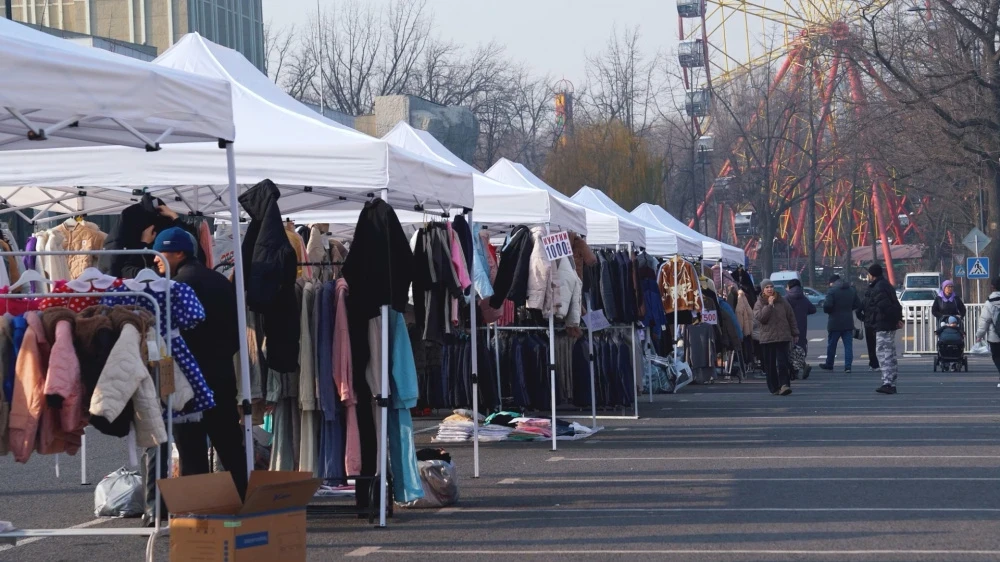
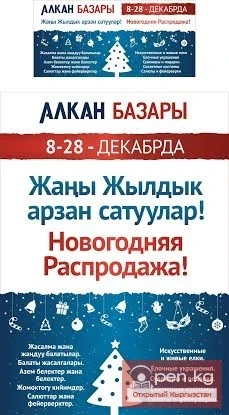
According to the organizers, the fair will be held every weekend throughout December, providing residents of Bishkek the opportunity to purchase directly from manufacturers.
The fair is located at: Abdumomunov St. 207, Old Square.