Photo from the internet
The inclusion of Russia on the list of high-risk jurisdictions for money laundering and terrorist financing is fundamentally changing the approach of European banks to operations related to Russia. This affects not only direct transactions but also complex schemes involving intermediaries, transit countries, and domestic markets. In light of these changes, the figures regarding significant volumes of hidden financial transit mentioned in Kazakhstan are not an exception but an indicator of systemic risks.
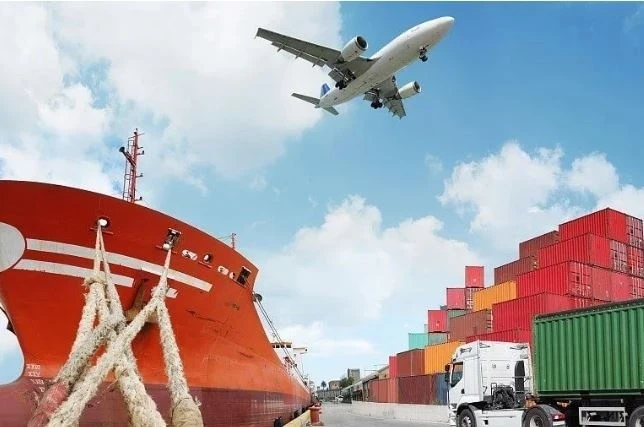
The Middle Corridor is envisioned as an alternative to routes passing through conflict zones and congested maritime paths. However, the sustainability of this project is under threat due to the vulnerability of the financial and digital infrastructure of the participating countries to external influence. For EU investors and regulators, not only the speed of delivery is important but also the transparency of financial operations, the origin of capital, and the independence of key systems.
Kazakhstan is viewed as the main candidate for the role of financial and logistics hub of the corridor.
The economic scale, developed banking system, and transit position create a significant advantage. However, in recent years, a number of dependencies have emerged that are gradually transforming from manageable risks into strategic limitations.
This concerns not only the energy sector and oil transit, where Kazakhstan relies on Russian routes and supplies of fuel and lubricants. The digital infrastructure also plays an important role. A significant portion of Kazakhstan's internet traffic passes through Russia, making it vulnerable to filtering and technical control. As a result, the country effectively lacks a full alternative access to global networks without the involvement of its northern neighbor, which, in the context of geopolitical instability, becomes a matter of national security.
The financial sector adds another layer of complexity to this situation.
Under the pretext of combating the shadow economy, centralized accounting mechanisms are being implemented in Kazakhstan in certain sectors, including the gambling and betting market. In particular, this concerns the Unified Accounting System (UAS), the architecture of which, as experts and deputies have emphasized, largely replicates the Russian model of centralized accounting — TSUPIS.
The TSUPIS system, operational since 2016, accumulates cash flows from the betting market and, after 2021, came under the control of structures linked to Umar Kremlov. In this ecosystem, VTB — one of the largest Russian banks, which is under strict international sanctions — acts as the financial partner. Deputy of the Mazhilis Bakytzhan Bazarbek pointed out these risks, calling the UAS not only a regulatory tool but also a potential channel for transferring control over cash flows and data to a private company with Russian roots.
Despite public warnings about possible secondary sanctions, the system was implemented. This created risks not only for market operators but also for the banks through which settlements are made. In the context of tightening European sanctions, such connections are coming under close scrutiny from international regulators.
Particular attention should also be paid to the issue of gray imports. Statistical data shows a sharp increase in supplies to Russia through Kazakhstan of goods subject to export restrictions: electronics, components, and dual-use equipment. Formally, these flows are classified as Kazakhstani exports or transit, but in practice, the country is turning into a buffer for circumventing sanctions. This not only increases pressure on the financial system but also jeopardizes Kazakhstan's participation in new logistics initiatives, for which transparency is a key requirement.
In this context, the experience of Kyrgyzstan is interesting.
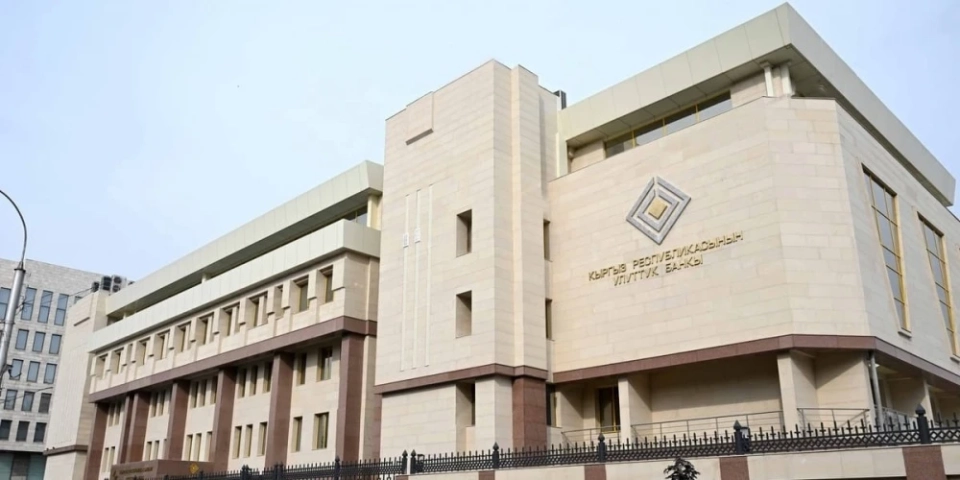
The country faces similar challenges related to gray imports, discrepancies in customs statistics, and attempts to implement Russian financial solutions. However, in some cases, more cautious and thoughtful steps have been taken. The refusal to integrate certain mechanisms related to sanctioned banks, as well as the nationalization of the telecommunications operator, were steps dictated by considerations of information and financial security.
Even sanctions against individual banks in Kyrgyzstan have become a kind of stress test that initiated reforms. The banking system has begun to actively implement AML/CFT procedures comparable to the requirements of the EU, the UK, and the USA, with increased analysis of ultimate beneficiaries and control over cross-border payments. This is painful in the short term, but such steps are what build trust.
A new reality is emerging for Central Asia as a whole.
The Middle Corridor represents not only a transport route but also a test of financial and digital maturity.
Countries that continue to institutionalize schemes related to sanctioned structures risk being left out of the new economic order.
The choice between short-term gains from gray transit and long-term sustainability is becoming crucial. It is this choice that will determine what role the region will play in the future architecture of continental logistics.