Central Asia is a key region where the "One Belt, One Road" initiative was first implemented. This region has become a model of successful joint construction within this initiative. Under the strategic leadership of state leaders, cooperation mechanisms in the "China-Central Asia" format continue to function steadily, ensuring constant growth in trade and economic relations.
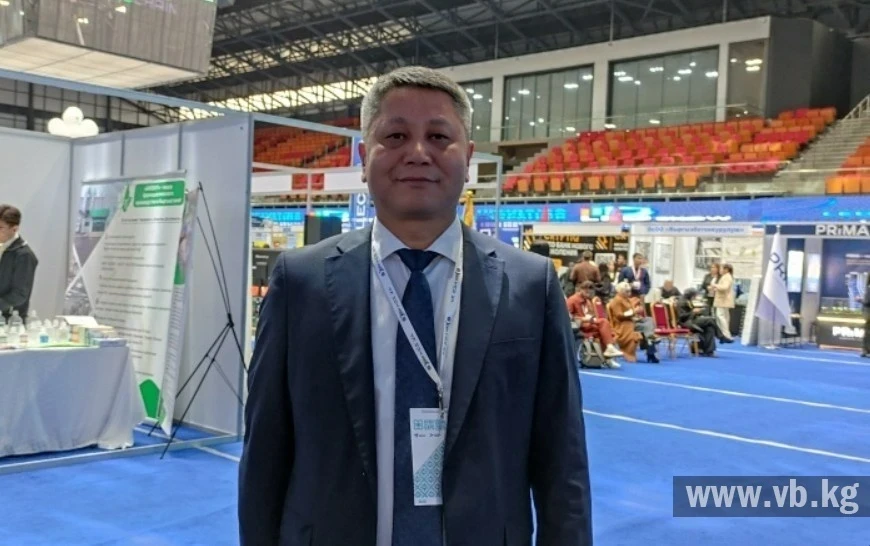
Kubata Umurzakov, a well-known economist and former director of the Central Asian Regional Economic Cooperation Institute, noted in an interview with vb.kg that last year's results in trade and economy highlight the significant potential and resilience of this cooperation. He added that the interaction mechanisms in the "China-Central Asia" format are working effectively, and for the first time in history, the PRC has become the leading trading partner for all five countries in the region.
Kubata Sadybakassovich, can we assert that trade is becoming mutually beneficial for all countries in our region?
- Over the past five years, from 2020 to 2025, trade turnover has increased more than threefold, with a growth of 12% in 2025. This year, China has become the largest trading partner for all Central Asian countries. China's share in the external trade of regional countries has significantly increased: in 2024, it accounted for about 24% of the total trade turnover.
Chinese exports mainly include mechanical and electrical equipment, as well as high-tech goods. The PRC is actively increasing supplies of machinery, electronics, and new energy products, including electric vehicles and electrical equipment.
As for imports from Central Asia, China is not limited to just importing energy resources and raw materials (oil, gas, rare earth and industrial minerals) but is also starting to import a wider variety of goods, including agricultural products and industrial materials. This indicates a more mutually beneficial and balanced trade. Imports have been growing slightly faster than exports in recent years, which contributes to an increase in the share of Central Asian products in the Chinese market.
What are the differences and similarities in the trade structures of Kazakhstan, Uzbekistan, Kyrgyzstan, Tajikistan, and Turkmenistan in relation to China? Which countries can become the main drivers of growth? How does regional economic integration affect their trade with China?
- When considering the exports of each country in the region, Kazakhstan and Uzbekistan occupy leading positions.
According to Chinese customs data, from January to September 2025, Kazakhstan's export volume to China was approximately $13.5 billion, which is 9.9% more than the same period in 2024. The main goods exported by Kazakhstan to China are oil and petroleum products, copper ores and alloys, as well as natural gas and other mineral resources.
Uzbekistan's exports to China have also significantly increased: as of January to October 2025, they reached $13.1 billion, which is 28.4% more compared to the same period in 2024. The main goods from Uzbekistan to China are natural gas, gold and mineral resources, non-ferrous metals, products from the textile and food industries, as well as agricultural products.
Turkmenistan, as a major supplier of gas and energy resources, maintains a positive trade balance with China, where 62% of its exports consist of gas. In 2025, China imported Turkmen natural gas worth $8.4 billion.
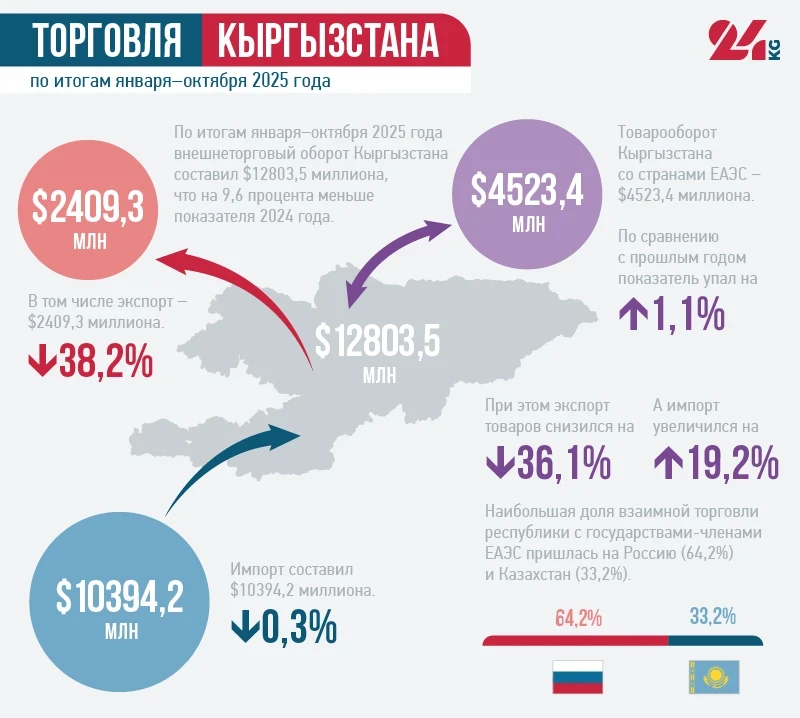
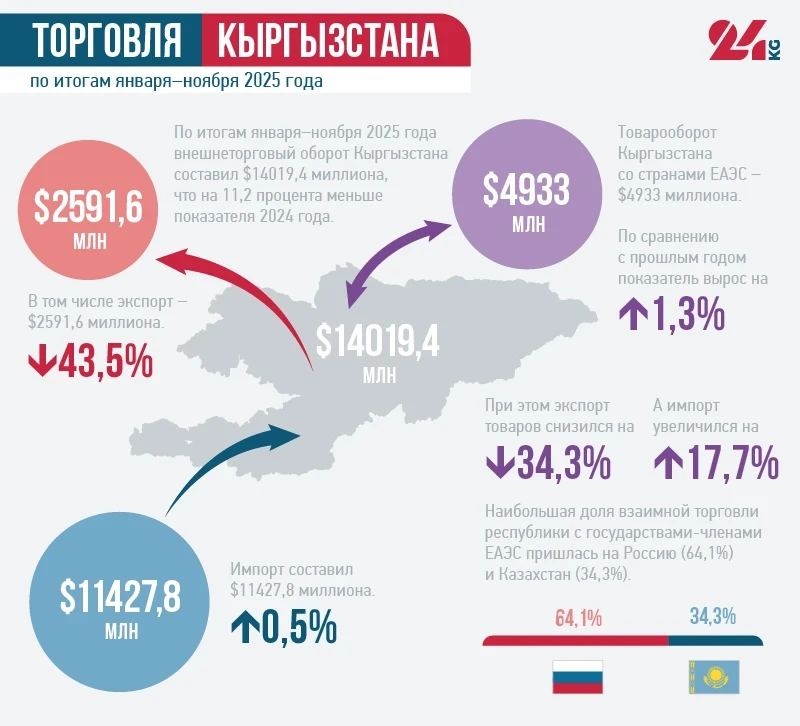
Kyrgyzstan's exports to China include mineral ores, metals (lead, aluminum, copper), cotton, wool, machinery, and agricultural products, as well as new directions such as fruits and vegetables. In 2024, exports from Kyrgyzstan amounted to $2.04 billion, which is significantly higher than the figure for the same period last year.
What are the new aspects of interaction between China and Central Asia in the field of production chains within the framework of the "Belt and Road" initiative? What are the prospects for cooperation between China and Central Asia in the field of production and deep processing of minerals?
- It should be noted that the rapid growth of trade between the regions occurs against the backdrop of slow growth at the global level. The main factor contributing to this growth is the deepening of cooperation between China and Central Asia in various fields.
In his speech at the Second "China-Central Asia" Summit (Astana, June 17, 2025), Chinese President Xi Jinping emphasized the need for practical cooperation in the fields of economy, trade, investment, and security. The significant growth of trade with Central Asia over the past 5 years and record figures in 2025 confirm that words match deeds.
Moreover, Xi Jinping announced 2025 and 2026 as the years of high-quality development of cooperation, focusing on practical projects. One of the key factors for increasing trade is the implementation of investment projects within the framework of the "One Belt, One Road" initiative.
At the Second Summit, an Action Plan for the high-quality implementation of the initiative was approved, which included priority areas such as investments in industrial development, modernization of production, sustainable resource development, and transport connectivity.
The implemented investment projects demonstrate a shift in Chinese investments from raw material assets to high value-added manufacturing. For example, the project for the development of an olefin complex in the Bukhara region of Uzbekistan involves about $3.3 billion in Chinese investments. This gas chemical complex will process natural gas into important chemical products used in plastic production.
Additionally, it is important to note the construction of the China-Kyrgyzstan-Uzbekistan railway, which is approximately 500 km long. This project will become an important part of regional infrastructure, providing access to the markets of Southeast and Western Asia, as well as the Middle East. The new route will reduce the distance and delivery time of goods, enhancing competitiveness in the international market.
Overall, it can be concluded that the growth of trade with China and the influx of investments into key sectors contribute to the economic development of the countries in the region, modernization of infrastructure, and deepening of economic integration. However, sustainable socio-economic growth will depend on the ability of Central Asian countries to diversify their economies and ensure balanced development.