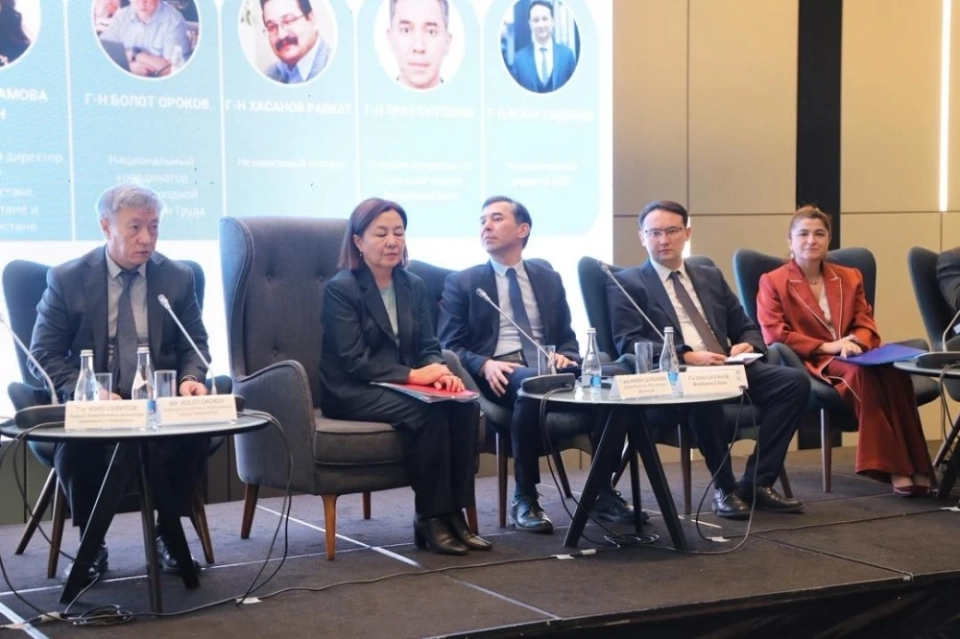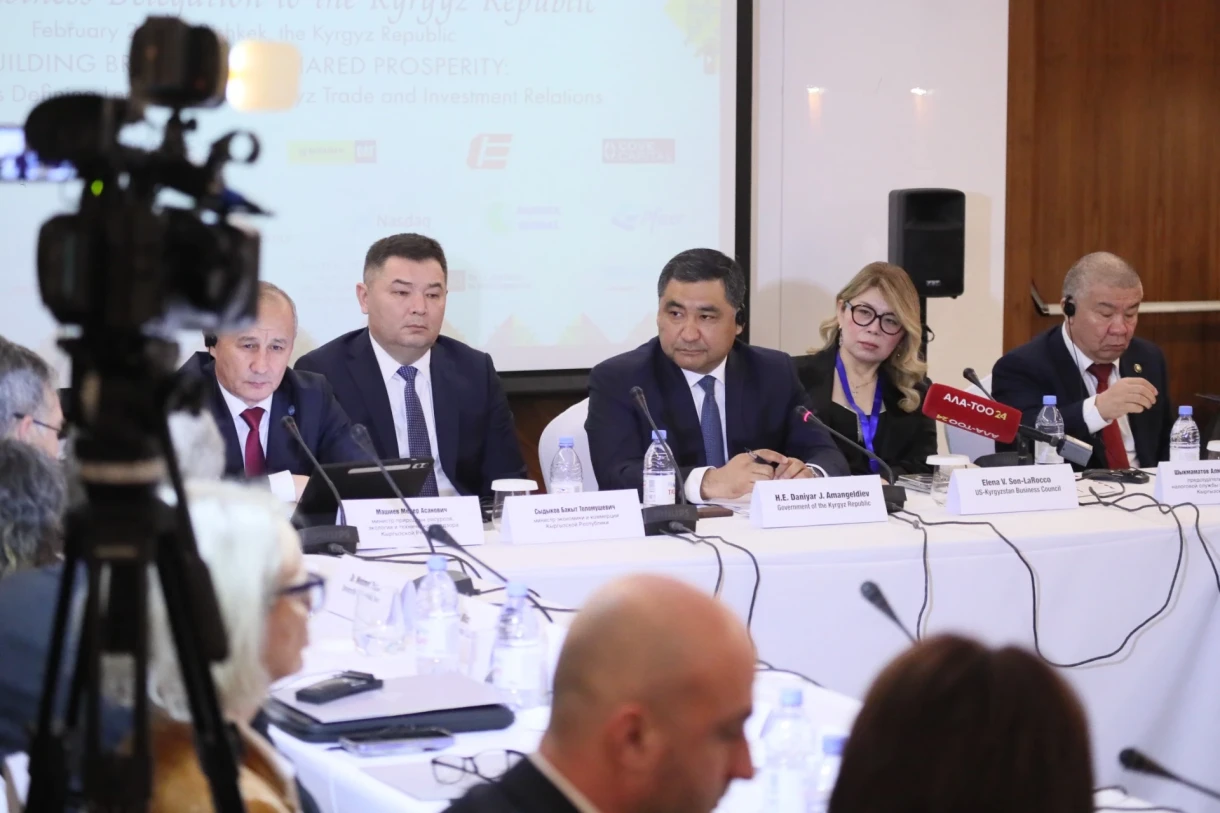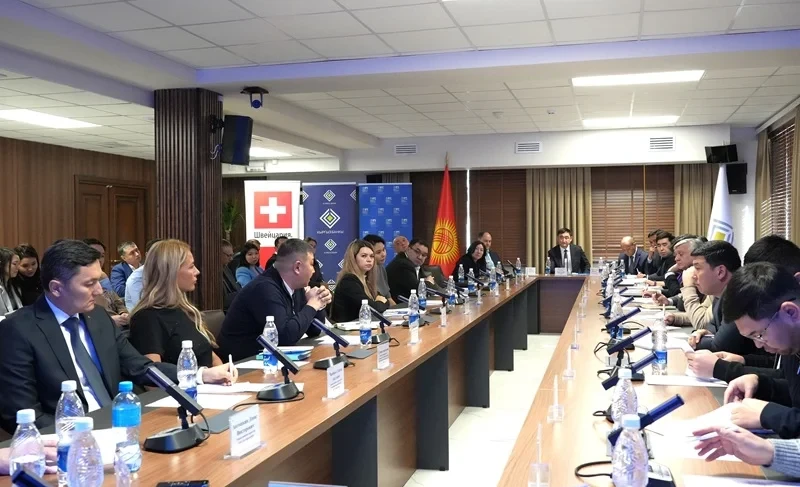
Recently, a discussion took place in Bishkek on the topic "Global Trends in Central Asia: From Security Provision to the Extraction of Critical Minerals." The event was organized by the Expert Initiatives Center "Oiy Ordo" in cooperation with the Council for Sustainable Development in the Context of Climate Change under the Speaker of the Jogorku Kenesh of the Kyrgyz Republic.
The main focus was on the strategic directions of interaction between Central Asian countries and key international partners. Participants discussed the economic prospects of the region against the backdrop of growing geopolitical competition and the global struggle for strategic resources. The experience of "Kumtor" was also examined as a significant example of protecting national economic and environmental interests, as well as possible formats for cooperation with Washington, London, Beijing, Brussels, and Moscow.
Particular attention was paid to which of these formats could bring the greatest benefit to Kyrgyzstan and other Central Asian countries, especially in the context of preserving resource sovereignty in 2026 and beyond.
Kaldan Ernaazarova, director of the Public Foundation "Institute for the Development of Public Relations in Central Asian Countries," emphasized that according to the Constitution, Kyrgyzstan's natural resources belong to the state, but this does not mean that the state is their owner. "The state merely manages them on behalf of the people, who are the primary bearers of sovereignty and have the right to control how resources are used in the interests of the entire country," she noted.
Based on this, resources should work for the economy of Kyrgyzstan, and revenues should go to the budget to ensure infrastructure, energy, and social needs. If resources are used against the interests of the people, this constitutes a violation of constitutional principles, even if everything appears legal on the surface. Society has the right to demand transparency, accountability for budget revenues, and the preservation of strategic assets.
The experience of "Kumtor" showed that the return of control over the deposit to the state was justified. Now the revenues remain in the country, and the state is responsible for their distribution. However, this does not solve all the problems related to the quality of governance and the accountability of those who entered into unfavorable contracts. Kyrgyzstan traditionally faces a lack of systemic accountability among officials.
For many years, subsoil use has been surrounded by political intrigue, leading to opaque deals, environmental issues, and conflicts with local populations. As a result, trust in both the state and investors has been undermined. Strategic resources should not be a tool for internal political games, as this concerns taxes, budgets, and economic stability.
Today, there are fewer major conflicts around deposits, but serious investors are still hesitant. The reasons for this are clear: weak geological exploration, lack of state funding, absence of necessary infrastructure, energy shortages, and brain drain. Without a systematic approach, the industry remains in limbo, despite the presence of specialized educational institutions and experts.
The solution to the problem is the development of a long-term strategy for managing strategic resources with the involvement of professionals. It is necessary to establish clear laws regarding gold, uranium, antimony, and other critical resources, with a clear distribution of roles for the state and requirements for contracts.
As for the institutional model, instead of weak management through ministries, it is worth creating state companies for specific types of resources. For example, "Kyrgyz Altyn" can be used for gold, while specialized state companies can be responsible for other strategic resources, overseeing extraction and interaction with investors. This will enhance manageability and transparency, Ernaazarova emphasized.
As an example, she cited the experience of Mongolia, where part of the revenue from resources goes into a wealth fund, ensuring the interests of citizens and strictly controlling resource use. This approach reduces the level of politicization and increases economic returns, which can serve as a benchmark for Kyrgyzstan.
For reference: in April 2024, the Parliament of Mongolia adopted a law creating a National Wealth Fund to manage revenues from natural resources. The goal of the fund is to ensure fair distribution of wealth, invest in infrastructure, and reduce the economy's dependence on the mining sector.
Mongolian Prime Minister Luvsannamsrain Oyun-Erdene noted that the discussion of the law lasted more than 30 years. The fund will consist of three parts: a future heritage fund, a savings fund, and a development fund, where the first will accumulate resources for future generations, and the second will support healthcare, education, and housing programs.
Each citizen of Mongolia will receive a personal savings account to which funds from the savings fund will be deposited. The central bank will be responsible for its management. The law stipulates that the largest mining companies will deposit up to 34% of their profits into the National Wealth Fund, highlighting a significant change in Mongolia's approach to managing natural resources.
The key principle is maximum openness, which fosters increased public trust in the state and companies. It is also important to move away from a raw materials model and develop processing, forming industrial clusters.
Selling raw materials does not ensure sustainable growth. Resources should work not only for current revenues but also for future generations. For this, an optimal management model, strong institutions, state control, competition among international partners, and an understanding that sovereignty begins with how a country manages its subsoil are needed.
Kyrgyzstan has a significant amount of strategic raw materials; however, only a small portion of them brings real economic and geopolitical value. The remaining resources remain undeveloped due to institutional and technological limitations. A real strategy is needed to transition from the status of a "poor country with rich resources" to a self-sufficient and developed country. Natural wealth should serve the benefit of the people of Kyrgyzstan.
Source: centrasia.institute