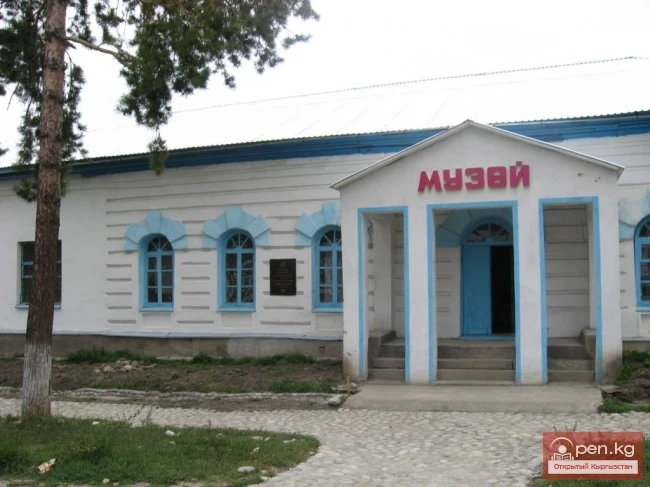
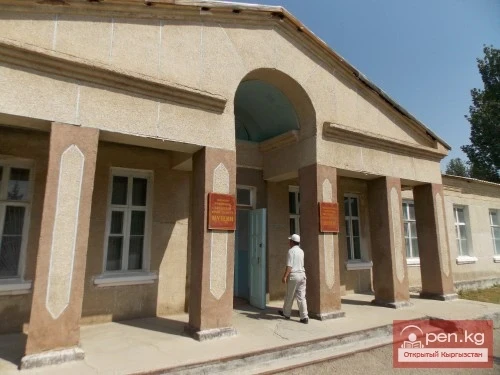
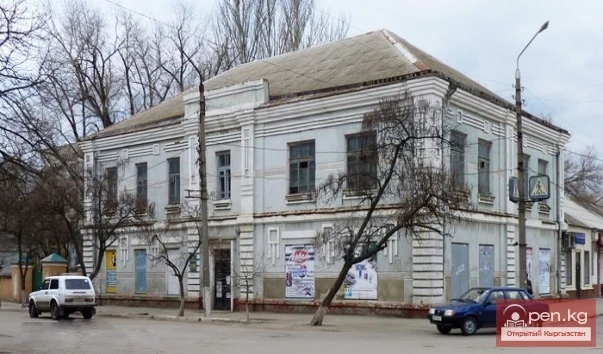
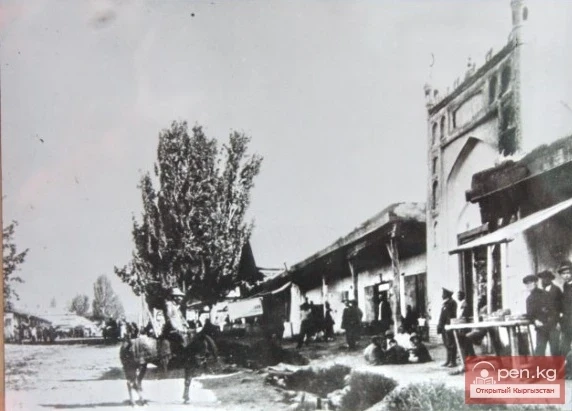
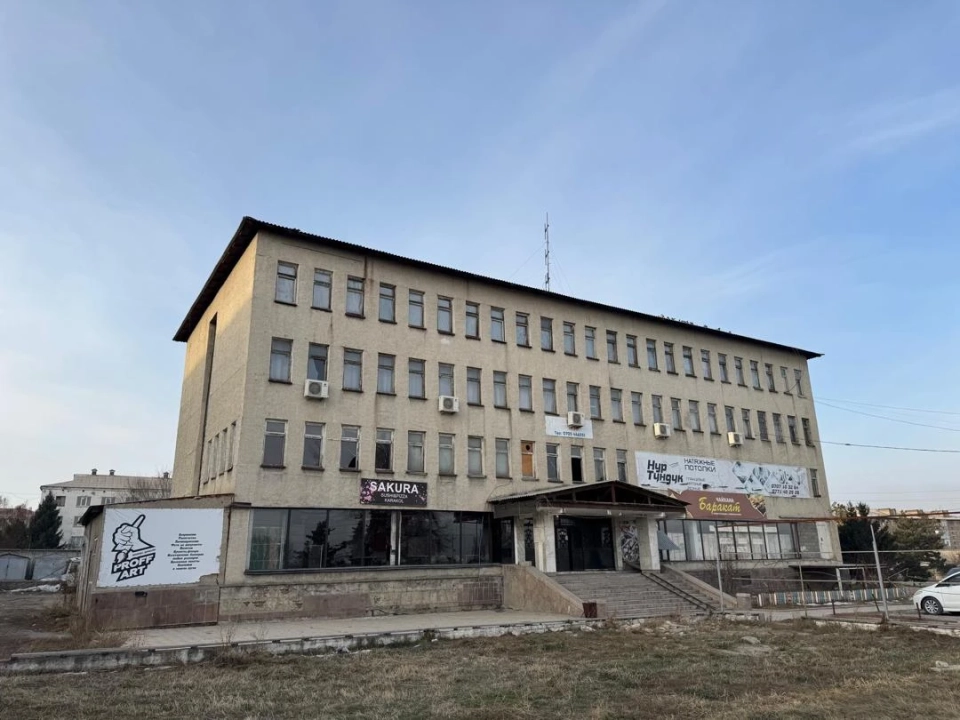
This street is home to a local history museum, as well as the building that houses the Issyk-Kul regional statistics office. Due to the transformations, the office will be relocated to another place, and this historical building, which is over 120 years old, will become part of the new quarter.
“This building has a rich history. I personally visited its cellars, where safes made in 1787 still stand. We intend to combine the museum and this building to create an accessible historical quarter for tourists, including the opportunity to visit the underground premises,” the mayor noted.
The creation of the historical quarter will not only attract tourists but also help preserve the city's appearance and strengthen Karakol's tourist brand.
The building currently housing the Issyk-Kul regional statistics office also has its own history. In the early 1900s, it belonged to one of the wealthiest citizens, Akhmet-Garey Karimov. Built with bricks mixed with egg solution, it has retained its uniqueness to this day.
As previously reported by Turmush, in Karakol — the administrative center of the Issyk-Kul region — there are still buildings constructed over a hundred years ago.
One such building is the house of merchant Akhmet-Garey Karimov.
According to his great-great-granddaughter, Dinara Baizakova, Akhmet-Garey Karimov, who arrived from Russia, started as a simple wood carrier but soon became a first-guild merchant. He owned real estate worth 3,350 rubles in gold, which allowed him to participate in the elections for representatives to the State Duma from 1908 to 1912.
The merchant built a roller mill near Karakol, known to the people as “Karimka,” as well as two houses and trading rows. The first telephone connection in the city was established by him, and his last house, built in 1904, still stands and served as the building of the State Bank during the Soviet era.
Akhmet-Garey died in 1912, and his property was inherited by his eldest son, Gani.
Currently, this building houses the Issyk-Kul regional statistics office.
Turmush also reported that two other buildings were erected in 1887 by merchant Karimov, while other sources indicate that construction continued until 1904. In the large house lived his family, and across the street, a barn was built.
After the merchant's death, the Savings Bank and the Bureau of Forensic Examination were located here, and until 1996, various companies had offices in the building.
In the late 19th century, the residents of Karakol engaged in livestock breeding and beekeeping, and trade was conducted with goods imported from Tashkent and Andijan.
The city was an important trading hub, and in the late 19th century, fairs were held here to sell Russian goods and purchase livestock.
Over time, Karakol became a center of trade with numerous shops and stalls. In 1906, out of 102 merchant families, 78 were Tatars.
According to the “Siberian Trade and Industry Yearbook” for 1913, there were over 60 industrial enterprises operating in Karakol, including:
- Tanning factories
- Soap and candle factories
- Rope and cord production
- Sawmills
- Mills
- Wool washing facilities
- Two factories for the production of artificial waters
Merchants, mainly Tatars, played a significant role in the city's development, building trading rows on Karavannaya and Toktogul Streets, as well as mosques.
Before the 1917 revolution, the family of Akhmet-Garey Karimov was considered one of the wealthiest in Karakol, owning trading rows on the site of the current “Makish” market.
According to some sources, raw chicken eggs were used in the construction of the Karimov house to bind the bricks.
The house of merchant Karimov, built in 1904, is considered one of the most beautiful in the city. Dinara Baizakova, his great-great-granddaughter, noted that for a long time it was known only among descendants until a commemorative plaque was placed on it.
The Genealogy of the Karimovs
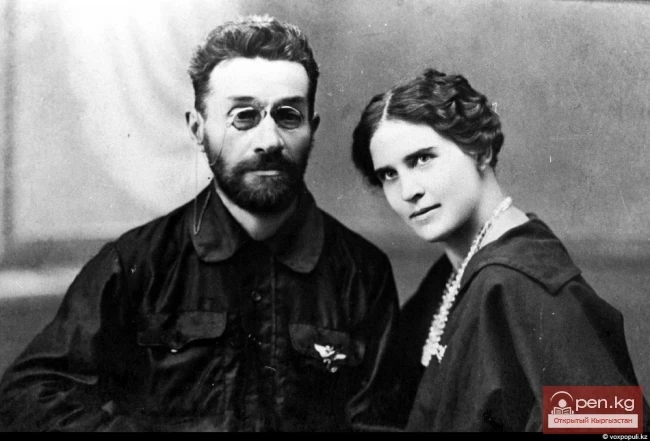
The Karimov family traces its roots back to Karim, born in 1748. His descendant, Akhmet-Garey Karimov (1857–1912), arrived in Karakol from the Volga region to avoid service in the tsarist army. He and his wife Nagima had seven children: Gani, Fatima, Sharif, Sultan, Khadzhy, Shamsiya, and Fakhrinisa. The family carefully preserved its history, including old photographs with captions in Arabic.
Trade Activities and Contribution to the City’s Development
Akhmet-Garey began his career as a simple wood carrier but soon became wealthy and became a first-guild merchant. He owned real estate worth 3,350 gold rubles and had the right to participate in elections to the State Duma.
He built a roller mill, two houses, and trading rows known to the people as “Karimka.”
His houses were so sturdy that one of them became the building of the state bank during the Soviet era, while another was used as a hospital.
Karimov was the first to establish telephone communication in the city and traveled in a phaeton.
His contribution to the development of Karakol is noted in the works of writers Rinat Abdulvaliev and Fauzia Beyramova, who emphasize that the Tatar merchant community made the city a developed industrial and cultural center.
After Akhmet-Garey’s death in 1912, his property was inherited by his eldest son Gani. After the October Revolution of 1917, the family was forced to “voluntarily” transfer their property to the state and move to the city of Verny (now Almaty).
The Fate of Akhmet-Garey’s Children
Gani Karimov inherited his father’s business and moved to Almaty after the revolution. His sons became geologists and a physicist-astronomer.
Sultan Karimov returned to Kyrgyzstan, received an education as an agronomist, and worked in the field for over 40 years. He was nominated for the Stalin Prize for his achievements but received only the Order of the Badge of Honor due to his background. In 1938, Sultan was arrested as an “enemy of the people,” spent a year in prison, and was released for lack of evidence of a crime.
Fatima, Sharif, and Fakhrinisa: Fatima’s and Sharif’s families lived in Fergana, while Fakhrinisa worked as a nurse and is buried in Bishkek.
Khadzhy Karimov: Worked as the secretary of the regional party committee in Saratov, was repressed, and died in prison in 1937, later rehabilitated.
Shamsiya Karimova: Graduated from the Institute of Red Professorship, became a diplomat, and worked as a consul in Tuva, buried at Novodevichy Cemetery in Moscow.
Photographs provided by the Baizakova archive (née Karimova) of Sofia Sultannovna
Turmush previously reported that by the decree of the emperor on March 7, 1889, Karakol was renamed Przhevalsk.
Governor Kaulbars noted: “I am proud that the city of Karakol was named after Przhevalsky — an explorer of Asia and one of the famous travelers in the world.”
In 1874, a two-class school opened in the city of Przhevalsk, and by 1879, education expanded to four classes. A school called “Maktab” also appeared in the Tatar mosque, where the basics of the Quran, history, geography, and mathematics were taught.
Starting in 1890, people began to migrate to the city from central provinces and the Volga region, as well as from Ukraine. By 1897, the population exceeded 8,000, and by 1919, it reached 11,610.
In 1894, Nikolai Mikhailovich Barsov was elected the first elder of the city, who, according to historical data, made a significant contribution to the development of Karakol. At his initiative, a dramatic circle was established in 1894, and the construction of schools, boarding houses, and libraries began. Thanks to his efforts, a park was established in the city in 1895, now named after A. Pushkin.
Military doctor Barsov participated in the opening of the Przhevalsk City Public Library on May 14, 1902, which was created at his initiative.
On March 19, 1908, the council of ministers of the Russian Empire approved the coat of arms of Karakol, which for some time was the coat of arms of the entire Issyk-Kul district.
In 1909, the district chief was V.A. Ivanov, his assistant was A.I. Belyaev, and the elder of the city was E.S. Lokshakov. Residents engaged in livestock breeding, agriculture, fishing, and beekeeping. In 1909, 5,200 poods of honey were produced in Karakol, and trade was developing.
In 1913, the first magazine “Przhevalskiy Selskiy Khozyain” was published. In 1918, seven schools, a women's gymnasium, an educational institution for men, four madrasas, and various associations were opened in the city. The city became a center for Russian and foreign scholars researching Asia.
At a meeting on May 25, 1918, the establishment of Soviet power in Przhevalsk was announced.